Male vs Female Dobermans: Vet-Reviewed Differences (With Pictures)


In this article
The Doberman Pinscher, or Doberman, is a loyal, loving, and intelligent breed. They can also be energetic, boisterous, and very strong. Although temperament is more important than sex, and you can socialize and train a young puppy to integrate into your family, there are some notable differences between the two sexes.
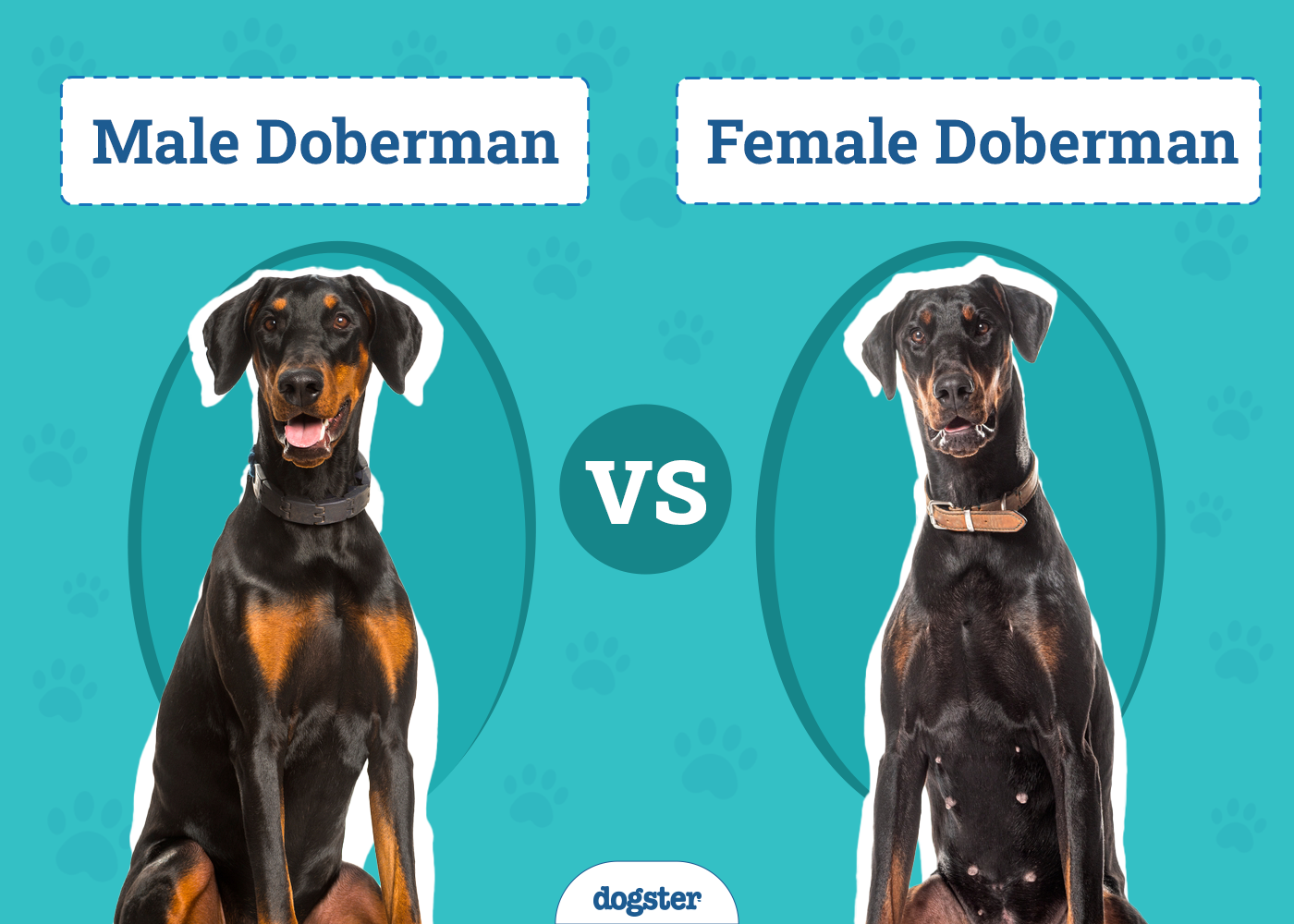
As with most breeds, the male will grow taller and heavier than the female. Males are ore prone to playfulness and are more comfortable in the company of strangers. They’re also messier and are more easily distracted. Read on for more differences between male and female Dobermans to see which is right for your life.

Visual Differences

At a Glance

Doberman 101

The Doberman originated in Germany in the 19th Century when tax collector Karl Friedrich Louis Dobermann combined several breeds to create a formidable guard dog to protect him during his rounds. Although the exact breeds combined are unknown, experts believe that Dobermann, a dog pound keeper and a tax collector, included Rottweilers, German Pinschers, Great Danes, and German Shepherds.
The Doberman’s intimidating appearance, muscular body, and fierce bark are ideal traits for a guard dog. Although they're still trained to be guard dogs, Dobermans also serve as police dogs, military dogs, and rescue dogs. They have also been used as therapy dogs and are known for being caring and affectionate family pets.
Since they're so energetic, Dobermans need a lot of exercise. This should include daily walks and incorporate games and playtime with the family. The Doberman is always ready to play, and they can excel at canine sports and agility courses. Because the Doberman was bred as a guard dog, you must train and socialize the breed regardless of sex. This will ensure a better-behaved dog and prevent unwanted aggression or excessive protectiveness.

Male Doberman Overview

Personality / Character
The male Doberman is friendly and loyal but also silly and boisterous. These playful tendencies will wear off when the dog reaches maturity, but males don’t reach this point until they are about 4 years old, compared to 2 years for females. This not only necessitates firmer training practices, but the combination of a muscular frame and goofy playfulness means that the male Doberman can be accident-prone and messier.
The male is more likely to bond with all family members and is eager to please their humans. They get along well with strangers and are more likely to get on with other dogs than a female. However, a male who has not been socialized or trained can be aggressive to other male dogs at the dog park.
Training
The male Doberman's playfulness can cause him to get distracted during training. You need to use concise commands and must be consistent in all of your training efforts. If you do not keep the male’s attention, he will find something else to entertain him.
However, the male is eager to please and very intelligent. Once you master how to keep the Dobie’s attention, you will see excellent training results. Although males are considered more challenging to train than females, they are easier to train than many other breeds.

Health & Care
Males grow bigger and heavier than females, which naturally puts more pressure on their bones, joints, and hearts. They are more prone to joint dysplasia and dilated cardiomyopathy, which is a serious heart condition. The average male Doberman’s life expectancy is a little shorter than that of the female, but there is little to no difference in healthy males and females.
When buying a puppy, make sure that they have been screened for dysplasia and other health concerns. This will reduce, although not eliminate, the likelihood of your dog becoming seriously ill.
Pros
- Playful nature
- Accepting of strangers
- Bonds with the whole family
Cons
- Takes longer to mature (4 years)
- Tends to be messier
- Easily distracted
Female Doberman Overview

Personality / Character
While the male is considered goofy, the female Doberman is more serious. She reaches maturity at about 2 years old; she will be easier to housetrain and can be left alone at a younger age. The female is not especially prone to separation anxiety, but the male can get bored and be destructive. Females are less likely to show these unwanted tendencies, so if you go out to work all day, the female’s personality is likely a better match for your lifestyle.
The female also gives her owner more space, but she is still loving and loyal. While the male’s playfulness endears him to all family members, the female is more likely to pick a favorite human and form a closer bond with them. She may not be as good a choice for a family with children for this reason.
Since females are less boisterous, they're less likely to make a mess in your home. They're also less comfortable around strangers, which could be an advantage if they're trained as guard dogs.
Training
The male’s attention wanders, but he is eager to please. The female is less concerned with making her owner happy but is driven and considered easier to train. If you are a first-time or novice dog owner, the ease of training and the sensible nature of the female make her the better choice. The female will potty train sooner, is less likely to cause a mess with her food, and is easier to keep her attention when giving commands.
The female is said to have better off-leash skills than the male. Dobermans generally have excellent skills off the leash, but the female has better recall and is unlikely to approach strangers or chase other dogs.

Health & Care
Females are less prone to hip and elbow dysplasia and less likely to develop dilated cardiomyopathy; they are generally healthier than males. Some state that this, combined with their being lighter than males, means that they have a longer lifespan, but males and females both have an average life expectancy of around 12 years.
The female Doberman is still a big dog and is vulnerable to bloat, hepatitis, and von Willebrand’s disease, and although she is less likely to develop joint dysplasia, it is still a possibility.
Pros
- Easier to house train
- Matures more quickly (2 years)
- Less chance of health complaints
Cons
- Tends to bond to one person
- Wary of strangers
- Not as playful
Which Sex Is Right For You?
The Doberman is an intelligent breed that excels at several tasks but has been especially popular as a guard dog. As a family pet, the Doberman is loving, loyal, easy to train, and energetic. They require thorough training and early socialization, but they make excellent family pets.
While the dog's character is more important, there are some notable differences between male and female Dobies. The male is bigger, more playful, and more tolerant and welcoming of strangers. They bond with all family members rather than a single person, but they can become distracted during training due to their playful nature. The female, on the other hand, is more likely to listen but less eager to please. She will potty train sooner but will form a close bond with a single family member rather than all of the family.
Whichever sex you choose, socialize your Doberman early, ensure that they are properly trained, and be prepared to give plenty of daily exercise to ensure a healthy and happy dog.
Related Reads:
Featured Image Credit: (L) volofin, Shutterstock | (R) OlgaOvcharenko, Shutterstock
Expert dog care, straight to your inbox
Vet-reviewed advice, training tips, and the best of Dogster. Free, and you can unsubscribe anytime.
By signing up, you agree to our Terms & Conditions and Privacy & Cookies Policy.
Nicole has loved animals of all sizes her whole life so it's no wonder she has dedicated her career to helping them through what she loves best: learning, writing, and sharing knowledge with others. She’s the proud mom of two dogs, a cat, and a human. With a degree in Education and 15+ years of writing experience, Nicole wants to help pet parents and pets around the planet to live happy, safe, and healthy lives.
Join the conversation
Ask a question, share your story, or send private feedback.