American vs European Doberman: Main Differences (With Pictures)

In this article
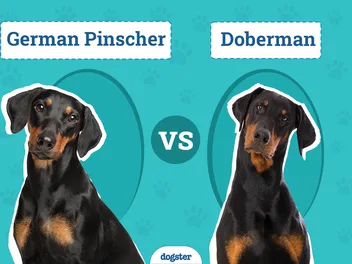
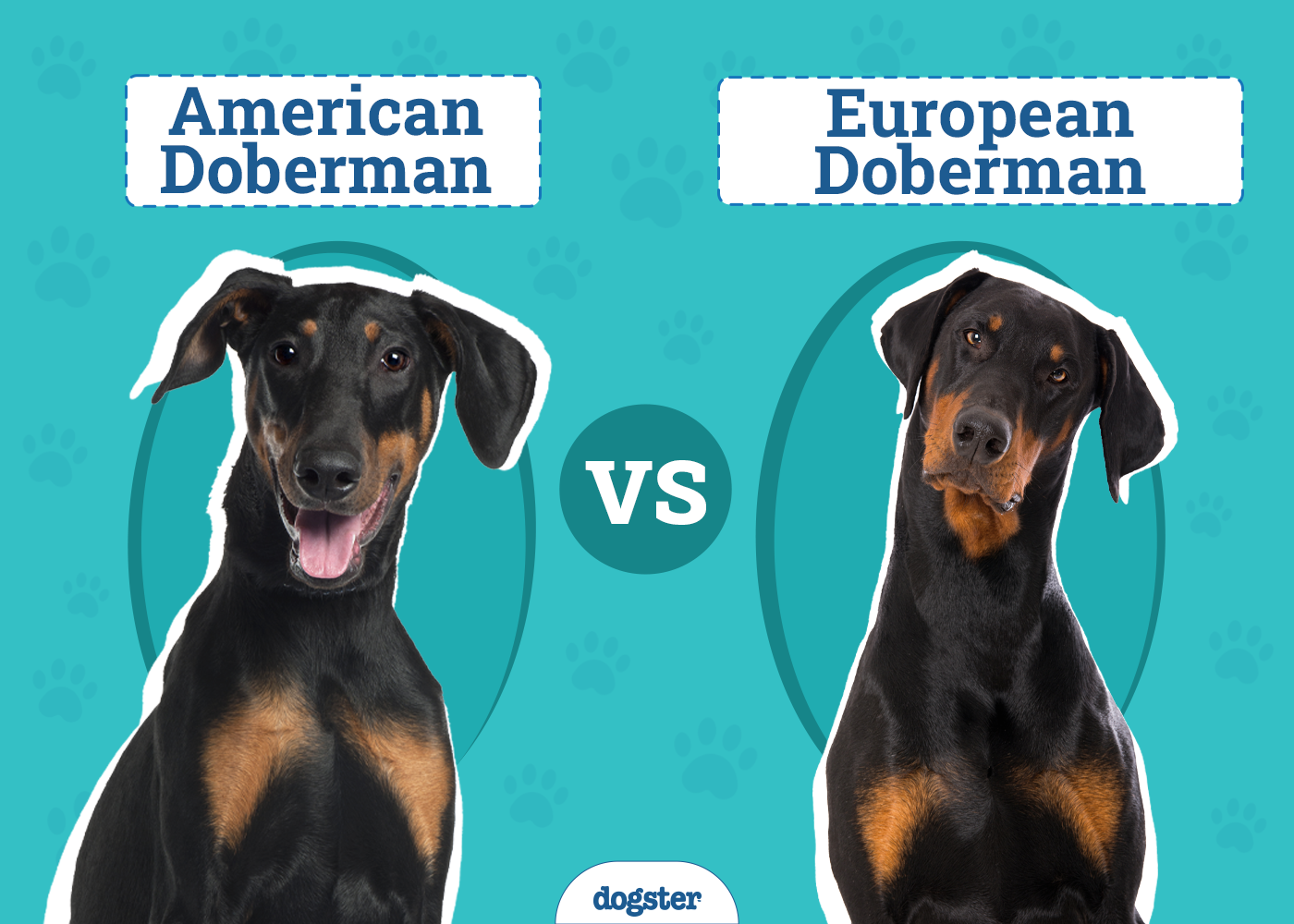
The Doberman is an old breed first bred in 1890 as a protection dog. A tax collector, Louis Dobermann, wanted a highly intelligent, loyal, and easily trained dog that was agile and limber. The American Doberman Pincher lives up to this vision: Their sleek and streamlined body ends in a narrow muzzle and intense eyes, while the European variation is more muscular. The "heavy-set" European Dobie is exclusively bred in Europe and conforms to the Fédération Cynologique Internationale (FCI) standards.

Visual Differences

At a Glance

American Doberman Overview

The American Doberman conforms to the American Kennel Club (AKC)1 breed standards in both looks and temperament. This is a dog ideally suited to family life, as they're more placid and homely than their European counterparts, yet they still have merits as a working dog.
Personality / Character
The American Doberman is intelligent, bright, and sharp. They're a family-oriented dog that wants to share the sofa with their owners and loves a cuddle, despite their intimidating appearance. Most American Dobies are loyal to their owners, with one family member usually being the "favorite," though the whole family is protected and kept safe. If allowed to get bored, however, the American Doberman can become destructive, aggressive, and snappy. Due to their high intelligence, they require a lot of mental stimulation.
Training 🎾
The American Doberman is easy to train and is always willing to please. They're one of the most intelligent breeds in the world and ranked as the fifth most intelligent dog breed in obedience and first in general trainability.2 The American variant is not as headstrong as the European one, and as such, they can take to learning new commands well. They were often used as police dogs due to their high trainability, and modern Dobies are happy to follow commands to the letter as long as praise and affection are given afterward.
Health & Care
American Dobermans suffer from congenital health problems, which can considerably shorten the dog's lifespan.
These problems include:
American Doberman breeders will often genetically test for these illnesses and won't breed from dogs with these conditions. However, conditions such as GDV and osteosarcoma are more random and cannot be tested for.
Because of these, good pet insurance is recommended to help cover any illnesses or injuries your Dobie may face.

Exercise 🐕
The American Doberman needs around an hour of exercise daily since they're a medium breed. Their high intelligence and agile frames mean that high-intensity exercise is tolerated well, and an American Dobie that's allowed to use their nose while out on a walk will benefit greatly from the body and mind workout that this provides.
Suitable For:
The American Doberman variant is suited for active families who enjoy a dog that loves to cuddle. They are more laidback than the European type and are generally smaller and sleeker. However, they still require an hour or so of exercise a day to keep them stimulated. Owners with experience with working dogs will do well with an American Doberman, and families with older children won't find a better breed for a devoted family pet.
Pros
- Sleek and agile
- More laidback and cuddly
- Intelligent
- Loyal
Cons
- Can be anxious around new people and require more reassurance
- Needs an active family to keep them entertained

European Doberman Overview

The European Doberman is a slightly larger, more muscular alternative to the American variant and is primarily bred out of Europe. This Dobie is held to the FCI’s breed standards and is broader in the chest and features, which suits them well as a working protection dog.
Personality / Character
The European Doberman is strong in every way: fiercely loyal, strong-willed, and physically imposing, despite being a medium dog. However, don't let this sway you into thinking that this dog doesn't have the brains behind the brawn, as the European Doberman is just as intelligent as their American cousin.
The European Doberman is also more stalwart and unshakable than the American version. They are still used as protection dogs that need a level and non-reactive temperament until a reaction is necessary to keep the family safe.
They are loyal, doting, and excellent workers, using their bright and sharp minds to carry out any tasks asked of them.
Exercise 🐕
European Dobermans need slightly more exercise than their American counterparts due in part to their higher drive and energy levels. This stems from their lineage, as European Dobermans are mostly bred for working protection and unwavering focus. They are only slightly more muscular and generally larger, but they can become easily bored and destructive if their physical exercise needs aren't met.
Training 🎾
The European Doberman has the same sharp intellect as the American Dobie and is included in the breed's overall ranking of the fifth most intelligent dog breed in the world. Training a European Dobie should be easy, as their desire to please and sharp minds afford them the drive to be as obedient as possible. They may need more firm direction than the American Dobie, but positive reinforcement and showing them that they've done well will always go a long way when training these loyal dogs.

Health & Care
Unfortunately, the European Doberman suffers from the same congenital conditions as the American Dobie. These are inherited disorders that can be tested for, and they are also more likely to suffer from illnesses that aren't inherited but that occur randomly.
The conditions the European Doberman is more likely to suffer from include:
These, unfortunately, can all lower the dog's lifespan.
Suitable For:
The European Doberman is more suitable for families with older children who are well-versed in keeping strong-willed working dogs. The European Dobie is no less affectionate than the American variant but requires more exercise and training to keep them happy and calm. These dogs are unsuitable for a sedentary family or a family who wants a lap dog, since they are highly energetic and thrive on routine and reward.
Pros
- Strong and determined
- Excellent protection
- Intelligent and easy to train
Cons
- Can be stubborn
- Require lots of exercise and training
- More of a working DOG than a family dog

American vs European Doberman Coloring

The American and European Dobermans have the same distinctive tan markings on their bodies, with their expressive eyebrows, chest blazes, and cheeks being the most recognizable. There are differences in color between them, however, at least according to the breed standards.
The AKC accepts a wider range of colors in its breed standard, which differs from the FCI's.
American Dobermans can be shown in the following colors:
However, the FCI states that only black and tan and brown and tan colors may be permitted. There are several instances of white Dobermans that aren't albino. This is a deformation and causes lots of health problems for the dogs, including temperament issues, blindness, and deafness. Breeding white Dobermans (of either variety) is shunned for this reason, as it's irresponsible and causes suffering for the dogs.
Which Breed Is Right for You?

The Doberman variant that is right for you depends on why you want a dog. If you want a family pet that is easily trained, protective, and good with children and loves a relaxing evening on the sofa, the American Doberman is absolutely for you. If you'd prefer a hard-working, loyally devoted working dog that is strong-willed and razor-sharp, the European Doberman is ideal. However, this doesn't mean that the American can't be a dutiful watchdog and the European can't be a loving family pet. These are just the lifestyles each breed would be best suited for. Either way, both variants will thrive most on love, care, and affection from their families.
Sources
Featured Image Credit: Dogster/Shutterstock
Expert dog care, straight to your inbox
Vet-reviewed advice, training tips, and the best of Dogster. Free, and you can unsubscribe anytime.
By signing up, you agree to our Terms & Conditions and Privacy & Cookies Policy.
Nicole has loved animals of all sizes her whole life so it's no wonder she has dedicated her career to helping them through what she loves best: learning, writing, and sharing knowledge with others. She’s the proud mom of two dogs, a cat, and a human. With a degree in Education and 15+ years of writing experience, Nicole wants to help pet parents and pets around the planet to live happy, safe, and healthy lives.
Join the conversation
Ask a question, share your story, or send private feedback.