Doberman vs Rottweiler: The Key Differences (With Pictures)


In this article
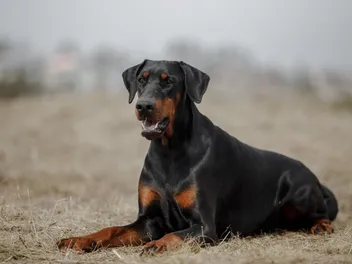
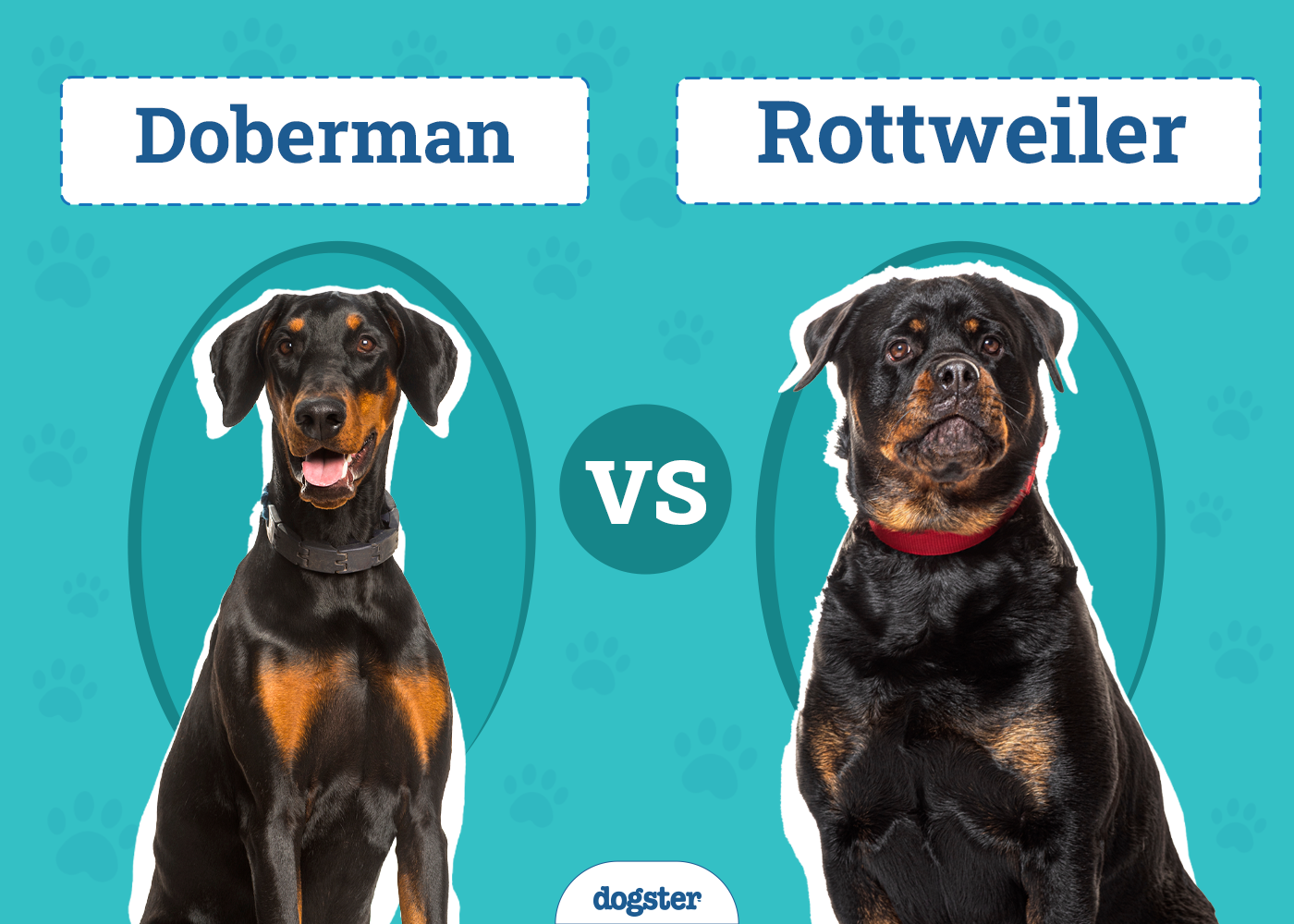
Dobermans and Rottweilers are both strong, loyal, and intelligent large dog breeds and share the same brown and black coloring. Both breeds are known for their guarding skills, and as with all dogs, they need proper socializing and training from a young age.
However, while they're similar in some ways, they differ in other respects. The Doberman is taller and more slender, while the Rottweiler tends to be bulkier. The former tends to be more energetic and active, while Rottweilers are usually calmer.
Despite their sometimes unfair reputation, both dogs can make excellent family pets, though one might be better for your living conditions than the other. Read on to learn about the differences between these breeds and to determine which one will make a more suitable pet for your home.

Visual Differences

At a Glance

Doberman Overview

The Doberman was first bred as a protector by German tax collector and dogcatcher Louis Dobermann. He used a selection of stray dogs from the dog pound that he ran, and created a dog that would protect him while on his rounds. This history means that the breeds used to create the Doberman are not certain, but most experts believe that the list includes the Rottweiler, Great Dane, German Pinscher, Weimaraner, German Shepherd, and Manchester Terrier.
Five years after Louis Dobermann’s death in 1894, the first Doberman Pinscher club was set up in Apolda, Germany. The Doberman Pinscher was recognized as a breed by the American Kennel Club (AKC) in 1908. They continue to work as guard dogs but have also been police and military dogs, rescue dogs and also make great pets.
Personality / Character
The breed does not tend to be stubborn but many people consider them slow to mature. They are usually considered people-orientated dogs that are affectionate and loving. They form a strong bond with their family and can be protective and wary of strangers.
Training 🎾
First and foremost, the Doberman is a highly intelligent dog. They can learn commands quickly, and since they are eager to please their humans, they will do very well responding to positive reinforcement training methods.
It is essential to start socialization and training early in puppyhood. All dogs have a period of time known as the “socialization period” between the ages of about four and twelve weeks of age. During this time a Doberman puppy is learning about the world around them and it's really important they have lots of positive experiences with different people, places, and other dogs. This helps them learn how to react and respond in different situations and they are more likely to be happy and confident as an adult.

Health & Care
Besides being a tough breed, the Dobie is generally healthy. However, they are at risk of certain problems and conditions relating to their breed. These include Von Willebrand’s disease and hip dysplasia, which can plague many large breeds. Other health issues they may be more at risk of include dilated cardiomyopathy (DCM)- a type of heart disease, hypothyroidism -an underactive thyroid, and gastric dilatation-volvulus (GDV)- a severe form of bloat when the stomach rotates. Insurance can help cover the cost of any unexpected problems.
Generally, the breed benefits from having plenty of outdoor time, including in their own yard and down at the park or on walks. This means that they do better in a house rather than an apartment, where their size may also be an issue. They will need plenty of exercise every day, so expect to spend at least one to two hours walking, running, and playing games.
Grooming ✂️
The short coat of the Doberman does not require much grooming or brushing. They do not usually smell of dog either. While the coat is minimal fuss, you should brush it every week to help remove dead hair.
- Our Recommendation: Best Dog Shampoos - Dogster's Reviews & Top Picks

Suitable For:
The Doberman does appreciate plenty of room and needs a lot of exercise. They are also a strong, energetic breed, which means they are not necessarily a good choice for young children or seniors. Active families who have plenty of time for exercising, training, and socializing are where the Doberman will do best.
Rottweiler Overview

Like the Doberman, the Rottweiler also originated in Germany. They are thought to have descended from large cattle-driving dogs left by the Romans in Rottweil, Germany.
Originally they were working dogs and were used to herd livestock and pull heavy carts, usually containing dead animals and meat, to markets. Besides pulling the meat, they were entrusted with protecting the cart and its contents. In the mid-19th century railways replaced this work.The Rottweiler was officially recognized by the AKC in 1931.
Nowadays Rottweilers still herd stock in some parts of the world and are also used as guard dogs, search and rescue dogs and police dogs. A well-raised Rottweiler also makes a loving and loyal companion.
Personality / Character
The Rottweiler is, above all, a confident dog. They are strong, powerful dogs but are generally calmer than the Doberman. They can also be more aloof or reserved, particularly towards strangers. With family, however, they are affectionate, loving, and protective. They may follow their humans around the house but are more likely to sit close to you than on your lap!
Even as a puppy, the Rottweiler is usually not overly excitable. Males are known to be watchful guardians, while females are more family-oriented and are often considered the better choice as family companion dogs.
Exercise 🐕
Don’t let the sheer size of the Rottie fool you. Some can be fast and agile dogs, and all require a decent amount of daily exercise, especially since the breed is prone to weight problems. Consider enrolling in a canine sport if you cannot provide enough structured and vigorous exercise. The breed tends to excel in strength-based sports like cart pulling; it was what they were initially bred for, after all.

Training 🎾
Besides providing exercise, you should provide adequate training. This dog requires positive and consistent, but not physical or aggressive, training. As with the Doberman, early socialization is essential.
Very intelligent, the breed will learn commands quickly, but you will usually do better if you can make training sessions short and inject some fun into them. A study in 2006 ranked the smartest dogs breeds. Both the Doberman and the Rottweiler were in the top 10 smartest breeds but the Doberman had the edge being ranked at number 5, compared with number 9 for the Rottweiler.
Health & Care
The Rottweiler can be prone to certain health conditions. The breed can suffer from weight problems, so you will need to make sure that you weigh food carefully and do not overfeed your pup. Other common health problems include hip and elbow dysplasia, aortic stenosis, which is a common heart complaint, and osteosarcoma, an aggressive cancer of the bones.
The Rottie can be a family-loving breed but they are large, strong dogs so do best with an experienced owner and plenty of space. As with the Doberman, they are usually not the best choice for families with young children.

Grooming ✂️
The Rottweiler also has a short coat but it is a double coat and consists of an outer coat and an undercoat. This means they can experience periods of heavier shedding in the spring and fall. They require brushing several times a week but this might need to be increased to daily during shedding season.
Suitable For:
The Rottweiler is a loyal and intelligent dog. They require early socialization, regular consistent training and adequate mental enrichment. Rottweilers are usually more suitable for homes with experienced owners and older children.
They need plenty of space, both in the home and yard and need at least an hour of daily exercise so are most suitable for active families.

Which Breed Is Right for You?

The Doberman and Rottweiler breeds share a lot of similarities. They have similar markings; both come from Germany, and they were both highly revered working dogs. However, besides their obvious appearance differences, the two breeds are different in other ways. The Dobie tends to be more energetic than the Rottie, while the Rottweiler is a calmer dog, even when they’re a puppy.
However, both breeds require a decent amount of exercise, and both benefit from early and ongoing socialization to ensure that they are not too apprehensive and cautious around strangers. In terms of training, both are intelligent and can be trained quite easily, but the Doberman is usually considered the more willing to accept training.
Whichever breed you choose, you can expect them to live around 10 years, both breeds are prone to certain conditions which you should be aware.
See Also:
Featured Image Credit: Dogster/Shutterstock
Expert dog care, straight to your inbox
News, insights, expert advice, and everything dog.

No spam — unsubscribe anytime.
By signing up, you agree to our Terms & Conditions and Privacy & Cookies Policy.
How useful was this post?
Click a star to rate. You can leave written feedback afterwards. (We read all feedback.)
Ollie is a zoologist turned freelance animal writer living in South Australia with his partner Alex and their mini zoo consisting of their eldest, a rescue dog named Pepper, many aquatic creatures, and their cat Steve. Ollie has a Master's degree in wildlife biology but became a freelance animal writer in 2020 and hasn't looked back. He loves sharing what he has learned with pet parents around the planet.