Doberman vs German Shepherd: The Comparison (With Pictures)

In this article
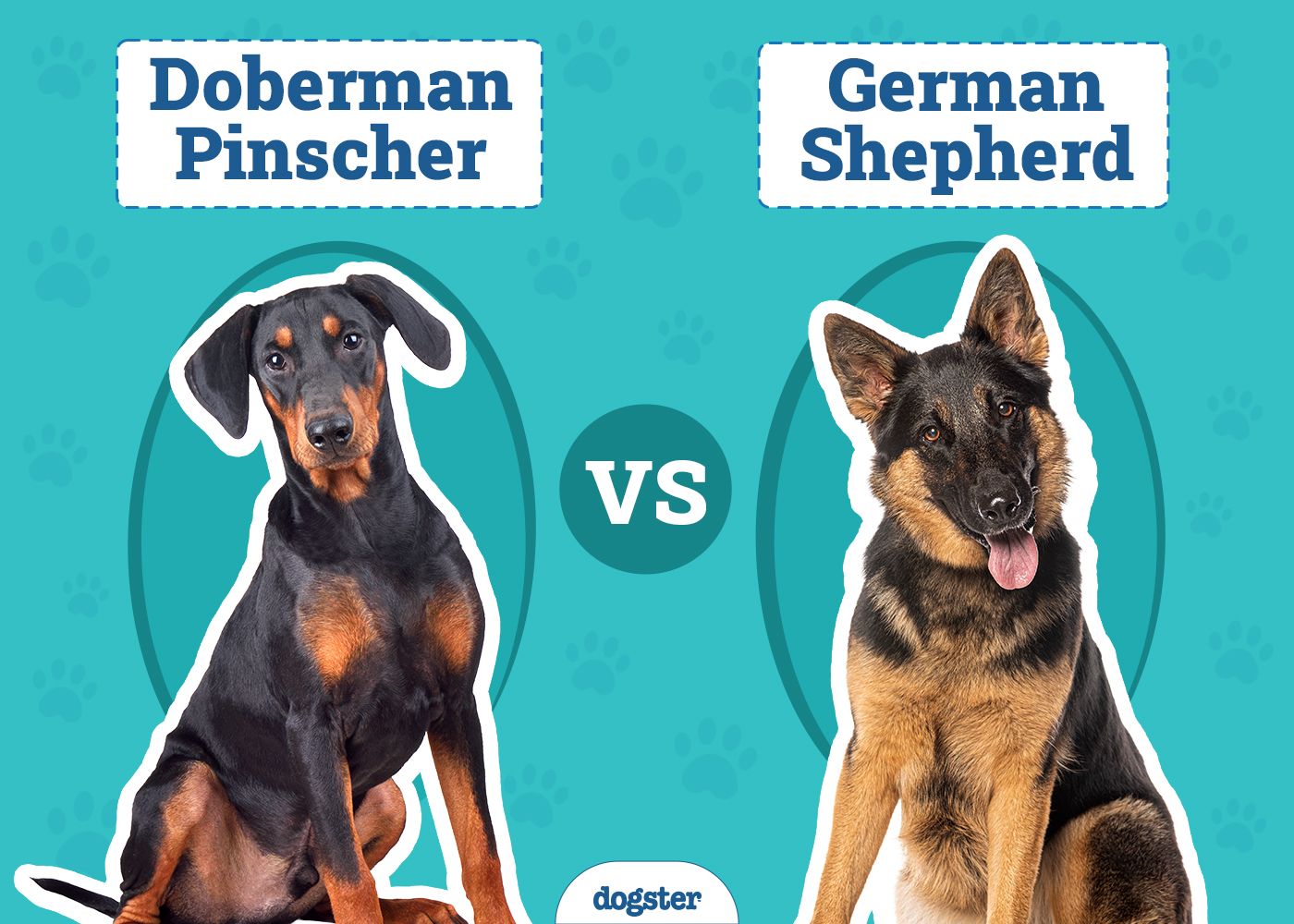
There are several similarities between the noble Doberman and German Shepherd, and while they are both excellent guard dogs, they make excellent pets too. They are popular breeds for active families that enjoy an outdoor lifestyle and want an energetic dog to join their family.
If you want to add a dog to the family and are looking for a loyal protector, both the Doberman and the German Shepherd are brilliant options. Deciding which one may be right for you may seem tricky, but we have made some comparisons between the two breeds to help you choose the right companion.

Visual Differences

At a Glance

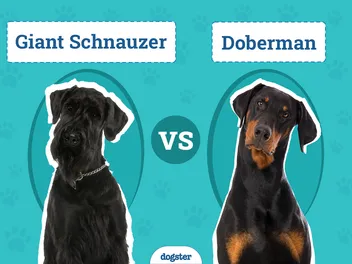
Doberman Overview

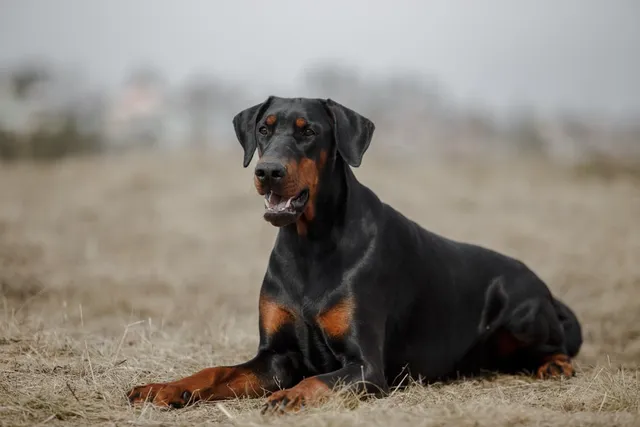
In the late 1800s, a German tax collector named Louis Dobermann was credited with creating the Doberman breed. He sought a ferocious guard dog to accompany him on the job. The "Tax Collector's Dog" quickly became known worldwide as the ultimate working dog.
They are a noble breed and one of the best dogs to provide protection. Dobermans have played a leading role in K-9 work for police and the military, excelled as service and therapy dogs served as search and rescue dogs, and are champions in competitive dog sports.
Personality and Temperament
Even though Dobermans make excellent working and guard dogs, this loyal breed’s temperament makes them magnificent pets in the right situation. Although they may seem intimidating at first sight and have a reputation for being aggressive, they are usually sweet and loving.
They are loyal, intelligent, and curious, with an abundance of energy that needs to be expelled through an active lifestyle.
Training 🎾
Dobermans have a high level of intelligence, and that quality, paired with high energy and a personality fit for a guard dog, makes them easy to train. They learn fast, respond quickly, and thrive on obedience and basic dog training. However, it is important to socialize and begin training when your Doberman is still young, as they can become destructive and assertive.
They also require a regular outlet for their energy, so starting with a consistent training routine while they are young will motivate good behavior.
Health
Dobermans are generally a healthy breed, but like most dogs, there are a few health issues that new owners should be aware of.
Gastric dilatation-volvulus (GDV) is a condition that can present suddenly and requires immediate attention 1. GDV occurs when there is a buildup of gas and food in the stomach, and the stomach begins to expand, contract, and sometimes rotate, restricting blood flow to the spleen and stomach.
The Doberman is also prone to genetic conditions such as hip dysplasia, von Willebrand’s disease, dilated cardiomyopathy, albinism, progressive retinal atrophy, and hypothyroidism.

Nutrition
Dobermans require easily digestible proteins to maintain their muscles and keep them healthy. Omega-3 fatty acids are also essential in their diet to help support their kidneys and heart health and maintain a healthy coat and skin.
The caloric requirements of Dobermans will vary according to their size and weight, so it is always recommended to consult a vet about an individual diet plan.
Exercise 🐕
As previously stated, the Doberman is a highly active breed requiring a lot of exercise and playtime. Your Doberman will need a large area to run around in as it is essential for its mental and physical health, and if you are an outdoor enthusiast, your Doberman will thoroughly enjoy long walks and hikes.
If you enjoy taking part in canine sports, your Doberman will gladly participate. They excel at obedience, agility, and tracking, and this hobby will benefit their physical and mental health.
Grooming ✂️
Grooming your Doberman won’t require much time and effort as they have short coats that shed moderately and have healthy skin that needs little care. To help manage the shedding, you can brush your Doberman twice a week and bathe them once a month.

Suitable For:
Dobermans are less aggressive than they once were in history, and today they remain loyal and obedient pets, making them excellent watchdogs. They are best suited to an owner who understands how to bring out the best in this breed and has the time and space for its high exercise needs.
They are great companions to children as well, as long as they are gentle and respectful, but it's always important to keep an eye on them and never leave them alone with small kids. They also generally get along well with other dogs if they are socialized and trained from a young age. They will get along better with dogs of the same size and energy requirements.
Pros
- Make excellent watchdogs and work dogs
- Excel at sports
- Loyal and obedient
- Easy to train
- Moderate grooming needs
- Great family dog
Cons
- Their protective instincts can overpower them if not trained correctly
- Require a lot of exercise

German Shepherd Overview

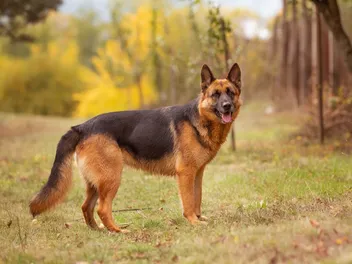
The German Shepherd is a remarkable breed, and a graceful and noble appearance complements their muscular builds. They are loved for their character and loyalty and are the second most popular dog breed in the United States. Not only are they great pets due to their loving and loyal attributes, but they are intelligent and brave, making them excellent working dogs.
Personality and Temperament
German Shepherds are highly intelligent, loyal, and courageous dogs. They were initially bred as herding and guard dogs, and they are very active and require a regular outlet for their energy. They are confident and always alert, making them popular dogs used for search and rescue operations and as protectors in the home.
Training 🎾
German Shepherds are smart, easy to train, and excellent workers. You will need to start training when the Shepherd is young to set the proper foundation. They thrive on consistency, which is key to successful training and strengthening the human-animal bond.
Fun training activities for a German Shepherd include herding, agility, dock diving, nose work, and tracking.
Health
German Shepherds have a long life expectancy and are generally healthy, but like most breeds, they are prone to health conditions that new owners should be aware of. German Shepherds are prone to GDV, which is a type of bloat that can be life-threatening, and owners must know about the signs and symptoms and what to do2 .
They are also prone to Degenerative Myelopathy, which is a neurological disorder that gradually causes paralysis of the back and legs3 .
Heart Disease can also be common in German Shepherds. Other health conditions that can affect a German Shepherd include elbow and hip dysplasia, allergies, pannus, and cancer 4 .

Nutrition
You will need to feed your German Shepherd high-quality dog food appropriate for its age since it will include all the nutrient requirements that the breed needs.
German Shepherd puppies will generally need to be fed 3–4 times a day, while adult dogs only need to be fed twice a day. Research suggests that providing your German Shepherd with smaller meals may lower the chances of bloat and stomach problems.
German Shepherds that are overfed have an increased chance of rapid bone growth. Maintaining a healthy body weight can decrease the rate of rapid bone growth, and calcium supplements or calcium-rich foods should not be given to German Shepherds under the age of 6 months. Supplements containing glucosamine, chondroitin, and MSM are excellent for improving joint health.
Exercise 🐕
German Shepherds require plenty of exercise and play for their physical and mental health. A dog that is not sufficiently exercised will become frustrated and more likely to display unwanted behavior due to irritation and built-up energy.
You can start with daily walks and provide a fenced-in area for your dog to run around freely. Agility, herding, tracking, and dock diving are fun and rewarding activities for both dogs and owners.
Grooming ✂️
German Shepherds have a double coat that is medium in length, and although their undercoat is soft, their outer coat is dense and thick and sheds a lot. Their hair can be maintained with daily brushing to remove any loose fur.
They will go through one or two periods a year where they shed excessively, which owners must prepare for. They will only need to be bathed occasionally, but when they are experiencing heavy shedding, a bath can help to control the amount of fur that ends up around the house.
Their nails will need to be clipped as they are prone to breaking if they are too long. Because German Shepherds are prone to eye problems, it's essential that you inspect your dog's eyes for changes.

Suitable For:
This extremely active breed will require regular exercise to keep them physically and mentally fit, and they are suitable for owners who have the time and commitment and enjoy playing games outside with their pets. The German Shepherd belongs to a pack, and they require you to be the pack leader, providing guidance and structure.
German Shepherds get along well with children if they are adequately trained and socialized. Children also need to learn the proper ways to interact with the dogs so that there are no unwanted accidents. Because of their herding instincts, they tend to nip and sometimes bite smaller animals.
They are happiest as a family unit, and leaving them outside alone leads to mischievous behavior, so if you are not planning on sharing your home with a pet, it may not be the dog for you.
Pros
- Loyal and intelligent
- Great guard dogs and working dogs
- Love being part of a family unit
- Easy to train
- Affectionate family dogs
Cons
- Require plenty of exercise
- Have herding tendencies
- Shed excessively at least twice a year
Which Breed Is Right for You?

Several factors will determine which breed is right for you. Dobermans and German Shepherds are excellent guard dogs that are easy to love. They both require high amounts of exercise, are affectionate, easy to train, have grooming needs, and are prone to health issues.
Both breeds are ideal for owners and families that can meet their exercise needs and provide proper training and socialization for them to grow into well-adjusted and confident dogs.
What sets them apart is their grooming needs and health issues, but not by a lot. German Shepherds require more regular grooming, while a Doberman requires very little. Both dogs have long life expectancies, but German Shepherds may be prone to more conditions than a Doberman.
Pet Insurance should be highly considered for both breeds to ensure they can be provided with care if something unexpected happens. Whichever dog you add to your family, be sure you can give them the care they need. That includes a high-quality diet, freedom to run around, time and for training, maintaining their coat and nails, patience, and love.
See also:
Featured Image Credit: Dogster/Shutterstock
Expert dog care, straight to your inbox
News, insights, expert advice, and everything dog.

No spam — unsubscribe anytime.
By signing up, you agree to our Terms & Conditions and Privacy & Cookies Policy.
How useful was this post?
Click a star to rate. You can leave written feedback afterwards. (We read all feedback.)
Nicole has loved animals of all sizes her whole life so it's no wonder she has dedicated her career to helping them through what she loves best: learning, writing, and sharing knowledge with others. She’s the proud mom of two dogs, a cat, and a human. With a degree in Education and 15+ years of writing experience, Nicole wants to help pet parents and pets around the planet to live happy, safe, and healthy lives.