Doberman vs Husky: The Differences (With Pictures)

In this article
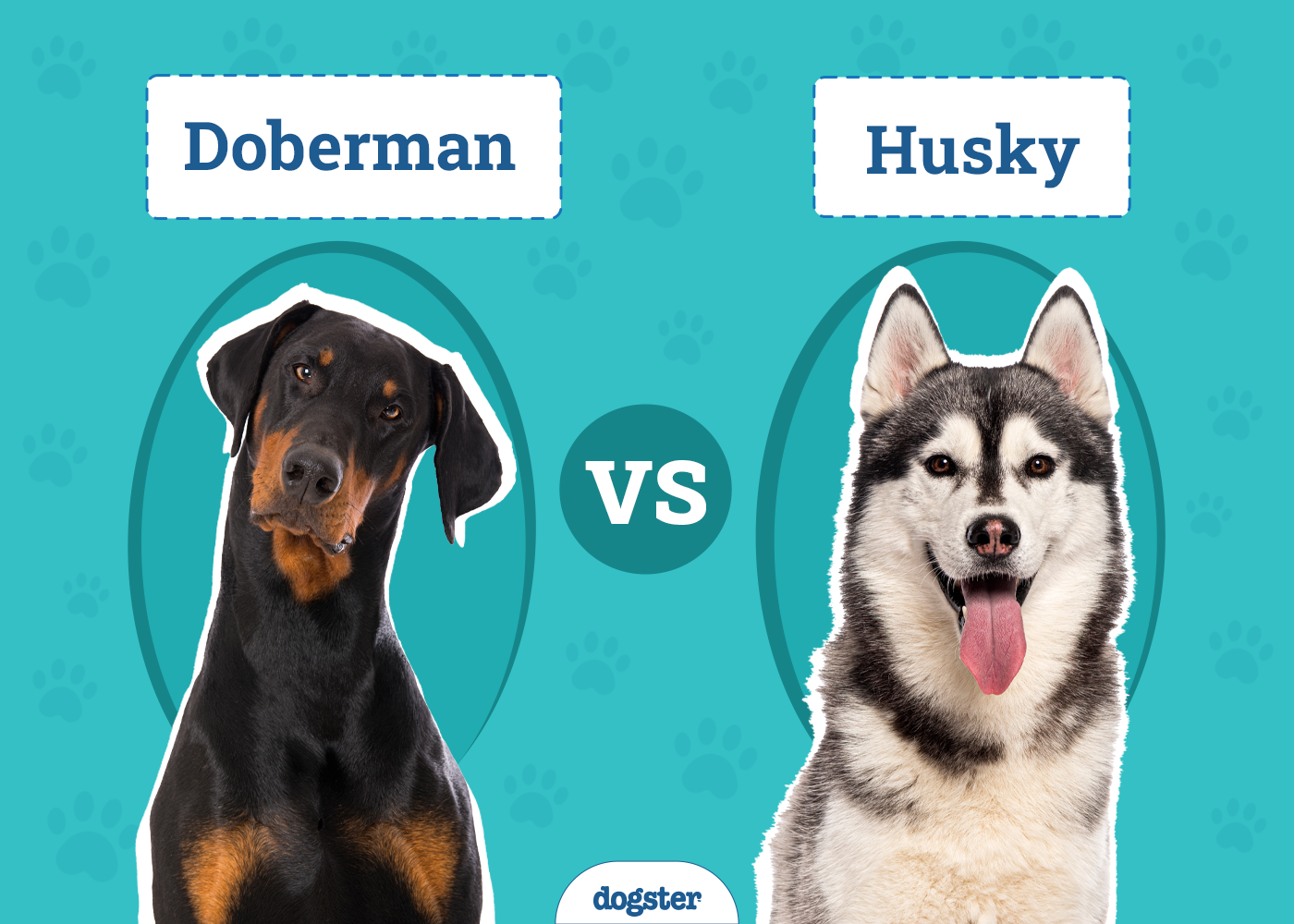
If you’ve been looking for a new dog and have narrowed down the breeds you’re interested in to include the Doberman or the Husky, you might be having trouble picking between them. While the Doberman and the Husky look nothing alike, they have some commonalities regarding their personality and how well they get along with people and other pets. There are some significant differences, however!
To help you decide which breed would be the best for you and your family, we’re taking a closer look at the Doberman and the Husky to determine how they’re alike and different.

Visual Differences

At a Glance

Doberman Overview

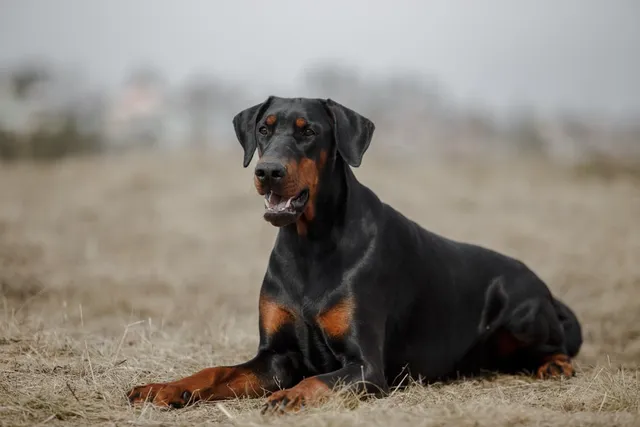
Dobermans originated in Germany in the 1890s as guard dogs. Specifically, the breed came about because a tax collector wanted a vicious dog to guard him while he made his rounds and carried money about. The breeds the tax collector was already familiar with weren’t aggressive enough for him, so he mixed several of those together to get the Doberman. Which breeds those were precisely, no one knows, but they may include the Rottweiler, Manchester Terrier, Greyhound, Beauceron, Great Dane, black and tan Terrier, Weimaraner, and German Shorthaired Pointer.
Of course, the Doberman is less aggressive and vicious these days. Instead, Dobermans are loyal dogs that love to work and can be great pets for the right people.
Personality
As we said, the Doberman was bred to be a guard dog, which is why they have a bad reputation. However, breeders have been purposely breeding out aggressive traits in the Dobermans for years, so that rep is somewhat unfair. Dobermans can be some of the sweetest and most loyal pets you’ll ever have. When socialized from puppyhood, they can be affectionate, loyal, and protective with the whole family, down to the smallest family member.
Dobermans are also incredibly intelligent, which makes training them an easier job to undertake. However, if they aren’t properly exercised and mentally stimulated, they will become bored and destructive. So, you’ll need to ensure your Doberman gets enough playtime and exercise.

Training 🎾
Because the Doberman is such an intelligent breed, training them is simpler. Without being trained and socialized, the negative traits of the Doberman, such as aggressiveness or destructive behavior, can overtake the positive characteristics of the breed. So, begin training and socializing your dog with other people and animals as soon as you get them. One excellent way to train your Doberman is through clicker training, as they do particularly well with it, and they thive with training that relies on positive reinforcement. Dobermans need positive reinforcement when being trained, so be sure you have plenty of praise and treats. If you feel like you aren’t up to the task of training your Doberman, you can always find a reputable trainer to help out.
Health & Care
Dobermans are fairly hardy dogs, but they are vulnerable to a few health conditions.
These conditions include:
- Eye problems
- Bloat
- Hepatitis
- Cardiomyopathy
- Von Willebrand’s Disease

Suitable for:
The Doberman can get along well with all family members, including small children, as long as they are properly trained and socialized from a young age. Since they can be quite protective, they make excellent watchdogs. However, Dobermans have been known to develop a bond with a single family member, resulting in separation anxiety and negative behaviors when that person is away from the dog.
Regarding other pets, as long as the Doberman is socialized well and early, they should be able to get along with pets of any size.

Husky Overview

The Husky is a Nordic breed bred in Siberia. They were developed as pack animals for sled-pulling. In 1908, the Husky came to the United States (Alaska, specifically) to pull sleds. These days, the Husky may sometimes still be a sled-pulling dog in competitions, but they're usually a well-loved household pet.
Personality
Besides looking beautiful with their striking eyes, the Husky is affectionate, loyal, and energetic, making them fun to be around. Plus, as pack animals, they love to be around their families, so they are incredibly loyal. Since they are working dogs, Huskies also enjoy participating in activities that will keep them busy and active. They need to stay active, so you’ll find yourself engaging in plenty of long walks and playing games.
Training 🎾
Huskies aren’t quite as clever as Dobermans (they only ranked 74th on the list of most intelligent dogs versus the Doberman’s ranking of 5th), but they are used to taking commands, so training them shouldn’t be too much of a hassle. Like most dogs, the Husky will also need to be socialized from a young age, particularly with other animals, since they have a strong prey drive and won’t hesitate to chase smaller pets.
Positive reinforcement is vital (never use negative reinforcement) for training, but if you feel you won’t have the time to devote to the job, seek a reputable trainer to take over.

Health & Care
The Husky is an extremely healthy breed, but they suffer from a few genetic conditions.
The most common health conditions in Huskies are:
- Hip dysplasia
- Juvenile cataracts
- Progressive retinal atrophy
- Uveodermatologic syndrome
- Follicular dysplasia
Suitable for:
The Husky adores people, so they are great for families or singles. They even get along with children; you just need to ensure you teach them to be careful around kids, as the Husky is prone to being rambunctious at times. Children should be taught to treat the Husky with care as well. They are incredibly active, and they’re not the best choice for those with an aversion to exercise.
Huskies also tend to get along with other dogs, but smaller animals, like cats, could be an issue due to the breed’s strong prey drive. However, if you work at socializing your Husky immediately, you may be able to break their chasing habit.


Which Breed Is Right for You?

Whether a Doberman or a Husky is right for you depends on how active you are and whether you have other pets. Those more inclined to spend a day watching TV rather than hiking won’t do as well with either breed. But those that are active on a regular basis will. Those with smaller pets in the home, such as cats, will likely have issues with the Husky chasing them, whereas the Doberman should do better in that regard. Other than those two aspects, it comes down to which physical aspects of the dogs appeal to you more—muscular and lean or fury and striking! See also:
Featured Image Credit: Dogster/Shutterstock
Expert dog care, straight to your inbox
News, insights, expert advice, and everything dog.

No spam — unsubscribe anytime.
By signing up, you agree to our Terms & Conditions and Privacy & Cookies Policy.
How useful was this post?
Click a star to rate. You can leave written feedback afterwards. (We read all feedback.)
Misty Layne lives out in the woods in small-town Alabama with her two Siamese - Serafina & Jasper. She also has an array of stray cats, raccoons, and opossums who like to call her front porch home. When she’s not writing about animals, you’ll find her writing poetry, stories, and film reviews (the animals are, by far, her favorite writing topic, though!). In her free time, Misty enjoys chilling with her cats, playing piano, watching indie and foreign films, photographing abandoned places, and catching up on her never-ending TBR list.