Do Dogs Get Embarrassed or Are They Just Well Trained?


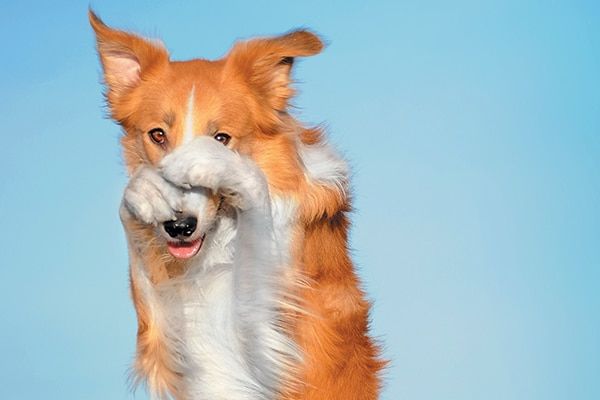
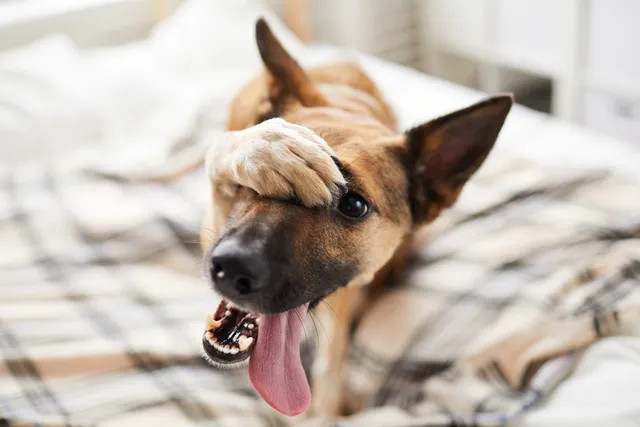
You know the look your dog gives you: the lowered head, averted eyes, and sudden retreat that seems like an obvious reaction to having done something awkward or broken a rule. But appearances can be misleading, especially when it comes to canine emotions. So, do dogs ever really feel embarrassed?
The debate over whether dogs can genuinely experience embarrassment rages on alongside the heated arguments about dog shame and guilt. Some researchers believe dogs may be capable of something approaching embarrassment, while others argue that we are simply seeing what we want to see, and the behaviors often interpreted as embarrassment are simply emotional reactions and learned responses. The disagreement comes down to what it really means to feel embarrassed, and whether dogs have the mental and emotional capacity to experience it.
Embarrassment Is a Complicated Emotion
There is consensus that dogs experience basic emotions such as happiness, sadness, anger, and fear. These emotions tend to have direct triggers, and often help dogs navigate the world around them.
Embarrassment is different. It involves a degree of social awareness and self-awareness. To feel embarrassed, an individual would need to recognize that a social rule has been broken and understand that this creates an uncomfortable situation, often accompanied by laughter at the individual’s expense.
Embarrassment does not help you survive danger or help you recognize safety. It is far more complicated than simply being frightened, happy, or upset.
Some believe that canine social structure and thousands of years cohabiting with humans may have provided dogs with enough understanding of social situations to experience something resembling embarrassment. Others argue that dogs lack the self-awareness required for such a complex emotion. At the moment, there is no definitive evidence to settle the debate.

Looks Can Be Deceiving
Few canine expressions seem more convincing than the classic guilty look. A dog caught getting into something it shouldn't can lower its head, avoid eye contact, back away, or appear unusually subdued.
It looks a lot like shame or embarrassment, and it fits the situation. The problem is that the same behavior can have several explanations, and we humans have a tendency to anthropomorphize, applying human emotions to animal behaviors.
A dog that cringes or retreats after tripping might appear to be embarrassed by what happened. But it could also be responding to the discomfort of the fall, moving away from a negative stimulus, or becoming fearful that something similar could happen again.
None of those explanations require the dog to understand embarrassment or social judgment.
The same issue applies when a dog is caught stealing foodor getting into something it shouldn't. Lowered posture and avoidance can look like an acknowledgment that a rule has been broken. But the behavior could simply be a learned response to being caught.
Dogs can learn which actions and behaviors lead to frustration and which lead to positive attention. Over time, that learning can shape how they behave in particular situations.
We Can’t Just Ask Them
Studying animal emotions is difficult, most notably because no matter how much we learn about canine behavior, we can never know for certain what is going on inside that furry head. Researchers have to work backward from observable behavior, which becomes particularly challenging when the emotion being studied is complex.
Humans also have a natural tendency to interpret animal behavior through a human lens. A familiar facial expression or body posture can appear to communicate a specific emotion because that is how people would understand the same behavior.
But a behavior that looks like embarrassment does not necessarily mean a dog is experiencing embarrassment in the same way a person would.
That distinction is especially important with emotions that involve self-awareness. The more complicated the emotion, the more difficult it becomes to determine whether the animal is genuinely experiencing it or simply displaying behavior that looks familiar to human observers.

Dogs Are Quick Learners
One reason the guilty look can be so convincing is that dogs are highly capable of learning from the people around them.
A dog can pick up on which behaviors produce laughter, sympathy, frustration, or other reactions. That means an expression that appears to communicate embarrassment may sometimes be shaped by previous experiences with humans.
When an infant receives a big laugh for doing something silly, chances are, they’re going to keep doing it, and for dogs, a similar pattern of behavioral reinforcement can occur.
When a certain behavior receives a positive response, it is more likely to be repeated. If soulful eyes and a cowering posture make the humans go “ooh” and “aah” instead of shouting, the dog is likely to do it again. This has been described as a kind of performed or "fake" embarrassment. The behavior can look remarkably similar to the real emotion without necessarily meaning the dog has an internal understanding of embarrassment itself.
That doesn't mean the dog's reaction is meaningless. It simply means there may be more going on than the emotion humans initially assign to it.

So, Do Dogs Get Embarrassed?
There is no definitive answer yet.
Dogs clearly experience a range of basic emotions and are capable of learning how people respond to their behavior. What remains unresolved is whether those abilities extend to the kind of social awareness and self-awareness required for genuine embarrassment.
Complex emotions are difficult to study in any animal, and behavior alone cannot provide a straightforward window into what is happening inside a dog's mind.
For now, the guilty look remains one of the more intriguing mysteries of canine behavior. A dog that appears embarrassed may be experiencing something similar to the human emotion, or may simply be responding to discomfort, fear, or a learned reaction to the people around it.
So what looks like embarrassment may simply be another trick your dog has learned.
Featured Image Credit: Ksenia Raykova, Shutterstock
Did You Know?
- Our brand-new posts are rounded up and included in our weekly emails. Don't miss out on the latest - sign up for our newsletter below!
Expert dog care, straight to your inbox
News, insights, expert advice, and everything dog.

No spam — unsubscribe anytime.
By signing up, you agree to our Terms & Conditions and Privacy & Cookies Policy.
How useful was this post?
Click a star to rate. You can leave written feedback afterwards. (We read all feedback.)
Dan has been working in the dog world for over 4 years, covering dogs and all other pets, helping pet parents keep their companions happy, healthy, and totally spoiled! Originally from London, Dan now works remotely, which sadly means no pets at home, but plenty of opportunities to fuss over other people's furry friends.