How to Train a Search & Rescue Dog: 8 Expert Tips


In this article
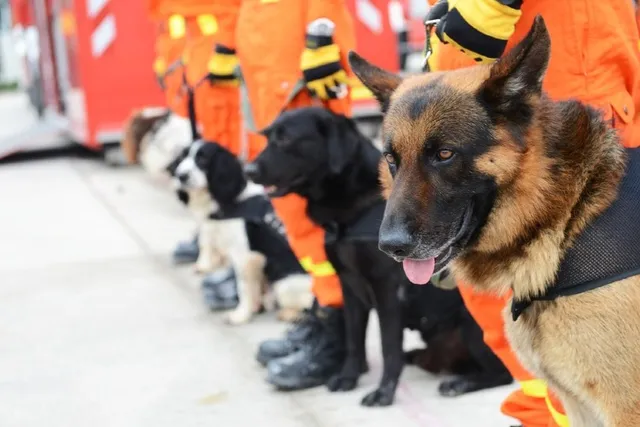
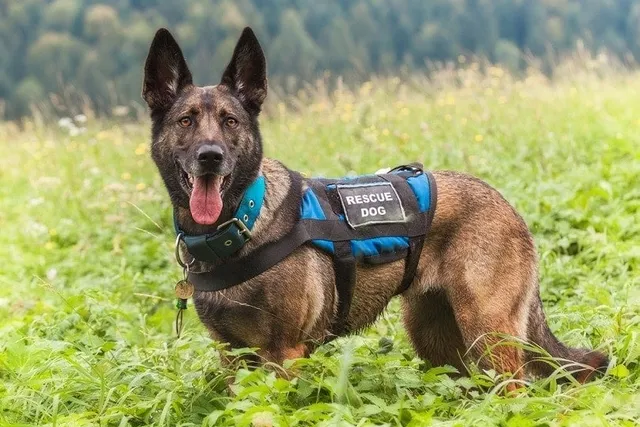
Search and rescue dogs, or SAR dogs, are working dogs that are involved in heroic and life-saving work. They’re trained to locate missing humans in various settings, like avalanches and collapsed buildings. They can also follow scent trails and help find people who may have gotten lost in the wilderness.
SAR training is rigorous, and not all dogs can complete it. It can take anywhere from 6 months to 2 years for a dog to complete SAR training and pass an exam to become certified. The best way to train your dog for SAR work is to enroll it in a special training program.
While your dog goes through training, there are some additional things you can do to help your dog practice as it goes through training.

The 8 Tips to Train a Search & Rescue Dog
1. Practice Obedience Training
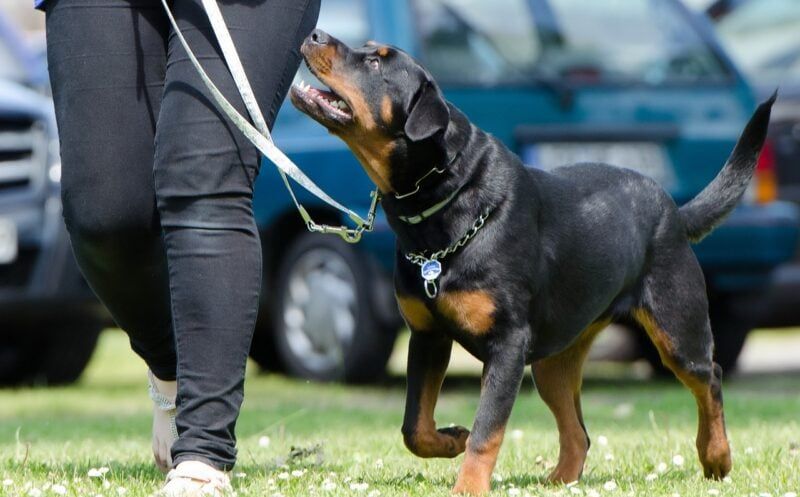
Consistent obedience is a core requirement for SAR dogs. SAR dogs must learn to stay focused and follow their handlers’ commands to contribute to SAR operations’ success. Along with basic obedience training, many SAR certification programs require passing off-leash obedience.
There are plenty of things you can do to help reinforce your dog’s obedience training outside of formal classes. You can set up training sessions throughout the day while you’re at home. Also, make sure to follow training rules everywhere your dog goes so that they can learn and retain commands more quickly.

2. Increase Your Dog’s Focus
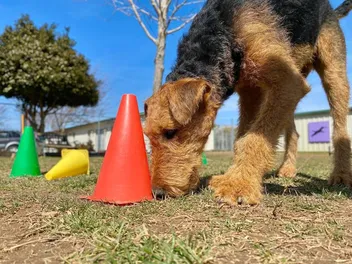
SAR operations can be high-stress situations, so it’s important to teach your dog to stay focused in a variety of environments and conditions. One way you can do this is by taking your dog to different places and working on training skills there.
Good places to train would be busy locations with heavy foot traffic and many distractions. Just make sure to work in increments. The challenges shouldn’t be so difficult that your dog becomes completely distracted, and you can’t recapture its attention. Start small and work your way towards more difficult places.
3. Create a Scent Path
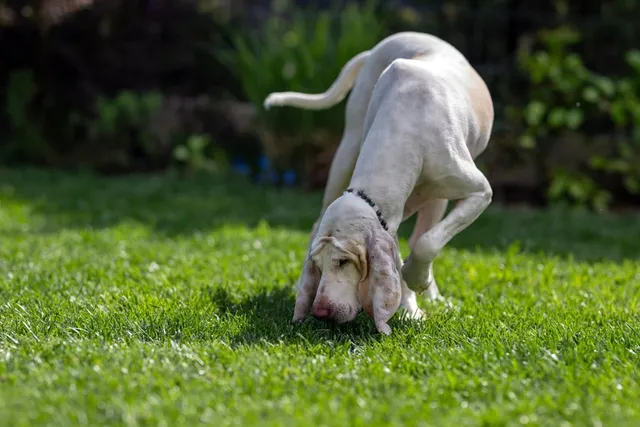
A fun way to challenge your dog is to create scent paths for it to follow. You can wear a piece of fabric or an old T-shirt you don’t mind cutting up. After you’ve worn the fabric for a day, you can cut it up and lay the pieces along a path that eventually leads to you.
After you’ve created the path, release your dog and let it follow the scent trail until it finds you. Always make sure to reward your dog every time it finds you. As your dog gets used to this game, you can increase the distance between the pieces of fabric, and you can also start to use other people that your dog has to find.

4. Play Hide-and-Seek
Hide-and-seek is a fun game for puppies, and it helps them to become better acclimated to SAR tasks. Playing hide-and-seek with a puppy will require two people. One person must hold your puppy while you hide.
Once you’ve found a good hiding spot, let your puppy sniff around and look for you. Once it successfully finds you, reward it. As your puppy becomes better and better at finding you, start hiding in more difficult spaces.
You can also increase the amount of time your puppy has to wait to start finding you. This can help increase your dog’s ability to focus.
5. Practice in the Snow
Some SAR dogs are involved in searching for people trapped under snow after avalanches. So, if you live in an area with snowy winters, a snow day could be a perfect opportunity for more training sessions.
Along with successfully finding people in the snow, your dog will also build endurance as it tracks through the snow. Make sure to equip your dog properly when working in the snow. Depending on the setting and your dog’s breed, your dog may need paw wax, protective booties, or a jacket.

6. Take Your Dog Swimming
Similar to practicing in the snow, taking your dog swimming can be a great training opportunity. A dog-friendly beach can help your dog get used to being in distracting settings. It can also help build your dog’s strength and endurance as it swims in the water.
Whenever you’re taking your dog swimming, make sure to monitor its health so that it’s not overworking itself. Give plenty of breaks to prevent overheating, especially in hot weather. If you’re by the ocean, pack a good amount of water so that your dog stays hydrated, and be careful of saltwater ingestion, which can lead to gastrointestinal upset or, in large amounts, hypernatremia (salt toxicity).
7. Get Your Dog Used to Sounds
SAR dogs are often in situations that have a lot of loud noises, especially from vehicles. Some SAR teams use helicopters or vehicles with sirens. You can help your dog get used to these sounds by playing recordings of them in the home. The volume shouldn’t be all the way up because you don’t want to damage your dog’s hearing.
However, these sounds should be introduced gradually at low volume and paired with positive experiences to help your dog become familiar with them and reduce fear or stress responses in real scenarios.

8. Socialize Your Dog
SAR dogs will have to work with different people, and some of their searches include looking for children. So, it’s important for SAR dogs to be friendly and sociable in various settings. Your dog must be approachable, able to remain calm and non-aggressive toward strangers.
Putting your dog in different social settings can help it become more used to interacting with different people. So, plan supervised interactions with children and have your dog interact with your family and friends in a controlled and positive manner.
How Dogs Become Certified Search & Rescue Dogs
Dogs must go through specific types of training to successfully become certified SAR dogs.
They must be proficient in these fields:
Several different training programs in the US offer SAR certification training:
- National Association of Search and Rescue (NASAR)
- Search and Rescue Dogs of the United States (SARDUS)
- National Search Dog Alliance (NSDA)
What Dog Breeds Become Search and Rescue Dogs?
Not all dogs can become SAR dogs. They require high levels of intelligence, trainability, agility, and endurance.
Some successful dog breeds include the following:
- Belgian Malinois
- Border Collie
- Bloodhound
- German Shepherd
- Golden Retriever
- Labrador Retriever
- Saint Bernard

Conclusion
SAR training is long and rigorous, and every bit of extra reinforcement goes a long way. There are plenty of activities that you can do with your dog to help it learn and get used to SAR operations. It’ll require investing a lot of time and patience, but the work that your dog gets involved in will be rewarding and worthwhile.
Related Read:
Featured Image Credit: 825545, Pixabay
Expert dog care, straight to your inbox
News, insights, expert advice, and everything dog.

No spam — unsubscribe anytime.
By signing up, you agree to our Terms & Conditions and Privacy & Cookies Policy.
How useful was this post?
Click a star to rate. You can leave written feedback afterwards. (We read all feedback.)
Jessica is a freelance writer who spends bigger part of her day researching and writing while her furry companion Cavapoo, Nora, snoozes beside her. She loves dogs, pets and animals because there’s so much to learn from them, and they do so much for us. As a dog mom, she understands the strong connection that pet parents have with their pets. So, she loves sharing helpful information that pet owners can use to better understand their beloved pets. When she isn't writing, you may find her walking dogs, tending to her plants, or drinking her nth cup of coffee.