8 Types of Specialized Dog Training: Facts & Pictures


In this article
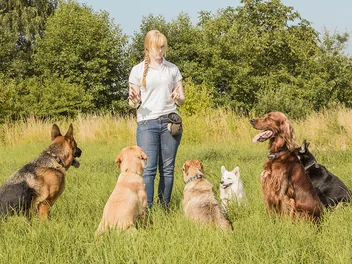
Dog training can be simple or complex, depending on what kind of training you want your dog to have. Basic commands like sit, stay, and lay down are all well and good, but dog training can go a lot deeper than just the basics. Dogs are highly intelligent creatures able to learn a variety of different tasks, jobs, tricks, and more. They’ve been trained for very specific jobs, which they can carry out professionally.
In this article, we’re going to discuss eight very specialized types of training that dogs can undergo to gain specific skills for various tasks, jobs, and competitions. But first, we will discuss four styles of dog training that can be applied to most of the types of dog training.

The Four Common Dog Training Methods
Every dog trainer has the school and style that they prefer. This could be based on a particular training tool or just a manner in which they communicate with the dogs they’re training. Some types of training might work better with some dogs, depending on their personality. Many trainers use a combination of the following methods.

Dog Training Methods

The 8 Specialized Types of Dog Training
These types of training are far more advanced than basic commands. Not every dog will be able to advance to these types of specialized training, though some special dogs can excel in such training and perform admirably at the tasks they were trained for. It also takes a professional trainer to prepare dogs in these training types; inexperienced dog owners won’t have the skills necessary to work with dogs on such a level.
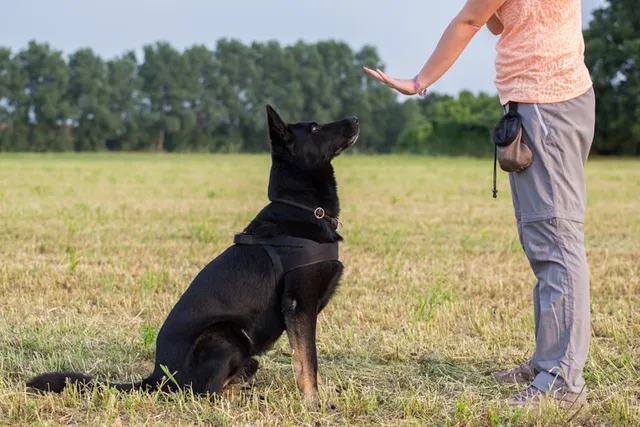
1. Advanced Obedience Dog Training
Every dog should undergo obedience training, at least on a basic level. This should begin early in life with the simplest commands of sit and stay. This type of training is meant to prepare your dog for the many social situations, diverse scenarios, and stimuli they might encounter throughout their life. You want to make sure you can get your dog under control when the moment counts, which is why obedience training is so important. It’s also a great way to further strengthen the bond between you and your dog.

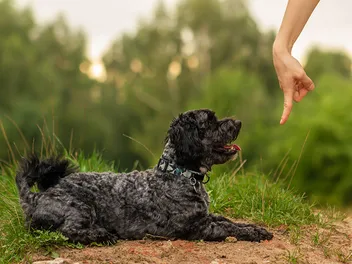
2. Behavioral Modification & Extinction Training
Behavioral training is focused on helping your dog unlearn bad behaviors that you don’t want to see. It’s used to stop things like digging, excessive barking, biting, poor walking skills, accidents in the house, and much more. This is perfect for dogs that are currently having such behavior problems as it can help them to start behaving properly, which will enable them and their family to live much happier.
If you are concerned about your dogs behavior, we suggest speaking to a vet.
3. Nose Work, Tracking & Search & Rescue
If dogs are trained to use their sniffers great things can be achieved. Nose work is the most basic form and it can be a very simple kind of training used for enrichment and fun.
Tracking is when a dog is trained to find something based on a scent trail. Some breeds are particularly adept at such work thanks to extra-song sniffers. These dogs can be used to track many different things, from using it as a sport or game to letting the dog track down animals for the hunt, to even tracking bombs or drugs in serious police and military work.
Search and rescue trained dogs have helped save millions of lives in natural disaster situations by helping us locate and rescue people trapped under collapsed buildings from earthquakes and other disasters. To date, we haven’t been able to invent a machine that can replace the amazing sense of smell of our beloved best pals.

4. Therapy Training
Therapy dogs are not service dogs. Rather, they’re meant to provide comfort for people in vulnerable positions, such as kids with disabilities, people who are sick in hospitals, or those who are dying in hospice. While therapy dogs don’t have any special privileges or protections under the law, they do need to pass the American Kennel Club therapy dog test for certification, which requires them to be exceptionally well-trained, calm, gentle, and friendly with strangers.

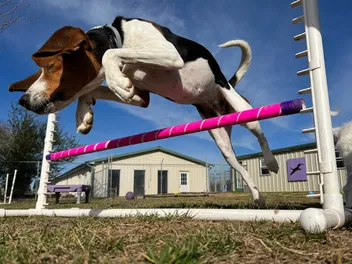
5. Agility Training
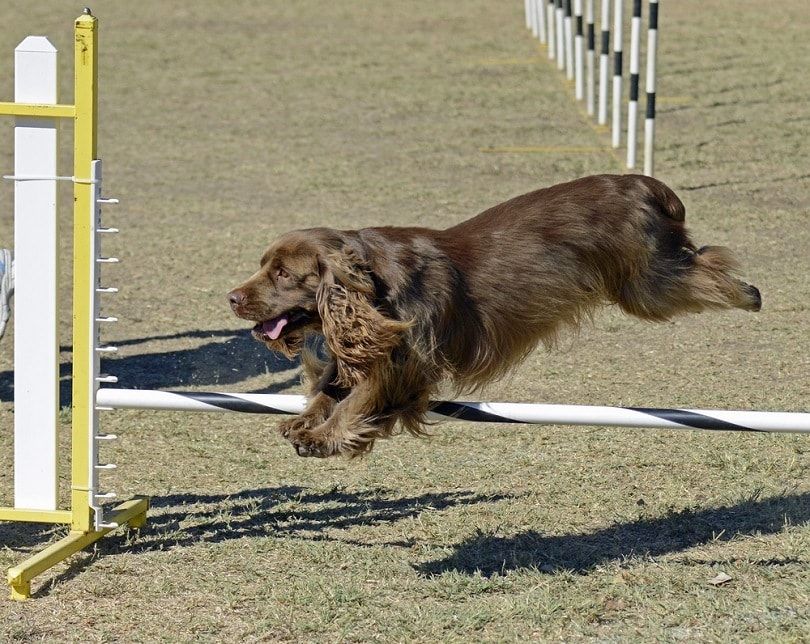
Agility training is the training you do for your dog to be able to run through agility courses. You’ll be taking the dog over, around, and through different obstacles, providing excellent mental and physical stimulation. Some of the obstacles that are commonly used include hurdles for jumping, weaving in and out of poles, running through a tunnel, or running up and down a teeter-totter.

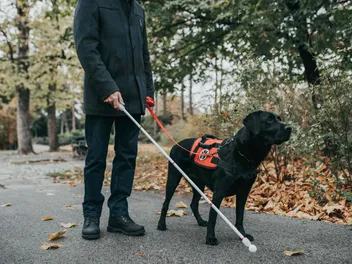
6. Service Training
Service training is the type of training that dogs go through in order to legally perform service work. For people in need, these dogs are valuable tools that make their lives far more comfortable and manageable. Some examples of service training dogs include mobility assistance dogs, hearing dogs, guide dogs, PTSD dogs, diabetic alert dogs, and many more. The dog will need specialized training for one condition; they are chosen with certain characteristics and temperaments and it can take years of training to fully prepare.

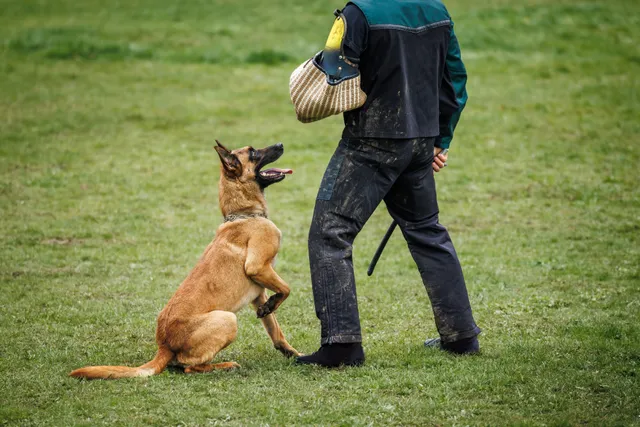
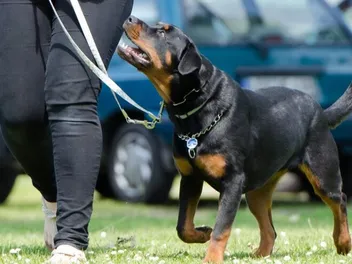
7. Protection Training
Protection training teaches dogs to be great guard dogs and protectors. The dog will need to have certain natural traits that work with such a job, including courageousness, being suspicious of strangers, confidence, and even some independence. Some breeds are better suited for protection training than others, including Doberman Pinschers, German Shepherds, Great Danes, Rottweilers, and Bull Mastiffs.

8. Retrieving
If you’re a hunter of certain types of game, a retrieving dog can be invaluable. Once you bring down a duck, rabbit, or similar game, the dog can chase it down or swim out and retrieve it, depending on the circumstances. Retrieving takes a lot of very specific training and certain breeds are best for this task, including Golden and Labrador Retrievers. The dog can’t bite or attempt to eat the animal. They must be gentle with their mouth, and if you’re hunting waterfowl, they often have to swim out to retrieve the downed bird.


Conclusion
They say you can’t teach an old dog new tricks, but it really depends on the dog and the trainer. With the right skills and approach, you can train dogs of any age to perform all sorts of tasks. Dogs can be trained for very specific skills that make them excellent helpers in a wide range of fields.
We’ve covered eight types of specialized training that dogs can undergo, including learning to retrieve, learning to protect, or learning to run agility courses. Some of these are great for a pastime, others allow dogs to help people in important ways. It all goes to show just how strong the connection is between humans and dogs after millennia of side-by-side evolution together.
See Also:
Featured Image Credit: Lois McCleary, Shutterstock
Expert dog care, straight to your inbox
News, insights, expert advice, and everything dog.

No spam — unsubscribe anytime.
By signing up, you agree to our Terms & Conditions and Privacy & Cookies Policy.
How useful was this post?
Click a star to rate. You can leave written feedback afterwards. (We read all feedback.)
An avid outdoorsman, Dean spends much of his time adventuring through the diverse terrain of the southwest United States with his closest companion, his dog, Gohan. He gains experience on a full-time journey of exploration. For Dean, few passions lie closer to his heart than learning. An apt researcher and reader, he loves to investigate interesting topics such as history, economics, relationships, pets, politics, and more.