Rattlesnake Training for Dogs: 8 Vet-Approved Tips to Keep Your Pup Safe


In this article
Hiking with your dogs is one of the best ways to strengthen your bond and give you an excellent workout. One of the troubles with it is the wildlife. From ticks to bears, every locale has its unique hazards potentially lurking around each turn, requiring appropriate preparation to safeguard your pup.
Depending on where you live, rattlesnakes may be high on the list of everyday outdoor threats to consider. To keep your pet safe during outdoor adventures, we’ll walk you through eight tips to get your pup to avoid snakes.

The 8 Tips For Rattlesnake Training with Dogs
A dog’s curiosity and prey drive are potent motivators when it comes to rattlesnake encounters. Although humans know to be cautious of unknown critters, most dogs happily explore novel situations without understanding the potential risks.
Snake avoidance training is subsequently a thriving business in certain regions, though the techniques can be off-putting for many. Training often involves electronic collars to simulate the negative consequences of the snake’s presence. Dogs learn the sights, sounds, and smells of snakes, with shocks providing positive punishment to make them move away.
Though efficient, training like this can harm a dog’s psyche, amplify fears and create unwanted aggressive responses. It’s easy for novices to get wrong while training at home. For owners, many experts recommend using positive reinforcement techniques similar to teaching everyday behaviors.
1. Train “Leave It” and “Stay”
If you encounter a rattlesnake on a walk, you can apply a few essential commands to maintain control. The “leave it” command is a valuable tool for numerous situations to keep your dog from approaching or ingesting the wrong object.
You can train general impulse control indoors with treats and then apply “leave it” to snakes outside. The cue is an excellent way to avoid potential hazards, such as bushes that might hide a rattlesnake.
Teaching a basic “stay” or “wait” command is equally practical for various contexts, including snake avoidance. Reliably getting your dog to stay in one spot is an effective alternative tool that gives you time to investigate situations and ensures your dog stays in a safe position.

2. Train a Solid Recall
Recall is the foundation for training your dog to avoid snakes with positive reinforcement techniques. While on walks in hazard-filled areas, you should only consider taking your dog off-lead if this command is highly reliable.
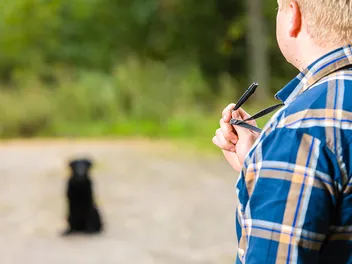
Alongside your standard recall, you should train an emergency recall for dire situations. The recall could be a whistle or a unique word, but whatever you choose, you must only trust it when you are sure the response will be 100% reliable.
You can use high-value treats and gradually build your dog’s reliability to ensure they understand the importance of heeding your cue.
3. Make Your Dog Comfortable With a Collar Grab
A collar grab is a critical safety move when all else fails and you must physically intervene to protect your dog from a rattlesnake. Unfortunately, a sudden grab can startle a dog that isn’t used to it, potentially causing them to move toward the snake and risk a bite.
Creating a positive association with collar-grabbing will help your dog stay calm when you restrain them. Use treats to mark good behavior when you grab the collar, starting with slow movements and brief touches until you can grab the collar from various angles.
Eventually, your dog will stay calm even with a sudden and firm grip on their collar. Training this will also allow others to help your dog without risking aggression, as neighbors, fellow hikers, and strangers may need to jump in to protect them from harm.

4. Teach Hand Targeting
Hand targeting essentially gets your dog to touch your hand on cue. It’s a practical way to gain your dog’s attention and reset their position by your side to keep them away from nearby rattlesnakes.
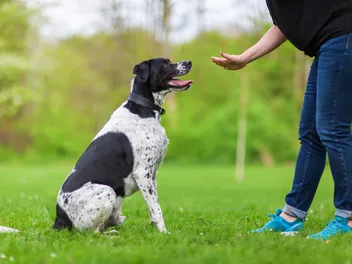
Train hand targeting by holding your palm flat to your dog’s nose, marking it when they touch, and rewarding them with a treat from your other hand. After numerous repetitions and variations in hand position and distance, you can train them to target while on walks.
5. Use Snake Training Aids to Put the Training in Context
Exposing your dog to the sight, sound, and smell of snakes is part of the final stages of training commands to avoid rattlesnakes while out in nature. Your dog must practice ignoring these particular stimuli and responding to your commands to develop that automatic reaction to stay safe and control their impulse for exploration.
You can train behaviors using tools like fake snakes, remote-controlled snakes to add movement, or snake skins. If possible, incorporate rattlesnake sounds and smells to broaden your dog’s understanding and exercise their tolerance for novel stimuli.

6. Increase Distractions and Generalize Behaviors
Training should focus on increasing success with any behavior. By keeping your dog in a position to accomplish the desired behavior, you promote that action, and your dog doesn’t have the chance to practice and subsequently reinforce an undesirable behavior.
Training your dog to make the best decision will be easier, faster, and more reliable. Start in low-distraction environments to establish cue-reward associations. As they get used to following your command, you can gradually increase distractions and vary the environment to generalize the behavior.
Dogs must generalize behaviors to ensure they associate them with particular stimuli and aren’t only displaying them at certain times of day, in specific settings, or around unimportant objects.
For example, you don’t want to train them in the morning exclusively, or your dog may not know how to act when you find a rattlesnake at night. Get creative to find new ways and situations to train avoidance.
7. Practice Continuously
Don’t wait for your dog to come across a rattlesnake to utilize your training after you feel it’s dialed in. Dogs need repetition and ongoing training to keep behaviors from going extinct. Without practice, training becomes more and more unreliable with each passing day.
You may train your dog to reliably “leave it” and return when they see a snake, but they’ll likely forget how to respond in a real-world situation months later if you don’t continuously reinforce the behavior. By practicing these habits at least once every few days, you’ll solidify them in your dog’s mind so they can quickly make the best decision when necessary.

8. Work With an Expert
Although many of these techniques can train your dog to avoid rattlesnakes when you’re around, you may occasionally have to rely on your dog to make the right decision when they come across a snake. For instance, if your dog plays outside alone, they must know how to respond without your signal.
Professional training can be invaluable in keeping pets safe in those situations. Trainers have the knowledge and resources to provide a well-rounded education. They can present real snakes, scents, and sounds in various situations to hone skills and show owners how to improve training at home.
Although some studies suggest downsides to shock collars, their use is, as of now, generally a philosophical debate. Experts use several approaches when training snake safety, including positive reinforcement. With research, you can find a trainer who applies their expertise in a way that meets your ethical standards.

Do Dogs Naturally Avoid Snakes?
All dogs are different; some are quick to engage snakes, and others are wary enough to look to their owner for guidance. Generally, you should play it safe and not expect a dog to know they should keep their distance. Dogs are curious, and even if they aren’t trying to hurt a snake, encroaching on their territory may be enough to earn a bite.
Some breeds, particularly those with high prey drives, can be naturally antagonizing. For example, Terriers are historically vermin exterminators, and mixing that drive with their training stubbornness may make them more challenging to control around a rattlesnake.
You must acknowledge your dog’s unique temperament and history to plan an effective and safe training routine. If your dog is well-trained to give you attention when asked and shows quality impulse control, they’ll likely present fewer risks when out on the trail.

What Do I Do If My Dog Gets a Snake Bite?
Keeping your phone and your vet’s contact info handy is crucial while you’re outdoors with your dog in areas with rattlesnakes. Rattlesnake venom can be lethal if untreated within only a few hours, so an immediate follow-up with your vet is vital if you suspect a bite.
Dogs usually suffer bites around the chest, face, neck, and legs. Immediate signs of a bite may include:
- Bleeding and pain at the site
- Discolored skin and swelling around the wound
- Excessive drooling
- Heavy breathing
Eventually, more troubling signs like muscle tremors, bloody urine, weakness, and seizures may occur.
Treating a Rattlesnake Bite
Move your dog away from the rattlesnake after being bitten. Keep your pet calm and limit movement to slow the spread of toxins through their body. On your way to the vet, keeping your dog’s bite wound below the heart may help reduce the flow.
The vet will provide IV fluids, pain relievers, and an antivenom to neutralize the rattlesnake venom. Dogs may need antibiotics to control infections around the site. Most stay overnight or several days at the hospital for monitoring. Once they’re home following treatment, you’ll likely have to let your dog rest for a few weeks to heal.

How to Prevent Rattlesnake Bites
The easiest way to reduce the likelihood of your dog suffering a rattlesnake bite is to keep them on a leash. Keeping your dog close to you while walking and exploring can allow you to watch for any upcoming threats and move your dog away as needed, a crucial concern if they aren’t 100% on their recall.
Plan your outing ahead of time to avoid rattlesnake hotspots and active times of day. Stay on trails and avoid brush, tall grass, and rocky areas where rattlesnakes may hide. If rattlesnakes are an everyday danger, you could consider a rattlesnake vaccine.
Vaccines may decrease the venom’s effectiveness, preventing excessive or rapid tissue damage and systemic issues. The efficacy of these vaccines is uncertain, so you must still treat rattlesnake bites on immunized dogs as a veterinary emergency.

Pet Insurance for Rattlesnake Bites
Treating a single rattlesnake bite can cost hundreds if not thousands of dollars, enough to put many owners in a financial bind. When the threat of rattlesnake bites is significant, the value of pet insurance becomes almost too high to ignore.
For a relatively low monthly price, you can get pet insurance to cover 60%–100% of the veterinary cost to treat a rattlesnake bite. You can choose from accident-only coverage to cover events like snake bites, cuts, and bone breaks for a low price or accident and illness coverage to help you pay for any emergency that happens to your dog.
Conclusion
A rattlesnake bite can change a dog’s life in a flash, which convinces owners in high-risk areas to prioritize prevention. Part of that entails teaching your dog to steer clear of rattlers, and another involves exerting control when needed. When you know your dog’s limits and follow these rattlesnake training tips, you can make every outing a safe and positive experience.
See also: Snake Bites on Dogs
Featuredd Image Credit: Dora Zett, Shutterstock
Expert dog care, straight to your inbox
News, insights, expert advice, and everything dog.

No spam — unsubscribe anytime.
By signing up, you agree to our Terms & Conditions and Privacy & Cookies Policy.
How useful was this post?
Click a star to rate. You can leave written feedback afterwards. (We read all feedback.)
Nicole has loved animals of all sizes her whole life so it's no wonder she has dedicated her career to helping them through what she loves best: learning, writing, and sharing knowledge with others. She’s the proud mom of two dogs, a cat, and a human. With a degree in Education and 15+ years of writing experience, Nicole wants to help pet parents and pets around the planet to live happy, safe, and healthy lives.