How Much Food to Feed a Golden Retriever (Puppy & Adult Guide)



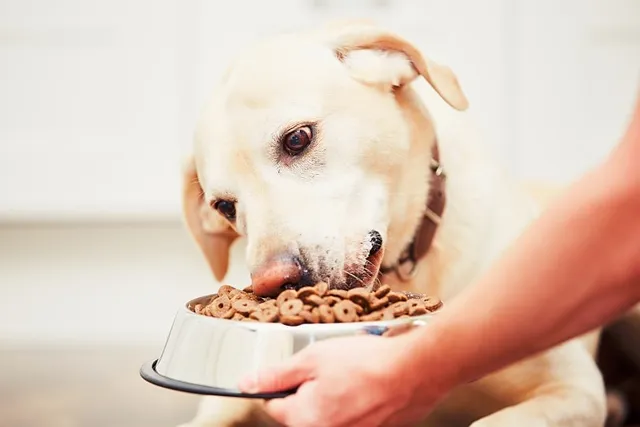
Feeding your Golden Retriever involves a lot of variables, many of which are largely dependent on the individual pup. Your dog may vigorously chomp down all of their kibbles the second they hit the bowl or may snobbishly languish around the untouched food for hours.
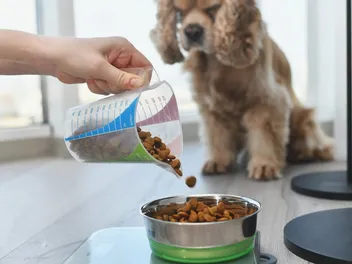
Because Golden Retrievers are prone to obesity, you should never allow them to free-feed. Knowing exactly how much is in your dog's bowl also helps you keep accountable for their overall health, such as allowing you to notice if they suddenly stop eating or become much more hungry than usual. Although it’s more complicated than a simple answer, if you're budgeting for dog food, it's safe to assume that your Golden Retriever is going to need between 2-4 cups every day.

How Much to Feed Your Golden Puppy as They Grow
Important Note: The amount of calories each juvenile dog needs for healthy growth and development depends on many factors, including their age, breed, and activity level. These charts are general guidelines for healthy young dogs, but we recommend confirming them with a vet.

Large breed dogs such as the Golden Retriever need three feedings per day until they're 6 months old, which is when they can start eating two meals a day like an adult dog. Golden Retriever puppies need more food per day relative to their body size, but not according to cups. Here's a rough estimate of how much food to feed your golden each day according to age:
Adult Golden Retrievers typically eat between 3-4 cups of food each day. However, the exact amount depends on the food and their individual condition. Talk to a vet about maintaining an ideal weight and see what they suggest about feeding time.
The Difference Between Puppy and Adult Food
Growing puppies require more nutrients than adult dogs. The American Animal Feed Control Officials (AAFCO) gives two different standards for dog food depending on if your pet is an adult or is a puppy or pregnant or nursing mother. This is because new life requires more protein, fat, and certain vitamins to mature than a full-grown animal who's simply maintaining their weight.
If you accidentally bought a bag of adult food and your puppy is now halfway through the bag, don't worry about it hurting them. Unlike adult beverages in humans, adult dog food won't harm your puppy directly, but you should remedy the situation as soon as possible so they don't miss out on vital nutrients as they develop.
When Should Your Puppy Eat Adult Food?
Spaying/neutering your pet alters their metabolism in such a way that they don't need as many calories each day as a reproductively intact dog would. Studies have found that the best way to reduce your pet's risk of obesity after surgery is to reduce their caloric intake by 30%.1 Some owners prefer to switch their puppy to adult food following this procedure since adult food is lower in calories. This might be a good choice if your pet is at least 6-9 months old when they're sterilized.
However, some pet parents prefer to feed their Golden retriever a puppy formula until they're a year old. You should monitor your dog's weight and growth to determine the best choice for your puppy. As a general rule, it's safer to continue feeding them puppy food even if it's a little late than to switch them to adult food too early because they'll miss out on proper nutrition. Remember, you should gradually integrate the new food with the old food any time you decide to change your dog's diet to avoid tummy irritation.

Older Dogs Need Fewer Calories
As your dog approaches their golden years, around age 7-10 depending on the breed, they'll need fewer calories and fat. Their bodies are generally slowing down, and it'll become easier to ingest more calories than they'll use, leading to obesity if you're not careful. Talk to your vet about when to switch your older Golden retriever to a senior diet that contains fewer calories and less fat.
Dog Calorie Calculator
Recommended Daily Calories

The exact amount of calories an individual animal needs to maintain a healthy weight is variable and influenced by many factors including genetics, age, breed, and activity level. This tool is meant to be used only as a guideline for healthy individuals and does not substitute veterinary advice
Is Premium Food Actually More Expensive?
Although a premium food costs more at once, a cheaper food contains lower-quality ingredients that aren't as nutritionally fortified, making your pet eat more to meet their dietary requirements and costing you more in the long run since you have to buy more food. A low-quality food might even make your Golden Retriever sick directly through a recall, or indirectly due to nutritional deficiency, which eventually makes cheaper food a more expensive choice.
A word of caution here: While there are guidelines guarding the definition of “human-grade” and “animal-feed grade,” there are no federally recognized rules on marketing labels such as “premium,” “high-quality,” or even “clean.” The dog food manufacturer may put any of these words on any package that they choose, regardless of whether the food lives up to the standard.
A real “premium” food will be “complete and balanced” according to the AAFCO, containing the proper proportions of protein, fats, and carbs. If you want a food that's going to be really good for your dog, look for a “human-grade” formula that's produced in the same facility as food for people because that keeps the company accountable for quality control. Also, look for organic, non-GMO ingredients with real meat as the first ingredient. Ideally, meat and at least one whole grain, such as brown rice or oatmeal, should be included in the first five ingredients.
Of course, you should choose the most appropriate food for your own Golden Retriever. For example, if they have a sensitive tummy, you probably shouldn't feed them a multiple-protein food because they might be allergic to a common allergen such as chicken or beef.

How the Condition of Your Pup Determines Their Plate
Although food packaging gives feeding guidelines, you should always work together with a vet to create a meal plan that's tailored to your pet's health. For example, if your Golden Retriever is diabetic, they may benefit from frequent, small, low-carbohydrate meals throughout the day. If your pet is overweight, you might need to cut down the portion-size or find a lower-calorie food. However, if Fido's ribs are clearly visible through their skin, you need to put some meat on those bones with more protein and fat.
How to Feed Your Golden Retriever
Here are a few tips you can try to create a mealtime routine that's enjoyable for your pet and easy for you:
- Feed twice a day at regular times. Your dog should trust you as a reliable provider. Not having a regular meal time can cause anxiety and confusion. Since your Golden Retriever shouldn't be allowed to free-feed, you might try having a scheduled mealtime lasting around 15 minutes. Encourage your dog to eat but pick up the bowl after 15 minutes regardless of how much they eat until the next mealtime. It might sound cruel, but it prevents picky eating, and your dog won't starve.
- Wait for a few minutes after you get home. Dogs can develop separation anxiety if you're regularly gone throughout the day. Feeding them as soon as you arrive reinforces the idea that food doesn't come until you do, which might fuel their anxiety. Greet them with pets and kisses when you come through the door and wait a few minutes before dinner is served.

Conclusion
Like all dogs, your Golden Retriever needs food that's formulated for their life stage. Most will need between 2-4 cups of food per day, but that ranges depending on the quality of the food and their overall health. For example, your pet requires fewer calories if they've been spayed/neutered and might not need as much if they're eating a premium food versus a cheaper formula. Talk to a vet about maintaining your Golden's ideal weight and ask them how a well-balanced, adequate diet can set them up for a long and healthy life.
Featured Image Credit: Chendongshan, Shutterstock
Expert dog care, straight to your inbox
News, insights, expert advice, and everything dog.

No spam — unsubscribe anytime.
By signing up, you agree to our Terms & Conditions and Privacy & Cookies Policy.
How useful was this post?
Click a star to rate. You can leave written feedback afterwards. (We read all feedback.)
Brooke Norris has 2+ years experience as a freelance writer. She graduated from University of North Georgia with a B.S. in Media Studies, and is intrigued by the idea of storytelling across different mediums. Currently she lives in New Orleans, Louisiana, with her husband and four pets. When she isn’t writing, you’ll probably find Brooke petting her dog, Tuggles, or one of her three cats, Satura, Rosie, and Demelza. They follow her around the house as she gardens, cooks, brews coffee, and otherwise makes their house a home.