Senior Dog Food vs Regular: The Differences, Pros & Cons


In this article
As dog owners know, the food that we feed our pups is essential to keeping them healthy. When our dogs start getting older, their bodies change, and so do their nutritional needs. After your dog reached a certain age (which varies depending on breed and size), your vet may have recommended switching your pup to senior dog food, but have you ever wondered why?
In this article, we compare senior dog food to regular dog food, including the ingredients and nutritional info. We look at the differences and similarities between the two and how senior dog food can help support your pup during their golden years of life.

Overview of Senior Dog Food
Ingredients
Senior diets generally rely on similar core ingredients as regular dog food. Most brands seem to carry over similar recipes from their regular food into the senior formulation, with little change. This helps make the transition between regular and senior food easier on the dog’s stomach.
However, regular dog foods often come in specialized formulations, such as limited ingredients or different recipes like chicken, beef, and fish. Senior dog foods typically aren’t available with such a broad range of options.

Nutritional Information
The nutrition label is one area where senior and regular dog foods usually differ. Since most senior dogs tend to become less active, with a decreased metabolism, senior dog foods often cut back on calories and fat compared to regular food. Some senior foods may also reduce the protein content, though this usually remains more closely aligned with regular dog foods.
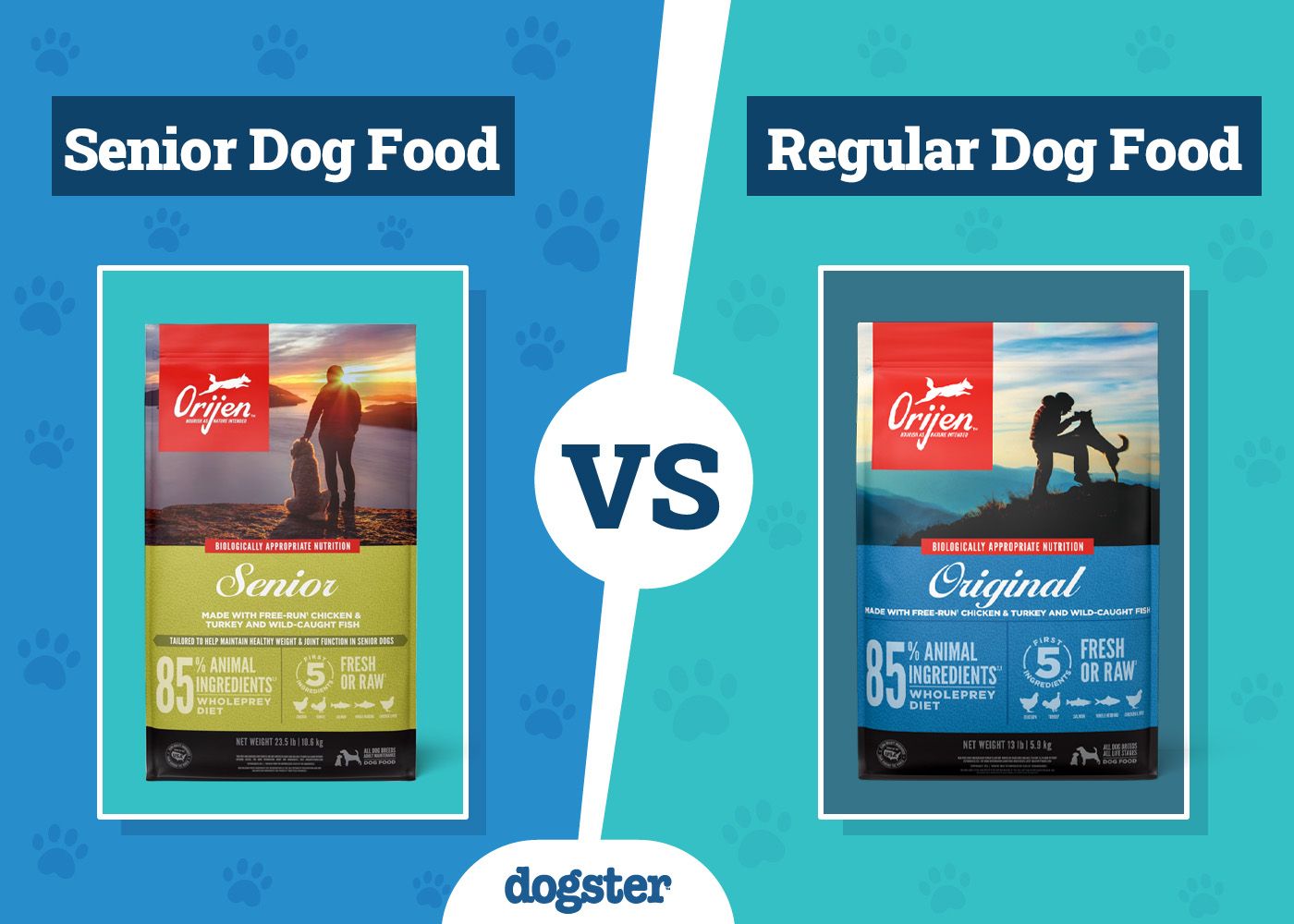
However, not every diet labeled “senior food” makes adjustments to the nutrition content. Orijen Senior Dog Food, for example, maintains a similar profile as the regular adult diet. Other brands may produce “all life stage” food, meaning it can be fed to any age of dog.
Added Supplements
Besides slowing down a little, older dogs often develop unique medical issues as they age. Several senior dog foods contain added supplements designed to support medical concerns.
For example, senior dog foods may contain glucosamine and fatty acids to help strengthen joints as arthritis develops. Others, such as Purina ProPlan Bright Mind, contain additives designed to improve mental clarity and slow aging changes in the dog’s brain.

When to Choose It
The age when a dog is considered senior varies considerably. Many of us may have heard the old saying that “1 dog year equals 7 human years” or something similar. The truth is that dogs don’t age the same way that we do, and the size of the dog plays a significant role in when they're considered a senior.
Generally, dogs are considered seniors once they reach 8 years old, but this average is based on average-sized (medium) dogs. Giant breed dogs may be considered senior as young as 6 years old, while tiny dogs may not until they are 10 to 12 years old. Every dog is an individual, even within these general categories, and the decision to switch to senior food is best made with the help of a veterinarian.
Pros
- Reduced fat and calories help keep senior dogs fit
- Often contains supplements to offset common aging changes like joint pain
Cons
- No set rules to tell you when to switch to senior dog food
- Not as many different recipes and specialized formulations available
Overview of Regular Dog Food
Ingredients
Regular dog food is made with various proteins, grains (or no grains), fruits, and vegetables. Some are made with unusual ingredients like venison, duck, oats, quinoa, and salmon. Formulas designed to be gentle on the stomach or high-protein for working dogs are also available.
When buying regular dog food, you can afford to be pickier about the apparent quality of the ingredients, avoiding by-products if you wish or choosing a diet that only sources ingredients from the United States.

Nutritional Information
All dog food sold in the United States (for any life stage) must meet the same minimum nutrition standards. Regular adult dog food is typically lower in protein and calories than puppy food but higher than senior dog food.
Added Supplements
Not all regular dog food contains additional supplements beyond the minimum required nutrients. Those that do generally focus on supporting the overall health of the dog, like antioxidants. Specialized skin or stomach diets may contain additional supplements like probiotics or fatty acids.

When to Choose It
As a general rule, dogs should eat puppy food until they are around 1 year old. Some dogs may never switch to senior dog food, continuing to eat regular food unless they develop a medical condition that requires a diet change. While puppies may not get the nutrients they need eating anything but a puppy diet, the same isn’t true for senior dogs.
Pros
- Available in many different recipes and specialized formulations
- Every brand makes regular dog food, but not all make senior dog food
Cons
- With so many options, choosing the right food can be hard
What Health Conditions May Require Special Diets?
Senior dog food often has a few nutritional adjustments to support the needs of older dogs. However, if your aging dog develops a medical condition such as diabetes, kidney disease, or heart disease, they may need a prescription diet.
For example, dogs with heart disease (like humans) should eat less sodium. A low-carbohydrate diet is typically recommended to help diabetic dogs stabilize their blood sugar, and dogs with kidney disease may be healthier if they eat less protein.

What If Your Dog Loses Some or All of Their Teeth?
Dental disease is a common concern as dogs age. Genetics, dental care, and the type of food all play a role in how your dog’s teeth survive into the senior years. If your older pup is missing some or even all of its teeth, what should you do about its diet?
If your dog will eat canned food, switching to a softer meal is often a great option. Most senior dog foods are available in a wet formulation, but some dogs refuse to eat canned food, no matter how many teeth they have. For these stubborn pups, try continuing with their dry food but soaking it in water to soften it first.
How to Choose a Dog Food (Senior or Regular)
If your dog has no special health conditions or food sensitivities, it’s wise to buy the best dog food you can afford. The price of dog food doesn’t always tell the full story regarding actual nutritional quality. Some “premium” brands charge more by promising to use “organic” or “holistic” ingredients, but these are unregulated marketing terms that don’t tell you anything about quality.
All dog food, from the cheapest generic brand to the most expensive, must meet the same minimum nutrition standards.
When deciding on a senior food, it’s often simplest to use the same brand your dog has been eating. If your chosen brand doesn’t make a senior formula, look for one that uses similar ingredients.

How to Switch Your Dog’s Food
Anytime you switch your dog’s food, you’ll want to do it gradually to avoid an upset stomach. Take several days to make the complete transition or possibly longer if you know your dog has a sensitive stomach.
Begin by serving 75% old food and 25% new for a day or so, then increase to 50/50. If your dog is doing fine on a half-and-half diet, increase to 75% new food for a couple of days. Once you know your dog seems to be tolerating the new brand, complete the transition to 100% of the new recipe.
If you notice vomiting or diarrhea at any point, return to the previous ratio, and give your dog more time to make the switch.
See also: Dog-Friendly Beaches Near Sarasota, FL
Conclusion
Responsible owners understand that bringing a dog into our lives means making a lifetime commitment to that animal. It can be a truly rewarding experience sharing life with a dog, going from puppy food to senior food. If you have any questions about managing the aging changes or conditions that your older dog experiences, do not hesitate to speak to a veterinarian.
Featured Image Credit: Top: Senior Dog Eating (Image Credit: Jaromir Chalabala, Shutterstock), Bottom: Regular Dog Eat (Image Credit: Pixel-Shot, Shutterstock)
Expert dog care, straight to your inbox
News, insights, expert advice, and everything dog.

No spam — unsubscribe anytime.
By signing up, you agree to our Terms & Conditions and Privacy & Cookies Policy.
How useful was this post?
Click a star to rate. You can leave written feedback afterwards. (We read all feedback.)
Elizabeth Gray is a lifelong lover of all animals great and small. She got her first cat at 5 years old and at 14, she started working for her local veterinarian. Elizabeth spent more than 20 years working as a veterinary nurse before stepping away to become a stay-at-home parent to her daughter. Now, she is excited to share her hard-earned knowledge (literally--she has scars) with the readers. Elizabeth lives in Iowa with her family, including her two furry kids, Linnard, a husky mix and Algernon, the worldʻs most patient cat. When not writing, she enjoys reading, watching all sports but especially soccer, and spending time outdoors with her family.