Dogster is reader-supported. When you buy via links on our site, we may earn a commission at no cost to you. Learn more.

Dog Nutrition

How Much Should I Feed My Golden Retriever Puppy? Vet Verified Tips & Timeline

Nicole Cosgrove
By Nicole Cosgrove · Reviewed & fact-checked by Dr. Lorna WhittemoreVet Approved
Dr. Lorna Whittemore
Reviewed & Fact-Checked byDr. Lorna WhittemoreMRCVS (Veterinarian)
Lorna is a veterinarian based in Cape Town, South Africa. originally from Scotland. Lorna loves to travel and has lived, studied, and worked on three different continents. Lorna has over two decades of experience in small animal medicine and surgery, both in the charity and private sector, plus a further qualification in feline medicine.View authorThe information is current and up-to-date in accordance with the latest veterinarian research. Learn more
Updated on June 17, 2026
Share
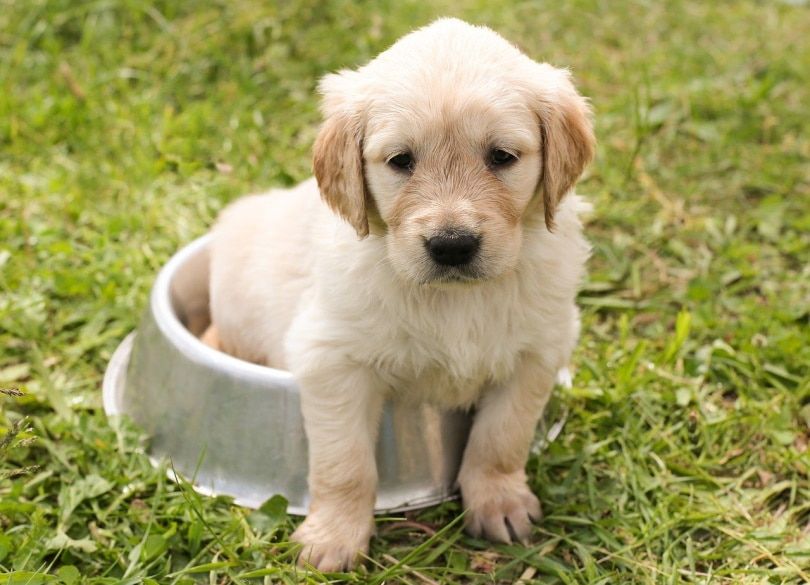
Golden retriever puppy sitting on bowl

Congratulations on your new Golden Retriever puppy! You now have a beautiful, smart, and loyal dog who will love you for life. To make sure they grow into a healthy and happy companion, you need to feed them the right amount of food.

At 2–3 months old, which is usually when they are ready to leave their mother, a Golden Retriever puppy should be eating 3 cups of dog food divided into three meals per day. This is based on a typical large-breed puppy food—different brands will give a feeding guide on their packaging.

However, how much and how often to feed your Golden Retriever will keep changing during this time of rapid growth.

divider dog faces oct 2024

Golden Retriever Puppy Feeding Chart

Important Note: The amount of calories each dog needs for healthy growth and development depends on many factors, including their age, breed, and activity level. These charts are general guidelines for healthy young dogs, but we recommend confirming any changes you make to your dogs diet with your vet.
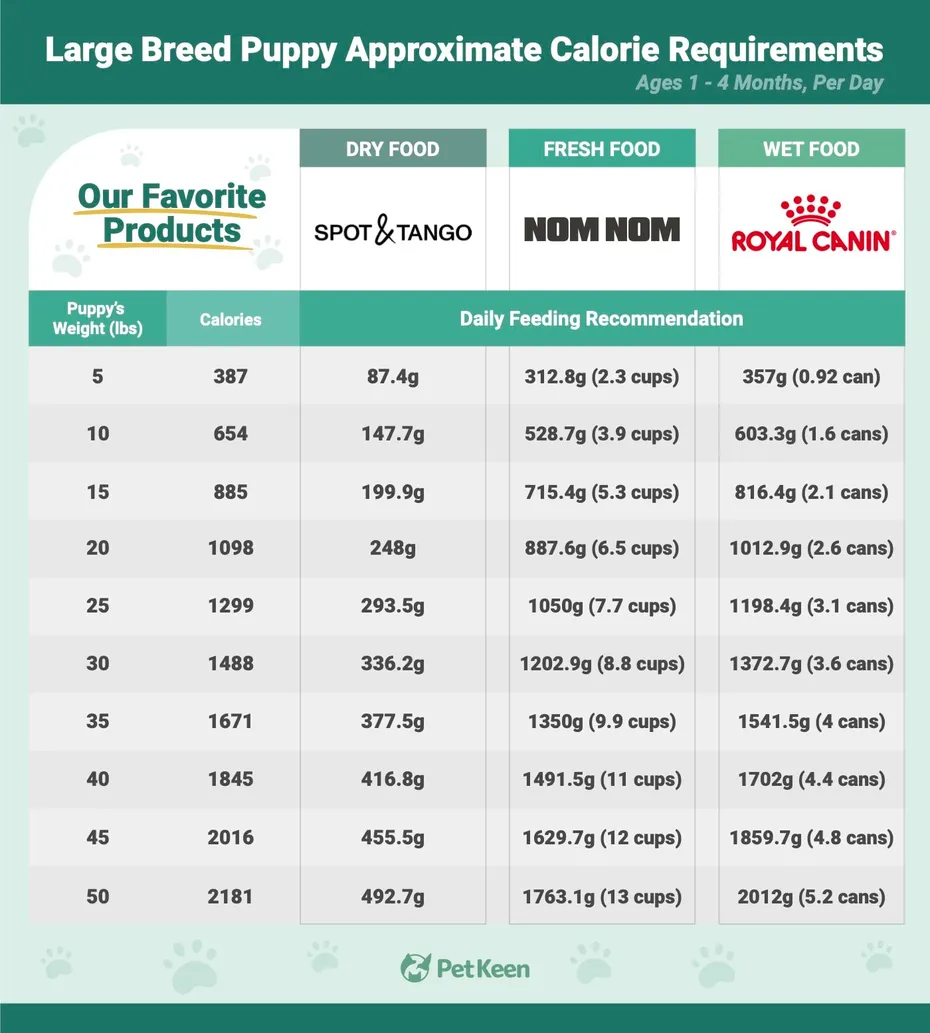
Click here to download printable PDF

Golden Retriever Puppy Feeding Timeline

Image By: pixa-kems, Pixabay

All puppies are different as are the foods, but some general guidelines for feeding your Golden Retriever during their first year are:

  • 0–6 weeks: A Golden Retriever puppy can start eating solid food when they are 3–4 weeks old 1. Around this time, you can start weaning them off their mother's milk by mixing it with some soft puppy food.
  • 6–12 weeks: At this point, they should be eating puppy food spread over three to four meals a day 2.
  • 3–6 months: You can start decreasing the feedings to three times a day. Give them a total of 3 cups of dog food per day by their third month, and 3 to 4 cups by the time they are 6 months old.
  • 6–12 months: After 6 months, you can start feeding them twice a day instead of three times. The AKC recommends waiting until large breed puppies are at least 12 months old 3 before switching them over to adult dog food and more likely 18 months.
  • 12+ months: Once your Golden Retriever is a year old, they should be eating adult or junior dog food twice a day. The amount will depend on their weight and activity level, but a rough guide is 1–2 cups per meal.

How Often Should I Feed My Golden Retriever Puppy?

Large breed puppies like Golden Retrievers should eat three to four small meals a day for the first 3–6 months of their lives.

Smaller portions spread throughout the day are easier on their tummies and help prevent bloat, a serious condition that can be deadly for dogs 4. It also helps them maintain their energy level throughout the day.

You can also use our dog calculator tool to complement this information here:

The exact amount of calories an individual animal needs to maintain a healthy weight is variable and influenced by many factors including genetics, age, breed, and activity level. This tool is meant to be used only as a guideline for healthy individuals and does not substitute veterinary advice 

How to Choose Dog Food for Golden Retriever Puppies
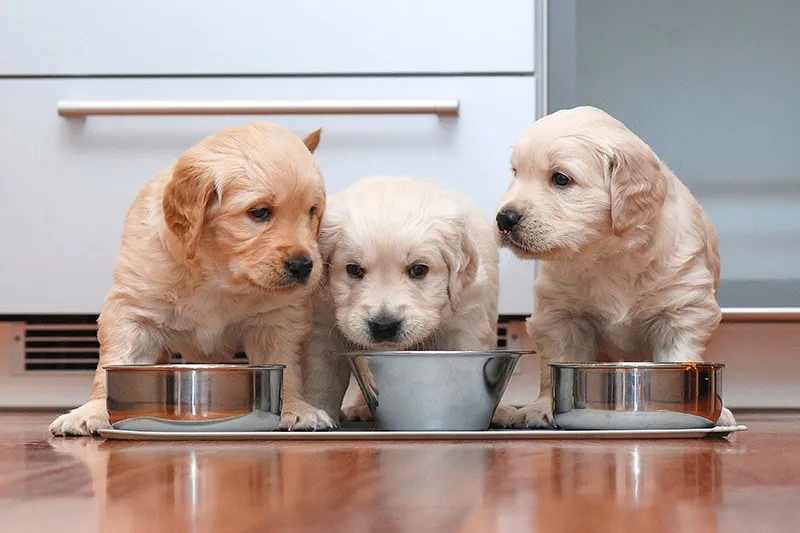
Image Credit: Demanescale, Shutterstock

The nutritional requirements for Golden Retriever puppies are different than for adult dogs. Puppy food has more calories and fat to support their growth, as well as extra vitamins and minerals for their developing immune and nervous systems and bones.

Use these tips to choose the best food for your Golden Retriever puppy:

  • Check the Protein Content: Puppies need more protein than adult dogs to support their growth, so look for a food that is at least 22% protein. The protein source matters, too. Puppies need animal-based proteins like chicken, beef, or lamb for their growing muscles.
  • Choose a Large Breed Formula: Large-breed puppies grow quickly, which means they need extra support for their bones and joints. Formulations for large breeds contain the correct calcium and phosphorus 5 ratio for strong bones and glucosamine and chondroitin for healthy joints.
  • Look for a Food That Is AAFCO Approved: The Association of American Feed Control Officials (AAFCO) requires that all pet foods meet certain standards for nutrition. To be sure your puppy food meets their requirements, look for the AAFCO statement on the package 6.
  • Choose Food With DHA: DHA is an omega-3 fatty acid that supports cognitive development 7 in puppies. It's found naturally in fish oil, but many puppy foods also add it in. DHA can help your Golden Retriever puppy learn new things more easily and remember what they've learned.
  • Ask Your Vet: Each puppy has unique needs, so it's always best to talk to your veterinarian before making any changes to their diet. They can help you choose the right food for your puppy based on their age, weight, and activity level.

How to Know if You're Feeding Your Golden Retriever Puppy Enough
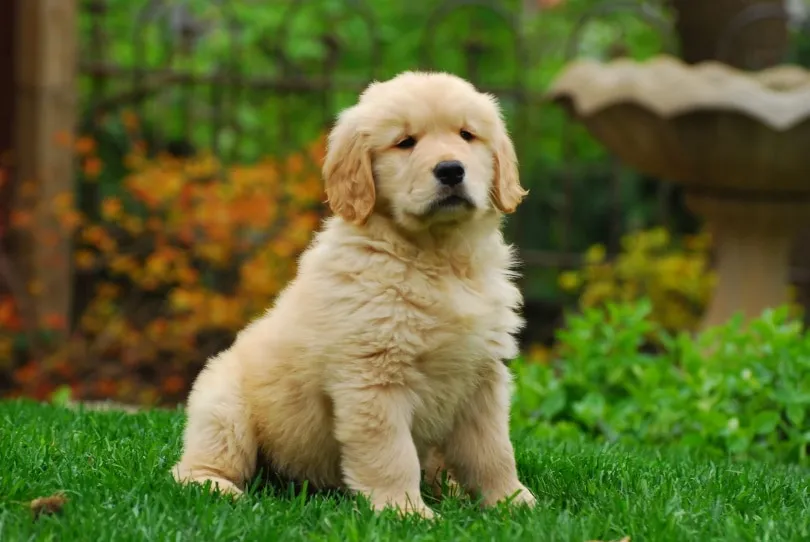
Image Credit: Piqsels

If your golden had his way, he would probably eat all day long. But puppies need to be fed on a schedule to prevent them from overeating and becoming overweight.

How do you know if your puppy is getting enough to eat? Here are a few signs that your Golden Retriever puppy is well-nourished:

  • He's Growing at a Steady Rate: You can expect your Golden Retriever puppy to gain about 5 pounds per month during their first 6 months. After that, their growth will start to slow down.
  • He Has a Healthy Appetite: A healthy puppy is interested in food and eager to eat. If your puppy turns away from his food or doesn't seem interested in eating, it could be a sign that he's not feeling well, and you should take him to the vet.
  • He Looks Trim and Muscular: You should be able to feel your puppy's ribs, but they shouldn't be protruding. If you can't feel them at all, your puppy is probably overweight. If you can see them, he's probably too skinny.
  • He Has Plenty of Energy: A well-fed puppy is full of energy and ready to play. If your puppy is lethargic, it could be a sign that he's not getting enough to eat.
  • His Fur, Eyes, and Skin Are Healthy: A well-nourished puppy has shiny, soft fur, bright eyes, and smooth skin. If your puppy's fur is dull and dry, his eyes are sunken, or his skin is flaky, it could be a sign of malnutrition.

If you're ever unsure about whether your puppy is getting enough to eat, it's always best to consult with your veterinarian. They can help you fine-tune your puppy's diet to ensure he's getting all the nutrients he needs to grow into a healthy adult dog.

divider dog faces oct 2024

The 8 Tips for Feeding Your Golden Retriever Puppy

Puppy mealtime is more than just filling up a bowl with food. It's an opportunity to bond with your puppy and start teaching them good manners.

Make the most of mealtime with these tips:

1. Set a Regular Feeding Schedule and Stick to It as Much as Possible

Image Credit: Dmytro Zinkevych, Shutterstock

This will help your puppy know when to expect his next meal and make it easier for you to monitor how much he's eating. It also helps other aspects of puppy training, such as potty training and crate training.


2. Consider Feeding Them in Their Crate

This can help your puppy associate their crate with good things (like food) and make it more likely that they'll want to go in there.


3. Don't Free-Feed Your Puppy
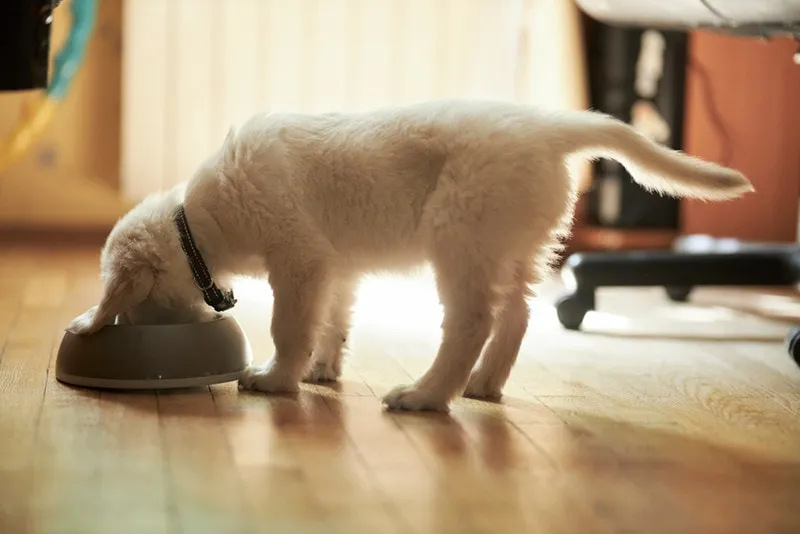
Image Credit: Alena Marchuk, Shutterstock

This means leaving food out all day for them to graze on whenever they want. It's easier, but it can lead to problems like obesity and poor manners. Leave food down for 10 minutes and then pick up what is not eaten. If they have not eaten anything, offer it again in an hour.


4. Make Sure They're Eating Slowly

Some puppies gulp their food down so fast they don't even taste it. Slow them down by scattering their kibble around the bowl, using a puzzle feeder or snuffle mat. This will help them learn to eat slowly and enjoy their food more.


5. Don't Forget to Add Water
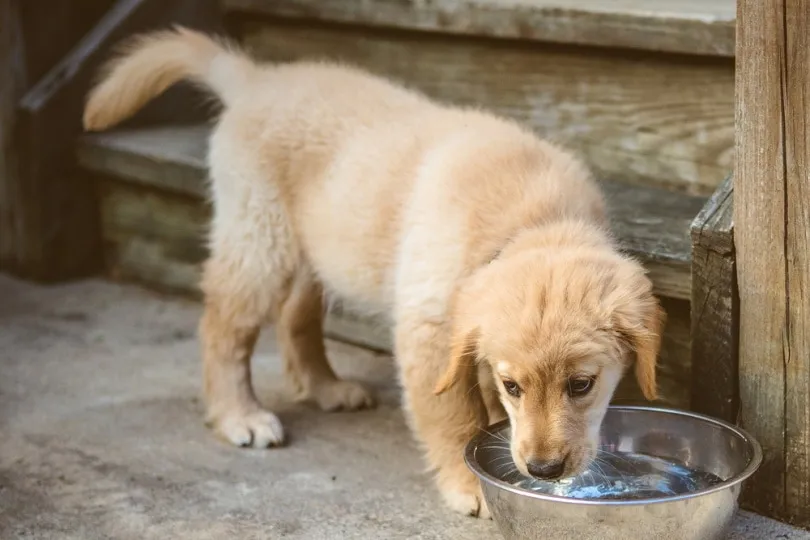
Image Credit: kathleen collins, Shutterstock

Puppies need plenty of fresh water, so make sure to fill up their bowl before and after each meal. If your puppy is not drinking enough water for your liking, try adding a bit of broth to their bowl to make it more appealing and help them stay hydrated.


6. Resist the Urge to Sneak Them Table Scraps

Puppies are experts at giving those big, soulful eyes that make it hard to say no. But resist the temptation to give them table scraps or human food. Aside from teaching them bad manners, it can also lead to health problems, like obesity.

A lot of human foods are not safe or healthy for dogs. For instance, garlic and onions are toxic to dogs. Oily food can upset their stomach, and carbs add a lot of calories.


7. Feed Them at the Same Place for Each Meal

Image Credit: jagdprinzessin, Pixabay

Even if you're not crate training, it's a good idea to feed your puppy in the same spot each time. This helps them learn that mealtime is a specific time and place and not something that happens all over the house.


8. Let Your Puppy Eat in Peace.

Make sure everyone respects your puppy's mealtime and gives them space to eat. This includes other pets in the house and small children who might want to bother them or try to steal their food. Otherwise, meals can become a stressful experience for your puppy instead of a happy one.

dogster paw divider

Conclusion

Feeding your Golden Retriever puppy the right amount of quality dog food will establish a strong foundation for their health and happiness. In addition, make mealtimes more meaningful by turning them into lessons and bonding moments between you and your dog.

The puppy phase is over before you know it, so enjoy it while it lasts!

Related Reads:

Sources

Featured Image Credit: Chiemsee, Pixabay

The Dogster Newsletter

Expert dog care, straight to your inbox

News, insights, expert advice, and everything dog.

No spam — unsubscribe anytime.

By signing up, you agree to our Terms & Conditions and Privacy & Cookies Policy.

Click a star to rate. You can leave written feedback afterwards. (We read all feedback.)

Nicole Cosgrove
Authored by

Nicole Cosgrove

Leave a Reply

You're very welcome to leave a comment or question. Please know that all comments must meet our community guidelines, and your email address will NOT be published. Let's have a positive and constructive conversation.

How Much Food to Feed a Golden Retriever (Puppy & Adult Guide)

How Much Food to Feed a Golden Retriever (Puppy & Adult Guide)

Feeding your Golden Retriever involves a lot of variables, many of which are largely dependent on the individual pup. Your dog may vigorously chomp down all of…

Brooke Norris
By Brooke Norris · 4 weeks ago
Puppy Feeding Guide: Quantity, Schedule & FAQ

Puppy Feeding Guide: Quantity, Schedule & FAQ

It is essential to feed your puppy correctly. Puppies are constantly growing and need different nutrition than an adult dog. Feeding your puppy correctly now c…

Kristin Hitchcock
By Kristin Hitchcock · 1 month ago
How Often Should Puppies Eat? Vet-Approved Guide & Scheduling

How Often Should Puppies Eat? Vet-Approved Guide & Scheduling

Raising puppies is not for the faint of heart. It's a tough gig, not unlike raising a newborn baby, but it is extremely gratifying, rewarding, and a whole lot…

Chantelle Fowler
By Chantelle Fowler · 1 month ago
When Can a Puppy Eat Dry Food Without Water? Vet Approved Feeding Guide

When Can a Puppy Eat Dry Food Without Water? Vet Approved Feeding Guide

So, you’ve added water to your pup’s dry food to soften it. Or maybe you’re just feeding your puppy wet food. That’s great! Puppies need moist, soft food while…

Cassidy Sutton
By Cassidy Sutton · 3 weeks ago

How to Feed a Puppy: 10 Vet-Approved Tips

Puppyhood is an important time in a dog’s life that’s marked by significant growth and development. Puppies have many needs and require a great deal of time an…

Jessica Kim
By Jessica Kim · June 27, 2026
How to Feed a Puppy: 10 Vet-Approved Tips

7 Golden Rules for Feeding Your Dog: Vet-Verified Advice & Info

As a dog owner, you know the key to your pup’s good health is proper nutrition. Navigating the different types of dog food out there can be confusing. You want…

Nicole Cosgrove
By Nicole Cosgrove · June 16, 2026
7 Golden Rules for Feeding Your Dog: Vet-Verified Advice & Info

When to Switch to an Adult Dog Food? Vet-Approved Facts & FAQ

Enthusiastic, sweet and downright fun—puppies are simply wonderful. All it takes is one look from those adorable puppy eyes to hook most people to the point of…

Lorre Luther
By Lorre Luther · June 16, 2026
When to Switch to an Adult Dog Food? Vet-Approved Facts & FAQ

My Puppy Is Overweight: 5 Vet-Approved Tips on What to Do

If you have an overweight puppy, we recommend consulting a veterinarian before implementing any suggestions in this post, as it may be related to diet or healt…

Rachel Giordano
By Rachel Giordano · June 17, 2026
My Puppy Is Overweight: 5 Vet-Approved Tips on What to Do

When Can a Puppy Start Eating Puppy Food? Vet-Approved Recommendations

There's nothing much cuter than a puppy, but with puppies come responsibilities. Knowing how to feed puppies and when to wean them off their mother's milk is i…

Rachel Giordano
By Rachel Giordano · June 29, 2026
When Can a Puppy Start Eating Puppy Food? Vet-Approved Recommendations

What Time Should I Feed My Dog? Vet-Verified Feeding Guide

Canine nutrition can feel like an impossible labyrinth to navigate, whether you're a first-time dog owner or not. There is so much information—and misinformati…

Chantelle Fowler
By Chantelle Fowler · June 17, 2026
What Time Should I Feed My Dog? Vet-Verified Feeding Guide

How Much Food Does a Great Dane Need? With Feeding Chart

Great Danes are one of the biggest dogs in the world, and it’s no surprise when you meet one face to face. If you decide to add one of these gentle giants to y…

Nicole Cosgrove
By Nicole Cosgrove · June 29, 2026
How Much Food Does a Great Dane Need? With Feeding Chart

How Much Food to Feed a Lab: Feeding Guide & Nutritional Tips

Wouldn’t you love to feed your Labrador dog the best, high-quality food in the exact quantities it needs to thrive? Every dog owner wants this more than anythi…

Cassidy Sutton
By Cassidy Sutton · June 27, 2026
How Much Food to Feed a Lab: Feeding Guide & Nutritional Tips

Love Dogs? So Do We! Join the Dogster Community

Stay informed with expert pet care insights delivered straight to your inbox! Discover professional guidance on animal behavior, feeding tips, trusted product picks, and much more.

You may opt-out at any time. View our Privacy Policy for more information.

The Dogster app on a phone