Male vs Female Great Danes: The Differences (With Pictures)

In this article
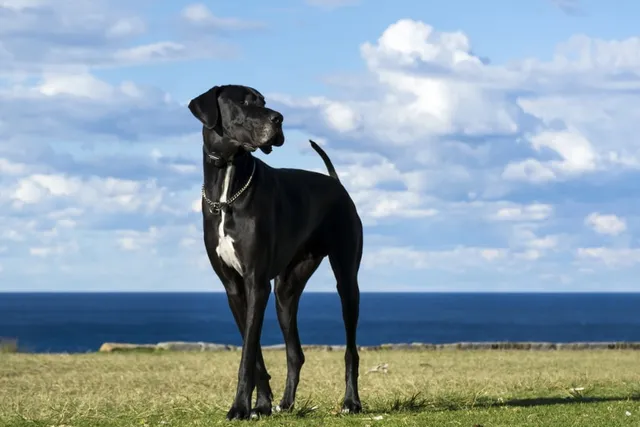
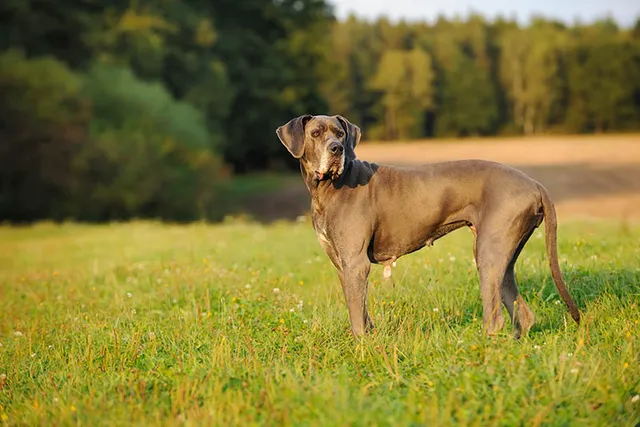
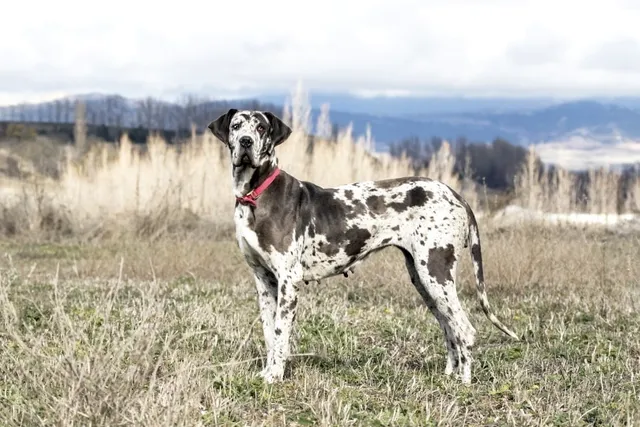
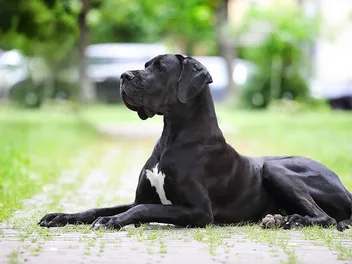
Great Danes are most famous for their impressive size, but these gentle giants are an easy-going, loving breed. These beautiful dogs are also patient and loving, making perfect additions to a family. Once you’ve decided that a Great Dane is right for you, there’s only one question left: Should you get a boy or a girl?
While this question can really only be answered according to your personal preference, there are differences between the two sexes to take into consideration. Not every characteristic will apply to every dog of each sex, since each animal is unique with their own personality. However, these differences may help you determine whether a male or female is right for you.

Visual Differences

At a Glance
Great Dane 101
Whenever you decide to add any dog to your home, it’s important to do your research and make sure the breed will be a good fit for your home and lifestyle. This is especially important with Great Danes! They’re thought to be slow-moving and lazy because of their large size, but they can surprise you with spurts of energy as they run and play.
While other animals in the home may steer clear of the Great Dane, this dog just wants to be friends with everyone. They’re loyal and outgoing while not failing to be protective if they sense any sort of danger. When guarding a home, their size alone is enough to make people think twice about getting near them.

Known as the “Apollo of Dogs,” Great Danes were originally bred to be wild boar hunters. Today, they are gentle dogs that prefer the company of humans. Obedience and training classes are strongly encouraged with a dog of this magnitude. They are eager to please, so they respond well to training and are easy to housetrain. Socialization is necessary to help this dog grow up to be well-rounded and confident.
Their loving natures make them eager to nudge your hand or arm to let you know that they want attention. They don’t know their own size, often knocking things over with their tails. They may even join you on the couch and plop themselves down right into your lap. They want to be where their family is, and they’re happy to have visitors as long as they know that you’re happy with those visitors too.
Great Danes love children and are known for being gentle with them. Older kids may be best for this breed. Younger children may be accidentally knocked over and overwhelmed by them.

Male Great Dane Overview

Personality / Character
Male Great Danes are affectionate, clingy goofballs who want human interaction and validation. They’re easy-going dogs that enjoy being part of a family. They can play rough sometimes, but they don’t always know their own size. They can be dominant, territorial, and protective of their families. Neutering the dog can usually decrease the amount of dominance that they display. Male Great Danes also take longer to mature than females.
Training 🎾
This is an intelligent dog that is happy to learn new things and is eager to please. Training a male Great Dane is not difficult when using rewards and positive reinforcement. They learn quickly and can start the training process as young as 8 weeks old. Socializing should go along with training to help your dog get used to new situations and environments. Male Great Danes are social dogs that are happy to meet new people. In order to have a well-adjusted dog of this size that will be calm and follow your commands, training and socializing are necessary from day one.

Health & Care
Male Great Danes have risks of certain health conditions, especially if not neutered. If you’re not planning on breeding your dog, neutering is the best way to keep them healthy and happy. Certain behavior issues can be controlled with neutering too. Here is a list of health issues to be aware of if you own a male Great Dane. Regular vet visits will keep you aware of any potential health problems that are starting or may start in the future.
Breeding
Only healthy male dogs should be allowed to breed. If breeding your dog, a veterinarian should check for all genetic health issues to make sure the risk to future litters is low. If you aren’t going to breed your dog, have him neutered to prevent unwanted behaviors and potential health risks.

Female Great Dane Overview

Personality / Character
Since female Great Danes mature faster than males, they are thought to be easier to train. You can hold their attention longer during training sessions. They’re calm, loving, and affectionate dogs that do well with children and are gentler during play than males. They like their alone time, often seeking places to lie down and decompress by themselves. While they’re more independent than their male counterparts, they do enjoy bonding with their owners and are known to seek out affection. They can be moodier than males too, especially if they aren’t spayed.
Training 🎾
Female Great Danes are smart and can pay attention for longer periods during training. They can learn whatever you want to teach them and respond well to positive reinforcement. Females can also be more serious than males, so they listen carefully to your commands. It’s not difficult to get a female Great Dane to be a well-trained dog. Like males, females also need socialization from a young age. This will help them when they get older to be more confident and secure in new situations.

Health & Care
Female Great Danes share the same risks for genetic health conditions as males, with the addition of mammary cancer and reproductive cancers. If you aren’t going to breed your dog, have her spayed to avoid mood swings and health problems in the future.
Breeding
Only dogs that are healthy enough for pregnancy and nursing puppies should be allowed to breed. If you aren’t planning on breeding your dog, have her spayed. This decreases the chances of health issues, like certain cancers, and behavior issues, like anxiety and moodiness. Your vet can perform the necessary health checks and screenings on your dog if you’re interested in breeding her.

Which Sex Is Right for You?
Choosing a male or female Great Dane depends on your preference. If you’ve had male dogs before, you might be more comfortable with them rather than learning how to deal with a female that will experience heat cycles. If you’ve only had females before, you might know them best and want to stick with them.
No matter which sex you choose, it’s important to start training and socializing your Great Dane as soon as possible. Both are smart, trainable, and friendly.
While females mature faster than males, they’re intelligent and can learn whatever you want to teach them. Positive reinforcement is crucial.
Great Danes are loving dogs, and whether they are male or female, they will display these traits. Males tend to live for affection while females can be a little more independent. They are loving and sweet dogs that also like time to be alone.
The determining factors of the dog’s personality, more than their sex, are their genetics and how they are raised. Both can make loving additions to your family, but every dog is unique. These differences between males and females won’t cover every dog in every situation; they simply give you points to consider in your choice.
Also See:
Sources
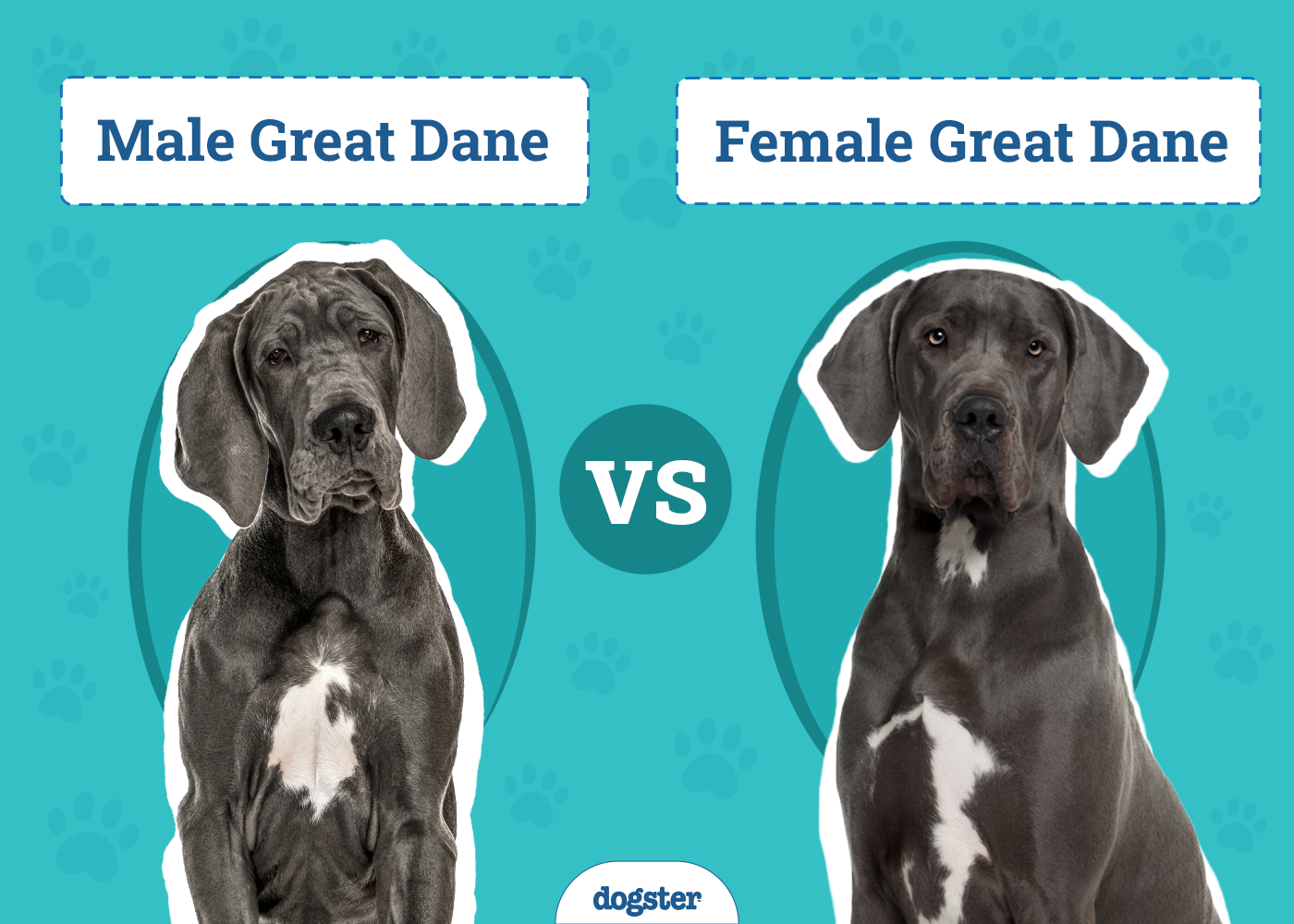
Featured Image Credit: Up - Nikolas Otto, Shutterstock; Down - muroPhotographer, Shutterstock
Expert dog care, straight to your inbox
Vet-reviewed advice, training tips, and the best of Dogster. Free, and you can unsubscribe anytime.
By signing up, you agree to our Terms & Conditions and Privacy & Cookies Policy.
Ollie is a zoologist turned freelance animal writer living in South Australia with his partner Alex and their mini zoo consisting of their eldest, a rescue dog named Pepper, many aquatic creatures, and their cat Steve. Ollie has a Master's degree in wildlife biology but became a freelance animal writer in 2020 and hasn't looked back. He loves sharing what he has learned with pet parents around the planet.
Join the conversation
Ask a question, share your story, or send private feedback.