Greyhound vs Great Dane: Vet-Reviewed Differences (With Pictures)


In this article
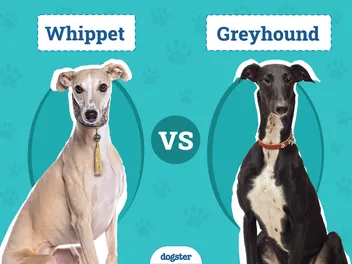
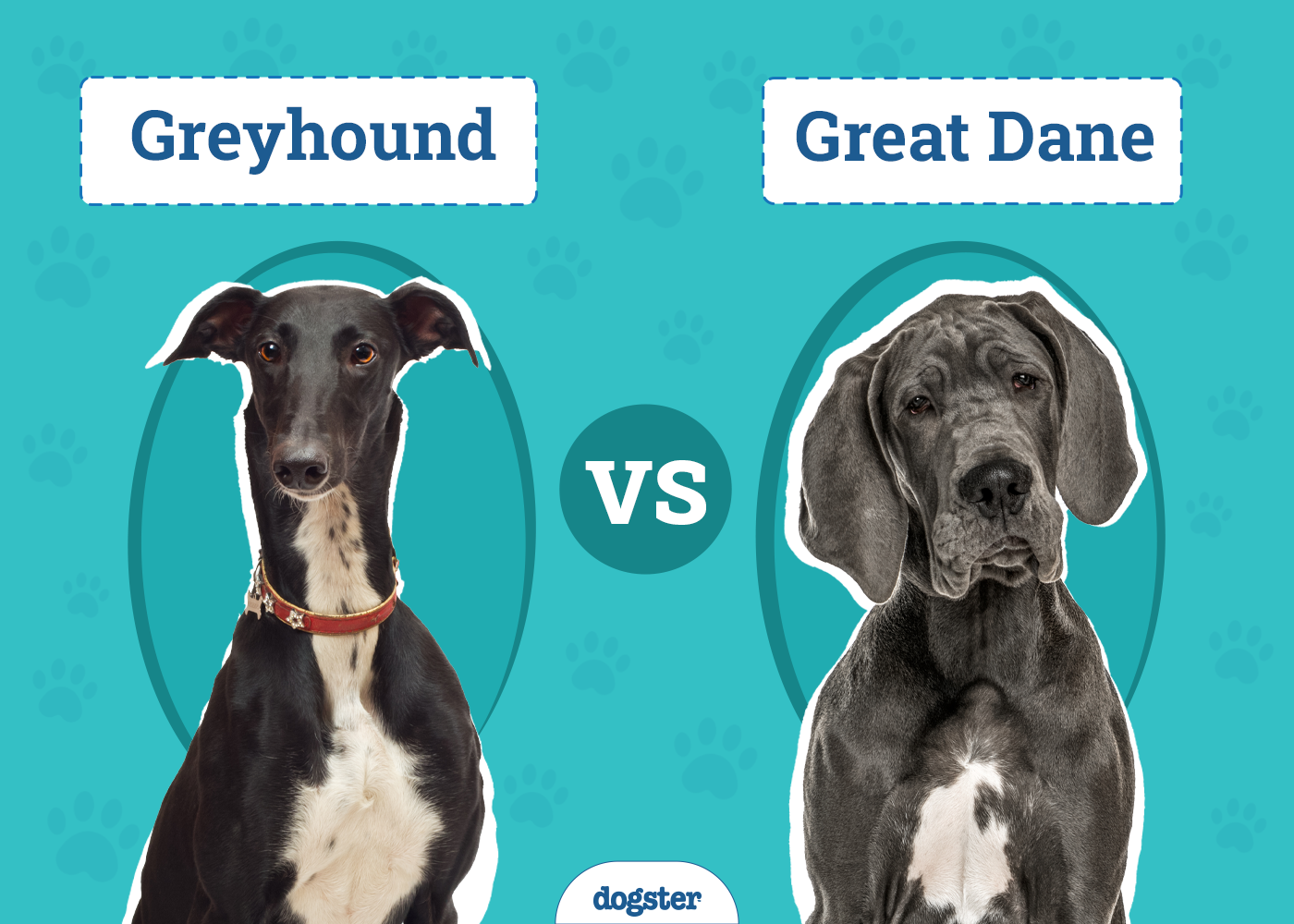
Greyhounds and Great Danes are beautiful and affectionate dog breeds. They're both large with short, easy-to-maintain coats, though Greyhounds are more slender while Great Danes are more massive. They have playful streaks but somewhat different exercise requirements. That is where their similarities end, however.
Considered a giant breed, Great Danes are considerably larger than Greyhounds. They also lead much shorter lifespans, typically living 7-10 years, while Greyhounds can live as long as 10-14 years.
If you’re considering adopting one of these breeds, you need to familiarize yourself with their personalities, exercise needs, trainability, and health concerns. Keep reading to learn everything you need to know to make an informed decision about which breed would fit in best with your family and lifestyle.

Visual Differences

At a Glance

Greyhound Overview

Greyhounds are sighthounds, a type of dog that hunts primarily via sight and speed rather than by scent. They were bred for coursing, hunting, and greyhound racing. They have an instantly recognizable silhouette and an aerodynamic build that allows for plenty of speed.
Greyhounds likely have ancient origins, with early records being mentioned in Egyptian, Greek, and Roman cultures.
Personality
A Greyhound’s personality may depend on its lineage, but most are even-tempered and mellow. They are often friendly and non-aggressive, though some may be aloof to strangers at first. However, a treat can change that pretty quickly, making Greyhounds quick to warm up to new people.
They are an intelligent and independent breed with a sensitive side. Greyhounds can be quite responsive to their environment and may pick up on tension in the home. However, they can also become shy and timid if they experience mistreatment, even if it is not intentional.
Greyhounds are very sweet but may have difficulty adapting to new situations. Therefore, potential owners should be prepared to be patient when introducing them to things like stairs, toys, or vehicles.
They have a very strong prey drive, so you may wish to rethink adopting a Greyhound if you have other small animals in your home.
Training & Exercise
Greyhounds have a moderate to high energy level and thrive in environments where they can enjoy regular exercise and mental stimulation along with plenty of rest. Families should be willing to provide daily walks and opportunities for short bursts of activity.
Training Greyhounds can sometimes be challenging, as they are bred for independent pursuit and may have a stubborn streak. Their sensitive side will make ineffective training techniques even more inefficient, so ensure you always use positive reinforcement during your training sessions.

Health
Greyhounds are a healthy and often long-lived breed, living up to 15 years! However, they may be prone to certain inherited conditions and predisposed to some health issues.
Gastric dilatation and volvulus (GDV) can affect deep-chested dog breeds. Gastric dilatation, sometimes better known as bloat, can occur when the stomach fills with gas and expands, sometimes after eating. There are a number of other factors, including genetics, temperament, lifestyle, and environment, that may make some dogs more prone to developing bloat. A combination of gas and food in the stomach can make it difficult for digested food to exit the stomach, increasing its pressure and size.
This can lead to compromised blood flow, potential ruptures, diaphragm pressure, and difficulty breathing. Bloat is always life-threatening, so immediate veterinary care is necessary if you suspect or notice signs of GDV.
Greyhounds may develop an inherited progressive neurological disorder known as polyneuropathy, although it is rare. This condition is linked to nerve dysfunction and occurs in dogs whose parents both carry the genetic defect. Signs of this condition will usually begin manifesting between three and nine months.
Greyhounds are known for their sensitivity to certain anesthesia drugs. This may result in prolonged recovery periods after anesthesia, even for routine procedures like dental cleanings.
The breed may also be prone to osteosarcoma, an aggressive form of bone cancer, and hypothyroidism.
Suitable For:
Greyhounds can be a good choice for first-time pet owners, provided they are aware of the breed’s specific needs. However, they are best suited for calm, stable homes. They do well in homes with children but may fare better in households with older children versus unpredictable and boisterous young ones.
They can live harmoniously with other dogs when properly socialised and introduced, but their strong prey drive may cause problems if you have smaller animals.
Great Dane Overview

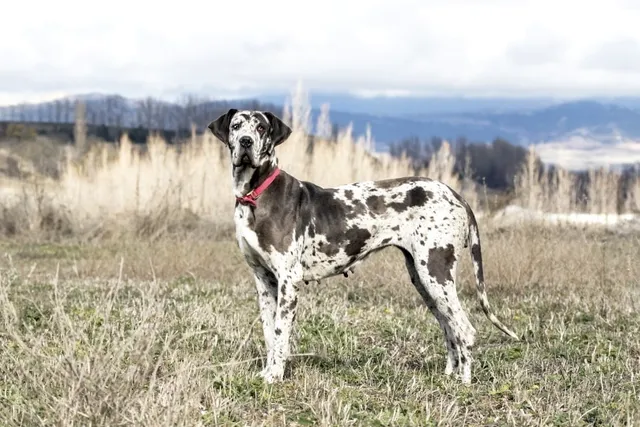
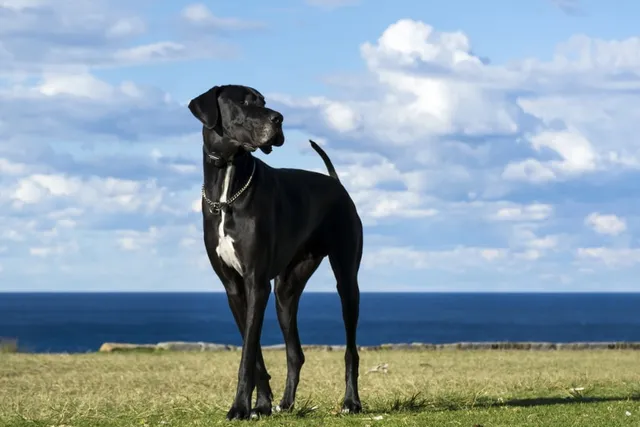
Great Danes are a German breed with noble origins. They descended from large hunting and mastiff-type dogs used in the Middle Ages to hunt wild deer and boar. They often worked as protectors for German nobility.
While there are ancient drawings of large dogs in Egyptian artifacts, the modern Great Dane breed developed much later in Europe and is not directly traceable to 3000 B.C. representations.
Personality
Well-trained and well-bred Great Danes are one of the best-natured dog breeds. They are very gentle and affectionate pets that love to play. They sometimes think they’re lap dogs and are often referred to as “gentle giants.” They love to be where the family is and aren’t opposed to getting to know strangers.
Great Danes, when properly socialised and introduced, get along well with other dogs, different animal species, and humans that are familiar to them. They generally don’t exhibit aggressiveness or a high prey drive, which can make them suitable for multi-pet and multi-species homes.
The Great Danes of centuries past were fearless boar hunters, but the ones we know and love today can have timid and anxious sides if they do not have proper socialization. You should prepare to expose your Great Dane puppy to a lot of new stimuli during the first few months of its life to help it live a fulfilling and fear-free life.
Training & Exercise
Great Danes are moderately playful and do need some space for daily exercise. If you live in a small apartment, you’ll need to take your pooch out for regular walks and playtime to keep up with its exercise needs. Puppies and adolescents require carefully managed activity rather than long exercise sessions, in order to protect their fast growing bones and joints.
Some Great Danes can make good running partners, for short distance jogs only, but you should wait until your pup is at least 18 months old. Before that point, their bones are still developing and they should avoid strenuous or repetitive running. Some aren’t even ready to start jogging until they are two years old. It is often better to allow controlled free play in a safe enclosed space, adjusted to the individual dog’s age and energy level, rather than relying on running, as a high impact activity.
Great Danes are people pleasers, so training them is often straightforward. However, they are fairly laid back, so training should be consistent and focused on positive reinforcement, over short sessions throughout the day.

Health
Like the Greyhound, Great Danes are prone to developing gastric dilatation volvulus. This condition can become life-threatening in as little as a few hours. It’s important to monitor feeding habits and avoid vigorous exercise immediately after meals, although other factors may increase the likelihood of this condition. In addition, some owners opt to get a preventative surgery known as gastropexy to significantly reduce their pup’s risk of developing GDV.
Great Danes are also prone to hip dysplasia. Your vet can take an X-ray to assess your dog’s current hip status, although these do not always accurately predict potential disease risk in the future. In case of confirmed hip dysplasia, long-term management may be required to help reduce pain and mobility issues.
Great Danes are also prone to a neurological condition known as wobbler syndrome. Wobbler syndrome is influenced by several factors, including genetic, structural, and developmental components. This disease affects the cervical spinal cord, resulting in neck pain and a wobbly gait. Feeding a high-quality large-breed puppy diet is recommended during growth, adjusted based on veterinary guidance.
The length of your Great Dane's tail may make it prone to happy tail syndrome. As cute as the name of this condition is, it can result in non-healing wounds and repeated trauma. Happy tail syndrome occurs when your dog’s long tail is constantly smacking on solid objects when it’s happy. In severe cases, surgical intervention may be considered, although this is not very common.
It’s not just the head, neck, and tail of Great Danes that are oversized. Their hearts are big, too, which may make them prone to dilated cardiomyopathy (DCM). This progressive disease affects the heart muscle, making it difficult to pump blood efficiently.
Suitable For?
Great Danes are suitable for moderately active households that can provide the exercise necessary to keep them happy and healthy. They do best with experienced dog owners who can spend a lot of time with them.
They can live in apartments, but potential owners need to take them outside for daily walks to ensure they stay physically active. When properly socialised, introduced and supervised, they often do well in homes with children and other pets, even non-canine ones.
Which Breed Is Right for You?

Greyhounds and Great Danes are both very beautiful dogs, but they’re not right for every home. First, consider your experience level. Greyhounds can be a good choice for first-time dog owners familiar with the breed, while Great Danes are often better suited to those with some experience.
Next, think about your living arrangements. Do you have other pets or children? Due to their strong prey drive, Greyhounds may not be best for you if you have cats or other small animals. They can, however, get along with other dogs. Most Great Danes are gentle with cats and other small pets, provided you socialize them together properly.
Both breeds can be kid-friendly when properly socialised and supervised, though Greyhounds do much better with older children than younger ones. Finally, consider your commitment level. Greyhounds tend to live longer than Great Danes, so you must be prepared to commit the next 10–15 years to your canine pal.
No matter how you spin it, both breeds can make wonderful companions for the right households. With a little consideration and forethought, we’re sure you’ll make the right decision.
See also:
Featured Image Credit: (UP) Akiko Campbell, Pixabay | (Down) black-pearls, Pixabay
Expert dog care, straight to your inbox
News, insights, expert advice, and everything dog.

No spam — unsubscribe anytime.
By signing up, you agree to our Terms & Conditions and Privacy & Cookies Policy.
How useful was this post?
Click a star to rate. You can leave written feedback afterwards. (We read all feedback.)
Chantelle is passionate about two things in her life – writing and animals. She grew up on the prairies of Canada surrounded by animals and as an adult, she choose to share her home with five cats, two guinea pigs, and a bearded dragon. Chantelle, her husband, and their child take great pride in being great animal parents- the ones who spend a thousand dollars on wall-mounted cat shelves so that their cats can have an indoor jungle gym all year round. When Chantelle isn’t snuggling her cats on the couch or taking pictures of them being funny, she’s outside exploring in the Rocky Mountains, binging the same shows on Netflix over and over, and reading about whatever random topic pops into her brain.