Male vs Female St. Bernards: What’s the Difference (With Pictures)

In this article
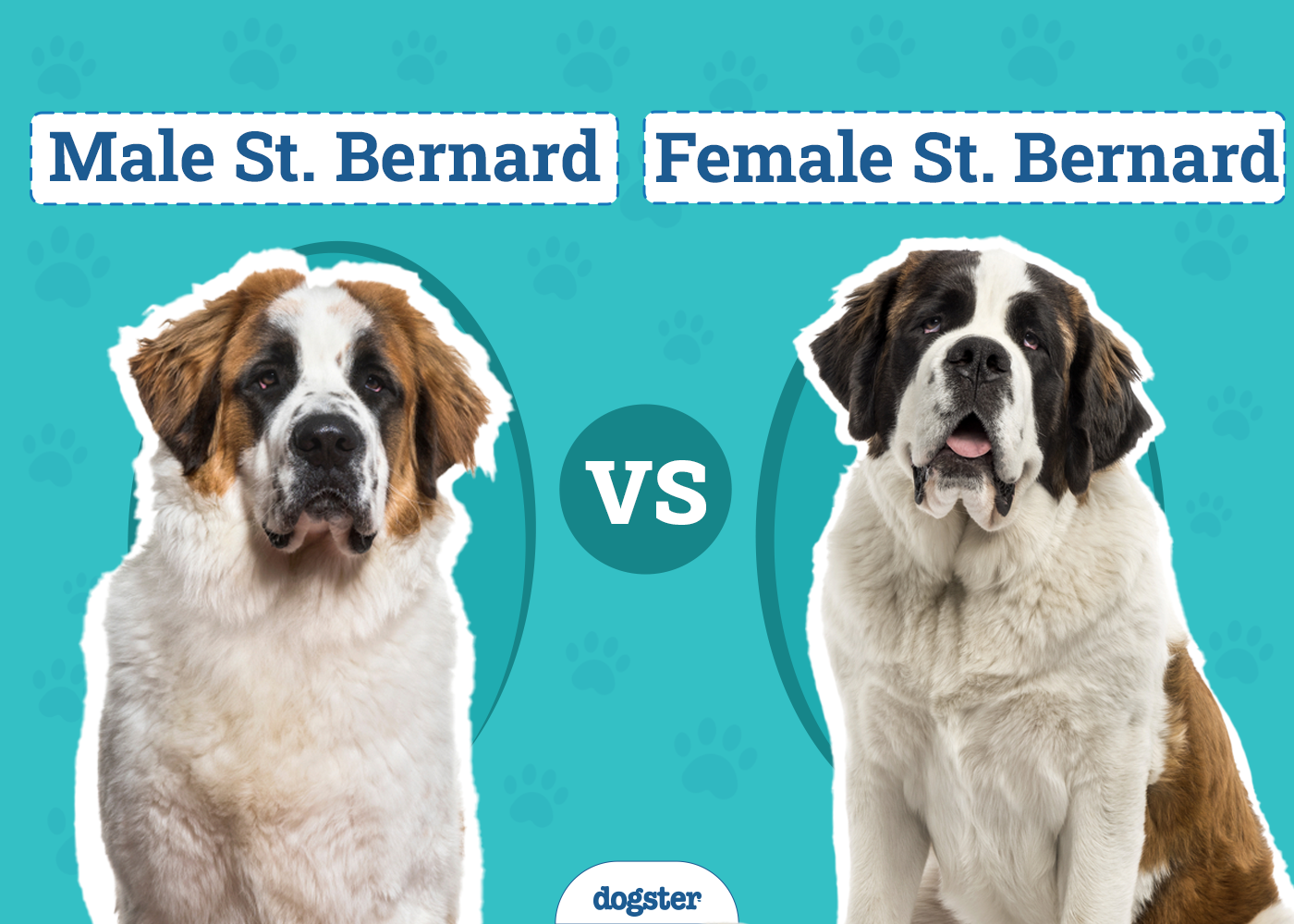
The St. Bernard is the epitome of the term gentle giant. Both sexes can reach weights well over 100 pounds, but they are known to be loving and affectionate dogs, traditionally used as rescue dogs. However, while their temperament is friendly and caring, their size does represent certain challenges, and there are some differences between the male and female of the species that might make one more suitable than the other. Read on to see which gender is the best choice for you and your family.

Visual Differences
At a Glance

St. Bernard Dog Breed 101

The St. Bernard comes from the Swiss Alps where it was used to rescue stranded Alpine adventurers. Its strength meant that it was capable of moving barriers like fallen trees. Its stamina enabled the Bernard to wade through deep snow for hours on end in search of weary travelers. Its gentle nature meant that, when the huge hound found its targets, it could care for them until help arrived.
Although the St. Bernard is still a working dog in many countries around the world, it has also become popular as a companion dog. The breed has an inherent understanding of its size so rarely causes accidents even around young children. It gets on with strangers and does not usually have a prey drive so is not considered a threat to cats and other family pets.
The size of the breed means that the St. Bernard is not suitable for all owners and potential owners. They are still considered a rare pet breed, despite being instantly recognizable and being a part of popular culture.
Male Pet Breed Overview
Personality / Character
Male St. Bernards are said to have a big heart but are more likely to suffer from wanderlust, so the male of the species is more likely to go missing or disappear, although this obviously isn’t a problem if you ensure good boundaries and fences around your yard. It is very rare for a St. Bernard to be aggressive, but it is more likely with a male than a female.
Training 🎾
The male can be more difficult to train. They take longer to pick up new commands and are messier, which also means that they are more difficult to house train or potty train.
Health & Care
The male and female St. Bernard have roughly the same chances of developing illness or poor health. In either case, having your dog spayed or neutered greatly reduces the chances of it developing serious health problems and illnesses later in life.
Pros
- More affectionate
Cons
- More challenging to train
- Much bigger than the female
Related Read: How Much Do St. Bernards Cost?
Female Pet Breed Overview

Personality / Character
The female St. Bernard is said to be more affectionate with their puppies and the female is less likely to wander looking for a mate. The female is not as daft as the male and is more likely to have a calm head on its shoulders. The female is more nurturing, not only to its own puppies, but potentially also to children in the family.
Training 🎾
It is said to be easier to house train a female dog than a male dog, which means that you are less likely to suffer messes and accidents in the home if you have a female St. Bernard. Females pick up new commands quicker than males.
Health & Care
As with males, the most important thing is to ensure that your dog has been neutered. This greatly reduces the chances of developing illnesses.
Pros
- Affectionate with puppies
- Calmer than males
Cons
- Not as loving as males

Which Sex Is Right for You?
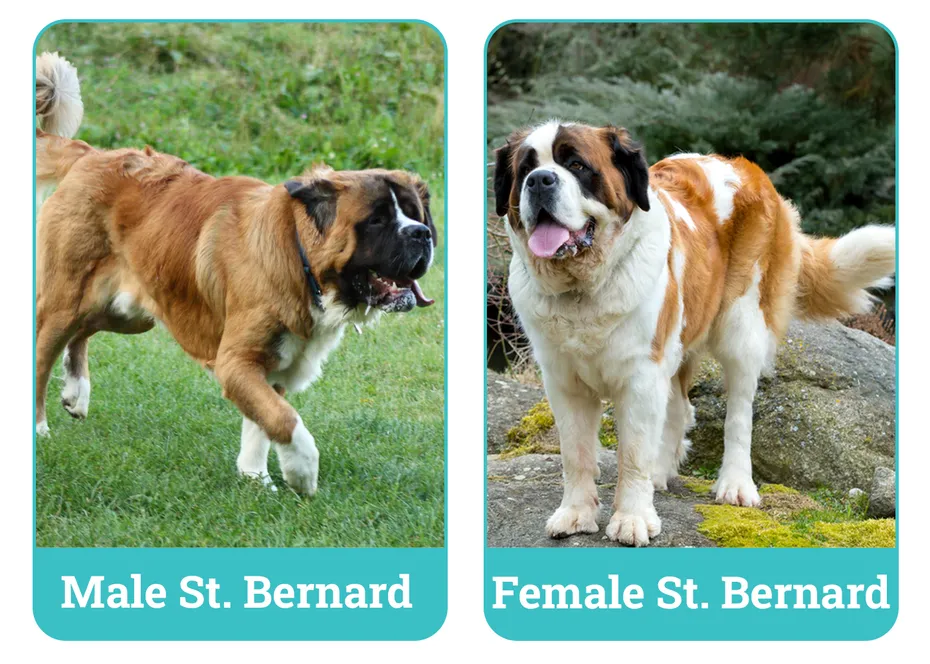
Other than the physical size difference, there is no real difference between the male and female St. Bernard. Both can be trained effectively and by ensuring that they are neutered at a young age, you can reduce the likelihood of either gender getting ill or suffering any major illness. It was once true that males were more prone to wandering, because they would go looking for a mate, but most owners keep their dogs within the confines of their home and by ensuring that the dog has been spayed or neutered, you can prevent the desire to wander in search of a mate. However, one area where the male and female of this species does differ is in size. The breed is already considered a giant, and it is the male of the species that tends to grow larger and taller, so do take this into account when choosing one over the other.
See Also:
Featured Image Credit: Top - GildAix, Pixabay | Bottom - Aneta Jungerova, Shutterstock
Expert dog care, straight to your inbox
News, insights, expert advice, and everything dog.

No spam — unsubscribe anytime.
By signing up, you agree to our Terms & Conditions and Privacy & Cookies Policy.
How useful was this post?
Click a star to rate. You can leave written feedback afterwards. (We read all feedback.)
Nicole has loved animals of all sizes her whole life so it's no wonder she has dedicated her career to helping them through what she loves best: learning, writing, and sharing knowledge with others. She’s the proud mom of two dogs, a cat, and a human. With a degree in Education and 15+ years of writing experience, Nicole wants to help pet parents and pets around the planet to live happy, safe, and healthy lives.