Rottweiler vs German Shepherd: The Differences (With Pictures)

In this article
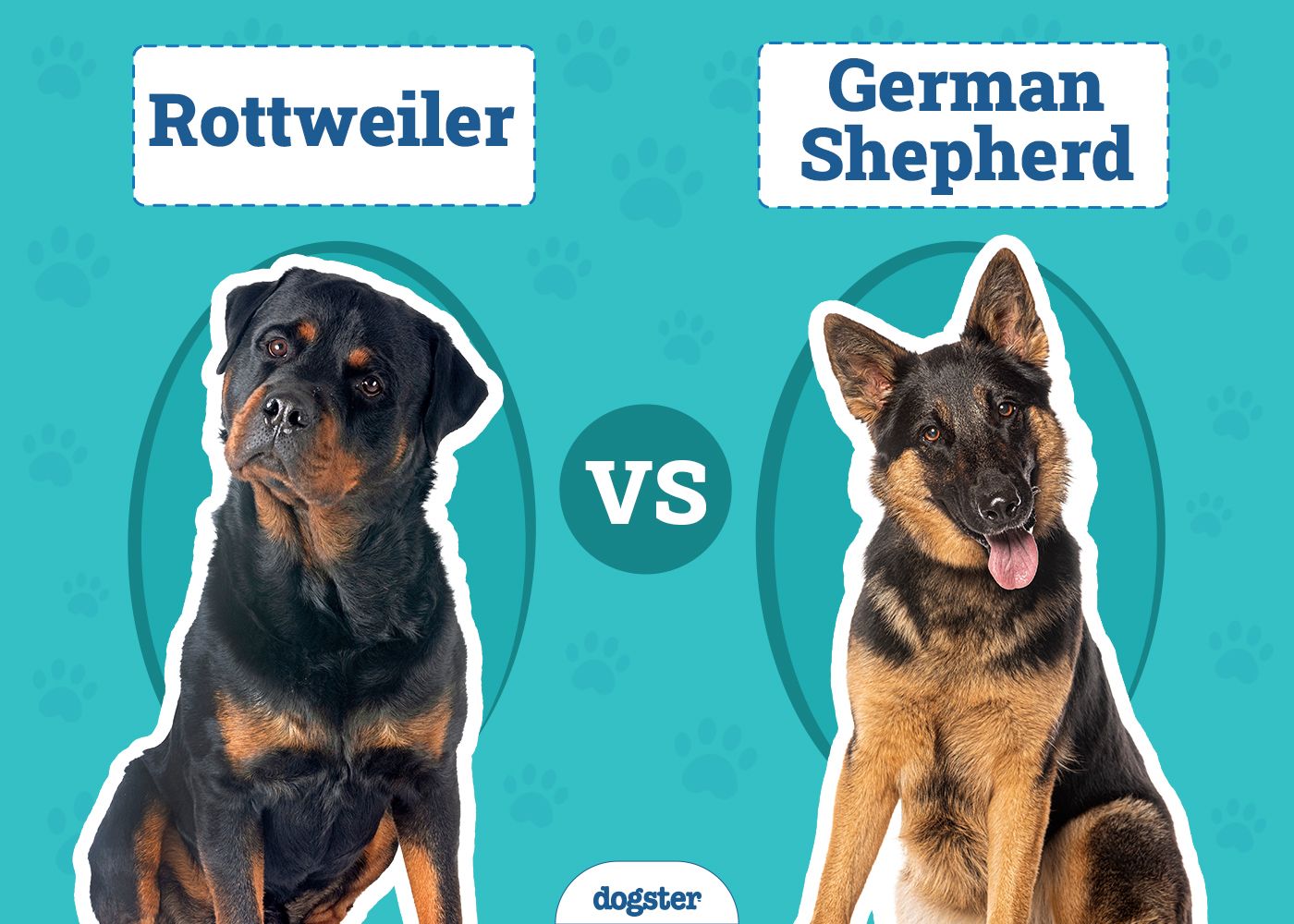
The Rottweiler and the German Shepherd are two of the most popular working dog breeds. Both dogs make for excellent police, military, and/or therapy animals. And as long as you take the time to train a Rottweiler or German Shepherd from an early age, they will both make wonderful family pets and excellent guard dogs, too.
If you’ve been looking for an addition to your family that everyone will love and that will make for a loyal companion, then the Rottweiler and the German Shepherd are two of your best bets. And while they are very similar, making it a difficult choice between the two, they have some differences that will help you decide which breed would be the better fit.

Visual Differences

At a Glance

Rottweiler Overview

Rottweilers (aka Rotties) often get a bad rap, but it’s undeserved. The breed was developed during the Roman Empire, originally bred as herding dogs, but quickly grew into guardians for their protective instincts. They were supposedly used during the Middle Ages to guard merchants traveling with lots of money, and later were recruited as law enforcement animals during World War II. As a result of this background, you’ll find them to be fiercely protective and very trainable as guard dogs.
They aren’t just working dogs, though. Plenty of Rottweiler owners talk about their pets being goofy, sweet, gentle, and loving. If your Rottweiler begins training and socializing at a young age, they should get along well with children and, often, other pets. However, you might need to watch out for those herding instincts, as they could result in small children or those shaky on their feet being accidentally knocked over.
Personality / Character
Dogs, like people, have individual personalities, and the Rottweiler is no exception. Their characters can range from laidback to highly driven, solemn to silly. Overall, Rottweilers tend calmness rather than hyperactivity, and at times, even seem a bit aloof.
These pups are protective and somewhat paranoid. They can be left to their own devices, though, unlike other breeds who experience separation anxiety. Plus, they aren’t much of barker, making them excellent for those with close neighbors.
As far as potential negatives go, Rottweilers can be territorial, which means they might not want to let strangers into your home without your welcoming approval. Their protective natures also mean they may step in to protect even if the “danger” is merely perceived and nothing is actually wrong. Finally, they can be quite stubborn at times.
Health & Care
While Rottweilers tend to be relatively healthy, they will have some health issues to watch out for, and they can have shorter lifespans due to their larger size. Some of the more common ailments in Rottweilers include hip dysplasia, dilated cardiomyopathy, hypothyroidism, and lymphoma.
When it comes to caring for your Rottweiler, you’re in for a fairly easy time. While they may shed more than you expect, they only need to be brushed once a week for a healthy coat (except for spring and fall when they shed a lot more, known as “blowing out” the coat). Bathing is only needed as necessary, although if you use a gentle shampoo, you can wash them weekly. Trimming their nails should be a bi-weekly experience.
The food you give your Rottweiler should contain around 22–26% protein from whole proteins (think chicken or lamb). The amount of food is often based upon their weight, and you’ll need to keep an eye on these guys as they are prone to weight gain if overfed or under-exercised. Since they are calmer than other breeds, around an hour of exercise a day should do them well.

Suitable For:
Rottweilers are suitable for experience dog owners because they need a lot of training. They are also ideal for families with backyards and those who spend several hours a day outside the home. Finally, these pups are good for those looking for a working dog, whether it be for herding or guarding.

German Shepherd Overview

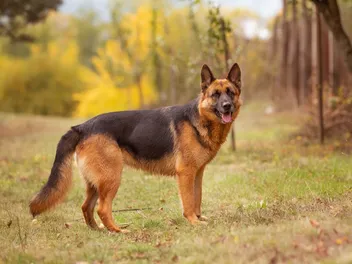
German Shepherds are one of America's favorite breeds, even though they too have a bad rap regarding aggressiveness. Like the Rottweiler, though, don’t let the reputation fool you. German Shepherds make excellent family pets when given proper training and socialization.
Also a working dog breed, German Shepherds are known for being whip-smart and courageous under fire. You’ll find them working as police dogs, military dogs, search and rescue dogs, assistant dogs, and more. It makes sense seeing as how these dogs are high-energy and love having tasks. That high energy and driven nature make them less suitable for those without the time to dedicate to their furry companions, though.
Each German Shepherd will have its own personality, but overall, you’ll find them loyal companions who make for wonderful watchdogs. They can be more likely to suffer separation anxiety than other breeds, so leaving them alone for long periods may cause trouble.
Personality / Character
German Shepherds tend to be on the more reserved side, so they may come off as aloof, but once they become your pal, you’ll be pals for life. They are highly intelligent and incredibly loyal, making them great as family watchdogs. With their families, they’ll be affectionate and relatively easy-going, as well as super active. You’ll have to make lots of time to play with this breed.
German Shepherds also love having jobs to do, so if there’s something in the house they can be trained to do—from letting someone who’s deaf know they have a visitor at the door to watching out for those prone to seizures—they’ll be uber happy to do it. Their smarts give them the ability to be trained to do almost any job you can imagine (minus those requiring the use of thumbs!).
One thing these dogs hate, however, is being left to their own devices. This can cause separation anxiety which in turn can lead to bad behavior and aggression. If you or your family aren’t home often, this is not the pet for you.
Health & Care
German Shepherds are typically pretty healthy with proper care, but they will be at more risk to develop certain diseases than other breeds. These include elbow dysplasia, bloat, degenerative myelopathy, and exocrine pancreatic insufficiency.
With the energy levels these pups have, you’ll be looking at lots of time spent playing and exercising them. In fact, The Kennel Club recommends at least 2 hours a day of activity for German Shepherds! This activity can come from walks, playing in the backyard, and a variety of doggy toys.
When it comes to their nutritional needs, you’ll need to feed your pet a diet made for larger dogs who engage in a lot of activity. How much food they need a day will vary by age. Be careful not to overfeed or give them too many treats since this can cause weight gain that leads to joint issues.
German Shepherds will shed much more than Rottweilers, so have your vacuum handy! Brushing twice or thrice a week will be helpful. You won’t have to bathe these pups too often (you shouldn’t, as it strips their coats of healthy oils), but do check their ears once a week for any dirt or odor and trim their nails once a month.

Suitable For:
German Shepherds are suitable for families and those who live in homes with backyards large enough to run and play in. They are also wonderful for people who are highly active and able to spend a couple of hours a day exercising their dog. However, German Shepherds are less suitable for those living in apartments or smaller dwellings with tiny yards and for people who are away from home often.

Which Breed Is Right for You?

Whether the Rottweiler or German Shepherd is right for you comes down to a few factors: where you live and how much space there is, how much time you must dedicate to a pet, and whether you are able to train your pup (or send them to a trainer). Other than that, both the Rottweiler and German Shepherd can make for good, loyal pets who are also willing to guard and protect the family if needed.
See Also:
Expert dog care, straight to your inbox
News, insights, expert advice, and everything dog.

No spam — unsubscribe anytime.
By signing up, you agree to our Terms & Conditions and Privacy & Cookies Policy.
How useful was this post?
Click a star to rate. You can leave written feedback afterwards. (We read all feedback.)
Nicole has loved animals of all sizes her whole life so it's no wonder she has dedicated her career to helping them through what she loves best: learning, writing, and sharing knowledge with others. She’s the proud mom of two dogs, a cat, and a human. With a degree in Education and 15+ years of writing experience, Nicole wants to help pet parents and pets around the planet to live happy, safe, and healthy lives.