Labrador Retriever vs. German Shepherd: Key Differences (With Info & Pictures)

In this article
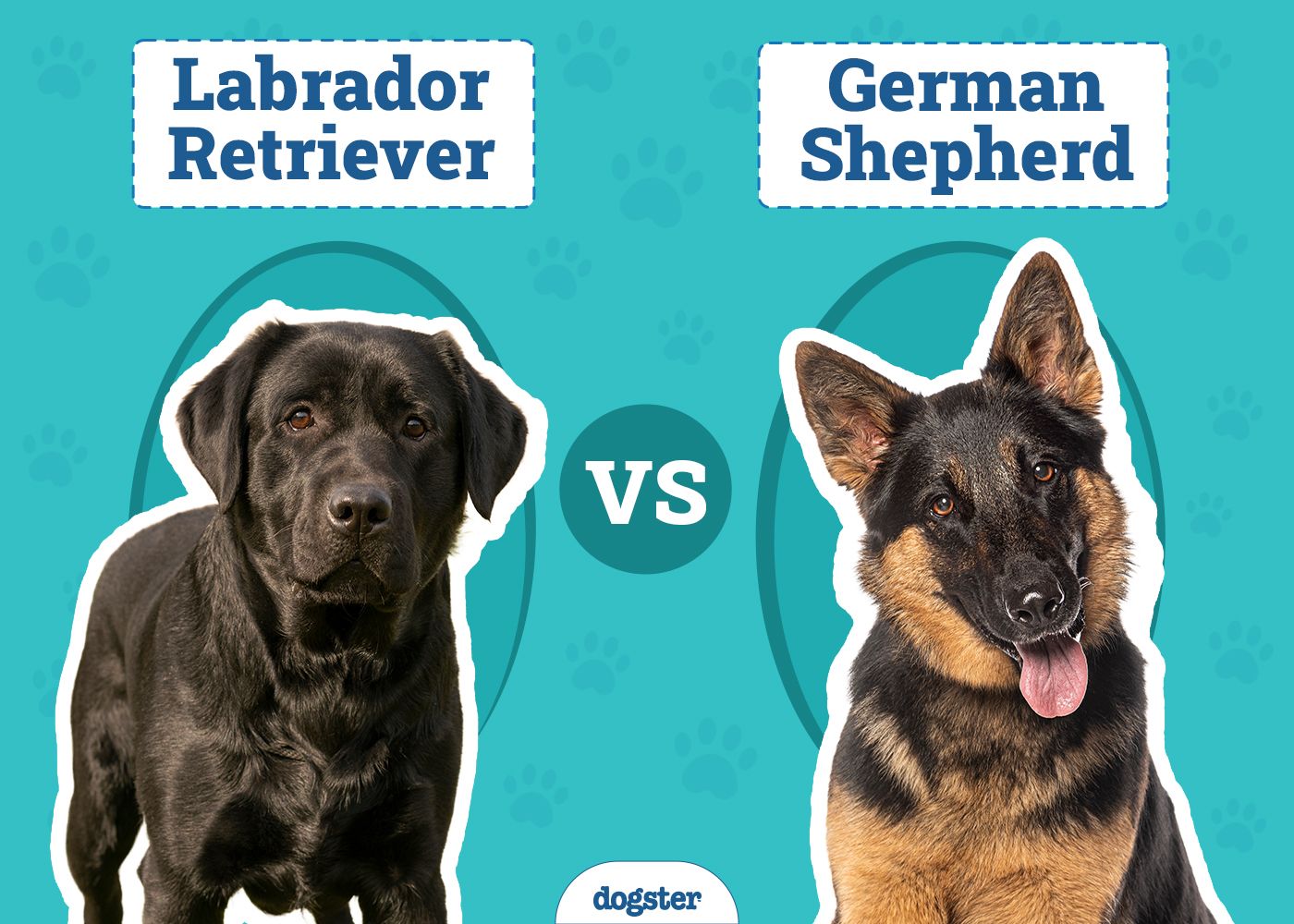
The Labrador Retriever and German Shepherd are extremely common breeds in the United States. In fact, they regularly top the AKC’s list of most popular breeds every year.1 That said, they are exceedingly different dogs and are not considered interchangeable in the least. A dog that is better for one family may not be the best option for another. Therefore, we highly recommend doing your research before adopting one of these breeds.
Labrador Retrievers tend to be quite friendly and people oriented. They love everyone and everything, though they also have a strong prey drive. Many also love water because they were originally bred to retrieve fowl and fishnets.
German Shepherds tend to only be oriented toward their families. A well-socialized German Shepherd is not aggressive toward strangers, but that doesn’t mean that they’re friendly. It really depends on how they're raised on training.
Several other aspects differentiate these breeds. Keep reading to determine which one is best for your family.

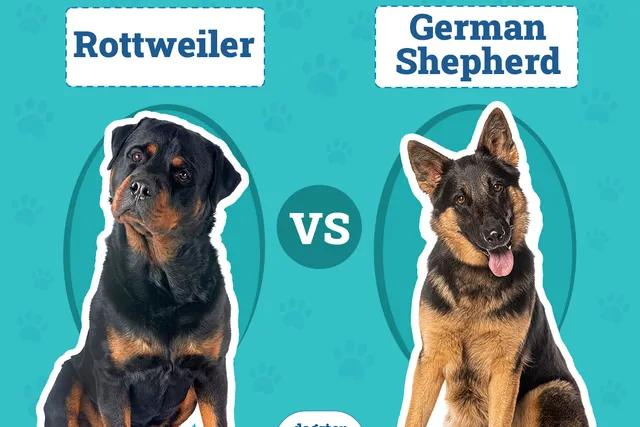
Labrador Retriever vs German Shepherd: Visual Differences

At a Glance
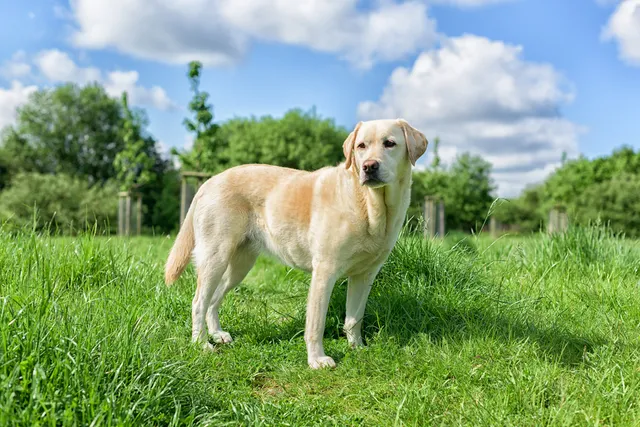
Labrador Retriever Overview

The Labrador Retriever was bred as a gun dog. Originally, they were bred and developed in the United Kingdom, but many were later imported to Canada. Today, this breed is still a prized hunting dog. They are also used for service animal work and kept as companions.
They are exceedingly popular throughout much of the Western world. Most people love them as companion animals due to their obedience and playfulness. They are friendly and loyal.
Temperament
Labrador Retrievers are outgoing, friendly, and pleasant. They have an extremely good temperament, which is why they make such good family dogs. They are even-natured and able to get along with children and other dogs. They even have a good reputation with smaller animals, as long as they are properly socialized.
These dogs can be energetic, though. Many do not have much fear, which can get them into trouble. Training and socialization are required to keep them from getting out of hand. These dogs mature late, at around 3 years old. They often have puppy-like energy before this, which often causes them to be labeled as hyperactive.
Labrador Retrievers are not typically noisy or territorial. However, they may bark at unknown noises and when startled. That said, their friendly nature makes them poor guard dogs.

Health
Labrador Retrievers are generally healthy. However, they are prone to a few genetic conditions, like all purebred dogs.
Perhaps most notably, Labrador Retrievers are extremely prone to obesity. They may be missing all or part of their POMC gene, which helps them regulate their appetite. Therefore, many Labrador Retrievers must be fed carefully.
Chocolate Labradors are more likely to develop certain health conditions, and their lifespan is significantly lower than that of the other colors. While the exact cause of this is unknown, it is thought to be due to the selective breeding for color, since the chocolate trait is rare.
Labrador Retrievers are also prone to:
Care
Labrador Retrievers make great family pets, but they do require an extensive amount of care. They are an active, working breed, so exercise is a must. They need multiple 30-minute walks a day to stay healthy and happy. Otherwise, they can become destructive. Of course, intense play in a fenced-in area can also run off energy.
Training at a young age is essential. These dogs are prone to boredom, which can lead to destruction and hyperactivity. For this reason, it is recommended that Labrador Retrievers are trained as early and often as possible.
Not only will this help them stay well-behaved, but it also prevents the dog from becoming bored. These dogs are quite intelligent, which does come with responsibility on the owner’s part.
Their grooming needs are not excessively high, but daily sessions are often required. Their coat sheds heavily. Therefore, we often recommend brushing them as much as possible. This routine also helps distribute the natural oils through their skin, which helps them stay clean and waterproof.
They don’t need baths that often. However, due to their love of water, it isn’t odd for them to get muddy. In these cases, a bath is often required. They’ll need their nails trimmed and their teeth brushed regularly. Their ears may also need to be cleaned, though their short fur often means that this isn’t a major issue.
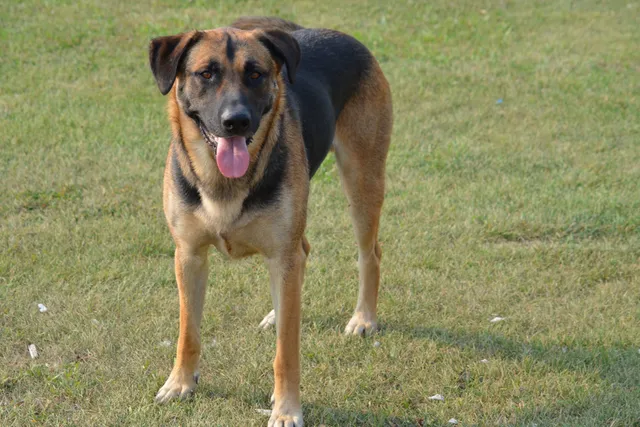
German Shepherd Overview

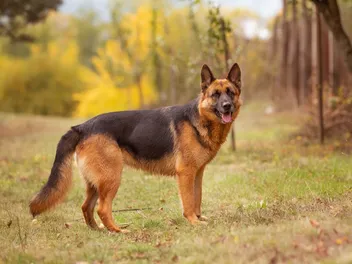
The German Shepherd is a working dog that originated in Germany. As the name suggests, this breed was originally bred for herding animals. However, they are mostly known for their territorial and protective instincts today.
They are extremely popular in the United States and are often kept as family dogs. Their obedience and intelligence are the oft-cited reasons for their popularity. They are also used in many different fields, from police work to search and rescue. Their loyalty makes them wonderful for these environments.
Temperament
The German Shepherd may be a popular family dog, but their temperament often means that they can be a handful. They are extremely loyal and often well-behaved at home. However, they can be territorial toward strangers, which can potentially make them aggressive if they are not properly socialized.
You cannot bring a German Shepherd home and never take them out again. Their need for socialization is quite high compared to that of other dogs. They need to know that others are not a threat, which can only be accomplished by introducing them to many other people!
These dogs are eager to learn and train. They easily pick up commands and are owner-oriented enough to listen to them. They bond closely with everyone in their family, making them great family dogs.
They do best when given some sort of job to do. If you’re interested in canine sports or something similar, this dog breed is often a suitable choice. Even if you aren’t, many people recommend training the dog in agility or obedience to exercise their brain and keep them from becoming excessively bored.
Health
In the past, German Shepherds were quite healthy. However, they did undergo a certain amount of inbreeding during their early years, with a heavy focus on appearance in a few lines.
Today, these dogs are increasingly unhealthy. It is best to purchase puppies from working lines, where health and athleticism are put above appearance. Show lines often place too much emphasis on conformity to the standard, which can lead to health problems.
German Shepherds are often prone to hip and elbow dysplasia. The more sloped a dog’s back is, the more likely it is to be affected by one of these conditions. Arthritis is common later in life, even for dogs that don’t have hip dysplasia.
Many working dog breeds have degenerative spinal stenosis. However, the extent and reach of this disease are unknown, as there has yet to be a large study. Most German Shepherds live to about 11 years, which is normal for a breed of their size.

Care
German Shepherds have a wiry coat that does a good job of staying clean. However, they shed heavily. Therefore, it is best to brush them daily if possible. Luckily, they don’t need baths that often, especially if you keep up with their brushing routine. Too frequent bathing can actually cause problems, as it dries out the dog’s skin.
German Shepherds will need typical grooming. Their nails will need to be trimmed every few weeks, and they should have their teeth brushed at least every other day.
Training and socializing these dogs is essential to their well-being. They are quite intelligent, so you must exercise their mind regularly. Daily training is one easy way to do this, and it can help you keep them under control.
Socialization should be continued well after their puppy years. Otherwise, the dog can back-pedal and suddenly become fearful of new people and environments.
You should expect to give these dogs plenty of exercise each day. They are best for active families, as others may have trouble meeting their significant exercise needs. Multiple walks a day are often required.
Lab vs German Shepherd: Which Breed Is Right for You?

These breeds are similar in the amount of care that they require. Both need extensive training and exercise. They are heavy shedders, so regular grooming is necessary. However, they don’t need baths often and do a good job of staying clean (most of the time).
That said, the Labrador and German Shepherd are quite different temperament-wise. German Shepherds are aloof with strangers and protective. They bond closely with their families, but that also means that they need a great deal of socialization. Labrador Retrievers will love everyone. They aren’t protective or territorial in the least.
Which breed you choose largely depends on the temperament that you’re looking for. If you want a dog that is ecstatic every time they see a stranger, a Labrador Retriever is the best option. For those who want a dog that bonds closely with family members only, get a German Shepherd.
Related Read: Cane Corso vs German Shepherd: Key Differences
Expert dog care, straight to your inbox
News, insights, expert advice, and everything dog.

No spam — unsubscribe anytime.
By signing up, you agree to our Terms & Conditions and Privacy & Cookies Policy.
How useful was this post?
Click a star to rate. You can leave written feedback afterwards. (We read all feedback.)
Kristin loves to help pet parents create a fulfilling life for their pets by informing them on the latest scientific discoveries and helping them choose the best products for their pets. She currently resides in Tennessee with three cats, four dogs, two fish, and a lizard, though she has dreams of owning chickens one day!