Reactive vs Aggressive Dog: Vet-Reviewed Differences


In this article
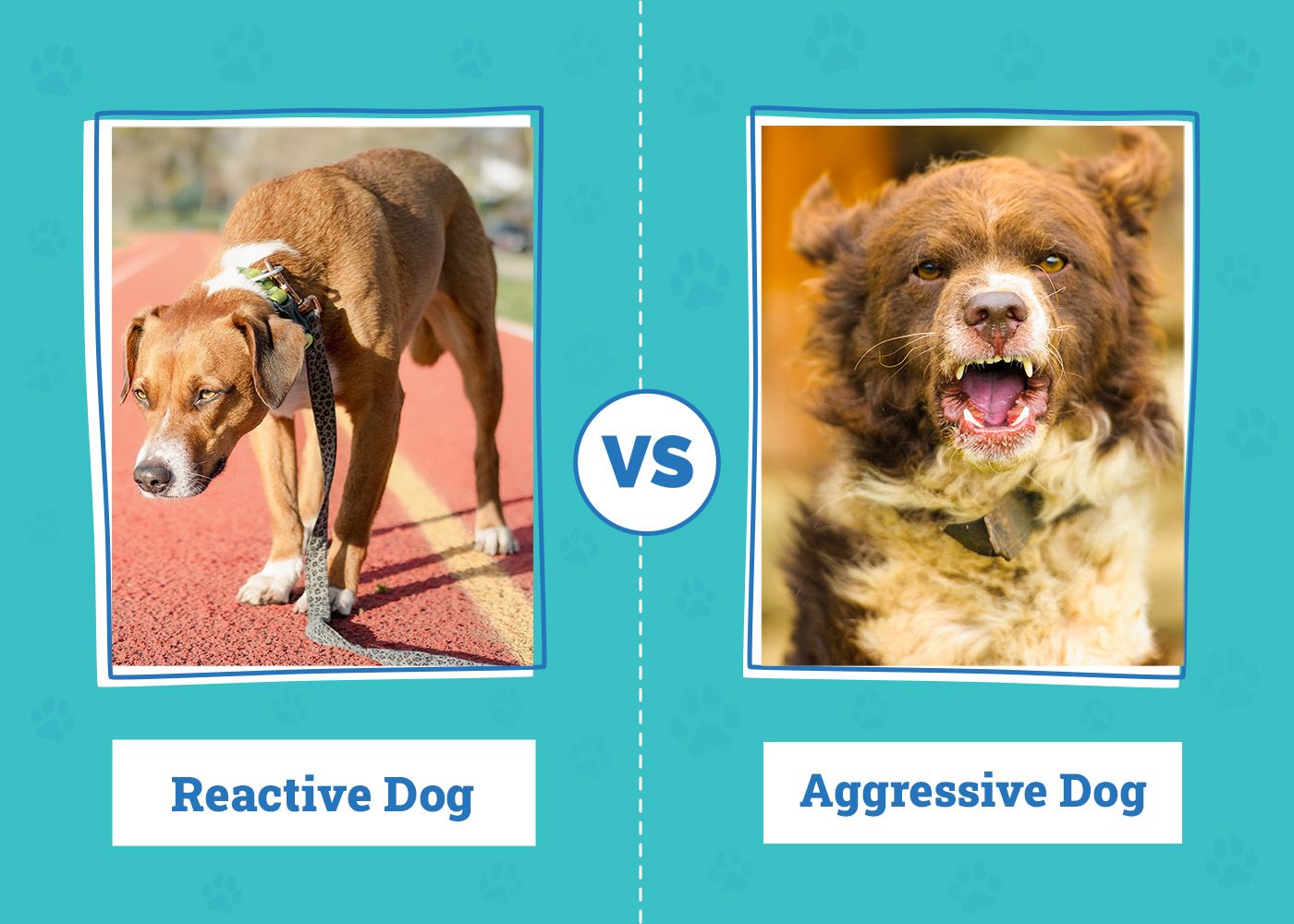
Perhaps you’ve heard the terms “reactive dog” or “aggressive dog.” Most people know what an aggressive dog looks like, but do you know what a reactive dog looks like? Better yet, do you know the differences between the two? Surprisingly, they are very similar; however, certain aspects differentiate them, and if a reactive dog is not properly trained, it can lead to an aggressive dog.
In this post, we discuss the differences and what you can do if your dog is displaying behaviors that point to these problems.

Visual Differences

At a Glance

Overview of Reactive Dogs

When it comes to reactive versus aggressive dogs, reactive dogs are commonly mistaken for aggressive dogs. But why? Because the actions between the two are very similar, and sometimes, a reactive dog can lead to an aggressive dog, but not always.
In a nutshell, reactive dogs overreact to certain stimuli that are otherwise normal situations for non-reactive dogs. For example, some dogs may overreact to someone with a beard due to an unpleasant memory, or perhaps the dog has not been properly socialized to behave appropriately in certain situations, such as the arrival of guests to the home. Reactive actions can stem from improper training, non-socialization, a frightening experience, genetics, or a combination of all these factors.
What Does Reactivity in Dogs Look Like?
Reactivity in dogs is an intense response to certain stimuli. Dogs with reactivity will overreact to sounds, such as thunder or fireworks. A reactive dog may also overreact when seeing another dog or animal, seeing large vehicles moving down the street, being on a leash, or seeing someone they either are afraid of or are curious about, such as a child.
Imagine this scenario: You’re walking your dog on a leash for a nice stroll when another dog suddenly comes into view. Your dog starts barking hysterically, forcing you to take another route to avoid the other dog. In this case, the dog is reactive.

How Do I Help My Reactive Dog?
A reactive dog can turn into an aggressive dog. In short, you don’t want a reactive dog because it may lead to unwanted and undesirable behaviors. Luckily, most reactive dogs can be trained to act normally when presented with triggers or certain stimuli.
The first step is to identify your dog's triggers. Once you’ve established the triggers, try to avoid them; however, this isn’t a one-and-done plan, as this is not always feasible. Behavior modification, or counterconditioning, is a method in which you teach your dog that the triggers resulting in reactivity are not that scary. In other words, socialization and training are permanent solutions to the problem before it may turn into aggression, while avoidance is more like a Band-Aid to temporarily avoid the issue.
Rewards with treats are an excellent way to train your dog not to be afraid of certain situations. For example, offer a reward as soon as a trigger appears, like another dog out for a stroll with their owner. Feed treats to your dog while the trigger passes or as you move by it. However, to start, give the treat at a safe distance initially so your dog feels comfortable. Constant training will help your reactive dog understand the trigger is not so scary. In time, your dog will look to you for a treat when seeing a trigger rather than acting out.
Pros
- Reactive dogs can be trained to avoid unwanted behaviors
- Training enhances a bond and trust with your dog
- Training improves your dog’s social skills
- Reactive dogs teach humans patience
Cons
- Takes time to train a reactive dog
- Involves an emotional investment
- Requires much time and dedication

Overview of Aggressive Dogs

We’ve established that a reactive dog can lead to an aggressive dog, which is not a desirable outcome. Unlike reactivity, aggressive dogs react in such a way as to inflict harm. Aggression is a real possible outcome in a reactive dog that has not been trained to subdue the behaviors. An owner of a reactive dog may not have fully understood their dog’s body language, which means they never corrected an unwanted behavior, which can lead to aggressive behaviors, such as a stiff and rigid body, growling, or showing teeth.
When it comes to aggression in dogs, there are certain types, with many being situational. Aggression usually stems from a fight-or-flight response, meaning a dog will likely bite a threat to save themselves. Aggression involves a strong emotional response to a threat, which releases neurotransmitters to the brain to prompt the dog to “act.”
Aggression in dogs can be quite complex, with many factors involved, such as fear, instinctive predatory behavior, pain or health issues, and resource guarding, to name a few.
What Does Aggression in Dogs Look Like?
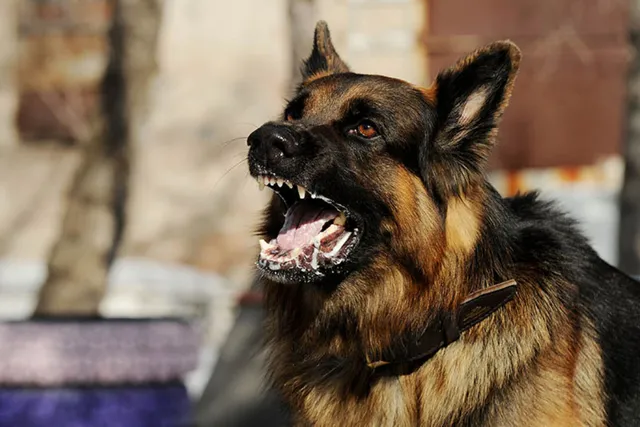
When a dog is in aggressive mode, it can take different forms, stemming from being in an uncomfortable situation. Here are typical actions from an aggressive dog to give you a better idea of what it looks like:
- Biting
- Nipping
- Lunging toward the threat
- Growling
- Staring intensely
- Stiff body
- Showing teeth
- Ears either straight back or forward
- Snapping or nipping
- Raised hackles

How Can I Help My Aggressive Dog?
If your dog is showing signs of aggression, there are a few things you can do to help curb the behavior, much like with reactive dogs. For starters, identify the triggers and avoid them if possible until you can begin training. When avoiding a trigger isn’t possible, try to redirect your dog before your dog spots the threat, or at least keep your dog as far away from the trigger as possible.
Avoid yelling at your dog when they display aggressive behaviors. Rather, talk in a soft voice as you move your dog away from the trigger. Try to keep your dog from overarousal, as this will result in your dog not responding to your efforts. The main focus is to reduce the behavior while your dog is still capable of thinking rationally.
Much like reactivity, you can train your dog with desensitization and classic counterconditioning, but if you have trouble, you may need to seek help from a professional canine behavioral specialist.
Pros
- Most dogs can be trained not to exhibit aggression
- An aggressive dog can scare away intruders
Cons
- Legal and liability issues
- Risk of being attacked
- Risk of serious injury or death
- Euthanasia due to aggressive actions
Frequently Asked Questions (FAQ)
Are Reactive Dogs Happy?
After reading this information, you may wonder if your reactive dog is living a happy life. All dogs are different, and some reactive dogs may be constantly uncomfortable dealing with everyday triggers. Since fear is the driving force of reactivity, you can conclude that a fearful dog is not comfortable or happy. In short, it’s best to train a reactive dog to be socialized and unafraid, which can lead to a better quality of life.
How Common is Reactivity in Dogs?
Reactivity is quite common in dogs. Sometimes, a reactive dog never sheds the behavior due to a lack of training to correct it, which may stem from the owner simply not understanding the behaviors and how to fix them.
Are Some Breeds More Prone to Reactive or Aggressive Behaviors?
We’ve mentioned that genetics can play a role in these behaviors, and research shows that genes greatly contribute to aggression toward strangers, trainability, and chasing. For example, Border Collies and Poodles had higher trainability scores, while Chihuahuas and Dachshunds had higher aggression toward strangers.
While any breed can develop reactive or aggressive behaviors, certain breeds are more prone to them. According to data from the University of Helsinki, which conducted a 2021 study on aggressiveness among 22 dog breeds, 10 breeds are more aggressive than the average:
- Rough Collie
- Miniature Poodle
- Miniature Schnauzer
- German Shepherd
- Spanish Water Dog
- Lagotto Romagnolo
- Chinese Crested
- German Spitz Mittel
- Coton de Tuléar
- Wheaten Terrier

Is My Dog Being Playful or Aggressive?
Understanding your dog’s body language will help you determine if your dog is being playful or aggressive. Here’s what to look for in friendly dog play:
- Relaxed body
- Relaxed ears
- A wagging tail that is not high up in the air or low to the ground
- Playful bow
- A wag that wiggles the entire body
- Rolling over with belly exposed
- Soft eyes
- Blinking eyes
When to Seek Professional Help
If your dog is displaying reactive behaviors, it’s crucial to nip it in the bud before it can potentially turn into aggression, which will come with a whole slew of problems. If your dog does not respond to your training efforts and continues these behaviors, it would greatly help to enlist the help of a professional canine behavioral specialist to help your dog get on the right track. Ask a veterinarian if they can refer you to a certified animal behaviorist in your area. On the same note, if your dog is showing aggression, intervening with a professional is a must.
Conclusion
As you can see, the similarities between reactive and aggressive dogs are similar, but there are crucial differences to help you determine if your dog is aggressive or simply over-aroused to specific stimuli. The good news is that you can train a reactive dog to behave appropriately so the behaviors do not evolve into aggression, and when all else fails, you can hire a professional to help you train your dog. An aggressive dog can be a dangerous situation, and it’s something you need to address as soon as possible.
See Also:
Sources
https://www.akc.org/expert-advice/training/reactivity-vs-aggression/
https://www.animalhumanesociety.org/resource/reactivity-and-aggression-dogs
https://www.sciencenews.org/article/dog-breed-behavior-genetics#:~:
https://www.newsweek.com/most-aggressive-dog-breeds-1841348#:~:text=
https://www.akc.org/expert-advice/training/reactivity-vs-aggression/
Featured Image Credit: (L) sophiecat, Shutterstock | (R) The Len, Shutterstock
Expert dog care, straight to your inbox
Vet-reviewed advice, training tips, and the best of Dogster. Free, and you can unsubscribe anytime.
By signing up, you agree to our Terms & Conditions and Privacy & Cookies Policy.
Rachel Giordano is a writer and musician living in Pensacola, Florida, with her partner and their two dogs, Aero, a Border Collie/Sheltie mix and Sophie, a Boston Terrier. Rachel holds a Bachelor of Arts degree in communication and loves writing about animals of all types. When she’s not writing about pets, she loves to write suspense/thriller novels. A musician by night and writer by day, she enjoys educating the public about the needs and requirements of animals, big and small.
Join the conversation
Ask a question, share your story, or send private feedback.