Raised vs Floor Dog Bowls: Key Differences (With Pictures)

In this article
For pet parents, buying the right supplies in order to keep their canine companions healthy and happy is of the utmost importance. But when it comes to mealtime, what are the best types of dishes for your dog?
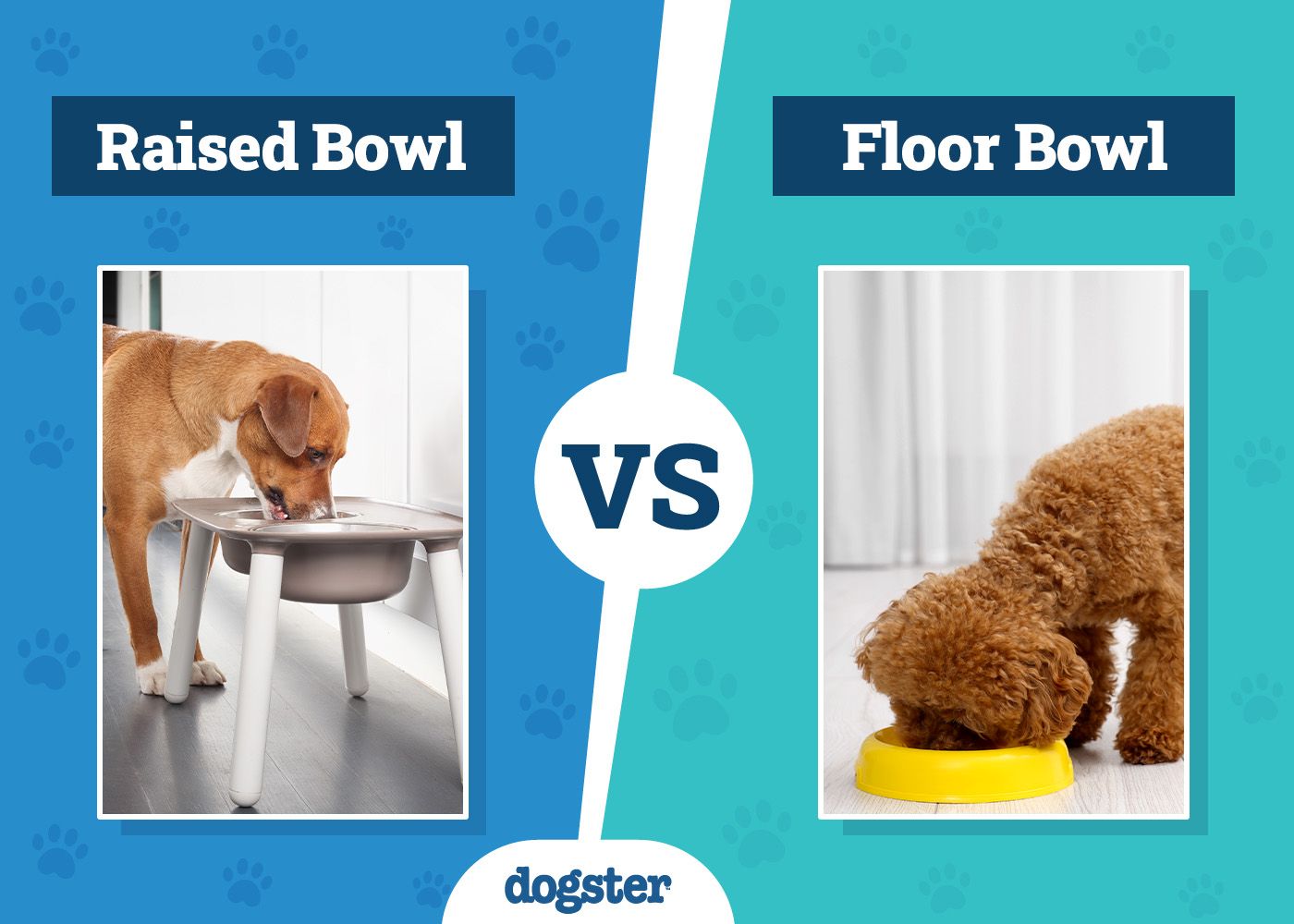
There are numerous dog dish options available, including raised and floor dog bowls. While floor dog feeders lay flat against the ground, elevated ones sit on stands that are several inches above floor level.
But which one should you pick for your pooch? In this in-depth article, we’ll take a closer look at floor vs. raised dog bowls to help you determine which one is right for your pup.

Overview of Floor Dog Bowls
Floor-level dog feeders are just what their name implies. They’re dog dishes that rest parallel to the floor. Typically, a pet parent will keep floor dog bowls on a mat in order to protect the flooring underneath.
There are several different kinds of floor dog bowls, including shallow bowls, deep dishes, and slow-feeding bowls. All of these floor bowls require the dog to bend his neck down in order to efficiently eat his meal. For larger dogs, floor bowls can present problems if they suffer from head or neck pain.

Types of Floor Dog Bowls
There are three main types of floor dog bowls. Each of them is designed with specific needs in mind.
Shallow floor bowls are ideal for dog breeds that have shorter muzzles or a flattened face, including Pugs and Bulldogs. Shallow bowls allow the dog to easily reach his food and put less pressure on his throat while eating.
Deep dog dishes are perfect for canines with longer snouts, including Wolfhounds or Collies. The low bottom and the high walls ensure that no mess is left when the dog gobbles up his meal.
If your pup is a fast eater, opt for a slow-feeding floor dog bowl. Specifically made for dogs that quickly gulp down their meals without chewing the food, these types of floor bowls have a small obstruction that the dog needs to navigate, slowing his eating.
Is a Floor Dog Bowl Right for My Pet?
Floor dog feeders make excellent choices for smaller dog breeds. Since the dog needs to bend his head and neck in order to reach his meal, a floor-level bowl work better for petite pooches.
Moreover, floor-level bowls eliminate the mess that often accompanies elevated dog dishes. This is because floor bowls have deep sides, catching any spillovers.
Overview of Raised Dog Bowls
Raised dog dishes, also known as elevated feeders, are bowls that are elevated a couple of inches off the floor by a stand.

This allows the bowl to be the same height as a dog’s shoulders to decrease head and neck strain while eating or drinking. Many come in a fixed height, so it’s important for a dog parent to know what measurements best suit their pet.
Raised dog feeders are predominantly used to feed larger breeds. However, smaller options exist for tiny dogs.
Potential Risks of Raised Dog Bowls
When elevated dog feeders first hit the pet market, they were touted for their ability to drastically reduce bloat. Bloat is a very serious digestive issue that occurs when the stomach over-inflates due to excess gas. Quick-eating dogs are extremely susceptible to this condition.
Despite the initial good news, some studies found that raised dog bowls actually increase the risk of bloat. However, other studies have found the exact opposite to be true.
Benefits of Raised Dog Dishes
Big dog breeds can benefit the most from raised dog bowls. If your large pup suffers from neck aches, it could be hard for him to eat his meals off of the ground. An elevated feeder can reduce pain related to tenseness and arthritis by bringing the food up to shoulder level, enabling the dog to never bend his neck as he eats.
Moreover, your vet may recommend a raised dog dish if your pet has megaesophagus, which is a neurological impairment involving the esophageal muscles. Dogs suffering from this condition cannot use their esophageal muscles to push food into their bellies for proper digestion. This can lead to possible choking hazards and even death.
Consulting a veterinarian is recommended for the best course of action.
Raised dog bowls will also improve posture and keep unwanted pests out.
Which Dog Bowl Is Right for You?

When choosing the perfect dog dish for your pet, you should consider many factors. Smaller dogs that don’t have to crane their necks while eating can benefit from floor dog bowls.
However, if your dog is larger or suffers from neck pain, a raised dog bowl could be the better option. Your vet might even prescribe an elevated dog feeder if your pup has megaesophagus.
If your dog swiftly devours his food without chewing, it’s best to buy a slow-feeding floor dog bowl in order to reduce the risk of bloat. Raised dog bowls are also more expensive, won’t contain messes, and aren’t adjustable.
Final Thoughts
While floor dog feeders are great for small dogs, fast eaters, and pet parents who are on a budget, raised dog bowls are great for larger breeds suffering from neck pain. When it comes to making a decision, it all depends upon your dog’s unique needs.
Related Read: 3 Benefits of Hand Feeding Your Dog You Need to Know!
Featured Image Credit: Pixabay
Expert dog care, straight to your inbox
News, insights, expert advice, and everything dog.

No spam — unsubscribe anytime.
By signing up, you agree to our Terms & Conditions and Privacy & Cookies Policy.
How useful was this post?
Click a star to rate. You can leave written feedback afterwards. (We read all feedback.)
Nicole has loved animals of all sizes her whole life so it's no wonder she has dedicated her career to helping them through what she loves best: learning, writing, and sharing knowledge with others. She’s the proud mom of two dogs, a cat, and a human. With a degree in Education and 15+ years of writing experience, Nicole wants to help pet parents and pets around the planet to live happy, safe, and healthy lives.