Plastic vs Metal Dog Bowls: Which Is Right for Your Needs?

In this article
One of the first things most people get for a new dog is a food bowl, but with so many different types available, it can be challenging to know which type is best to buy. If you wonder if there is any difference between plastic and metal bowls beside the obvious, you’ve come to the right place!
We’ll take a closer look at these two common materials to see if there is any benefit to using one over the other to help you make the smart choice for your pet.

Overview of Plastic Dog Bowls

What Is Plastic Good For?
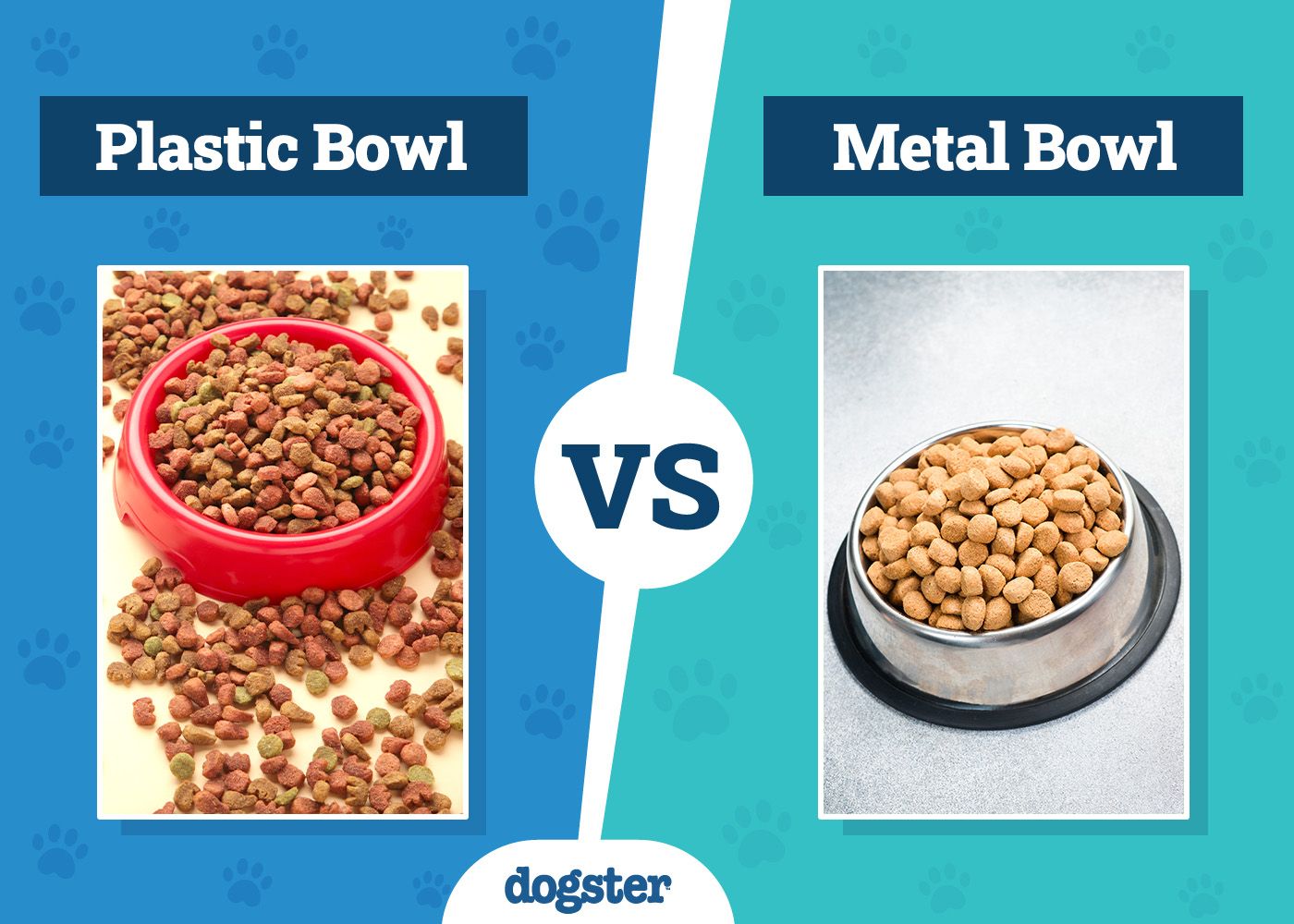
Plastic dog bowls are extremely easy to find, and you can find one in almost any store that supplies even the most basic pet supplies. Plastic is easy to form, so you can find these in almost any shape, including double bowls. Since plastic is so common, these bowls will be the least expensive, and they are also extremely lightweight. There are several kinds of plastic available, each with slightly different properties, and some can be quite durable.
However, it will not be as durable as metal, but you won’t need to worry about rusting.
There are a few problems with using plastic for a dog bowl. One downside is that it can leak BPA and other harmful chemicals into the food, which can be bad for your pet’s health and the environment. It can also change the flavor of water if left too long, and some dogs might decide to chew on the bowl, destroying it and ingesting the pieces.
Another problem with plastic is that it scratches easily, and even tiny shallow scratches can allow bacteria to grow, leading to health issues in your pet.

When to Choose Plastic
Plastic dog bowls make a good temporary bowl for feeding your pet someplace you don’t normally visit or on a long hike. It’s lightweight and easy to carry with you. Since it won’t rust, plastic makes a great option for a bowl that will sit unused for a long time. However, because it can leak harmful chemicals into food that will sit for a few hours, we don’t recommend plastic as its primary dinner bowl
Pros
- Inexpensive
- Any shape available
- Easy to find
Cons
- Not as durable
- Might leak harmful chemicals
- Harbors bacteria
Overview of Metal Dog Bowls

What Is Metal Good For
Metal dog bowls are typically much more durable than plastic ones, and dogs don’t usually chew metal as often as plastic, though they might still carry the bowl around with them. You can find metal in many shapes, but it’s more common to find metal bowls as inserts that fit into larger plastic bases. It’s usually more expensive than plastic, but it will not leak harmful chemicals into the food, and it’s not as bad for the environment. The hard surface does not scratch as easily, so it won’t allow bacteria to grow on the surface. Though they are not as easy to find as plastic, you should be able to find one without going to extremes.
There are several types of metal to choose from, like stainless steel, aluminum, and more. Aluminum and stainless steel will not rust, but other types, like chrome-plated steel, will begin to rust once the coating wears off. We recommend only purchasing higher quality metals that do not rust.
Related Read: Bone Meal in Dog Food & Is It Healthy for Your Dog?

When to Choose Metal
We recommend most people use an aluminum or stainless-steel dog bowl over a plastic one when choosing one that your pet will use every day. It’s more durable, unlikely to get chewed, and doesn’t leak chemicals into the food. It also tends to look more attractive. However, if you notice the outer coating wearing off or rust beginning to form, you should discontinue use immediately.
Pros
- Attractive
- Durable
- No chemicals
Cons
- More expensive
- Some low-quality metals
Plastic vs Metal Dog Bowls: How to Choose
How Large Should My Dog Bowl Be?
The dog bowl size you need will depend on your dog’s diet and the type of food you provide. Wet dog food is more condensed, so it will fit in a smaller bowl. Crunchy kibble will take more space and require a larger bowl. Determine how much food your pet will eat at each meal and get a bowl slightly larger. If your dog is still growing, you will need to consider that unless you intend to purchase others as your pet grows.
Final Thoughts
When choosing a dog bowl for your pet, we recommend selecting a stainless steel or aluminum bowl, or at least a metal alloy that won’t rust. Metal is easier to clean and doesn’t allow bacteria to grow. It’s durable, discourages chewing, and doesn’t change the flavor or leak harmful chemicals. Plastic is fine in an emergency, but you should quickly switch it out when possible.
We hope you enjoyed our look into the different materials used to make dog bowls and have learned some interesting facts. If we have helped answer your questions, please share this guide to the differences between plastic and metal dog bowls with your friends.
See Also:
Expert dog care, straight to your inbox
News, insights, expert advice, and everything dog.

No spam — unsubscribe anytime.
By signing up, you agree to our Terms & Conditions and Privacy & Cookies Policy.
How useful was this post?
Click a star to rate. You can leave written feedback afterwards. (We read all feedback.)
Ed Malaker is a seasoned writer who has contributed to a wide range of blogs covering everything from tools to guitars, and pets to fitness. When Ed isn't writing, he is usually making DIY projects around the house or working in the garden.