Why Does My Dog Bark at Kids? 6 Likely Reasons


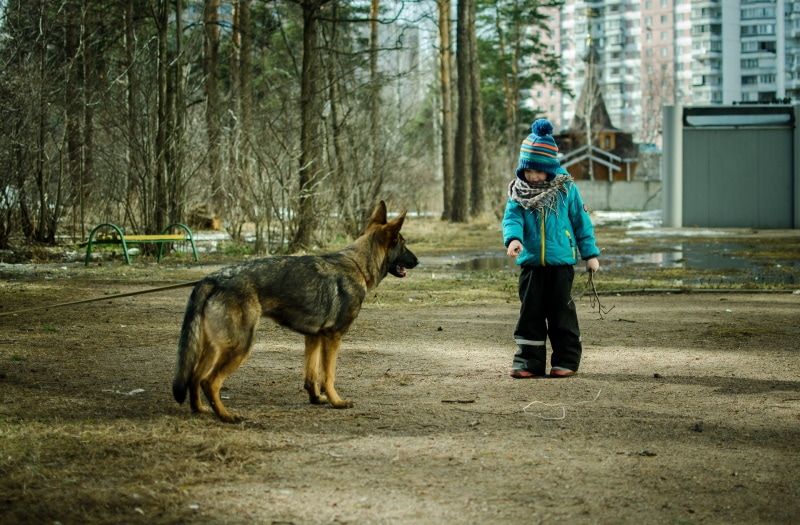
Dogs bark for too many reasons to count, but when they direct their vocalizations at kids, it can be particularly embarrassing or concerning for their owners. If your dog greets any sighting of a small human with a symphony of sound, you might wonder why.
Here are six likely reasons your dog may bark at kids and some suggestions of what to do about them.

The 6 Likely Reasons Why Your Dog Barks at Kids
1. Poor Socialization
Despite the common portrayals of dogs like Lassie who have picture-perfect bonds with the children in their lives, not every dog is born comfortable with kids. Dogs who were never given the chance to become accustomed to kids when they were puppies may grow up to become adult canines who bark at children.
Kids can be a scary experience for a dog because they are often loud, fast-moving, and may grab or approach without warning. Without early socialization with kids, dogs may not know how to react to them and resort to barking to try and scare off the small, noisy humans.
How to Solve This Problem:
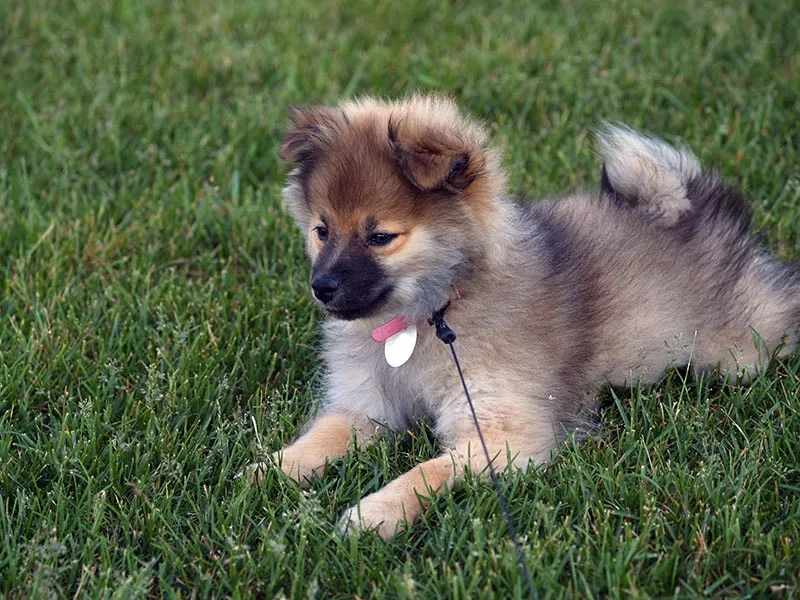
When you get a puppy, be diligent about exposing them to children of all ages and personalities when the dog is young. If you adopt an older dog with an unknown history, you can still attempt the socialization process but it will be much slower and require caution.
For example, start by allowing the dog to get used to the presence of an older, calm child before moving on to younger and louder ones.
2. Previous Bad Experience
Another reason your dog may bark at kids is that they are remembering a previous bad experience with a child. Dogs have surprisingly good memories, especially of negative moments. If your dog was startled or hurt by a child earlier in life, especially during puppyhood when they are most shaped by experiences of all kinds; the memory could be triggered by seeing another kid, causing them to bark.
As you socialize your puppy around kids, make sure to monitor and supervise the process carefully to avoid any issues that could lead to your dog later barking at children.
How to Solve This Problem:
Supervised early socialization can help ensure your pup avoids any bad experiences that could be triggered in the future. If your dog has already formed a negative association with kids, your best bet is to try to reverse it by creating a positive one instead. For example, feeding your dog high-value treats whenever you encounter a kid on your daily walk.
Eventually, your dog will begin to associate kids with the delightful experience of eating treats rather than whatever trauma was in the past.
3. Resource Guarding
Your dog may bark at kids because of a behavior known as resource guarding. Whenever your dog guards any possession (food, toys, a bed) they are displaying this behavior. Kids who get too close to a dog's food bowl or favorite bone may find themselves barked at, hopefully, nothing worse. Resource guarding is a natural trait in wild canine relatives, like wolves.
For wild animals, hanging on to their own food and territory is essential for survival. This trait is much less desirable in our pet dogs, however.

How To Solve This Problem:
If your dog’s resource guarding turns from barking to aggression, you'll likely need professional help from a vet or trainer for everyone's safety. Help your new puppy avoid this problem by hand-feeding them early on in their time with you. This allows the dog to get used to you handling and being around their food. Older kids could get in on the act too.
All kids should be taught to respect the dog's space and possessions. Don't let them take the dog's toys or hang around the food bowl during doggy mealtimes.
4. Protecting Their Territory
Your dog may bark at kids because they feel that they are getting too close to their territory, aka your house or yard. Some breeds, such as those developed to serve as guard dogs, are much more protective and territorial than others. Your dog may bark to alert you to the presence of the kids or to try and scare them away.
Unfortunately, kids often accidentally reinforce this behavior because they really do get scared and run away. These actions only prove to your dog that they’re doing the right thing by barking at the kids.
How to Solve This Problem:
If your dog won’t stop barking at kids that they see outside, try blocking their view by installing a privacy fence or window coverings. Obedience-train your dog so that they will respond when you tell them to stop barking at child visitors to your home.
Guarding and protection breeds should have diligent early socialization and training so that they grow into emotionally mature dogs who can distinguish between a real threat to their territory and a kid. Finally, teach kids to respect a strange dog’s space and not enter their yard without permission, especially without the owner present.
5. Wants to Play
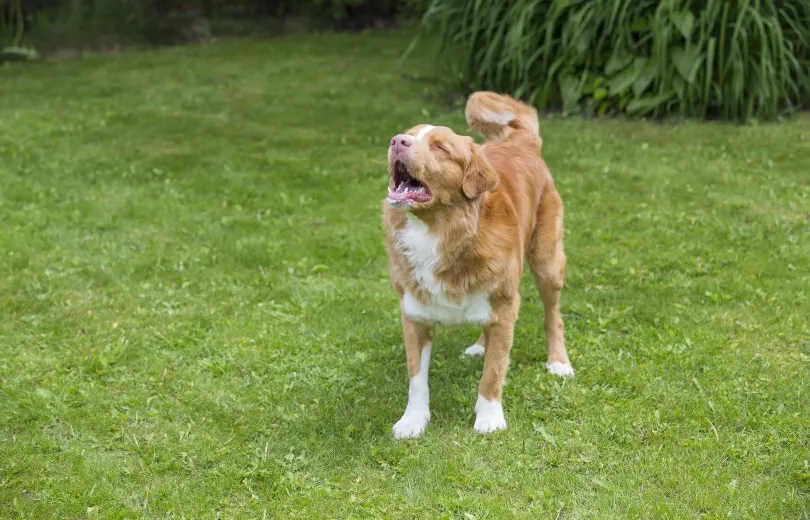
If your dog spies a group of children playing, they may bark excitedly because they want to join in on the fun! In this case, the dog is barking to communicate to the kids that they are eager to play with them. Suspect this cause for your dog's barking if they have previously had good interactions with children and if they are displaying other positive body language.
For example, your dog may perk their ears up, wag their tail, or display dog play behaviors like bowing into a "downward dog" pose or crab walking sideways toward the kids.
How to Solve This Problem:
If the kids and dog are comfortable with each other, let them play! However, to avoid reinforcing the idea that barking at the kids resulted in playtime, distract your dog or ask them to sit and be quiet before you let them join in the games. This helps your dog understand that they get what they want when they perform positive behaviors rather than negative.
If your dog can't play with the kids, train them to be quiet on command or use the phrase “Leave it!” to signal them to stop what they are doing and walk away from the children.
6. Anxiety
If your dog suffers from general anxiety, they may bark at kids as a sign of fear or nervousness. This could be because the kids serve as a trigger to a specific incident (as we discussed earlier) or just because they represent some change or stress that they have to deal with. Excessive barking, with no particular source, is one sign of anxiety in dogs.
Suspect this cause of barking if your dog has already been diagnosed with anxiety or if they show other signs of fear. Pacing, panting, and lip licking are all signs of anxiety in dogs.
How to Solve This Problem:
Unfortunately, solving this cause of barking in dogs requires you to deal with the generalized issue of your pup's anxiety. Anxious dogs benefit from obedience training, especially confidence-boosting activities. You may also need to perform more specialized training to identify and desensitize your dog to the things that make them anxious and fearful.
Professional assistance is often required to deal with an anxious dog. In some cases, anxious dogs benefit from taking anti-anxiety medications just like people.
When to Worry About Your Dog’s Behavior Towards Kids
Of the more than 4.5 million people bitten by dogs in the United States each year, more than half are kids. Children are also more likely to be severely injured by a dog. Most kids are bitten by dogs that they know rather than strays or unfamiliar pooches.
With these stats in mind, when should you worry that your dog’s barking at kids is going to escalate into something more serious? About 66% of dogs who bite have no previous bite history, so don’t assume your dog won’t do it just because they never have.
Signs your dog may be prepared to do more than bark include:
Many dog bite incidents occur because children don’t understand and respect the dog’s boundaries when they display the behaviors listed.
If your dog begins displaying these aggressive behaviors, take every precaution for the safety of the kids. Don’t allow your dog around children unsupervised. Seek professional help for training and desensitizing your dog.
In Conclusion
There you have it! Six likely reasons your dog could be barking at kids and what to do about them. Hopefully, you can maintain peace between your dog and any kids in their life. Keep in mind, however, that some dogs can't live safely with children despite the best efforts of owners, trainers, and vets.
In those cases, for everyone's safety, rehoming the dog to a child-free location may be the best solution.
Featured Image Credit: Александр Бочериков, Pixabay
Expert dog care, straight to your inbox
News, insights, expert advice, and everything dog.

No spam — unsubscribe anytime.
By signing up, you agree to our Terms & Conditions and Privacy & Cookies Policy.
How useful was this post?
Click a star to rate. You can leave written feedback afterwards. (We read all feedback.)
Elizabeth Gray is a lifelong lover of all animals great and small. She got her first cat at 5 years old and at 14, she started working for her local veterinarian. Elizabeth spent more than 20 years working as a veterinary nurse before stepping away to become a stay-at-home parent to her daughter. Now, she is excited to share her hard-earned knowledge (literally--she has scars) with the readers. Elizabeth lives in Iowa with her family, including her two furry kids, Linnard, a husky mix and Algernon, the worldʻs most patient cat. When not writing, she enjoys reading, watching all sports but especially soccer, and spending time outdoors with her family.