Protective Aggression in Dogs: Expert Tips to Recognize & Stop Behavior

In this article
When your dog is aggressive toward others when you are around, it’s only natural to think the root of the behavior is protection. After all, your dog loves you, and when you’re not around, they seem to behave themselves.
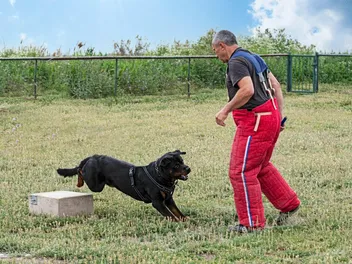
There are some natural protectors out there, and some breeds have a genetic inclination toward being guard dogs. Dogs have been shown to act empathetically to help their owners without training. However, most dogs are not trained protection dogs, and unless your dog has had formal training to switch aggression on and off, their aggression is more likely to be rooted in a behavioral problem.

What Is Protective Aggression?

Protective aggression is the set of behaviors designed to move a perceived threat away from another dog or person. A great example is a mother dog not allowing strangers around her puppies.
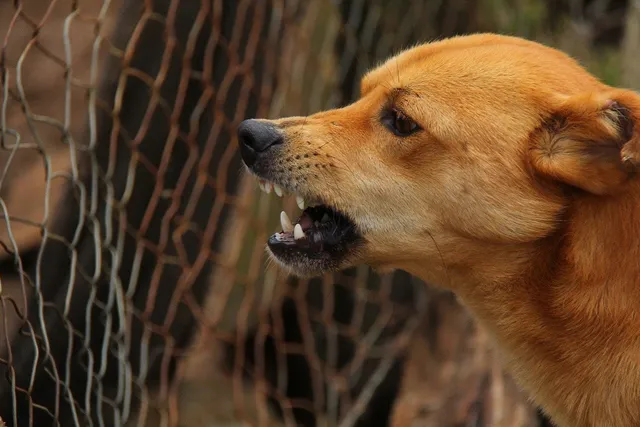
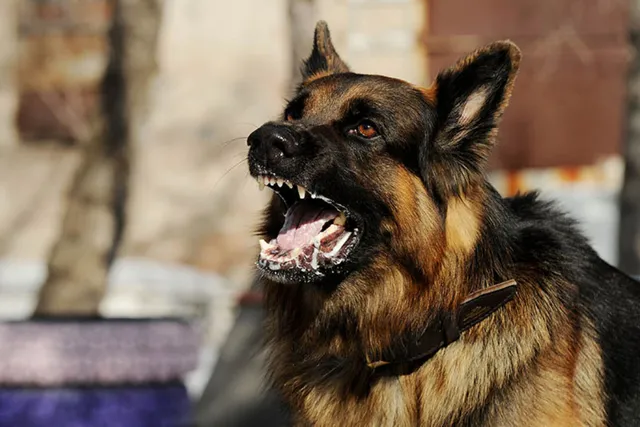
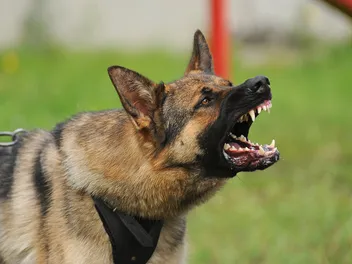
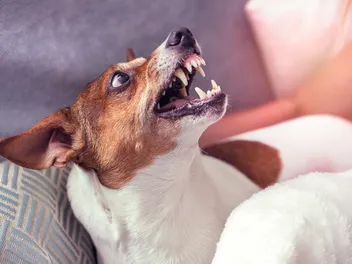
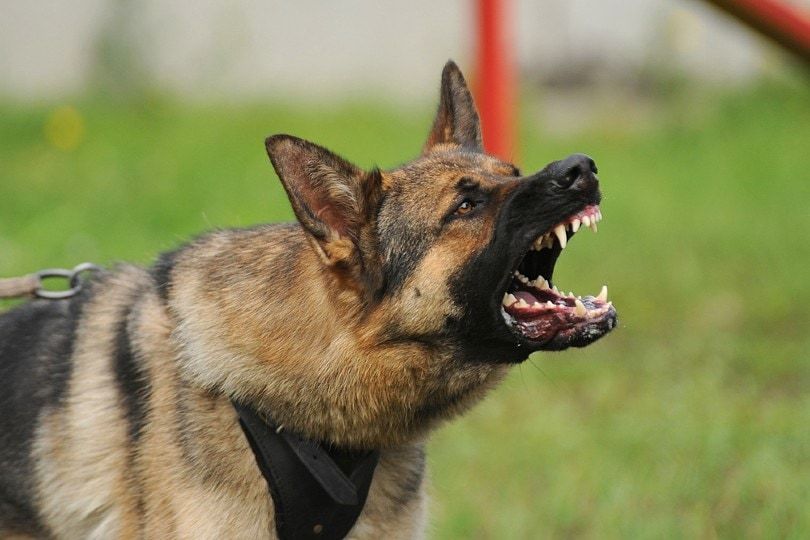
Dogs typically display warning signs such as growling, snapping, and aggressive body language, which can escalate into biting if not heeded. It’s important to note that some protective behavior in dogs is not a bad thing. A protective dog is doing what comes naturally to them, and that’s protecting their pack.
You and your family are a part of that pack as far as your dog is concerned. However, if your dog views everyone else as a threat or you as a resource that belongs to them, you have a serious problem on your hands.
Ask yourself: Is your dog behaving reasonably in a situation? If someone is presenting an obvious threat, your dog’s behavior can be excused. Most people don’t need a trained protection dog since the mere presence of dogs naturally seems to deter crimes.
Signs of Protective Behavior in Dogs:
There are signs to watch for that show your pup is just being protective, not aggressive in any way.
Signs of protective behavior in dogs:
Signs of Aggressive Behavior
Aggression is more likely to result from resource guarding or fear.
Signs of protective aggressive behavior in dogs:
In most cases of protective aggression, your dog’s reaction is unreasonable and rooted in one of three possible problems:
Resource Guarding
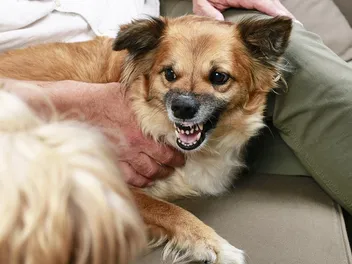
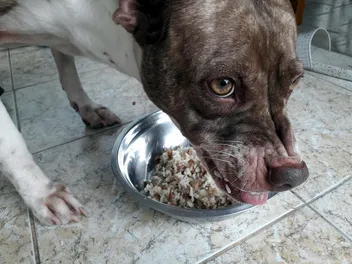
Most people think of food when discussing resource guarding, which is correct. However, food isn’t the only resource dogs will aggressively protect. A comfortable bed and toys can also be resources. Sometimes, you and the attention and love you provide are a valued resource that your dog may not want to share.
For obvious reasons, this is unhealthy behavior. Your dog must be able to share your time and space with others without reacting aggressively. This behavior can stem from a history of lacking love or mistreatment. They could also be stressed about environmental changes or unwilling to share you with a new animal in the house.

Fear Aggression
Fearful dogs can perceive other people and dogs as threats, even if that’s not the case. These dogs may act to scare others away from themselves and you. It can occur more in the owner's presence because they feel safe with their owner.
It’s a common phenomenon that veterinarians and dog training professionals are familiar with. The fear may stem from poor early socialization or previous bad experiences. Generally, your dog will show signs of anxiety that can escalate to aggression.
Medical Issues
Pet behaviors can be caused by various factors, but sometimes, the source is medical. A neurological problem may be changing their behavior. They could also have pain or illness that makes them act in a certain way.
If your pet’s behavior has changed with no obvious cause, the first step is to rule out medical problems. Your vet can also discuss your dog’s behavior, prescribe medication, or refer you to professional animal trainers.

Preparing to Train Your Pup
Training aggressive dogs is complicated, and multiple medical and environmental factors can impede your progress. As well as that, the stakes are high since your dog’s behavior can be potentially dangerous.
Never put your dog in a situation where they could bite. You can attach a muzzle and train your dog to wear it if necessary. We recommend the input of professionals in this matter, but we have a few tips to get you started:
1. How to Punish Your Dog the Right Way
Punishing your dog with harsh words or hitting escalates the situation. They may respond with worsening aggression or become fearful, which creates stronger negative associations with the situation. We want your dog to improve in confidence, and these punishments will only confuse or scare them. However, we wholeheartedly agree with one form of punishment: stay with me.
Negative punishment refers to taking away something desirable in response to unwanted behavior. Negative means taking something away, and punishment means making a behavior less likely in the future. The examples above are called positive punishment; they make a behavior less likely to occur by adding something aversive.
So, with resource guarding, your dog’s motivation for behavior is to keep your attention all to themselves. You can deter the behavior by withholding it and moving away from your dog in response to aggressive behavior.
2. Meet Their Needs
Dogs have physical needs like safety, physical health, food, and water. They also need exercise, social contact, and mental enrichment, the amount of which varies between breeds. Consistently meeting their targets puts your dog in a better state to progress with training.
If your dog feels insecure about how much attention they get, bored with pent-up energy, or threatened by something, they are in a worse state to progress with their training. However, if they’re satisfied, behavioral problems are less likely. That is where your vet visit is also extremely important to rule out underlying diseases.

3. Socialize Your Dog
Socialization means getting your dog used to various people, dogs, and situations. Vet visits, grooming procedures, play dates, exploring new environments, being out in public, and meeting many new people are all part of the process. Experiences should always be pleasant in order to have a positive effect.
You want your puppy to meet friendly dogs, not unfriendly dogs, for example. Socialization is essential for your dog to feel comfortable in day-to-day life. Anything new tends to cause fear in dogs of a certain age.
The critical socialization window occurs from 3 to 14 weeks of age. During this time puppies are generally accepting of new stimuli, but after this window, they become more fearful of the unknown. It’s possible to socialize other dogs but it requires more extensive training.
4. Manage the Environment
If you can avoid exposing your dog to triggers of their aggression while your training is progressing, that would be beneficial. If your dog is reactive toward strangers or other dogs while walking, for example, you should walk them at times and places where you are unlikely to encounter anyone.
If your dog is aggressive to family members who approach you at home, force distance between you and your dog when they are around. You can train your dog to retreat to their spot with a “place” command or set up physical barriers that prevent your dog from accessing you.

5. Use Desensitization and Counterconditioning
Desensitization refers to getting a dog used to something through exposure. Now, this won’t work if you put your dog in situations where they react. Instead, we want to reduce the trigger to a level your dog doesn’t react to. In this way, you set your dog up to exhibit good behavior.
For example, if your dog reacts to others when you are walking, keep them at a distance they are comfortable with. As time passes, your dog’s threshold will change, meaning you can decrease the distance.
Counterconditioning is changing your dog’s emotional response from a negative to a positive one. This is paired with desensitization. For example, if your dog reacts to others when they are on your lap because they are gauding you, let your dog see the other person at a distance.
If your dog doesn’t respond, shower them with extra affection, treats, toys, or other rewards to create a positive association.
6. Consistency and Timing
Like children, dogs will quickly learn when they can walk all over you. Stay consistent with your training, which means delivering commands, rewards, and consequences that are the same every time. This will help your training progress better and minimize any setbacks. If others are involved in the training, ensure you are all on the same page.
Timing is also important so your dog knows the actions that have incurred the rewards or punishment. The rewards or punishments should occur within seconds of the action. You should also take care not to accidentally reward the bad behavior.

Conclusion
If your dog is inappropriately aggressive toward others around you, it might be tempting to think of it as your dog’s strong devotion to you. While we know your dog loves you, their behavior is more likely to stem from fear of others or insecurity.
Since there are so many factors involved in canine behavior, and your dog’s behavior could potentially be dangerous, we recommend working with professionals who can assess your exact situation.
For more forms of aggression, see our other articles on Possessive Aggression, Predatory Aggression, and Redirected Aggression.
Related Read:
Sources
https://vcahospitals.com/know-your-pet/fear-vs-aggression
https://www.k9centre.com/family-protection-dog-training/
https://www.preventivevet.com/dogs/resource-guarding-in-dogs
https://www.usadogbehavior.com/blog/2022-1-11-how-to-know-if-your-dog-is-confident
https://www.msdvetmanual.com/behavior/behavioral-medicine-introduction/treatment-of-behavioral-problems
Featured Image Credit: Victoria Antonova, Shutterstock
Expert dog care, straight to your inbox
News, insights, expert advice, and everything dog.

No spam — unsubscribe anytime.
By signing up, you agree to our Terms & Conditions and Privacy & Cookies Policy.
How useful was this post?
Click a star to rate. You can leave written feedback afterwards. (We read all feedback.)
Dr. Ashley Darby BVSc (Veterinarian)
Dr. Ashley has worked in mixed and small animal emergency clinics and general practice ever since 2017 after studying Sydney University. She grew up in South Africa and England before moving to Australia, and her passion for animals came from many childhood safaris in the Kruger National Park.
Ash lives with her husband, two happy Springer Spaniels, and one very patient black cat. She also competes in equestrian sports with her horse, Atlas.