Predatory Aggression in Dogs: Can You Stop This Instinctive Behavior?


In this article
Predatory aggression occurs when a dog “hunts” something. Typically, this involves them chasing after a cat or another smaller animal. This type of aggression is not driven by hormones and is instead largely genetic. Dogs were made to chase other animals in order to eat. It is an innate instinct for them.
Despite being domestic, many modern dog breeds are still skilled predators, especially the ones used for hunting. Certain breeds have been specifically bred to exhibit this aspect of their predatory nature quite well. For instance, Labradors are good at retrieving prey, while Greyhounds are good at chasing. Even small terriers were originally made for hunting and killing small vermin. Some dogs may even be predatory toward other dogs, especially if the other dog is much smaller.1
Unlike other forms of aggression and despite the name, predatory aggression isn’t necessarily aggressive. The dog isn’t chasing the cat because they don't like the cat; it is simply natural for them to chase things. This is why “high prey drive” is a better term to describe this behavioral characteristic.

Understanding the Difference Between Predatory and Aggressive Behavior
Predatory behavior happens quickly, focuses intensely, and causes significant harm. Although it can lead to devastating outcomes, experts do not classify it as “aggressive” behavior.
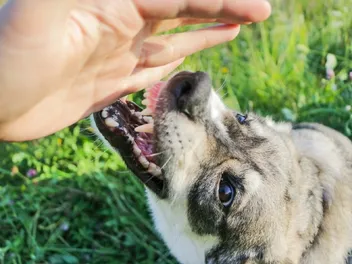
Here’s the difference: predatory behavior brings the dog closer to its target and is driven by a goal to approach (for example, to catch prey). Aggressive behavior, on the other hand, pushes the dog to create more distance from the target. A dog uses aggression to intimidate or drive away something it perceives as a threat.
This distinction often confuses people because many assume aggression includes any behavior capable of causing harm.
Why Do Some Dogs Exhibit Predatory Behavior?

Not all dogs chase cats. In fact, some get along remarkably well with smaller animals. However, the majority of breeds out there have a significant prey drive. Most dogs with a high prey drive today have been modified through selective breeding, so they often hunt in a specific way. At one point, all dogs had a strong prey drive. Otherwise, they wouldn’t be around today.
High Prey Drive
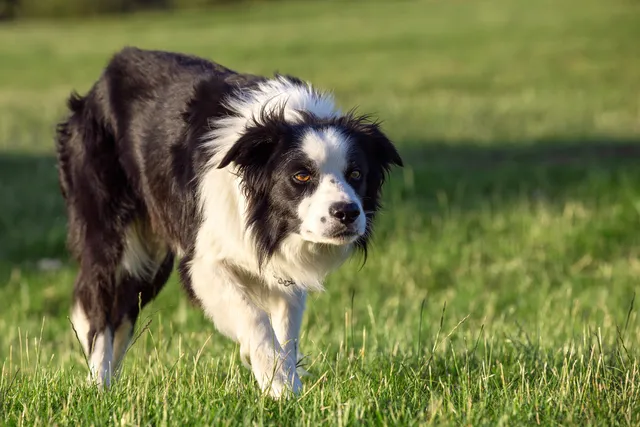
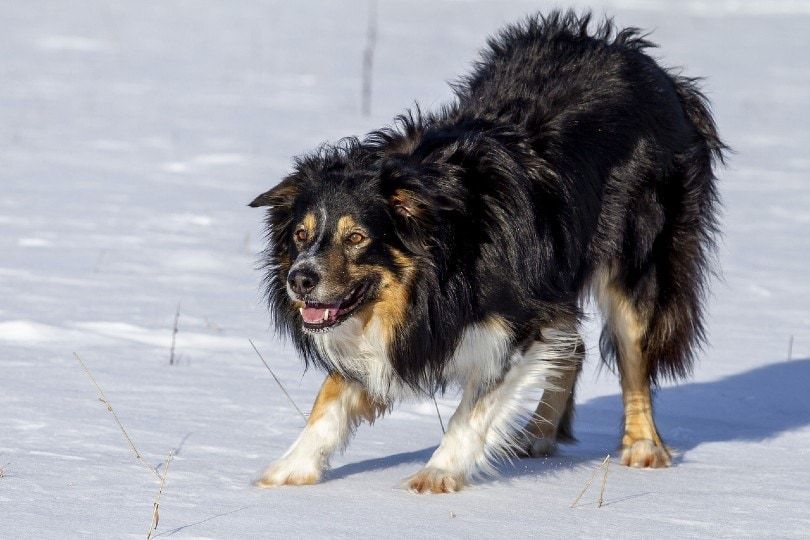
Dogs with a high prey drive are likely to chase and even kill small animals. Dogs in the sporting, herding, hound, and terrier groups all exhibit significant hunting instincts. However, herding dogs may not actually kill small animals, though they will chase them. They have simply been bred to exhibit intense stalking skills, which is how they are able to herd so efficiently.
Terriers, in particular, are good at catching and killing smaller animals. Most sporting dogs use their prey drive in some way, though not all of them are prone to killing animals. Labradors have a “soft mouth,” so they don’t tend to actually puncture animals' skin. This is useful when you need the dog to retrieve a bird intact, but not so useful when they're going after a rat.
Many dogs that exhibit predatory aggression will not show any warning signs, which can make them quite dangerous. It often isn’t possible to remove a cat or another small animal from the area before the dog becomes aggressive. They will suddenly just chase the other pet.
Attraction to Movement

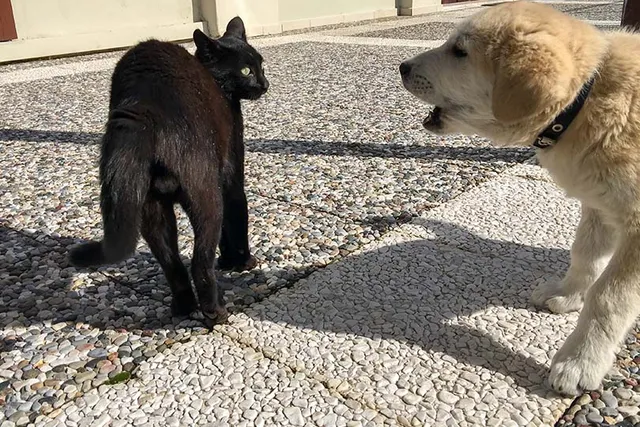
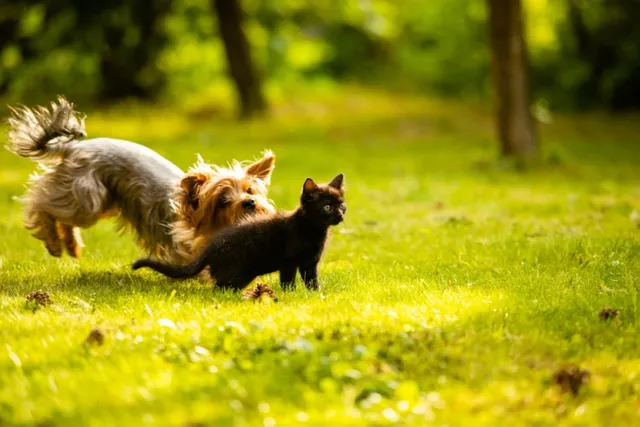
Movement often triggers predatory aggression. The dog may seem fine until the cat begins to run, and then they will begin to chase. Furthermore, other types of aggression often trigger predatory aggression. The cat may swipe at the dog, which will cause the dog to react aggressively. Even if the dog starts out defending themselves, it often turns into predator aggression.
Dogs may also chase other things that move, such as bicycles, joggers, cars, and even people. Often, they won’t actually hurt these things when they become close to them. They may even display “packing” behaviors, which involve many dogs ganging together to go after a “prey.” Dogs that usually don’t display a high prey drive often will if other dogs are involved.
The dog may act completely normal before they begin chasing their prey. They may even seem rather happy while they’re doing it. Many will continue wagging their tail because they enjoy hunting. It's how evolution ensured that they could hunt and catch their breakfast. It is a fun activity for them.
Dogs often take down their prey by accelerating toward them, biting at their heels, calves, and thighs. The point is to prevent the animal from running farther, at which point, the dog can kill the animal.
Can You Stop This Instinctive Behavior?
Not really. A high prey drive is innate in certain breeds. A hunting dog that was bred for hunting can't help themselves when a cat takes off running. They are simply doing what they were bred to do and what their ancestors have done for centuries.
Typically, dogs with a high prey drive will experience a state of high arousal, which makes them difficult to distract or command. For this reason, many commands do not work, which makes training ineffective. This behavior is simply natural and normal, though it can be dangerous for small animals.
You can’t prevent a dog from expressing their natural instincts. However, you can be aware of those instincts and prevent putting your dogs in situations where they may do something destructive. If you have a dog with a high prey drive, you should not adopt a cat. If you already have a cat, do not adopt a dog with a high prey drive.
Avoiding Certain Situations

You should avoid situations that would allow the dog to have access to smaller animals. For instance, they shouldn’t be allowed to roam, as they will likely chase any small animal they see.
Dogs should be supervised whenever they are outside. You should be ready to restrain the dog while leash-walking, as they will often “forget” that they’re on a leash and attempt to chase anything that runs. Do not put your dog in a fenced-in area if a small animal, like your neighbor’s cat, could enter it.
You can attempt reward-based training, using commands like “leave it” to direct your dog away from a small animal. However, this is unlikely to control predatory behavior completely.
Socialization can be helpful for some canines. If they grow up with cats, they may not see them as prey animals. However, this typically only works for dogs with a low prey drive. Those with a high prey drive will often chase anything that moves, even if it is a cat that they have known for years. Ask a veterinarian about the best ways to socialize your dog.
Final Thoughts
Many breeds have a significant prey drive that will cause them to chase and even kill small animals. Some will even chase bicycles and other large, moving items. Since this is an innate instinct, it is impossible to train dogs not to do it. The best option is often to prevent the dog’s access to animals that they may potentially see as prey. Some dogs even need to be watched around small children, as they may see them as prey animals when they are active and running around.
Dogs that exhibit predatory instincts aren’t being vicious or aggressive. Instead, they are simply doing what they’re supposed to do. Many of them will remain happy before, during, and after the hunting event. As far as the dog is concerned, things are great!
We do not recommend adopting a cat or other small pet if you have a dog with a high prey drive. While socialization can sometimes be helpful, it is usually not reliable enough for dogs to live with smaller animals. You never know when they may become aggressive and harm the other pet.
To learn more about real forms of aggressive behavior in dogs, see our articles on social aggression, protective aggression, and redirected aggression.
Featured Image Credit: Nietosvaara, Pixabay
Expert dog care, straight to your inbox
News, insights, expert advice, and everything dog.

No spam — unsubscribe anytime.
By signing up, you agree to our Terms & Conditions and Privacy & Cookies Policy.
How useful was this post?
Click a star to rate. You can leave written feedback afterwards. (We read all feedback.)
Kristin loves to help pet parents create a fulfilling life for their pets by informing them on the latest scientific discoveries and helping them choose the best products for their pets. She currently resides in Tennessee with three cats, four dogs, two fish, and a lizard, though she has dreams of owning chickens one day!