My Dog Snapped at Me: 4 Possible Reasons (Vet-Reviewed)


In this article
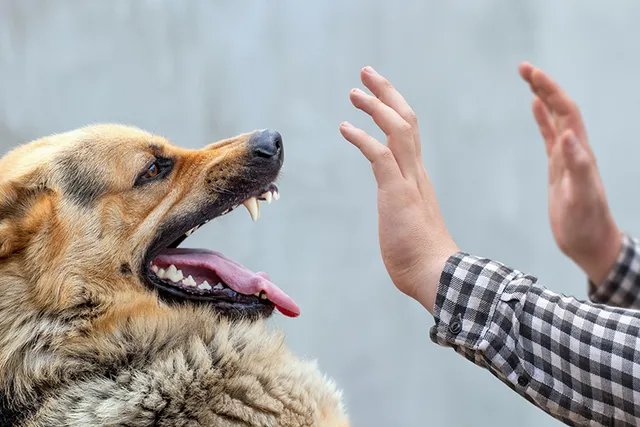
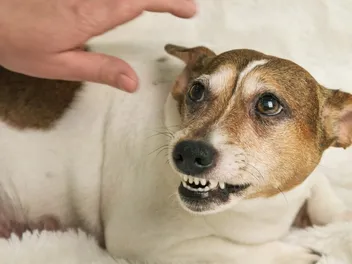
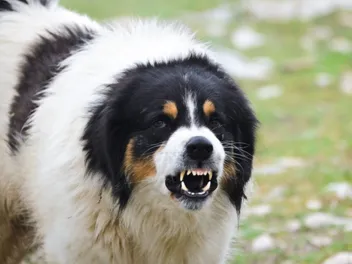
We count on our dogs for cuddles and romps around the house. We love engaging in play with them and taking them on their daily walks. But what happens when all this affection suddenly turns into a growl or even snap?
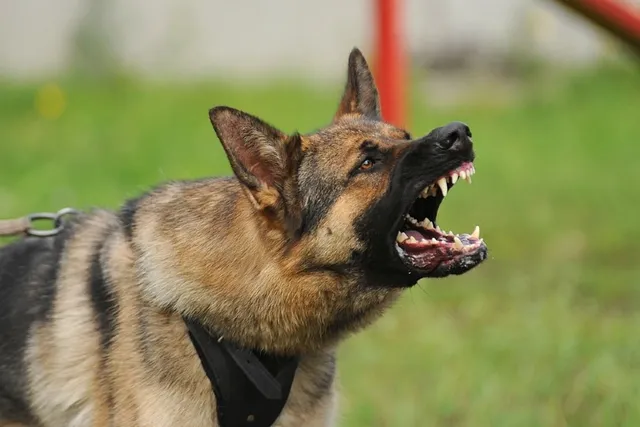
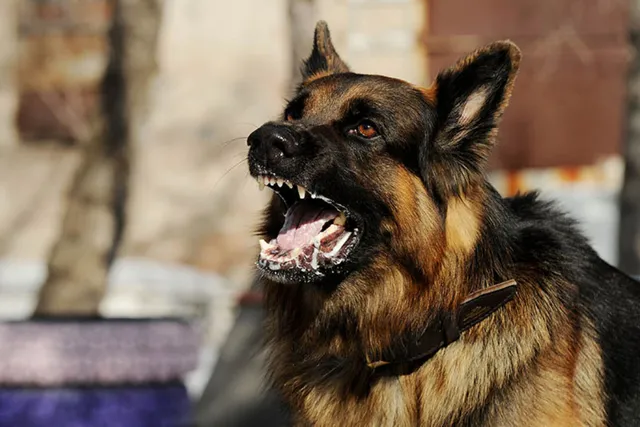
A dog snapping at you can come from various factors ranging from a momentary lapse of judgment, a warning, or a developing behavioral problem. Here, we will discuss some of these potential issues and solutions.

The 4 Possible Reasons Your Dog Snapped at You
1. Your Dog Was Startled
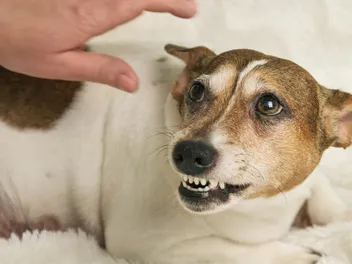
Sometimes, when we move too quickly or spook our dogs, it can warrant a reaction. If your dog is spooked unexpectedly, it can cause them to snap, even if they don't mean to instinctively snap at you. If your dog turned to bite, but quickly realized the mistake, it was probably a mishap and nothing more.
Think about this. When you are in the dark, and you're out of your element, and someone comes from another room or walks up behind you, it will trigger a response. Some people will scream, others will run, and some will respond physically (such as sweating, kicking, hitting, and otherwise).
Your dog is exactly the same. In moments of uncertainty, dogs have very few options when it comes to defending themselves. When their fight or flight response kicks in, it will manifest itself in only a few ways. So, if you can look at all the signs and realize that you scared your dog, it could be nothing more than a fight or flight response.
Now, if your dog realizes it's you and the aggression stays steady, you might have a bigger problem on your hands. However, most of the time, if your dog is scared, they will quickly snap out of it once they see no threat. Regardless, we recommend never touching a dog without them being calm and ok with it, so make sure the dog is aware of your presence and can see your hand about to touch them before making any physical contact.
Likewise, please never touch a dog while they are sleeping, even if it is challenging to avoid because they look so cute.

2. Your Dog Is In Pain
Our dogs are very good at hiding illness. This is a response found in nature to hide potential weaknesses from predators. So if your dog is not feeling very well or is physically hurting in some way, you might not even recognize the subtle signs you’re getting.
Touching your dog in a sore, weak, or painful spot could cause them to snap at you. This is not out of aggression towards you but rather a response to pain. This would be comparable to having a flesh wound or injured spot on your body and having another person hit, bump, or touch the spot.
You’re going to likely push the person away from you or have some other physical response to the stimuli. This is the same for your dog.
If you notice that they have a response every time a certain area on their body is touched or if they seem to be displaying other signs of potential injury or illness, make a veterinary appointment. Often, this is not an act of aggression but rather a way to show you that they don't want to be touched because it hurts!
Some health issues that can result in pain to the touch include:
Gather up any additional signs that you might notice in your dog, as well as all the information about their diet and day-to-day life, and talk to your veterinarian right away for further evaluation.
3. Your Dog is Resource Guarding
If you try to take a toy or other object out of your dog's mouth and they snap at you as a response, they might not be very good at sharing. But where exactly does this behavior come from?
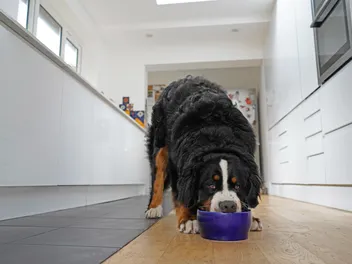
This behavior is called resource guarding. If you are feeding your dog, and they turn to snap at you if you get near the food bowl, they are very likely being aggressive in an attempt to defend their food. Food aggression can lead to growling, fighting, and biting other animals or even humans.
Food aggression is usually pretty easy to spot in most dogs. These behaviors typically develop during puppyhood and, if not properly trained, can bleed well into their adult life. Toy aggression usually isn't aimed at humans. After all, most dogs love having you throw their favorite ball or play a good game of tug-of-war. However, some dogs can be very territorial with their things.
Often, you can manage the behavior at home. However, if it has resulted in biting and other aggressive tendencies towards humans, it's time to get professional help. A professional trainer or a behavioral consultant can develop a training plan explicitly designed for your dog.

4. Your Dog Needs Some Space
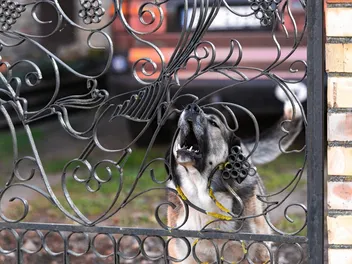
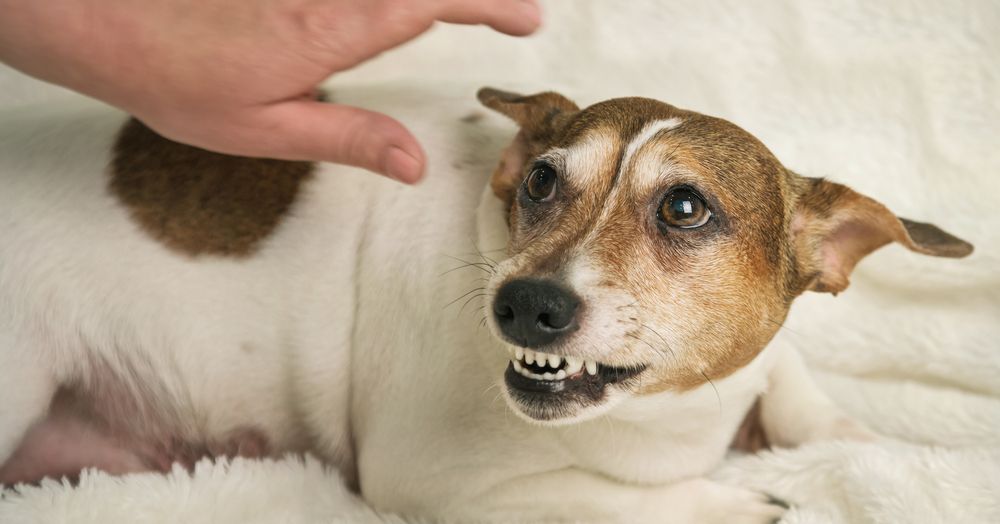
While snapping is an undesirable behavior and is considered a precursor of aggression, sometimes, dogs have no other way of communicating that they are feeling uncomfortable and need to be left alone.
Unfortunately, as a society, we are not very aware of the importance of consent required to make physical contact with a dog. Some dogs consider their resting area as their territory and might feel invaded if touched while they are trying to retreat. A dog that wants to sleep or simply is not up to play right now and would prefer to rest might growl or snap as a way of communicating they are not ok with what is going on. A dog that feels trapped in a space might also result in snapping or worse.
Snapping can, in these scenarios, be a precursor to aggression, and if our behavior is not rectified, an actual bite is the next level of aggression.
Our Dogs Can’t Communicate Like We Do
The bottom line is that our dogs have a limited spectrum of communication with humans. We can only understand each other as far as we can comprehend body language and other physical markers.
If your dog has snapped at you, it's certainly something you'll want to deal with and get to the bottom of before it becomes habitual or escalates into an actual bite. But we certainly recommend exhausting all of your resources before you think about giving up on your dog, and this includes consulting professionals in the area.
We understand that canines exhibiting signs and precursors of aggression can be very challenging for some owners to deal with; however, with the proper tools and training, these behaviors can often be rectified. If there is an underlying health condition of any kind, the dog will likely return to their normal loving, cuddly, tail-wagging self once they recover their health. Although with some chronic conditions, you might need to learn where you should never touch them.

Consider All Possibilities
Here are some pretty important questions to ask yourself.
Once you try to get a better understanding of where the behavior came from, you can take the necessary steps to solve the issue. Snapping can often be a freak incident due to a momentary lapse of judgment.

Why Biting Is a Bad Sign
If your dog snapping at you has a purely behavioral issue and is unrelated to an underlying health condition, it needs to be dealt with promptly. It might be easy to keep your dog away from strangers or other outside stimuli. However, it is not a positive issue when that aggression is aimed at you and other household members.
If you have small children or other vulnerable household members, they can pose even more of a risk and lead to some unwanted outcomes. It is never recommended to leave kids and pets unsupervised. Kids should be guided and learn how to properly interact with pets, respect their boundaries, and avoid causing them any form of pain or discomfort.
Likewise, puppies should never be allowed to bite on humans or else the behavior can quickly become habitual. Sadly, many dogs every year are put to sleep for showing aggression towards human beings and even other pets.
You have several resources available when it comes to correcting biting. Can we stop the behavior at home, or does it need professional help? If it seems like this is going to be an ongoing issue, get the expertise of a professional. Often, these issues are not dealt with properly and can lead to much bigger issues, such as attacks, biting, and other unwanted behaviors.

Final Thoughts
Our dogs can snap at us for a variety of reasons. It's never a settling feeling, but it's often easy to understand. Usually, this just comes from being startled and can easily be avoided in the future. If it is something a little more serious, with the help of your veterinarian or dog professionals, you should get to the bottom of the behavior itself and make a plan to extinguish it.
Sources
Featured Image Credit: Bonsales, Shutterstock
Expert dog care, straight to your inbox
News, insights, expert advice, and everything dog.

No spam — unsubscribe anytime.
By signing up, you agree to our Terms & Conditions and Privacy & Cookies Policy.
How useful was this post?
Click a star to rate. You can leave written feedback afterwards. (We read all feedback.)
Ashley Bates is a freelance dog writer and pet enthusiast who is currently studying the art of animal therapy. A mother to four human children— and 23 furry and feathery kids, too – Ashley volunteers at local shelters, advocates for animal well-being, and rescues every creature in need. Her mission is to create awareness, education, and entertainment about pets to prevent homelessness. Her specialties are dogs and cats.