Dogster is reader-supported. When you buy via links on our site, we may earn a commission at no cost to you. Learn more.

Dog Training

10 Dog Walking Problems & Vet-Approved Solutions

Brooke Billingsley
By Brooke Billingsley · Reviewed & fact-checked by Dr. Paola CuevasVet Approved
Dr. Paola Cuevas
Reviewed & Fact-Checked byDr. Paola CuevasVeterinarian
Dr. Paola Cuevas is our Senior In-House Veterinarian at Dogster and Pangolia. She has over 19 years of experience working with an array of species and loves sharing her knowledge and experience with our readers and aims to provide assistance with any issue presented by your non-human family members. She received her degree from the University of Guadalajara, Mexico.View authorThe information is current and up-to-date in accordance with the latest veterinarian research. Learn more
Updated on June 17, 2026
Share
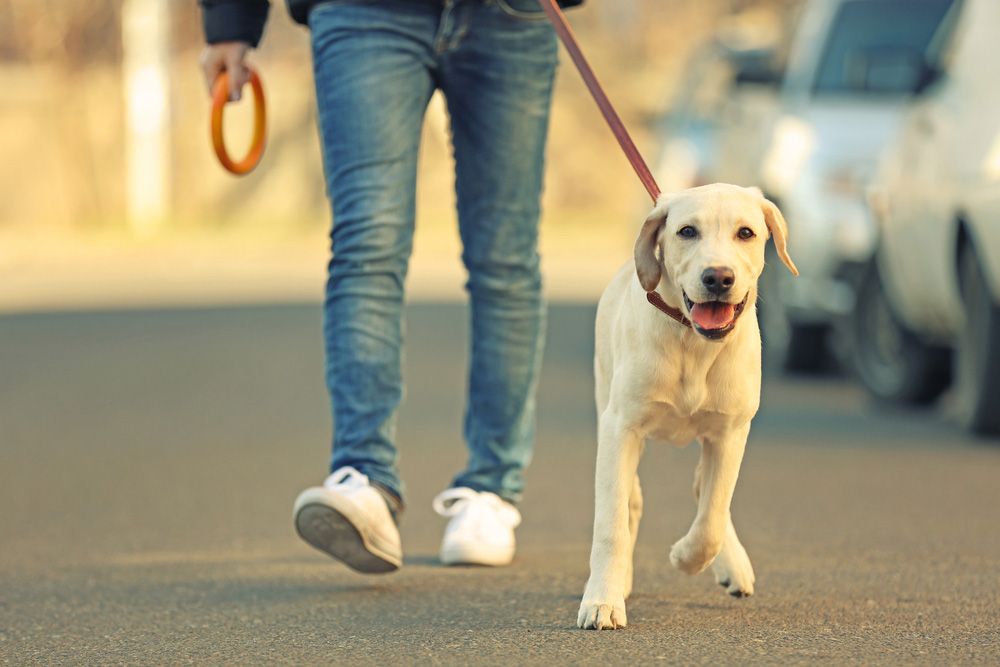
male owner walking his labrador retriever dog in the city

Are you finding that taking your dog for a walk ends with you or your pet feeling more stressed than before? Multiple problems plague a large number of owners once the leash is on. It can be frustrating to have a dog that doesn’t seem to know how to behave on a walk, and it can also put your pet in dangerous and stressful situations.

Let’s talk about the most common problems that dog owners face when taking their canine companions for a walk, along with possible solutions.

divider single dog paw oct 2024

The 10 Dog Walking Problems and Their Solutions

1. Showing Overexcitement Over the Leash

Image Credit: Christine Bird, Shutterstock

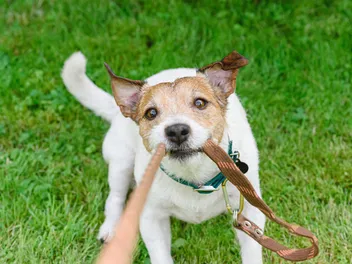
We’ve all seen this, whether it was our dog or someone else’s: The leash comes out, and the dog loses their mind, jumping, barking, spinning, and just generally being excessively excited to a point that can be annoying or frustrating.

For some people, this behavior can be risky since it can lead to trip-and-fall events. It’s fine for your dog to be excited when they realize they’re going for a walk, but it’s important for them to learn how to contain their excitement. Otherwise, you’ll be taking your dog on a walk after they’re already amped up and not paying attention.

The Solution:

Get your dog used to seeing their leash when they aren’t going for a walk. Leave it where they can see it, or pull it out at random times without actually going for a walk. Over time, you’ll be able to increase the frequency at which your dog sees the leash.

Provide positive reinforcement when your dog reacts calmly to the leash or ignores it completely. Once your dog has gotten better at how they react to seeing the leash, start clipping it onto them without going for a walk. Again, provide positive reinforcement for appropriate reactions to this action. Encourage your dog to sit calmly or stand still when you’re putting their leash on. The goal is for your dog to remain calm when they see the leash and allow you to get the leash on and off of them with ease.


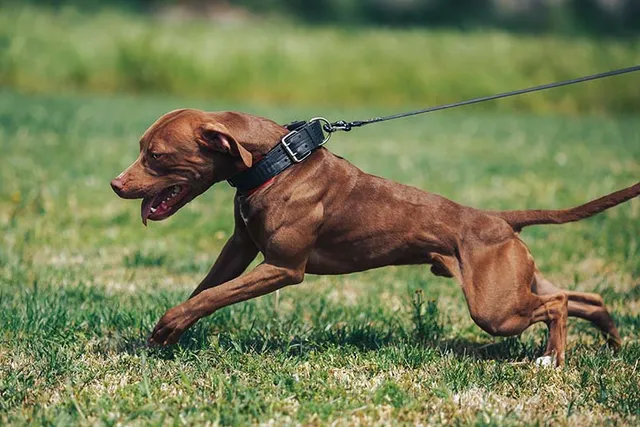
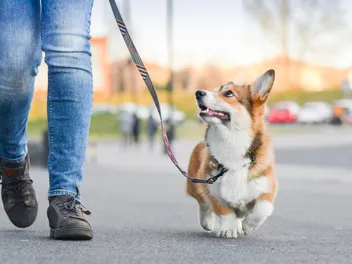
2. Pulling on the Leash

Pulling on the leash during walks is probably the most common issue that dog owners face. Pulling can be frustrating for you, but it can also cause you to fall or have your arms or shoulders jerked in a way that can be painful and cause injuries.

Depending on the collar or harness you use with your dog, pulling can also cause injuries to your dog. It enables them to have all the control during the walk, which means you aren’t able to be effective at keeping things safe and calm.

The Solution:

While walking your dog, do not allow them to continue walking when they pull. The second they do, stop the walk and keep your feet planted. When they return to your side or loosen the tension, you may continue to walk. This is going to take some persistence and lots of positive reinforcement, but they’ll catch on eventually!


3. Exhibiting Reactivity While Leashed

Image Credit: nadia_if, Shutterstock

Leash reactivity occurs when a dog feels the need to react inappropriately to people or other animals when they’re leashed. This behavior often includes displays of aggression, like growling, teeth-baring, barking, or lunging. However, this behavior occurs when your dog is feeling fearful or stressed and they don’t know how to respond appropriately to these feelings.

In many cases, your dog will spot the thing they’re going to react to when it’s still a good distance away. This means that your dog is going to have an escalation of their negative feelings as you get closer and closer to the source of their stress.

The Solution:

Counter-conditioning is an effective way to reduce leash reactivity, but it often requires time and patience. While you’re still working through this behavior, it’s best to stick to environments where you can have some control over the other factors.

To counter-condition your dog’s leash reactivity, you want to provide them with something positive, like a favorite treat, when they first see the source of their stress. Every time your dog looks at you instead of at their trigger, you should provide them with a treat until the trigger is no longer in their line of sight. This teaches them to take a moment and disengage instead of reacting.

Leash reactivity is not an easy thing to fix, however, and in many cases, professional help is needed to work through it, so don’t hesitate to reach out to a trainer. The faster you solve this, the less of a habit it will become for your dog.


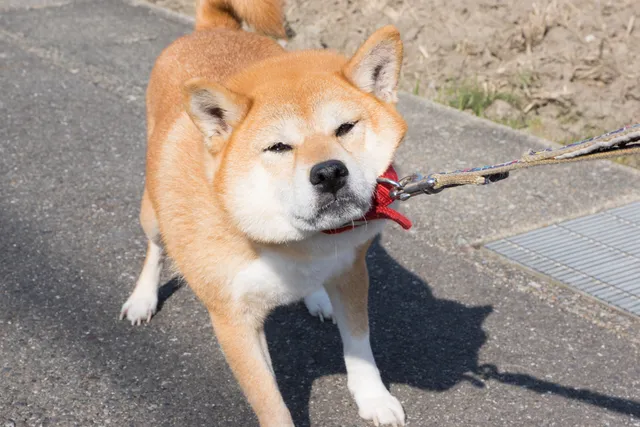
4. Refusing to Walk

As funny as it can be to see a dog plop down on the sidewalk and refuse to move, it can be a major inconvenience for the owner. This is especially an issue if your dog is too large for you to easily carry. There are sometimes physiological reasons that dogs will refuse to walk, including injury and illness. For other dogs, this is strictly a behavioral issue that should not be encouraged.

The Solution:

Check your dog over for any signs of injury or illness, and consider getting them in for a vet visit for a thorough exam. If this is a new behavior for your dog, it’s likely that something is causing them pain or making them excessively tired. Much like leash reactivity, refusing to walk can also be a sign that your dog is fearful or stressed about the situation, so positive reinforcement is needed to help your pet feel safe and comfortable again. If you have a dog that is simply lazy and stubborn, you can use positive reinforcement to encourage them to not suddenly stop and refuse to walk.

In some cases, this may also be a sign that you need to shorten the walks that you’re taking with your dog. If you have a low-energy breed, they may never be a good walking companion for you. Consider changing up your walking routes to keep things fresh and interesting, which will provide enrichment for your dog and make them more likely to keep moving.


5. Barking

Image Credit: dikkenss, Shutterstock

There are a few reasons that your dog may bark excessively during a walk. They may be overly excited, anxious, stressed, or fearful. Some dogs may bark at nothing in particular, while other dogs may only bark at other animals or people because of leash reactivity and stress. You might find yourself trying to shout over your pup’s barking in an effort to get them to stop, but this can actually make the situation worse by making them think that you’re joining in on the noisemaking.

The Solution:

The best way to keep your dog from barking on walks is to practice positive reinforcement of desirable behavior. Give treats for calm behavior and encourage calmness. It’s a good opportunity to train your dog to focus on you during your walks, so make sure to also provide positive reinforcement when they look at you.

Providing them with multiple reinforcement opportunities that are incompatible with barking—for example, holding a ball in their mouth—can help. Putting the barking under stimulus control and teaching them to do it on cue can also help extinguish this undesired behavior.


6. Scavenging

Does your dog love to pick up interesting things on their walk? Unfortunately, scavenging is a dangerous habit for your dog to have. Pesticides, rodenticides, herbicides, rotten food, antifreeze, and other dangerous products can be on objects that your dog picks up or consumes. Eating items on walks can lead to gastrointestinal distress, intestinal obstructions, toxin exposure, and injuries.

The Solution:

If your dog is a big scavenger on walks, you may need to look into the use of a basket muzzle. This can be a fantastic way to keep your dog from being able to consume things while still allowing them to pant. Just make sure to read up on proper muzzle sizing.

Positive reinforcement and encouraging your dog to focus on you throughout their walk are also good options for reducing or eliminating this behavior. Train your dog the commands “leave it” and “drop it” so you can quickly get them away from potentially dangerous items.


7. Excessively Sniffing

Image Credit: Lyns157, Shutterstock

Some dogs seem to stop every few feet to sniff, sometimes for extended periods. It can make walks feel like they’re taking forever to get through. You may find it highly annoying that your dog stops to sniff so frequently.

The Solution:

Dogs have an excellent sense of smell, and they use it to learn about the world around them. Sniffing is an incredible enrichment activity that doesn’t cost you anything. To stop your dog from sniffing so much on walks, you should consider adding a “sniffari” into your daily routine. This is a walk that is specifically for the purpose of allowing your dog to sniff and explore.

By offering them this opportunity, you may find it easier to keep them moving on their regular walk because they will have already experienced the enrichment of sniffing. Positive reinforcement when your dog doesn’t sniff very long or avoids sniff spots can also help keep things moving.


8. Taking Excessive Potty Stops

Like sniffing, it can be annoying to have your dog stop every few feet to pee. Many dogs love to mark their territory on walks, which can result in frequent pit stops.

The Solution:

The first thing you should do if your dog seems to be urinating excessively is have them checked out by a vet. You should have medical causes, like UTI and bladder tumors, ruled out. Some dogs will stop frequently for territory marking, though, and this is a normal behavior, especially if your dog is an intact male.

You can discourage frequent potty stops by keeping your dog’s leash short enough to give you control to keep them moving and practicing positive reinforcement when they opt not to stop to pee frequently.


9. Not Listening to You

Image Credit: Ira Shpiller, Shutterstock

It can be frustrating to deal with walking a dog that simply will not listen or pay attention to you. It can be dangerous for your dog to ignore your commands. This is a common problem for many owners because many dogs get overstimulated by the novel environment they experience on a walk.

The Solution:

Clicker training is a good option for dealing with this. Start in a quiet place in your home with minimal distractions. Over time, you’ll be able to work your dog up to more exciting environments.

Have your dog walk around with you, and every time they look at you, provide a click from the clicker and then give them a treat. A clicker is helpful because it enables you to “mark” the desirable behavior right when it happens, and then your dog will learn to associate the clicking sound with treats and praise.


10. Darting

Some dogs don’t pull on their leash but instead choose to dart all over the place. Sometimes, this can even result in your dog darting into the road, the path of a bicycle, or other dangerous situations.

The Solution:

Training your dog to focus on you and listen to your commands during walks is imperative. If your dog frequently darts, you will need to keep them on a very short leash until they’re trained. Keeping your dog from darting will help keep them safe, so even if neither of you is happy with the short leash arrangement, it’s important that you do it while you’re training your dog.

Training your dog to walk on your side and to “heel” is the best way to fix this problem.

divider dog paws 2 oct 2024

Conclusion

Taking your dog for a walk should be a fun bonding time for both of you. Positive reinforcement training can be used to solve a variety of dog walking problems. If you’re ever unsure of how to proceed in dealing with an issue or you’re struggling to succeed in training your dog, reach out to a professional trainer for help. They’re a wonderful resource and can help get you pointed in the right direction in your training journey.

See Also:

Sources

Featured Image Credit: Africa Studio, Shutterstock

Want content like this delivered to you?

Sign Up For Our Newsletter

News, insights, expert advice, and everything dog

* By submitting, you agree to our Terms & Conditions and Privacy & Cookies Policy.

Brooke Billingsley
Authored by

Brooke Billingsley

How to Stop a Dog From Pulling While Walking: 8 Vet-Approved Tips

How to Stop a Dog From Pulling While Walking: 8 Vet-Approved Tips

Keeping your dog on a leash is important for safety. If your dog is loose in public, they can get into a fight with another dog, run into oncoming traffic, or…

Nicole Cosgrove
By Nicole Cosgrove · 3 weeks ago
10 Most Common Dog Behavior Problems & Vet-Approved Solutions

10 Most Common Dog Behavior Problems & Vet-Approved Solutions

When dogs develop certain unsavory behaviors, it can be very challenging for their owners to navigate. Unfortunately, it can affect the entire dynamic of a hou…

Ashley Bates
By Ashley Bates · 3 weeks ago
How to Help a Dog With Leash Manners: 10 Vet-Verified Tips

How to Help a Dog With Leash Manners: 10 Vet-Verified Tips

When you take your dog out for a walk, are you constantly pulling them back on the leash or apologizing for their behavior? With proper training using positive…

Adam Mann
By Adam Mann · 3 weeks ago
Why Does My Dog Hate Walks? 7 Vet-Reviewed Reasons

Why Does My Dog Hate Walks? 7 Vet-Reviewed Reasons

Taking your beloved pup for a walk should be a pleasurable experience for both of you, right? So, what do you do when your lovely—and stubborn—canine friend ap…

Genevieve Dugal
By Genevieve Dugal · 3 weeks ago
June 17, 2026

How to Loose Leash Train a Dog: Vet-Approved Tips & Tricks

As a crucial skill for every dog, loose leash walking is your gateway to more activities and a higher quality of life for your canine companion. You can confid…

Nicole Cosgrove
By Nicole Cosgrove
How to Loose Leash Train a Dog: Vet-Approved Tips & Tricks
June 17, 2026

My Dog Keeps Sitting While Walking: 6 Vet-Verified Reasons

Walking provides your canines with the physical and mental activity they need to stay healthy, happy, active, and alert. Dogs love being walked, that’s why it’…

Patricia Dickson
By Patricia Dickson
My Dog Keeps Sitting While Walking: 6 Vet-Verified Reasons
June 17, 2026

How to Train a Leash-Reactive Dog: 12 Vet-Approved Tips

Leash-reactive dogs respond to other dogs, people or cars with a high intensity, like lunging. Calm your dog’s reaction with these simple tips.

Misty Layne
By Misty Layne
How to Train a Leash-Reactive Dog: 12 Vet-Approved Tips
June 17, 2026

How to Train Your Dog or Puppy to Walk on a Leash: Vet-Approved Tips

Learning to walk on a leash is one of the most crucial training steps for any dog or puppy. Leash behavior can be the difference between a relaxed, enjoyable w…

Kit Copson
By Kit Copson
How to Train Your Dog or Puppy to Walk on a Leash: Vet-Approved Tips
June 17, 2026

How to Train Your Dog To Be Calm in Public: 10 Vet-Approved Tips

Every responsible dog parent wants to make sure their dog is well-equipped to handle going out in public and interacting with other people and dogs. For this r…

Kit Copson
By Kit Copson
How to Train Your Dog To Be Calm in Public: 10 Vet-Approved Tips
June 17, 2026

How to Stop Your Dog From Barking at Others While Walking: 9 Vet-Approved Tips

Walking our dogs is great for both them and us. Everyone gets exercise, and your dog is less bored and can get out some energy. It’s pretty win-win all around.…

Misty Layne
By Misty Layne
How to Stop Your Dog From Barking at Others While Walking: 9 Vet-Approved Tips
June 17, 2026

How to Stop Your Dog from Biting the Leash: 9 Vet-Verified Tips

Of all the undesirable behaviors our dogs can present, leash-biting can put one of the worst dampers on the daily routine. Walks become an annoying hazard when…

Nicole Cosgrove
By Nicole Cosgrove
How to Stop Your Dog from Biting the Leash: 9 Vet-Verified Tips
June 17, 2026

My Dog Doesn’t Want to Go Outside: 5 Vet-Verified Possible Reasons

Most dogs love going outside. However, when your furry friend suddenly avoids the outdoors, you may have reason to worry. Often, dogs have a reason to avoid go…

Kristin Hitchcock
By Kristin Hitchcock
My Dog Doesn’t Want to Go Outside: 5 Vet-Verified Possible Reasons

Love Dogs? So Do We! Join the Dogster Community

Stay informed with expert pet care insights delivered straight to your inbox! Discover professional guidance on animal behavior, feeding tips, trusted product picks, and much more.

You may opt-out at any time. View our Privacy Policy for more information.

The Dogster app on a phone