How to Loose Leash Train a Dog: Vet-Approved Tips & Tricks


In this article
As a crucial skill for every dog, loose leash walking is your gateway to more activities and a higher quality of life for your canine companion. You can confidently conquer any social situation by teaching proper leash manners and giving your dog the vital exposure and socialization needed to prepare them for positive public experiences.
Training this is easier said than done. Dogs want to explore at their pace and won’t naturally stick by your side on a loose lead, making it at least a little tricky and often frustrating to get them to cooperate. Some dogs take less effort than others, but with these tips and tricks on how to loose leash train a dog, you’ll make the process as quick and straightforward as possible.

Before You Get Started
Before you get started on loose leash training, you’ll need the proper supplies, including:
The 9 Tips on How to Loose Leash Train a Dog
1. Only Reward the Loose Leash
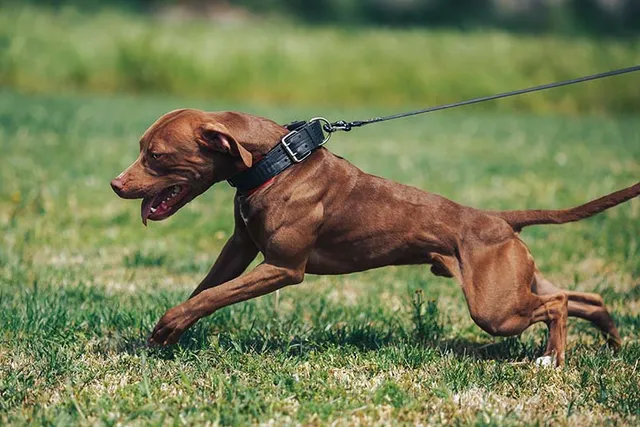
The fundamental rule of training your dog to walk on a loose leash is to reward the relaxed leash and punish the tight leash. Pulling cannot get your dog what they want or take them where they want to go.
You should only mark behaviors, give treats, and allow your dog to move in their desired direction when the leash is loose.

2. Train the Heel Position Immediately
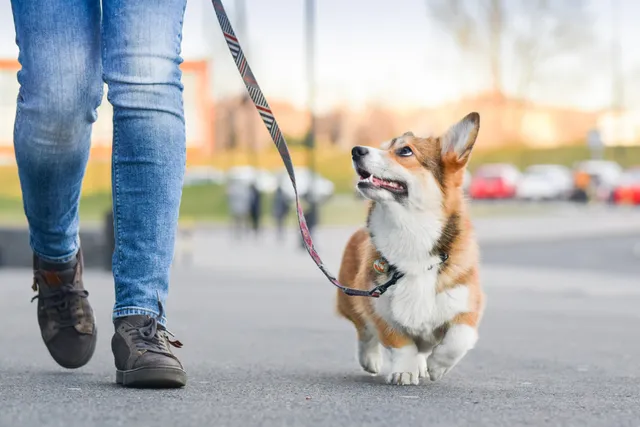
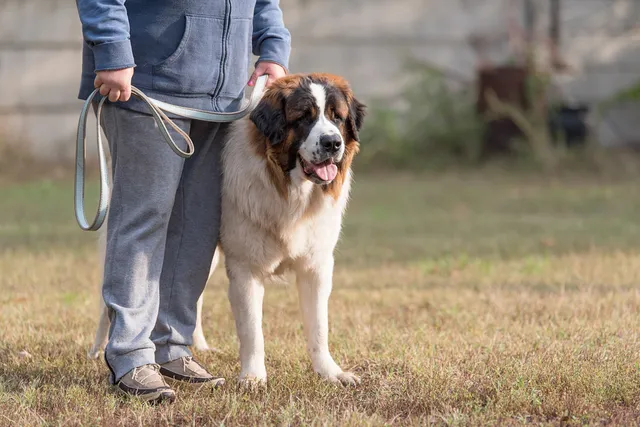
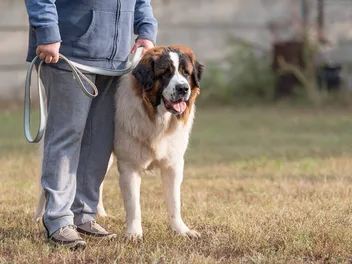
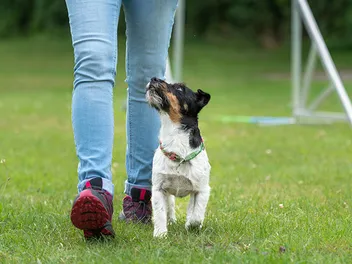
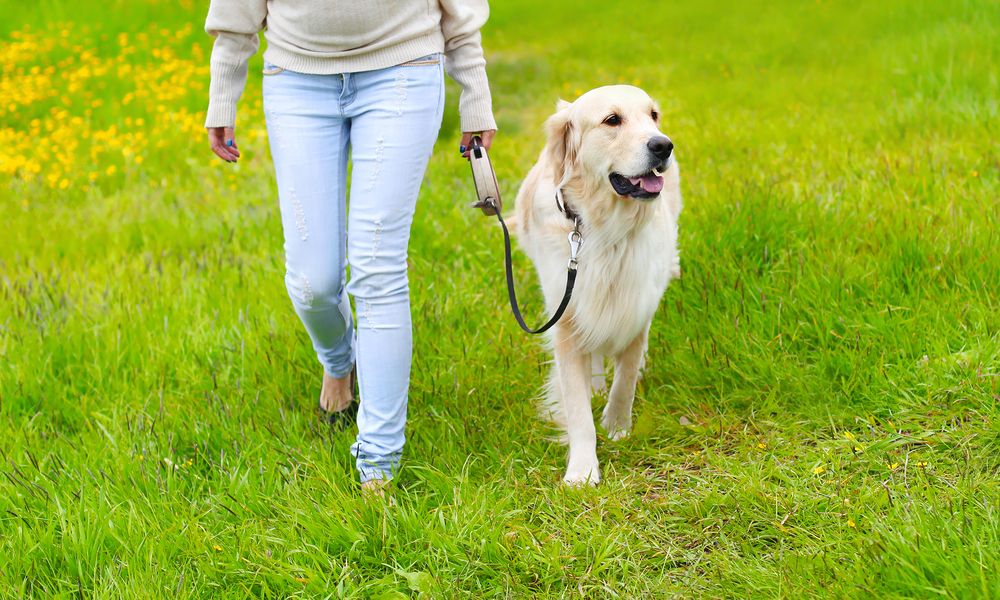
Ideally, you’ll want your dog to walk in a heel position next to you (usually your left side) to keep the leash hanging in a loose J by their side. The position is not instinctual for any dog, so you must make it second nature by training it immediately.
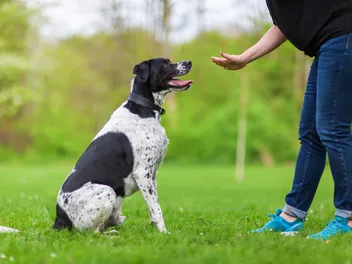
Make sure your dog is attentive, and grab your treats so you can start luring them into the heel position, marking and rewarding when they get their ear to your hip or leg, depending on their size, and facing the proper direction. You can then teach them to follow you in this position as you add steps forward, eventually adding a command to bring your dog next to you.
3. Practice Inside First
Although the goal is keeping a loose leash on outdoor walks, you must start at the ground level with indoor training. Starting indoors removes distractions and stressors that might steal your dog’s attention, letting them focus on you and learning how rewarding the loose leash can be.
Once your dog behaves reliably indoors, you can take this to different places and add new distractions to generalize good loose-leash habits. Indoor training also gives you helpful barriers to keep your dog from straying as you walk.
For example, having your dog heel on your left is easier when walking next to a hallway wall with your dog between it and your body. As you walk, your dog can’t move away. You’ll keep your dog successful and reinforce the habit of walking near you, speeding up their comprehension.

4. Make Your Dog Look at You Before They Can Go
Checking in is an essential behavior to promote since it shows your dog is looking to you for direction. Capture this behavior on your walks, giving your dog treats or letting them explore where they want when they look at your face.
With consistency, they’ll learn that looking at you is rewarding, and you will be training the habit of seeking permission before moving forward.
5. Stop the Pulling at the Door
Your dog should show proper behaviors on the leash as soon as you attach it, so don’t wait until you’re outside and walking before you start enforcing the loose leash rules. Before going out the door for a walk, put your dog in a sitting position and wait for them to look at you.
When they do, say “okay” or “let’s go” and open the door. If they lunge and try to pull when the door opens, close it and try again. Eventually, your dog will learn to look at you again when the door opens, at which point you can reward them and move forward.
Doing this reinforces the calm behavior and action of looking at you and negatively punishes the act of pulling. When you can take your dog outside without them pulling, you establish a calmer frame of mind to facilitate the subsequent loose leash training.

6. Stop Moving and Change Direction When Your Dog Pulls
Walking can be a bit monotonous and predictable for a dog if you walk at a constant rate forward. Eventually, they may think they know where they’re going and pull ahead, causing the leash to go taut.
When your dog’s leash gets tight as they try to pull ahead, stop moving. You won’t jerk the leash, but the sudden pull against them will grab their attention by bringing them to a halt. Call your dog back to you, and progress forward when they’re by your side, giving them treats to reinforce the position.
Going further, you can do a U-turn rather than simply stopping when your dog puts pressure on the leash. When they reach the end of the lead, turn in the opposite direction without saying anything and walk away.
The sudden about-face will be more attention-grabbing and push the idea that they should watch you more often.
7. Practice Turns to Keep Your Dog’s Focus
Take your dog to a park, a parking lot, or even your backyard to practice changing directions on a loose leash. Train your dog to pay better attention to you, showing they respect your leadership and can wait for your guidance.
Walk with your dog on a loose leash. If they start to pull away, abruptly change direction without speaking, and continue walking with your dog on the loose leash. Do this whenever they make the leash tight.
When they start sniffing or take their focus off of you, change direction by walking into them (i.e., you turn left if the dog is walking on your left). As you lead your dog around, they’ll learn to look at you more frequently, at which point you can reward them.

8. Desensitize Your Dog to Outdoor Stimuli
You want to reduce your dog’s reactive threshold so that they remain calm as you approach exciting stimuli. Dogs have a point, usually a certain distance, where they react to triggers and become too overwhelmed by emotions to listen to your commands. Squirrels running around, bikes riding past, and nearby dogs can all ignite that drive for escape, play, or predation that causes leash pulling.
You need to find the sweet spot where you’re close enough for your dog to notice the stimulus but far enough away that they don’t overreact and try to lunge toward it. If your dog reacts to other people or dogs, try this at a park, staying at a safe distance where they stay calm and by your side.
Praise and reward your dog when they can look calmly at the trigger and then at you. Monitor their body language to ensure you don’t push them past their threshold. When walking, you may have to turn around and go the other way if you get too close to triggers up ahead. As your dog learns that being calm is rewarding, you can slowly close the gap between you and the stimulus.
9. Maintain Your Dog’s Focus When You Go Past Their Threshold
Once your dog builds enough confidence, patience, and focus on a loose leash, you can work on maintaining that J-curve while you walk past various triggers. You can do this during your daily walk or by enlisting a friend with a dog for more controlled training.
Walk your dog past the trigger at a close distance. Before your dog can focus on the trigger, get their attention with high-value treats, like chicken or cheese. Take several pieces in your hand, and have your dog eat out of it from a heel position as you walk by. Your dog should be focused more on the delicious treats than the other dog, desensitizing them and counter-conditioning their response.
Final Thoughts
Loose leash skills are your ticket to more enjoyable daily jaunts around your neighborhood, excursions through city streets, and treks across nature parks. Walks become more fluid and less stressful for you while your dog earns the chance for countless experiences outside. It’s a win-win situation, and by following these tips and tricks to loose leash train your dog, you and your pet will be on your way to safe outdoor fun in no time.
Featured Image Credit: Rohappy, Shutterstock
Expert dog care, straight to your inbox
News, insights, expert advice, and everything dog.

No spam — unsubscribe anytime.
By signing up, you agree to our Terms & Conditions and Privacy & Cookies Policy.
How useful was this post?
Click a star to rate. You can leave written feedback afterwards. (We read all feedback.)
Nicole has loved animals of all sizes her whole life so it's no wonder she has dedicated her career to helping them through what she loves best: learning, writing, and sharing knowledge with others. She’s the proud mom of two dogs, a cat, and a human. With a degree in Education and 15+ years of writing experience, Nicole wants to help pet parents and pets around the planet to live happy, safe, and healthy lives.