What Vets Say About Acupuncture as a Treatment for Dogs


In this article
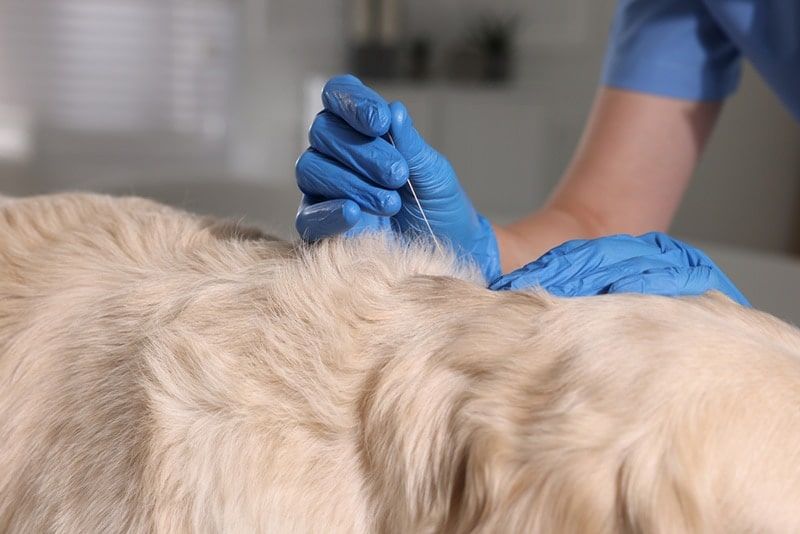
Acupuncture has moved well beyond its origins as an ancient Chinese healing practice and is now showing up more frequently in veterinary treatment plans. The technique involves placing very fine needles into the skin, often targeting trigger points, which are tight bands of tissue within muscles that respond to pressure. It is closely related to dry needling, a method that targets painful areas like joints and muscles directly. In fact, acupuncture and dry needling are not entirely separate practices, just different approaches to the technique.
How Acupuncture Works
The core idea behind acupuncture is to stimulate the release of nerve growth factor, a substance that helps repair inflamed or damaged tissue near the needle site and can produce healing effects elsewhere in the body by following nerve pathways. That mechanism would have been unknown to the ancient Chinese physicians who first developed the practice over 2,000 years ago, and their understanding centered on Qi (pronounced ‘chee’), a life force believed to flow through the body. When Qi became blocked, pain and illness were thought to follow. Acupuncture was used to unblock that flow, and practitioners eventually mapped 12 meridians across the body based on where needling produced results.
Modern science offers an interesting parallel to the meridian concept through embryology. Early in development, embryonic cells separate into three types: endoderm, which becomes the gastrointestinal, respiratory, urinary, and hormonal systems; ectoderm, which becomes the skin and nervous system; and mesoderm, which forms the spine, skeleton, muscles, kidneys, and blood. Since skin and the nervous system originate from the same embryonic cells, it is not difficult to see how stimulating points on the skin could influence internal organs through shared neural pathways.

How Dogs Respond to Needles
Dogs tolerate acupuncture better than many people expect. As with humans, the sensation is usually more pressure than pain, and most dogs settle and relax once treatment begins, even pets that are typically fidgety or anxious. When a dog will not tolerate needles in a specific spot, a veterinary acupuncturist can use nearby trigger points, points along the same meridian, or even points on the opposite side of the body to achieve a similar therapeutic effect through the central nervous system.
What a Course of Treatment Looks Like
Treatment usually starts slowly, with a first session involving only a few needles so the dog can adjust. Some dogs feel sleepy the day after a session, so practitioners pace treatment accordingly. Depending on the condition, a dog might need weekly sessions at first, tapering to monthly or quarterly visits, though some issues, such as a muscle spasm or a wound that needs help healing, may only require a single treatment. Acupuncture is most often used for arthritis and injury recovery, but it also has applications for stress, neurological disorders, wound healing, recovery from surgery, and gastrointestinal, respiratory, or urogenital problems.
A Complement to Medicine, Not a Substitute
It is important to note that acupuncture works best alongside conventional veterinary medicine rather than as a replacement for it. Anti-inflammatory medications remain the most effective way to manage the pain and inflammation of arthritis, but those drugs can stress the liver or kidneys, which limits how much can be safely used. Acupuncture has been shown to improve mobility and reduce pain in many arthritic dogs, even though it may not control inflammation as powerfully as medication alone. Combining both approaches tends to produce better outcomes than relying on either one by itself.
Who Is Qualified to Perform It
Not just anyone can perform acupuncture on a dog. In most states, only veterinarians who have completed training recognized by the American Academy of Veterinary Acupuncture are authorized to do so. Since not every veterinary practice offers the service, pet owners interested in trying it may need a referral.
Potential Benefits
The benefits of acupuncture are notable: it can typically be combined with most medications and conditions, aside from those involving blood clotting issues. It carries minimal risk of side effects, can provide added pain relief for dogs already on maximum medication doses, or even facilitate the lowering of medication doses overall. Finally, it tends to cost less than some alternative treatments.

Potential Risks
The risks, while present, are generally minor. There is a small chance a needle could puncture a lung, causing a collapsed lung, though this is extremely rare. Local skin irritation, redness, or minor bleeding can occur but is uncommon. Some dogs experience brief pain or tenderness from the needle stimulation, and many feel lethargic the day after treatment. There is also a low risk of a needle going unnoticed in a dog's fur and being swallowed if the needle count is not carefully tracked. Finally, some dogs simply do not respond to the treatment at all.
The Bottom Line
Acupuncture has been around for thousands of years, and through modern science, we are able to understand how and why it may work and embrace it as a reliable adjunct to treatment. It won’t suit every dog, but it is far better tolerated than people may assume, and it offers real potential benefits when paired with standard veterinary care. Along with the potential relief for dogs with musculoskeletal problems, it may hold the key to improving outcomes for a wide range of diseases and disorders.
Featured Image Credit: New Africa, Shutterstock
Did You Know?
- Our brand-new posts are rounded up and included in our weekly emails. Don't miss out on the latest - sign up for our newsletter below!
Expert dog care, straight to your inbox
News, insights, expert advice, and everything dog.

No spam — unsubscribe anytime.
By signing up, you agree to our Terms & Conditions and Privacy & Cookies Policy.
How useful was this post?
Click a star to rate. You can leave written feedback afterwards. (We read all feedback.)
Dan has been working in the dog world for over 4 years, covering dogs and all other pets, helping pet parents keep their companions happy, healthy, and totally spoiled! Originally from London, Dan now works remotely, which sadly means no pets at home, but plenty of opportunities to fuss over other people's furry friends.