Dogster is reader-supported. When you buy via links on our site, we may earn a commission at no cost to you. Learn more.

Dog Health & Care

How to Take a Dog's Temperature: 7 Vet-Approved Steps, Do's & Don'ts

Kit Copson
By Kit Copson · Reviewed & fact-checked by Dr. Chyrle BonkVet Approved
Dr. Chyrle Bonk
Reviewed & Fact-Checked byDr. Chyrle BonkDVM (Veterinarian)
On top of caring for animals and writing for veterinary publications, Dr. Chyrle Bonk owns a small cattle herd! When she’s not busy with those things, she can be found somewhere enjoying the Idaho outdoors with her husband and two kids. Dr. Chyrle Bonk received her Doctor of Veterinary Medicine (DVM) from Oregon State University in 2010.View authorThe information is current and up-to-date in accordance with the latest veterinarian research. Learn more
Updated on June 17, 2026
Share
vet taking a dog's temperature at the vet clinic

Just like us, dogs can get a fever when they're feeling out of sorts, but it can be hard to tell exactly whether or not a dog is feverish. So, what can you do?

If you have spoken to a vet and they have recommended that you check for a fever, there are a few things you’ll want to know. In this guide, we'll explain how to take your dog's temperature and reveal the kind of thermometer you need to get the most accurate reading possible.

Note: While many people have the ability to check their dog’s temperature at home, it is still advised to speak to a vet before doing so. If the vet does not think this is an appropriate step, it is better (and safer) to have your dog’s temperature checked by a professional.

How to Take a Dog's Temperature: Step-by-Step

Here, we'll lay out the steps for taking a dog's temperature properly. To learn more about what's considered a normal body temperature for dogs and get some do-or-don't tips, scroll down to the next sections.

What You'll Need:

  • Dog digital rectal thermometer (Mercury thermometers are not recommended)
  • Water-soluble lubricant (alternatives include KY jelly, petroleum gel, Vaseline, or coconut oil)
  • An assistant (optional)

Steps

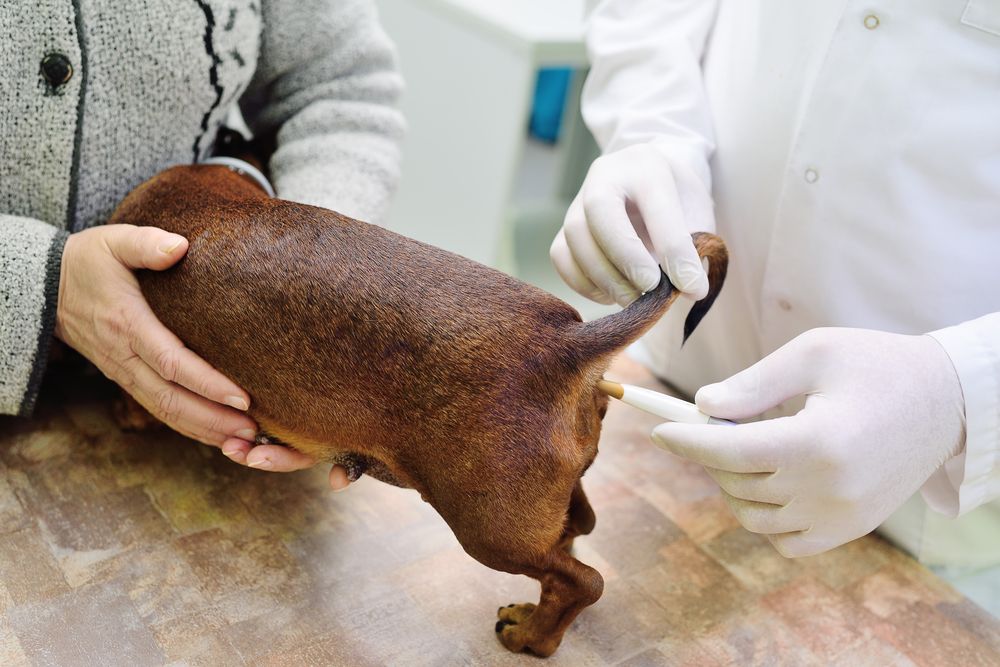
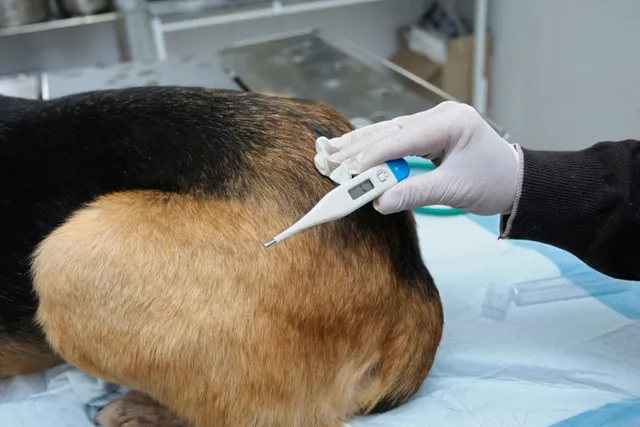
  1. Get a dog rectal thermometer—these are more likely to give an accurate result.

  2. Put a water-soluble lubricant or one of the alternative options mentioned above on the thermometer's tip.

  3. This is optional, but it may help to have someone on hand to hold and reassure your dog.

  4. Carefully insert the tip of the thermometer into the anus about 1 inch or so.

  5. Hold it against the side of the rectal wall to ensure it is not sitting in the middle of feces.

  6. Wait for the thermometer to beep.

  7. Read the temperature.

Image Credit: sirtravelalot, Shutterstock

What's a Normal Body Temperature for Dogs?

While a human's normal body temperature ranges from 97.6 to 99.6 degrees Fahrenheit, a dog's normal body temperature falls between 100 and 102.5 degrees Fahrenheit. This can cause confusion for someone taking their dog's temperature, as they could mistake a perfectly normal temperature for a fever.

A dog is considered to have a fever when their temperature rises to over 103 degrees Fahrenheit, but this doesn't always indicate a health issue. Stress and overexcitement can cause dogs to have a slightly elevated temperature as well as illness.

Keep in mind that if you have a pregnant dog, knowing their temperature is a way to tell if they are close to labor. A dog about to go into labor (within 24 hours) will have a lower temperature, around 98 to 99 degrees Fahrenheit.

What Causes High Temperature in Dogs?

The causes of fever in dogs can range from mild to serious. Possible causes include:

  • Stress
  • Excitement/Exercise
  • Infections
  • Vaccination side effects
  • Heat stroke

What About Low Temperatures in Dogs?

Many people think the main reason for taking temperatures is to show an above-average number. However, taking temperatures can also show if a pet has a low temperature, known as hypothermia. Low temperatures do not just result from the dog being in extremely cold environments or getting wet but can indicate illnesses, such as:

  • Sepsis
  • Hypothyroidism
  • Heart failure
  • Diabetes
  • Severe blood loss

These issues should not be taken lightly, so reach out to a vet if your dog’s temperature is lower than 99 degrees Fahrenheit.

Image Credit: areetham, Shutterstock

Should My Dog See a Vet?

If your dog's temperature is only slightly high, but they are acting normally (eating, drinking, going to the bathroom normally, normal energy levels, etc.), it could just be the result of stress or overexcitement. Nevertheless, you should still call a vet to let them know—better safe than sorry.

If your dog is feverish or has a lower-than-normal temperature and shows other signs of illness, they need to be seen by a vet immediately.

Signs to watch out for include:

  • Depression
  • Lethargy
  • Loss of appetite
  • Vomiting
  • Shivering
  • Nasal discharge
  • Coughing

We suggest you contact a vet online if you need urgent veterinary advice.

Taking a Dog's Temperature: Do's & Don'ts

Do

  • Do use a rectal thermometer for dogs to get the best reading.
  • Do use a lubricant to make the process a bit more comfortable for your dog.
  • Do be gentle when inserting the thermometer.
  • Do watch for other signs of illness like lethargy, depression, heavy panting, loss of appetite, excessive drooling, etc.
  • Do speak to a vet about your concerns.
  • Do act quickly if your dog has a high temperature and is showing signs of illness or heat stroke. See a vet straight away.
  • Do clean the thermometer after each use.

Don't

  • Don't put your hand on your dog's forehead to check the temperature—this doesn't work the same way as it does in humans.
  • Don't wait and see if things improve if your dog is not well. Contact a vet to be on the safe side.
  • Don't try to treat signs of fever by yourself with human medications like ibuprofen or acetaminophen. Follow the vet's advice.
  • Don’t take your dog’s temperature if they are getting scared. They might get defensive and may nip at you.
  • Don’t restrain your dog if they are forcibly trying to get away. If you struggle with the dog trying to take their temperature, you could end up hurting them. Plus, the dog could react badly to being hurt. Instead, let a vet do it.
dogster face divider

Final Thoughts

We recommend every dog parent get a dog rectal thermometer as this could come in handy one day. While you can try using a forehead or ear thermometer, the reading might not be as accurate as if you were to take the temperature rectally. Knowing what your dog’s temperature is can be a way to determine if further professional action needs to be taken.

See also:

Sources

Featured Image Credit: Evgeniy Kalinovskiy, Shutterstock

Want content like this delivered to you?

Sign Up For Our Newsletter

News, insights, expert advice, and everything dog

* By submitting, you agree to our Terms & Conditions and Privacy & Cookies Policy.

Kit Copson
Authored by

Kit Copson

What Is A Normal Temperature For A Dog? Vet-Verified Health Facts & FAQ

What Is A Normal Temperature For A Dog? Vet-Verified Health Facts & FAQ

Dogs normally have rectal temperatures that fall between 99.5° F and 102.5° F 1. A few factors, including level of activity, age, and environmental conditions,…

Lorre Luther
By Lorre Luther · 3 weeks ago
How to Comfort a Dog With a Fever: 3 Vet-Approved Tips

How to Comfort a Dog With a Fever: 3 Vet-Approved Tips

Having a sick dog is awful for both you and your pupper. If your pet has a fever, though, there are a couple of ways you can comfort and support them when they…

Misty Layne
By Misty Layne · 3 weeks ago
Why Do Dogs Have a Higher Body Temperature? Vet-Approved Facts

Why Do Dogs Have a Higher Body Temperature? Vet-Approved Facts

Disclaimer: This article has been fact checked by a qualified veterinarian using information available at the time of review. Veterinary medicine is continuall…

Keri-Beth Clur
By Keri-Beth Clur · 3 weeks ago
How to Tell if a Dog Has a Fever: Vet-Reviewed Tips & What to Do

How to Tell if a Dog Has a Fever: Vet-Reviewed Tips & What to Do

It’s heartbreaking to watch your pet endure a fever. Like humans, dogs experience a fever when their body temperature is higher than normal. A healthy dog shou…

Jordyn Alger
By Jordyn Alger · 6 days ago
July 1, 2026

How to Check Your Dog's Vital Signs At Home: 5 Vet-Reviewed Steps

As dog owners, we want to ensure our pet is kept healthy and happy under our care. If you want to keep your dog healthy, you first need to ensure you know the…

Sarah Psaradelis
By Sarah Psaradelis
How to Check Your Dog's Vital Signs At Home: 5 Vet-Reviewed Steps
June 17, 2026

Hypothermia in Dogs: Vet-Reviewed Signs, Causes & Treatment

Our pets are extremely important to us, and we do all that we can to keep them safe, which includes keeping them inside when it’s cold. However, many dog owner…

Ed Malaker
By Ed Malaker
Hypothermia in Dogs: Vet-Reviewed Signs, Causes & Treatment
June 17, 2026

What Is the Ideal Room Temperature for a Dog? Vet-Approved Facts & FAQ

You won’t see a dog waving a fan in its face to cool off or putting on a pair of fuzzy slippers to keep their feet warm (although that would be adorable). The…

Cassidy Sutton
By Cassidy Sutton
What Is the Ideal Room Temperature for a Dog? Vet-Approved Facts & FAQ
June 17, 2026

How to Cool Down a Dog: 10 Vet-Approved Tips

When the scorching summer temperatures roll around, the heat can take a toll on your dog if they are unable to cool down effectively. The heat is not only unco…

Sarah Psaradelis
By Sarah Psaradelis
How to Cool Down a Dog: 10 Vet-Approved Tips
June 17, 2026

How to Take a Dog's Blood Pressure: 2 Vet Reviewed Methods

It's not uncommon for dogs to occasionally have a higher-than-average blood pressure reading, as stress can have an effect on the result, and a trip to the vet…

Keri-Beth Clur
By Keri-Beth Clur
How to Take a Dog's Blood Pressure: 2 Vet Reviewed Methods
June 17, 2026

Frostbite in Dogs: Vet-Reviewed Signs, Causes & Treatment

Our canine companions might seem better suited to cold weather than humans, but are they actually? After all, many of them have warm coats to keep them cozy an…

Misty Layne
By Misty Layne
Frostbite in Dogs: Vet-Reviewed Signs, Causes & Treatment
June 29, 2026

My Dog Ate Tylenol (Acetaminophen): What Should I Do? Vet-Approved Advice

Tylenol, or acetaminophen (paracetamol), is toxic to dogs and can lead to various health issues. If your dog eats Tylenol, it's best to immediately speak with…

Visnja Radosavljevic
By Visnja Radosavljevic
My Dog Ate Tylenol (Acetaminophen): What Should I Do? Vet-Approved Advice
June 17, 2026

Dehydration in Dogs: Vet-Reviewed Warning Signs & What to Do

Dehydration in dogs is not to be taken lightly. Indeed, a severely dehydrated canine faces significant risks to their health, which can lead to serious complic…

Genevieve Dugal
By Genevieve Dugal
Dehydration in Dogs: Vet-Reviewed Warning Signs & What to Do

Love Dogs? So Do We! Join the Dogster Community

Stay informed with expert pet care insights delivered straight to your inbox! Discover professional guidance on animal behavior, feeding tips, trusted product picks, and much more.

You may opt-out at any time. View our Privacy Policy for more information.

The Dogster app on a phone