How to Take a Dog's Blood Pressure: 2 Vet Reviewed Methods


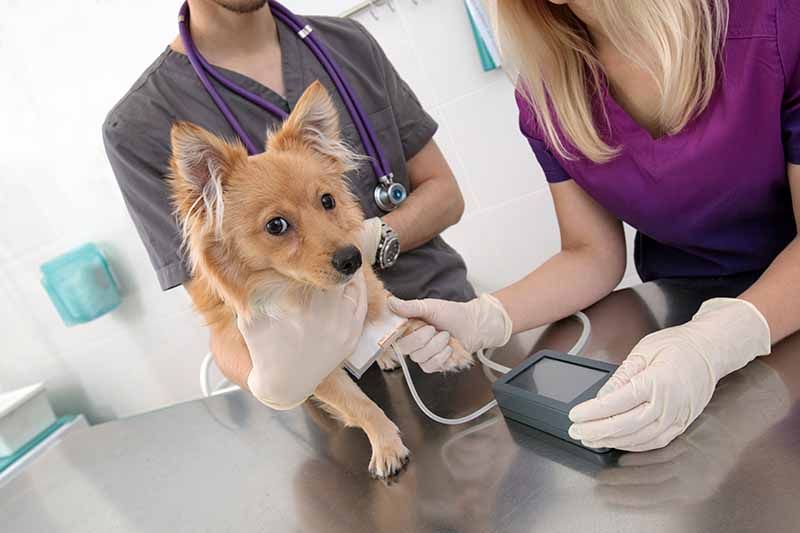
It's not uncommon for dogs to occasionally have a higher-than-average blood pressure reading, as stress can have an effect on the result, and a trip to the vet is very stressful for some dogs. Once your dog has settled a bit, your vet will test again, and the reading should fall between 90/60 to 160/100. However, if the reading is consistently high, your dog may have high blood pressure. Sometimes, this condition occurs on its own and sometimes is caused by an underlying health problem.
If your vet is concerned about your dog's blood pressure, they may ask you to monitor it by taking their blood pressure at home. There are a few different methods to do this, but it's important to do it properly, as your vet will benefit from the information you provide them with.
It is important to note that taking blood pressure from your dog requires dog-specific blood pressure equipment and techniques for accurate readings. This special equipment can be quite a big financial investment, so you may need to look into hiring or borrowing a machine.
Below are two simple ways to take a dog's blood pressure at home by yourself.

Before You Start
Before trying to take your dog's blood pressure for the first time, watch how to do it. You can watch your vet measure your dog’s blood pressure and ask a few questions throughout the process. To gain accurate, meaningful readings will require the correct cuff size, positioning, and position of your dog. It can be helpful to read the machine instructions first. It's important to feel relaxed and confident while taking your dog's blood pressure to ensure your dog remains calm and relaxed.
If your dog becomes anxious, wait a while before taking the readings. You can get them used to the cuff by placing it on them and then brushing them or cuddling them. Treats will also take their mind off the cuff. Once your dog has become relaxed, you can take their blood pressure.

The 2 Methods to Take a Dog's Blood Pressure
1. Use An Automatic Device
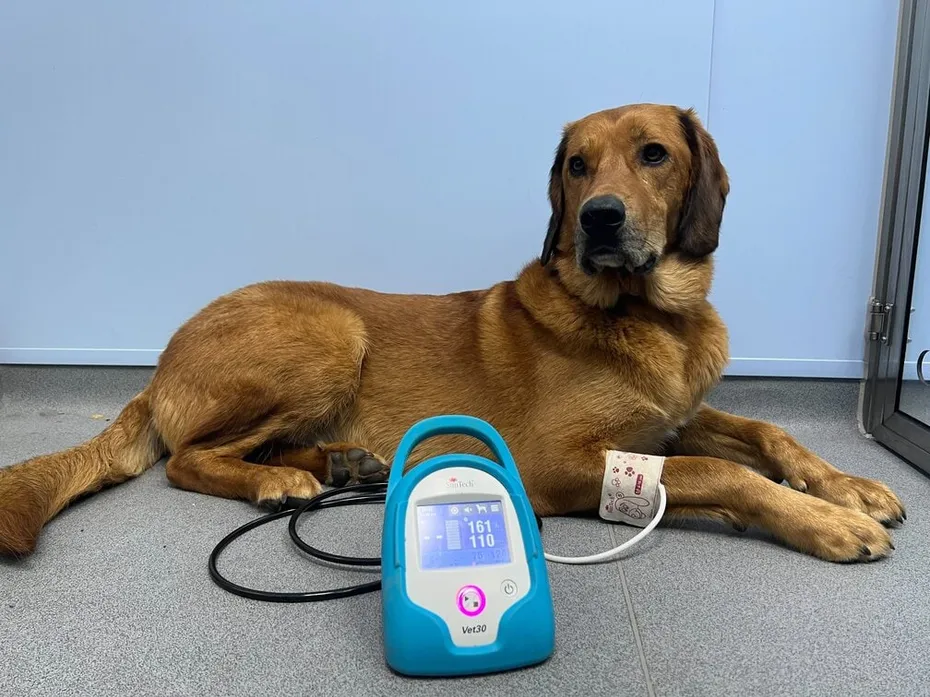
You can purchase a blood pressure monitor online or from your veterinary clinic. This machine looks similar to the blood pressure machine used in a doctor's room. You can choose to place the cuff on the base of your dog's tail or one of their limbs. However, if your dog has short limbs, their tail will be the best place for the most accurate readings.
Make sure that the cuff fits your dog properly. A cuff that is too big or too small will produce inaccurate readings, so you want the width to be about 40% of the diameter of your dog's limb. Attach the cuff, inflate it, and write down the reading it gives you. Your vet may ask you to repeat this a few times so they can see what the average reading is.
The blood pressure cuff reads your dog's blood pressure by filling it with air to block off their artery and blood flow temporarily. As it deflates, it gives you your dog's systolic and diastolic blood pressure.
2. Use a Doppler
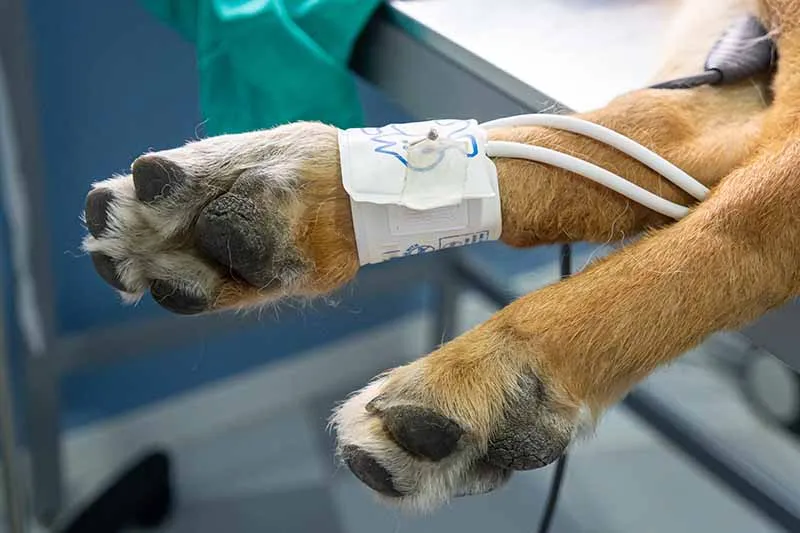
Another way to measure your dog's blood pressure is through the Doppler technique, which also is non-invasive but may take some getting used to. Once again, you'll need to keep your dog calm or try to calm them down before taking their blood pressure, as stress can produce inaccurate readings. Once they begin to relax, start taking the measurements, but take more than one to determine what their average reading is.
To use the Doppler technique, you'll need to get your dog to lie down on their side, align the cuff with their artery, and connect it to the sphygmomanometer. You'll then have to trim over the area on your dog's limb where their pulse is, putting ultrasound gel on the area as well as the probe. You should hear a “whooshing” sound.
Proceed by inflating the cuff until that sound stops, and then slowly deflate it until you hear the whooshing once more. When the sound returns, write down the level on the pressure gauge.

Can I Use a Human Blood Pressure Monitor on My Dog?
Although the cuff that your doctor uses on your arm to measure your blood pressure looks similar to the one the vet uses, they are not the same. If you have a blood pressure monitor for humans at home, you can ask your vet if they are happy for you to use it on your dog, but it usually isn't recommended as it can give inaccurate readings.
The readings you get from the monitor will help your vet with your dog's treatment, but the wrong readings could interfere with that process. Instead, look for a blood pressure monitor that is designed for canine use, as this will provide you with the most accurate readings.
Signs of High Blood Pressure
Signs of high blood pressure are usually only evident when your dog has had it for a period of time, it may be more likely that you will see signs of the underlying disease first, such as diabetes. Prolonged high blood pressure can cause damage to your dog's organs and, if left untreated, may result in congestive heart failure.
Some signs of high blood pressure in dogs are:
If you’re concerned about your pet’s well-being, we recommend you contact a veterinarian.
What Can High Blood Pressure Indicate?
Unfortunately, a wide variety of things can cause high blood pressure, and sometimes the cause is unknown. Sometimes, a dog's blood pressure will be temporarily high when the vet takes it because they're nervous, but their pressure will normalize once they leave the vet. However, high blood pressure is usually the result of an underlying health problem that needs to be addressed and treated.
High blood pressure can be an indication of:

Summing Up
If your vet is worried about your dog's blood pressure, they may ask you to take their blood pressure at home, where your dog feels most comfortable and relaxed. There are two simple ways to take these measurements at home, which are through the use of an automatic blood pressure monitor and through the use of a Doppler. Both methods require you to calm your dog before taking their blood pressure and to use dog-specific equipment and a cuff of the correct size.
To determine the average reading, repeat the measurements a few times. The more accurate the readings, the better and faster your vet will be able to treat your dog, so if you're struggling with getting accurate readings, let your vet know.
Featured Image Credit: Tereshchenko Dmitry, Shutterstock
Expert dog care, straight to your inbox
News, insights, expert advice, and everything dog.

No spam — unsubscribe anytime.
By signing up, you agree to our Terms & Conditions and Privacy & Cookies Policy.
How useful was this post?
Click a star to rate. You can leave written feedback afterwards. (We read all feedback.)
Keri-Beth is a freelance writer from South African who specializes in animals. She has grown up with a range of pets, volunteered at many shelters, and is highly passionate about pet care. Currently, Keri-Beth is raising two dogs - Benji, the Golden Cocker Spaniel, and Gracie, the Boerboel. With so much information out there, Keri-Beth has made it her questo to make pet care as easy and straightforward as possible for any pet parent in the world.
In her spare time, Keri-Beth enjoys photography, camping, and spending time with her husband, who is a professional drummer.