Why Do Dogs Have a Higher Body Temperature? Vet-Approved Facts



Disclaimer: This article has been fact checked by a qualified veterinarian using information available at the time of review. Veterinary medicine is continually evolving and changing. Dog owners are urged to discuss their dog's care with their veterinarian and this article should not be taken as a substitute for medical advice for your pet.
Have you ever cuddled your dog on a cold day and been warmed up by their body heat? Dogs have a higher body temperature than humans, which ranges from 100.0 to 102.5°F, while a human’s body temperature should be around 98.6°F.
Dogs have a higher body temperature because of an internal process called thermoregulation that maintains body temperature within a set range. This range is higher than that of humans, and your dog will feel warmer than you, even on a cold day.

Thermoregulation
Thermoregulation occurs in all animals. Sensors called thermoreceptors detect environmental and body temperatures and trigger changes to maintain an ideal body temperature, which differs between species. A high metabolic rate in warm-blooded animals is a source of heat production. Other adaptations to stay warm in dogs include the fur coat, shivering, and behavioral changes to conserve heat.
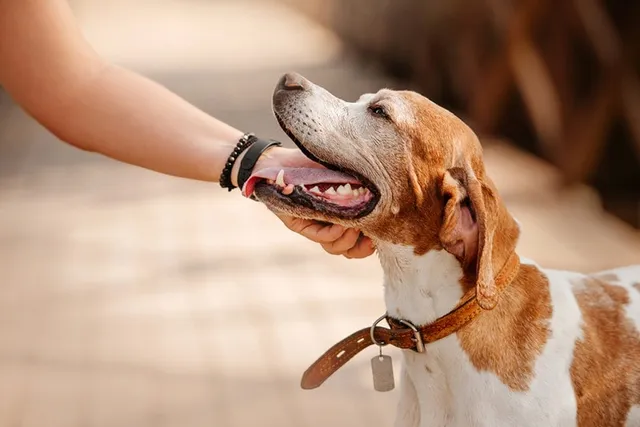
Dogs can cool off by panting, sweating from paw pads, and, again, behavioral changes. Unfortunately, short-nosed dogs are not as efficient at cooling down as those with longer noses. Therefore, Pugs, French Bulldogs, and Boston Terriers, among others, are prone to overheating and need special care on hot days.

Abnormal Temperatures for Dogs
It’s normal for your dog’s temperature to rise or fall slightly as they go about their day because weather and exercise can affect it, but it should never rise above 103°F or drop below 99°F because these temperatures are abnormal for a dog and are a sign of concern. If their temperature does fall outside of the normal range, it’s important for you to take your dog to the vet.
A hot summer’s day, stress, or vigorous exercise can raise dogs' body temperature, while a cooler day or a swim in the pool can cause it to drop slightly. Thankfully, dogs have ways to regulate their body temperature. If they are cold, they’ll curl up into a ball to retain heat and shiver to generate heat, but if they’re hot, they’ll pant or sweat through their paw pads.
What May Cause a Dog’s Temperature to Be Abnormal?
If your dog’s body temperature is above 103°F, they have a fever. There are many reasons why your dog may have a fever, but it is generally a sign that their body is fighting off an infection or producing inflammation. A fever can arise from an infected wound, an ear infection, a urinary tract infection, an abscessed tooth, an organ infection, or from eating food, plant matter, or a human product that is toxic to dogs.
If your dog’s temperature is below 99°F, they have hypothermia. Although hypothermia can be caused by leaving your dog outside in cold conditions or getting wet on a cold day, it can also be caused by blood loss, anesthesia, poisoning, and illnesses such as sepsis, pyometra, and severe Addison’s disease.

Signs of a Dog Fever
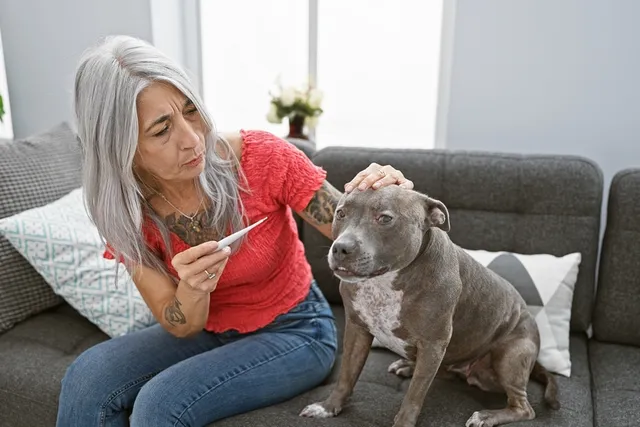
It isn’t always easy to tell if your dog has a fever because they are naturally warmer than you. The only way to know for sure is to take their temperature. However, there are common signs that can help you determine whether your dog is running a fever, such as lack of energy, lack of interest in food, and signs related to the cause of the fever (coughing, vomiting, straining to urinate, etc).
If your dog shows signs of the symptoms above or you suspect they might be suffering from underlying health issues, you should contact your vet.
How to Take Your Dog’s Temperature
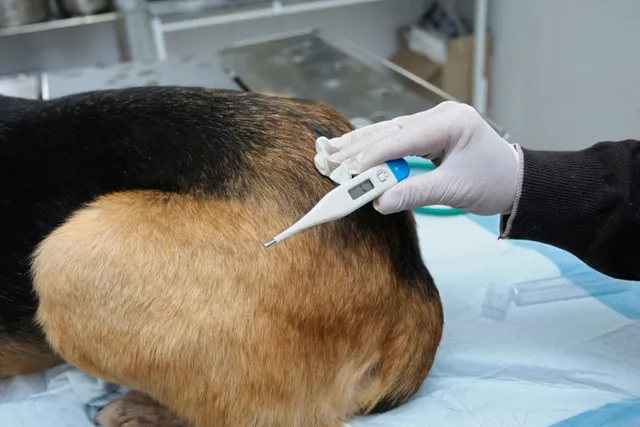
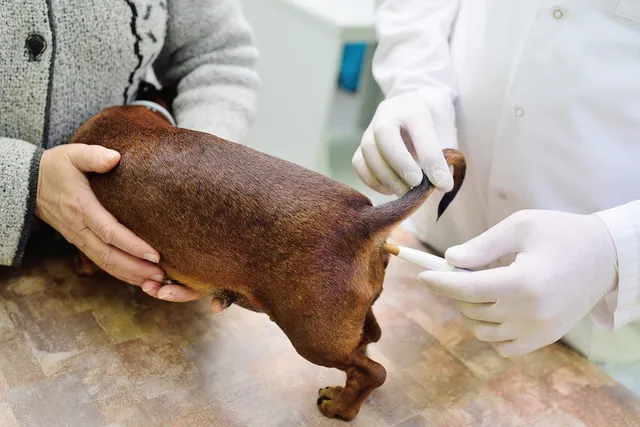
If you’re still not sure if your dog is naturally warm or running a fever, take their temperature. To take your dog’s temperature, you’ll need to use a thermometer. The best type of thermometer is a digital one designed for pets. It can give you a reading within a minute, which is faster than older types. Glass thermometers are dangerous since they can break easily and leave you with shards of broken glass.
Getting a reading quickly is necessary when taking your dog’s temperature because you’ll need to place it in their ear or anus, which can be uncomfortable for them. Regardless of their temperature, if your dog shows signs of an illness, they need to go to the vet.

How to Bring a Fever Down
If your dog is sick, you must take them to the vet, especially if they display other signs, such as lethargy, vomiting, coughing, blood in the stool, etc. Your vet may run several tests, including bloodwork, urinalysis, X-rays, and ultrasounds, to determine what is causing your dog’s fever. A temperature above 103°F warrants a trip to the vet, and if it rises to 106°F, damage can occur to your dog’s organs, which can be life-threatening.

Conclusion
If you take your dog’s temperature and notice it is higher than your own, don’t panic. Dogs naturally have higher temperatures because they are a different species. A dog’s body temperature can range from 101.0 to 102.5°F. However, fevers in dogs can be severe and should not be ignored. You will need a veterinarian to treat your dog and help them recover.
See Also:
Sources
Featured Image Credit: Radomir Rezny, Shutterstock
Expert dog care, straight to your inbox
Vet-reviewed advice, training tips, and the best of Dogster. Free, and you can unsubscribe anytime.
By signing up, you agree to our Terms & Conditions and Privacy & Cookies Policy.
Keri-Beth is a freelance writer from South African who specializes in animals. She has grown up with a range of pets, volunteered at many shelters, and is highly passionate about pet care. Currently, Keri-Beth is raising two dogs - Benji, the Golden Cocker Spaniel, and Gracie, the Boerboel. With so much information out there, Keri-Beth has made it her questo to make pet care as easy and straightforward as possible for any pet parent in the world.
In her spare time, Keri-Beth enjoys photography, camping, and spending time with her husband, who is a professional drummer.
Join the conversation
Ask a question, share your story, or send private feedback.