Dogster is reader-supported. When you buy via links on our site, we may earn a commission at no cost to you. Read about privacy.

What Is A Normal Temperature For A Dog? Vet-Verified Health Facts & FAQ


Lorre Luther
By Lorre Luther · Reviewed & fact-checked by Dr. Maja PlatisaVet Approved
Dr. Maja Platisa
Reviewed & Fact-Checked byDr. Maja PlatisaDVM MRCVS (Veterinarian)
Maja joined our team in March 2023 as one of our in-house veterinarians. She is passionate about animals and their health and loves to help the readers with any issues or questions they have regarding their four-legged friends and other animal companions. Her passion is small animal medicine and emergency work, while she also has a great interest in animal welfare.View authorThe information is current and up-to-date in accordance with the latest veterinarian research. Read about our vets
Updated on
Share
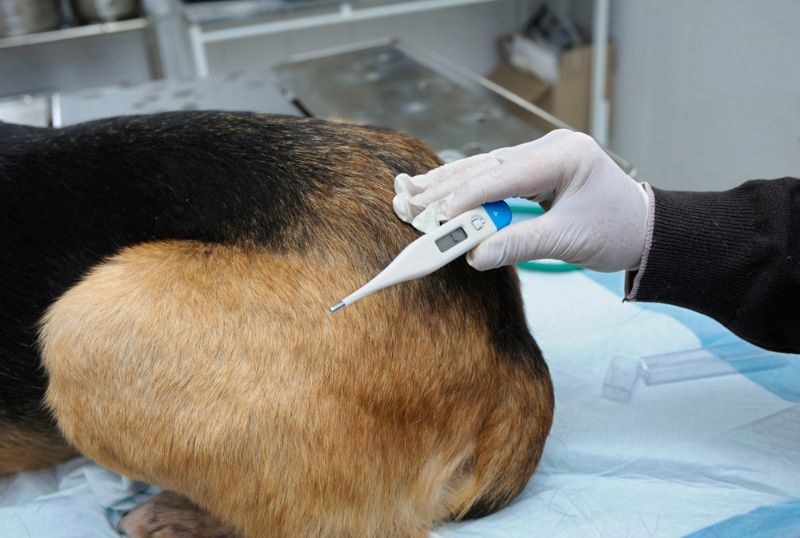
Veterinarian’s hand holding thermometer taking dog’s temperature

Dogs normally have rectal temperatures that fall between 99.5° F and 102.5° F 1. A few factors, including level of activity, age, and environmental conditions, can influence a dog's body temperature. Temperatures over 102.5° F are classified as fevers. Organ failure can occur when a dog has a temperature higher than 106° F. Always reach out to your veterinarian if you're concerned your dog has a fever.

divider single dog paw oct 2024

What Causes High Temperatures in Dogs?

Dogs can run fevers when their immune systems have kicked into high gear, often because of infections. Autoimmune diseases and some inflammatory conditions can cause dogs to have high temperatures. Dogs can also have elevated temperatures due to overheating or too much exertion. Pets can end up with dangerously elevated temperatures as a result of being left in cars with the windows up, having prolonged seizures, or exercising on hot and humid days. Dogs' temperatures can also rise temporarily when they're anxious or excited and often vary over the course of the day.

beagle dog lying on bed looking sick
Image Credit: HelgaBragina, Shutterstock

Are There Physical Signs That Often Accompany Fevers in Dogs?

Yes. Dogs with fevers often lack energy and have little or no interest in activities they usually enjoy. Many lose interest in eating and begin panting and shivering. Since fevers are generally linked to an underlying illness, there are additional signs related to the specific condition causing the immune system response.

If your dog is showing signs of fever, we suggest you speak to a vet.

divider dog paws oct 2024

What About Low Temperatures?

Temperatures below about 99° F or 98° F are considered low and are tipping into hypothermia. Low body temperatures may result when dogs spend too much time in cold, windy, or wet conditions without shelter. Small dogs, puppies, and senior pets are more vulnerable to developing hypothermia in cold weather. Dogs with thin coats also have trouble staying comfortable when the mercury drops. Illness and health conditions can make it difficult for dogs to manage their body temperatures.

Are There Physical Signs That Often Accompany Hypothermia in Dogs?

Shivering, slow reflexes, stiff muscles, and confusion are sometimes seen in moderate cases, and their ears and body may feel cold to the touch, although this is not always a reliable indicator. Dogs will stop shivering and become progressively more uncoordinated and lethargic when the condition progresses.

dog wearing a coat and playing in snow
Image Credit: alexei_tm, Shutterstock
divider dog paws 2 oct 2024

Are There Special Thermometers for Dogs?

You can purchase a thermometer designed specifically for veterinary use, but it's possible to take a dog's temperature using a thermometer designed for humans as well. Digital models are easy to read and generally safer than old-fashioned glass thermometers with mercury that can break and injure pets. In many countries mercury thermometers are no longer being used. Aural thermometers that are placed gently in the ear canal can make taking dogs' temperatures a bit easier for some owners, but the readings are sometimes less predictable than ones taken rectally. Your dog may suddenly move, which could cause an injury to the ear, and improper placement or an infected ear will give false readings.

What About Feeling a Dog's Nose?

There's a common misconception that warm, dry noses are indications of fevers in dogs. The only accurate way to determine a dog's temperature is by using a thermometer since the weather can influence whether a dog's nose is warm, cold, wet, or dry.

divider dog paws 3 oct 2024

Conclusion

Dogs' normal temperatures range between 99.5° F and 102.5° F. Human thermometers can be used on dogs, but old-fashioned glass mercury-filled models require more time to obtain accurate readings and can be hazardous if they break. Digital thermometers are quite fast and have the added benefit of being easy to read. If your dog has trouble standing still when you use an aural thermometer, you can try using a rectal thermometer to see if they prefer it.

Sources

Featured Image Credit: Krysja, Shutterstock

Expert dog care, straight to your inbox

Vet-reviewed advice, training tips, and the best of Dogster. Free, and you can unsubscribe anytime.

By signing up, you agree to our Terms & Conditions and Privacy & Cookies Policy.

Lorre Luther
Authored by

Lorre Luther

Join the conversation

Ask a question, share your story, or send private feedback.

Rate this post
Required to post. Only our editors see your rating.
Who should see this?

A human reviews every comment before it appears. Your email is never published.

Why Do Dogs Have a Higher Body Temperature? Vet-Approved Facts

Why Do Dogs Have a Higher Body Temperature? Vet-Approved Facts

Disclaimer: This article has been fact checked by a qualified veterinarian using information available at the time of review. Veterinary medicine is continuall…

Keri-Beth Clur
By Keri-Beth Clur ·
How to Take a Dog's Temperature: 7 Vet-Approved Steps, Do's & Don'ts

How to Take a Dog's Temperature: 7 Vet-Approved Steps, Do's & Don'ts

Just like us, dogs can get a fever when they're feeling out of sorts, but it can be hard to tell exactly whether or not a dog is feverish. So, what can you do?…

Kit Copson
By Kit Copson ·
How to Comfort a Dog With a Fever: 3 Vet-Approved Tips

How to Comfort a Dog With a Fever: 3 Vet-Approved Tips

Having a sick dog is awful for both you and your pupper. If your pet has a fever, though, there are a couple of ways you can comfort and support them when they…

Misty Layne
By Misty Layne ·
Why Does My Dog Feel Hot to the Touch? Our Vet Discusses 5 Possible Reasons

Why Does My Dog Feel Hot to the Touch? Our Vet Discusses 5 Possible Reasons

Many pet owners become worried when they notice their pet feels hot to the touch. While it can be a sign of fever, there can be other reasons that your dog fee…

Dr. Ashley Darby
By Dr. Ashley Darby ·

Hypothermia in Dogs: Vet-Reviewed Signs, Causes & Treatment

Our pets are extremely important to us, and we do all that we can to keep them safe, which includes keeping them inside when it’s cold. However, many dog owner…

Ed Malaker
By Ed Malaker ·
Hypothermia in Dogs: Vet-Reviewed Signs, Causes & Treatment

How to Check Your Dog's Vital Signs At Home: 5 Vet-Reviewed Steps

As dog owners, we want to ensure our pet is kept healthy and happy under our care. If you want to keep your dog healthy, you first need to ensure you know the…

Sarah Psaradelis
By Sarah Psaradelis ·
How to Check Your Dog's Vital Signs At Home: 5 Vet-Reviewed Steps

What Is the Ideal Room Temperature for a Dog? Vet-Approved Facts & FAQ

You won’t see a dog waving a fan in its face to cool off or putting on a pair of fuzzy slippers to keep their feet warm (although that would be adorable). The…

Cassidy Sutton
By Cassidy Sutton ·
What Is the Ideal Room Temperature for a Dog? Vet-Approved Facts & FAQ

Do Dogs Feel the Cold? Coat Types & Tips to Keep Them Warm

We know, we know—it seems like dogs have coats that keep them naturally protected from inclement weather. But can your dog feel the cold? Dogs feel the cold! S…

Ashley Bates
By Ashley Bates ·
Do Dogs Feel the Cold? Coat Types & Tips to Keep Them Warm

Can A Dog Get Frostbite? Vet Approved Facts & FAQ

Many dogs are equipped for chilly winter temperatures. They have full coats and double layers that act as a natural insulator. But how cold is too cold? Can yo…

Ashley Bates
By Ashley Bates ·
Can A Dog Get Frostbite? Vet Approved Facts & FAQ

Can a Dog's Nose Sense Heat? What Science Has to Say

We already know that a dog's nose is a powerful tool. Humans have utilized the canine's keen sense of smell to track down criminals, search for drugs, and loca…

Brooke Norris
By Brooke Norris ·
Can a Dog's Nose Sense Heat? What Science Has to Say

Do Dogs Like Cold Weather? Vet Approved Canine Behavior & FAQ

It's that time of year. Everyone is bundled up and trying to stay as snug as possible. Trips with your dog outside are brief, as you shiver to try to make it b…

Ashley Bates
By Ashley Bates ·
Do Dogs Like Cold Weather? Vet Approved Canine Behavior & FAQ

How to Cool Down a Dog: 10 Vet-Approved Tips

When the scorching summer temperatures roll around, the heat can take a toll on your dog if they are unable to cool down effectively. The heat is not only unco…

Sarah Psaradelis
By Sarah Psaradelis ·
How to Cool Down a Dog: 10 Vet-Approved Tips

Love Dogs? So Do We! Join the Dogster Community

Stay informed with expert pet care insights delivered straight to your inbox! Discover professional guidance on animal behavior, feeding tips, trusted product picks, and much more.

You may opt-out at any time. View our Privacy Policy for more information.

The Dogster app on a phone