Dogster is reader-supported. When you buy via links on our site, we may earn a commission at no cost to you. Learn more.

Dog Health & Care

How Many Hearts Do Dogs Have? Vet-Verified Anatomy Facts

Sarah Psaradelis
By Sarah Psaradelis · Reviewed & fact-checked by Dr. Ashley DarbyVet Approved
Dr. Ashley Darby
Reviewed & Fact-Checked byDr. Ashley DarbyBVSc (Veterinarian)
Dr. Ashley has worked in mixed and small animal emergency clinics and general practice ever since 2017 after studying Sydney University. She grew up in South Africa and England before moving to Australia, and her passion for animals came from many childhood safaris in the Kruger National Park.View authorThe information is current and up-to-date in accordance with the latest veterinarian research. Learn more
Updated on June 17, 2026
Share
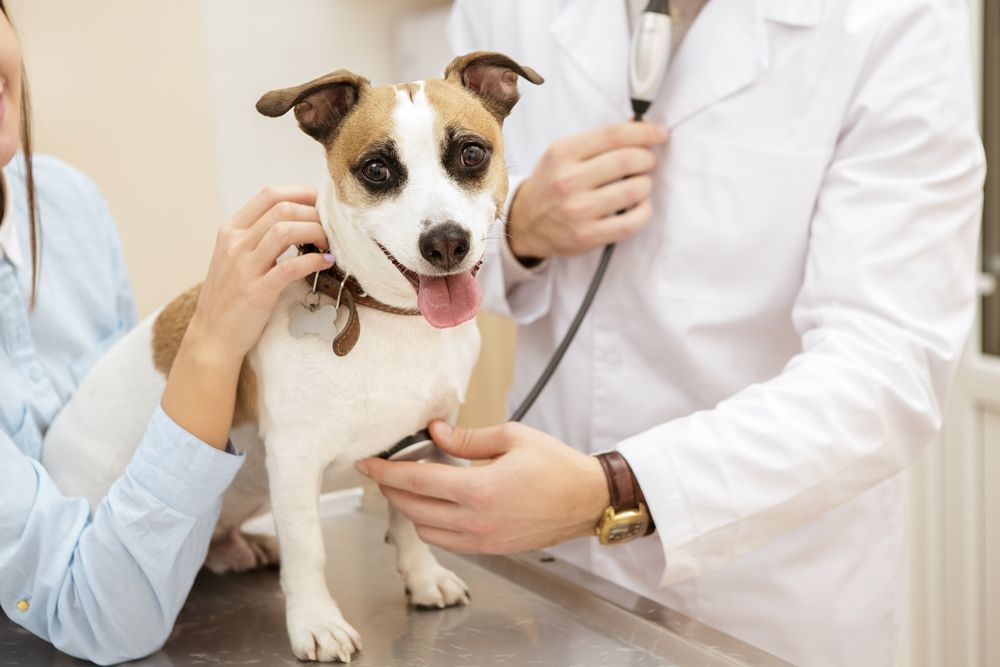
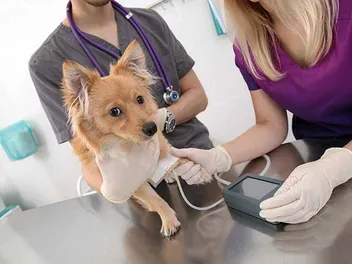
vet-checking-dog-heart-beat

Dogs have so much unconditional love and loyalty to give, that it would only make sense that they must have more than one heart. However, our canine companions only have one heart, just like we do.

A dog’s heart is part of their cardiovascular system which keeps them alive by pumping blood throughout their bodies. Their heart has many similarities to humans, both in appearance and functioning. Although dogs only have one heart, their heart consists of several chambers with different functions.

This article will explore more facts about a dog’s heart and anatomy.

Dogster divider_v3_NEW_MAY_24_

Dog Heart Anatomy 101

Dogs only have one heart located in their chest and are part of a single cardiovascular system. Their heart is oval to cone shaped, tapering towards the apex, and consists of four chambers: two atria and two ventricles. The two atria are the smaller chambers that receive blood from the dog’s body or lungs, whereas the two larger ventricles pump the oxygenated and deoxygenated blood to the body and lungs respectively.

Attached to a dog’s heart is a range of blood vessels, such as arteries and veins that form part of the cardiovascular system, which branch throughout the body into tiny vessels known as capillaries.

You’re welcome to use our images, but we require you link directly to this site for credit (ex. Image from Dogster)

Where Is a Dog's Heart Located?

A dog’s heart is located in the chest cavity between the lungs, but more towards the left side. To find their heart, you can lay your dog's body on the right side and bend their front left leg. The part where their elbow touches their chest is usually where their heart is situated. You can feel if you have found the right spot by placing the palm of your hand there and feeling for their heartbeat.

If it feels as if you can feel your dog’s heart beating throughout different parts of their body, you have probably found their pulse. A dog’s pulse can be felt over the femoral artery along the inner part of their upper thighs. This is the easiest pulse to feel but they also have other palpable pulses in their feet and underside of the tail. Use your index and middle fingers when locating the pulse rather than your thumb, as your thumb has a pulse of its own.

Feeling your dog’s pulse can help you determine their heart rate, which is the number of times their heart beats per minute. Dogs can have different heart rates depending on several factors, such as their size, fitness, and age. The general heart rate for dogs is between 60 to 160 beats per minute (bpm). Puppies usually have the fastest heart rates, whereas larger dog breeds have the slowest. Their heart rate will elevate with stress, excitement, or anxiety.

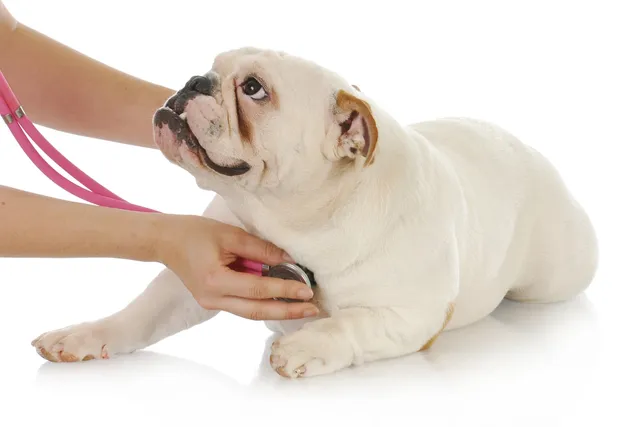
Image Credit: WilleeCole Photography, Shutterstock

How Does a Dog's Heart Work?

There are different parts of a dog’s heart each with a specific function.

  • Right atrium
  • Right ventricle
  • Left atrium
  • Left ventricle
  • Tricuspid valve
  • Aorta
  • Aortic valve
  • Pulmonary vein
  • Pulmonary valve
  • Mitral valve
  • Papillary muscles
  • Coronary vessels
  • Pulmonary artery

A dog’s heart works by pumping blood and oxygen to the body with every contraction. The right side of a dog’s heart pumps deoxygenated blood to a dog's lungs for oxygenation. The oxygenated blood is received by the left side and oxygenated blood is then pumped through the aorta and supplied to the rest of a dog's body. This oxygenated blood is delivered to a dog's tissue and organs to keep them functioning.

Dogster divider_v3_NEW_MAY_24_

Conclusion

Dogs have one heart and one cardiovascular system. Their heart is situated in the center of their chest between their lungs and slightly to the left. The heart's function is to pump blood throughout the body and receive deoxygenated blood to be pumped to the lungs for oxygenation.

You can locate your dog's heart by laying them on their right side and bending their front leg. Their heart will be by their elbow. However, their heartbeats can be felt in other parts of their body through a pulse.

See Also: 

Sources

Featured Image Credit: Nestor Rizhniak, Shutterstock

The Dogster Newsletter

Expert dog care, straight to your inbox

News, insights, expert advice, and everything dog.

No spam — unsubscribe anytime.

By signing up, you agree to our Terms & Conditions and Privacy & Cookies Policy.

Click a star to rate. You can leave written feedback afterwards. (We read all feedback.)

Sarah Psaradelis
Authored by

Sarah Psaradelis

How to Check a Dog's Pulse: Steps & Facts (Vet Answer)

How to Check a Dog's Pulse: Steps & Facts (Vet Answer)

Many dog owners are unaware of their pup’s pulse. Do you know how to check it on your dog? Has your vet asked you to monitor pulse rate? If so, do you know a h…

Dr. Rachel Ellison
By Dr. Rachel Ellison · 3 weeks ago
How Fast Is a Normal Heart Rate for Dogs? (Vet Answer)

How Fast Is a Normal Heart Rate for Dogs? (Vet Answer)

Do you think that your dog's heart is beating faster than usual and want to know what the normal heart rate is for dogs? As a general rule, a dog’s heart rate…

Dr. Iulia Mihai, DVM MSc
By Dr. Iulia Mihai, DVM MSc · 3 weeks ago
Irregular Heartbeat in Dogs: Our Vet Explains Signs, Causes & Care

Irregular Heartbeat in Dogs: Our Vet Explains Signs, Causes & Care

During a physical exam, your veterinarian should always listen to your dogs’ chest with their stethoscope. This will include placing their stethoscope in more…

Dr. Kim Podlecki
By Dr. Kim Podlecki · 1 week ago
Heart Disease in Dogs: Signs, Causes & Treatments (Vet Answer)

Heart Disease in Dogs: Signs, Causes & Treatments (Vet Answer)

Heart disease is an umbrella term for any health condition that exists within the heart and/or associated blood vessels. While there are numerous different dis…

Dr. Rachel Ellison
By Dr. Rachel Ellison · 1 week ago

How to Check Your Dog's Vital Signs At Home: 5 Vet-Reviewed Steps

As dog owners, we want to ensure our pet is kept healthy and happy under our care. If you want to keep your dog healthy, you first need to ensure you know the…

Sarah Psaradelis
By Sarah Psaradelis · July 1, 2026
How to Check Your Dog's Vital Signs At Home: 5 Vet-Reviewed Steps

10 Dogs Prone to Heart Disease: Vet-Reviewed Facts & FAQ

Dogs are prone to different health conditions as they age. This can be seen more commonly among certain breeds in comparison to others, whether it be due to th…

Nicole Cosgrove
By Nicole Cosgrove · June 29, 2026
10 Dogs Prone to Heart Disease: Vet-Reviewed Facts & FAQ

How Many Ribs Do Dogs Have? Vet-Approved Anatomy Facts & Info

The rib cage of a dog serves the function of protecting the internal chest organs, particularly the lungs and heart. That speaks to its importance as the origi…

Chris Dinesen Rogers
By Chris Dinesen Rogers · June 27, 2026
How Many Ribs Do Dogs Have? Vet-Approved Anatomy Facts & Info

What Is a Normal Dog Respiration Rate? Vet-Reviewed Facts

Dogs can have a very wide range of respiration rates. Some dogs sleep so deeply that they can look dead because their respiration rates drop so low. Other dogs…

Grant Piper
By Grant Piper · June 17, 2026
What Is a Normal Dog Respiration Rate? Vet-Reviewed Facts

Heartworm in Dogs: Our Vet Discusses Causes, Signs, Treatment & Prevention

Most of us know that regular worming treatments are an important part of canine preventive healthcare, but how much do we know about the worms we are trying to…

Dr. Karyn Kanowski
By Dr. Karyn Kanowski · July 4, 2026
Heartworm in Dogs: Our Vet Discusses Causes, Signs, Treatment & Prevention

How to Take a Dog's Blood Pressure: 2 Vet Reviewed Methods

It's not uncommon for dogs to occasionally have a higher-than-average blood pressure reading, as stress can have an effect on the result, and a trip to the vet…

Keri-Beth Clur
By Keri-Beth Clur · June 16, 2026
How to Take a Dog's Blood Pressure: 2 Vet Reviewed Methods

How to Do Dog CPR? Vet-Verified Step-By-Step Guide

Although dogs are less likely than humans to suffer heart attacks, there are still occasions when an owner might need to give their dog cardiopulmonary resusci…

Nicole Cosgrove
By Nicole Cosgrove · June 16, 2026
How to Do Dog CPR? Vet-Verified Step-By-Step Guide

Dog Paw Anatomy: Vet-Approved Facts & Shape Explanation

A dog’s paws play a huge role in their everyday lives. Healthy paws are essential for walking and running comfortably, the pads act as shock absorbers and cush…

Keri-Beth Clur
By Keri-Beth Clur · June 17, 2026
Dog Paw Anatomy: Vet-Approved Facts & Shape Explanation

Love Dogs? So Do We! Join the Dogster Community

Stay informed with expert pet care insights delivered straight to your inbox! Discover professional guidance on animal behavior, feeding tips, trusted product picks, and much more.

You may opt-out at any time. View our Privacy Policy for more information.

The Dogster app on a phone