My Dog Keeps Eating Birdseed, What Should I Do? Vet-Approved Tips

In this article
Some dogs are so picky that they won’t touch certain dog food flavors. On the other hand, others love to eat almost anything and everything, whether good or bad, edible or not. A food-loving dog may gravitate toward your bird feeder or at least under it. Birds love to splash in birdbaths and tend to make a big mess around their feeders, too. However, if your dog enjoys licking up birdseed, it won’t remain on the ground for long.
Although eating a few fresh seeds usually is not harmful to dogs, it can have adverse effects on their health, and you should try to implement ways to prevent them from accessing the fallen birdseed. Placing the feeder above a bush or in a section of your yard that your dog does not have access to can help. Keep reading to learn why birdseed is not recommended for dogs and how to keep them away from your bird feeder.

Why Birdseed Isn’t Recommended for Dogs
Birdseed contains various types of seeds that are intended for birds, not dogs. Therefore, it can cause a few adverse effects in dogs. Here are a few problems it can cause for your dog:

Gastrointestinal Upset
You don’t need to be alarmed if you’ve seen your dog eat a few fresh seeds off the ground, as long as it wasn’t a large quantity. If they jumped up, tipped over the feeder, and half the seeds fell out, you may have a more concerning situation. Thankfully, the latter scenario is less common than the first.
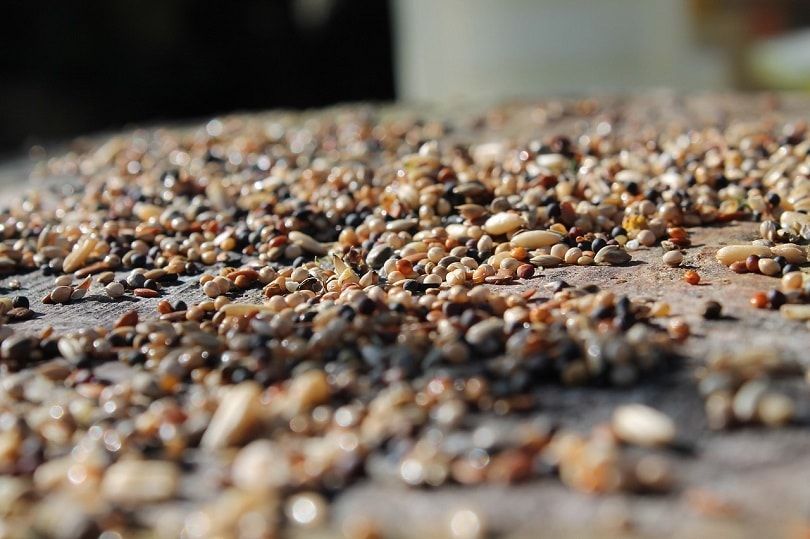
Birdseed is usually made up of a mixture of sunflower seeds and safflower seeds. These seeds are high in protein and healthy fats and aren’t toxic to dogs. However, they can cause gastrointestinal upset, which could leave your dog with diarrhea, vomiting, and stomach cramps.
Some types of birdseed may contain other ingredients, too, such as raisins, which are not safe for dogs to eat.
If your dog is showing signs of an upset stomach, we suggest you speak to a vet.
Aflatoxin Poisoning
A serious risk to dogs that eat birdseed is aflatoxin poisoning 1. Old birdseed lying on the ground through rain and dew can become damp and moldy. If your dog eats moldy seeds repeatedly, the aflatoxin levels can build up in your dog, and damage can occur to their liver. They may develop blood clotting issues, and they can eventually die.
The signs of aflatoxin poisoning in your dog include lethargy, unusual bleeding, jaundice, vomiting, diarrhea, and loss of appetite.
It Can Expose Your Dog to Salmonella
In addition to the moldy seed under the feeder, bird droppings are usually present. Unfortunately, the feces is in the same area as the bird seed, and as your dog eats up the seed, they’ll consume the droppings, too.
The risk with eating bird feces is that it contains bacteria and parasites, such as salmonella. A salmonella infection 2 can cause various problems in dogs, such as fever, diarrhea, vomiting, weight loss, skin disease, swollen lymph nodes, and much more.
What Can I Do to Prevent My Dog from Eating Birdseed?
Several health issues can arise from your dog eating bird seed, and it is vital to prevent them from lapping up the bird’s leftovers. As a dog lover, you are likely to have a soft spot for all wildlife, and watching different species of birdlife flock around your bird feeder every day could be one of your many joys in life.
However, it is crucial to keep your dog safe; thankfully, there are a few ways to do this.
1. Place a Pot Plant Below the Feeder
If you don’t want to move your bird feeder from its current spot, you can place a potted plant below the feeder instead. As the birds spill out their seeds, they’ll fall into the pot, not on the ground, which could stop your dog from eating them.
Otherwise, you can move the bird feeder above a bush so that the seeds fall into the bush, making it hard for your dog to reach them.

2. Keep It Clean
If you’re not worried about your dog eating the occasional seed or two but are worried about moldy seeds that could cause health issues for your dog, you may need to become diligent about keeping the feeder and area below it clean. Regularly clean and sanitize your feeder and stock it up with fresh seeds.
You’ll also need to frequently sweep up the seeds that fall to the ground before they have the chance to become damp and moldy.
3. Deny Access to It
If you have a section of your yard that your dog cannot access, such as the pool area, it can be a great spot to keep your bird feeder. If your dog has access to your entire yard, placing decorative fencing around the bird feeder will deny them access to the seeds.

4. Don’t Have a Bird Feeder
The last option is to do away with the bird feeder entirely. Of course, this may not be an option for some people, but it might be the only solution for others. If you’re lucky, you can still sit outside and enjoy the birdlife, even without feeding them.
Conclusion
You don’t need to worry if your dog has eaten a few bird seeds since they’ll probably only have a bit of diarrhea or vomiting, or they could be fine. However, there is cause for concern if they eat a large quantity of birdseed or moldy seeds. Aflatoxin poisoning and salmonella infection are other risk factors for eating old seeds off the ground.
Thankfully, you can keep your dog safe by placing a barrier around the feeder or a pot plant below it. You can also clean up the fallen seeds before your dog can eat them or remove the feeder.
Sources
Featured Image Credit: ASCII85, Pixabay
Expert dog care, straight to your inbox
Vet-reviewed advice, training tips, and the best of Dogster. Free, and you can unsubscribe anytime.
By signing up, you agree to our Terms & Conditions and Privacy & Cookies Policy.
Keri-Beth is a freelance writer from South African who specializes in animals. She has grown up with a range of pets, volunteered at many shelters, and is highly passionate about pet care. Currently, Keri-Beth is raising two dogs - Benji, the Golden Cocker Spaniel, and Gracie, the Boerboel. With so much information out there, Keri-Beth has made it her questo to make pet care as easy and straightforward as possible for any pet parent in the world.
In her spare time, Keri-Beth enjoys photography, camping, and spending time with her husband, who is a professional drummer.
Join the conversation
Ask a question, share your story, or send private feedback.