Australian Shepherd vs. Labrador: Breed Comparison (With Info & Pictures)

In this article
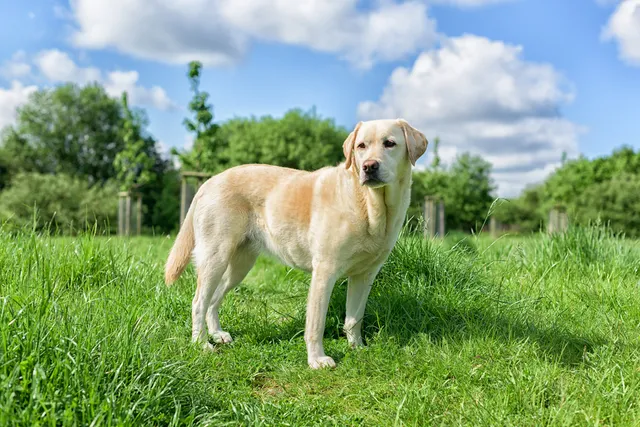
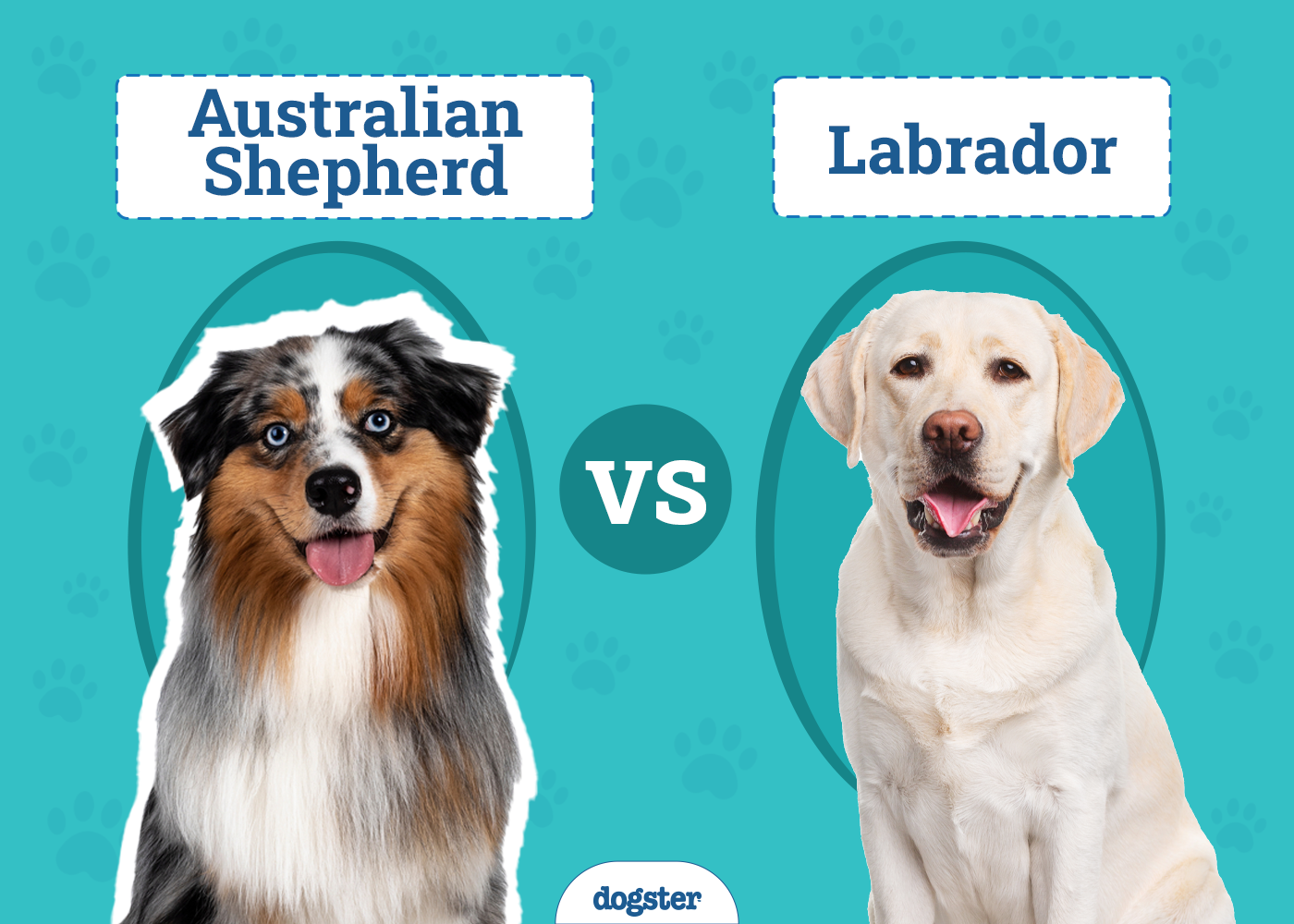
The Australian Shepherd and Labrador Retriever are polar opposites in terms of lifestyle, but they're both large and in charge, active, and, above all, loving. The Australian Shepherd breed originated in the western United States and was bred to be sheepdogs, despite what their name suggests. Sleek, athletic, and intelligent, this breed is perfect for a busy, active household. The Labrador retriever is one of America's most popular dogs, and for good reason. Hailing from the United Kingdom and first bred for fishing, the ancestors of this breed can be traced back to the 19th century. Early Labradors were developed in the United Kingdom from St. John’s water dogs imported from Newfoundland and selectively bred for retrieving ability. Modern Labradors descend from multiple foundation dogs.

Visual Differences
At a Glance

Australian Shepherd Overview
Australian Shepherds are hard-working dogs who were bred for a purpose. While similar to other breeds in specific ways (such as having the work drive of other herding breeds), the Australian Shepherd is in a class of its own.

Personality
The Australian Shepherd is bright, warm, and always eager to please. Some of them are always on the go, and some have an off switch, but most Australian Shepherds need regular mental stimulation to help keep them happy and satisfied.
They are very bright and adaptive. The modern Australian Shepherd is perfectly suited to being a pet and will playfully interact with the whole family. However, the herding instinct in the breed is still strong; it's not uncommon for Australian Shepherds to try to herd pets, children, and even older family members!
Training 🎾
Training the Australian Shepherd can be a very rewarding experience for those with the mindset and the willingness to go at the Shepherd's pace. Australian Shepherds can perform actions with lightning speed and perfect accuracy.
They are incredibly intelligent and fun to train, particularly if you find out their motivations, such as food, affection, or toys. The Australian Shepherd is adaptable and can learn every trick in the book.
Health
Australian Shepherds do have some potential health issues, which are passed down through their genes. Of particular note is the gene that causes some Shepherds (not all) to have increased sensitivity to certain medications, including ivermectin, the ingredient found in some effective parasite treatments.
Not all dogs will be affected by this, but a specific subset of breeds (including Australian Shepherds and Collies) can have a severe adverse reaction to certain drugs affected by the MDR1 gene mutation, so if in doubt, always ask your vet.
Australian Shepherds with merle coloring, particularly when two merle-patterned dogs are bred together, can sometimes be subject to partial or complete deafness, as well as having problems with their eyesight.
A dog that expresses the merle gene will not necessarily develop health problems, but the risk increases significantly in dogs with double merle genetics, as the genes associated with merle can affect pigment development in the eyes and inner ear. While a deaf or partially sighted dog will be an absolute joy for anyone who owns one, preparing for any dog that requires additional needs is sensible.
Like other medium to large breeds, the Australian Shepherd can suffer from hip dysplasia or elbow dysplasia. However, puppies from reputable breeders should be checked for the disease, and the parents should show no signs of heritable orthopedic disease.

Activity Level
Australian Shepherds are highly active dogs, and they need a family that enjoys long walks and games. The dogs were bred for livestock herding and ranch work, and they have boundless energy and must channel it; otherwise, their behavior can become destructive.
Aussies can quickly get bored, and they need to have long walks every day, commonly 1 to 2+ hours of combined physical and mental activity. This is where games like fetch and frisbee can help stretch their legs and help keep them feeling relaxed and happy. Like any older dog, Australian Shepherds will usually slow down as they age.
However, they still retain their herding instinct and often have a distinctive gait when they have a herding mindset: head forward and low, focused body posture, and intense attention to movement. Your Australian Shepherd will be extremely happy to go on long walks with the whole family. Just don't be surprised if they try to herd your kids!
Suitable For:
Australian Shepherds are ideally suited to active households that like to get out in the open air. Families with children are ideal, but as with any dog, your Australian Shepherd must be well-trained, and your children must know how to respect the dog.
Australian Shepherds can become alert or reserved with unfamiliar people, but they are fun-loving, playful, and always up for a long walk or run in the woods. If you can provide them with the attention they need, they make excellent family pets, which is why they are one of the most popular dog breeds in America today.

Labrador Retriever Overview
The Labrador Retriever is an absolute gem, renowned for being friendly, loyal, and playful at heart. Your Labrador will happily walk by your side doing any task, and some even stick to you like Velcro. Not that you mind, as these happy-go-lucky dogs have sunny dispositions and are an absolute joy to be around.
While they may seem silly and sometimes on the lazy side, they have bursts of energy and are rather intelligent dogs, which makes training them easy.

Personality
The Labrador Retriever is one word in a nutshell: friendly. With their large heads, big paws, and constantly wagging, the Labrador is forever trying to please their owners and families and is always trying to keep everyone smiling.
If you have food around, be ready to see extreme feats of begging since most Labradors are very food motivated, but this is an excellent tool to use in training, as Labradors always want to please.
Labs are warm, comforting, and incredibly loyal dogs. They are also rather steadfast and don't often get skittish, but because of their retrieving nature, they can sometimes feel the urge to chase or carry objects.
Exercise 🐕
Labradors need around 1-2 hours of daily physical activity, depending on age, health, and energy level. It can be on long walks where you both enjoy throwing a toy during fetch or just rambling and talking to each other; some Labradors are known to be quite talkative and will huff and bark right back at you.
Since they are larger dogs, swimming is an excellent activity since it helps to support their weight in the water while being a fun activity to keep fit. They were initially bred for swimming to help with waterfowl retrieving, and most of them love the water. Their double coat is water-resistant and provides insulation, which helps reduce heat loss when swimming in cold water.
Some Labradors can be more laid-back, and some are prone to lying down quite often, and taking them out and making a long walk a part of your routine will help to keep them fit and healthy.

Training 🎾
Labrador Retrievers are intelligent animals, and as stated before, they are very receptive to their motivators. Most of the time, you'll find your Labrador is motivated by food, and their favorite treat can help with your training efforts, not that it takes a long time to train most of them anyway.
Because of their intelligence, Labradors will thrive when taught new tricks and tend to retain information and understand commands easily. However, because they have this intelligence, they need mental stimulation daily. If not, they may develop destructive behaviors.
Health
Because the lovely Labrador is food-oriented, they are prone to obesity, which causes a whole host of health problems. They're large dogs as well, which means they also suffer from potential hip dysplasia and elbow dysplasia, as well as cruciate ligament associated with ligament degeneration and excess body weight.
However, as with any puppy, the sire and dam should be tested for any genetic problems before being bred. If you're concerned, talk to a reputable breeder about the tests they run on their dogs before breeding. The Labrador is otherwise very hardy, but only a few problems are more likely for Labradors than other breeds of dog. One of these is a lipoma, a benign fatty lump found under the skin.
Activity Level
Labrador Retrievers need about 1–2 hours of activity each day to keep them happy and engaged and to burn off enough energy. Because of their intelligence, they can easily get bored, which is why owners need to ensure that the active dogs are thoroughly engaged during the day and have enjoyed their time outside.
They can adapt to apartment living if their exercise and mental needs are consistently met, but they still need outdoor time and enough space to stretch their legs.
Suitable For:
The Labrador is suitable for any family that wants a loving, loyal, and devoted dog. Families with young children will delight in the friendly-faced Lab, but as with any dog, leaving young children unsupervised with it is never a good idea.
Even the sweetest, most gentle canine can only understand so much, so it is sensible to supervise them at all times, even though your Labrador is much more likely to give them a big kiss on the face than anything else. Because they are large dogs, they can cause accidental problems with tiny children.
Generally, labradors are typically calm, contented, and loving family dogs anyone could ask for, which is why they're among the most popular dog breeds in America. Those who go out to work can keep a Labrador Retriever happy with toys at home for short periods, provided their physical, mental, and social needs are met. But ultimately, ensuring they have all the love and attention they need is the best thing for them.

Which Breed Is Right for You?

The Australian Shepherd and Labrador Retriever are two very different dogs that share some traits. Both are family dogs. One is ideal for the active, outdoors family who has plenty of time to adventure (Aussie Shepherd), while the other prefers moderate daily exercise, a good game of frisbee, and relaxing by the fire (Labrador). Both the Australian Shepherd and Labrador are good with kids, and the Labrador may be more likely to be sociable with other animals. However, this greatly depends on each dog and how they were socialized as puppies. In general, your choice and suitability for either breed depend on how much time you have to spend on your dog each day, as the Australian Shepherd typically requires more physical and mental activity than the Labrador Retriever.
Expert dog care, straight to your inbox
Vet-reviewed advice, training tips, and the best of Dogster. Free, and you can unsubscribe anytime.
By signing up, you agree to our Terms & Conditions and Privacy & Cookies Policy.
Nicole has loved animals of all sizes her whole life so it's no wonder she has dedicated her career to helping them through what she loves best: learning, writing, and sharing knowledge with others. She’s the proud mom of two dogs, a cat, and a human. With a degree in Education and 15+ years of writing experience, Nicole wants to help pet parents and pets around the planet to live happy, safe, and healthy lives.
Join the conversation
Ask a question, share your story, or send private feedback.