9 Types of Greyhound Body Language & Behaviors (What They Mean)


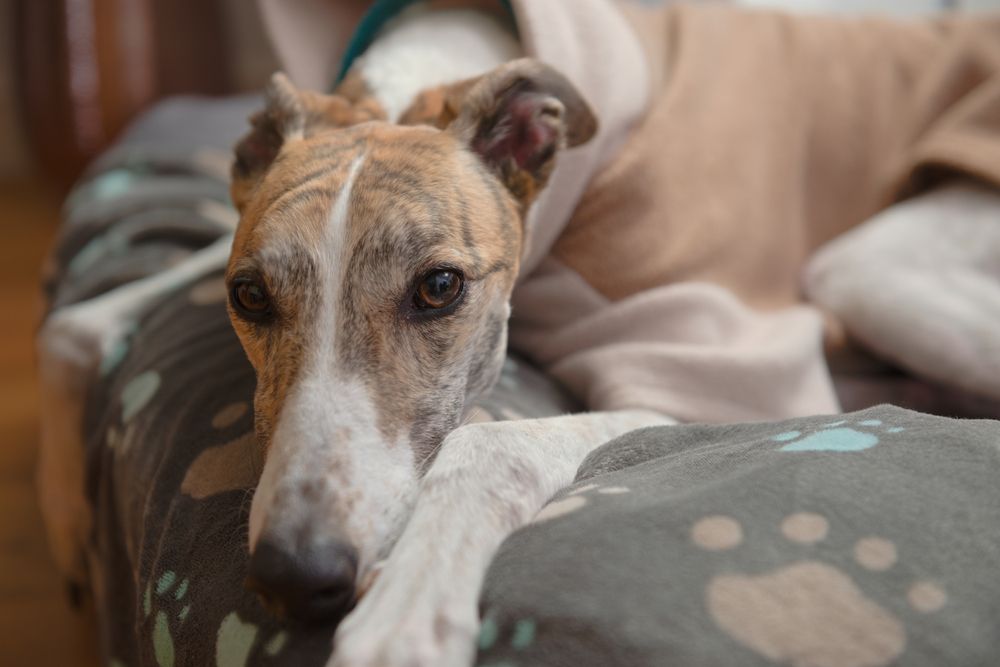
Greyhounds are an interesting dog breed with a language of their own. Like all dogs, Greyhounds express themselves through body posture, ear positions, and tail wags. Since they cannot talk to us, it’s important that we learn to read their body language and behaviors, even if we can’t always speak back.
Below, we’ll delve into the fascinating world of Greyhound body language, helping you decipher all those tail wags and roaches (no, not those kinds of roaches).

The 9 Types of Greyhound Body Language & Behaviors
1. Eyes on the Tail

The easiest (and arguably most important) part of a Greyhound’s body language is their tail. Most people know that when a dog wags their tail, they’re happy. However, this is a very surface-level understanding. If you want to truly understand what your dog is feeling, it’s important to dive a bit deeper.
Wagging doesn’t always mean your dog is happy. If your dog seems relaxed and has a high, wagging tail, they’re probably happy or excited. Sometimes, this sort of wag can also mean that your dog just spotted something they might like to chase, though. (Greyhounds love to chase, so this tends to happen a lot.)
A low-wagging tail often means anxiety, though. Greyhounds tend to be high-strung, especially retired racing dogs.
2. Check the Ears

If you thought your Greyhound’s tail was confusing, their ears have even more potential positions, leading to even more communication. Perked-up ears typically show interest. Your dog is trying to listen closer to whatever their attention is on.
Flattened ears can signal many things, including fear or aggression. Aggression and fear often go hand-in-hand, so this isn’t surprising. Many Greyhounds will spend most of their time without their ears perked or flattened. If your dog is somewhere in the middle, they’re likely relaxed.
3. Eye Contact (or Lack Thereof)
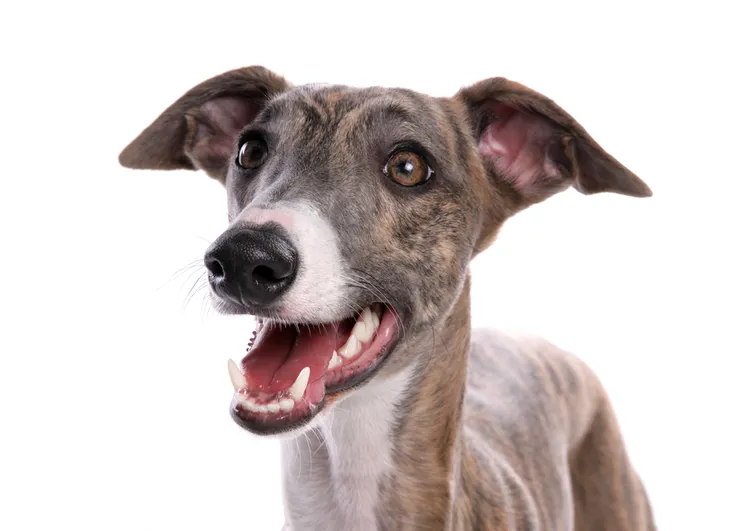
A dog’s eyes also communicate a lot. If a dog makes eye contact, it shows that they’re attentive. A Greyhound is no different. Despite popular belief, eye contact is not a sign of dominance. Dogs make eye contact for many of the same reasons people do.
Averted eyes usually mean your dog is trying not to bring attention to themselves. Because Greyhounds can be anxious dogs, anxiety is a common driving factor of purposefully averted eyes.
Just like with your Greyhound’s ears, your dog’s eyes will often be relaxed. In this case, your dog is content and not necessarily trying to communicate anything.
If you can see the whites of your dog’s eyes, it often means they’re uncomfortable. If you watch videos of toddlers crawling on top of dogs, you’ll often find this expression. When you spot this wide-eyed look on your Greyhound, it means they’re not having fun (and you may be moving towards aggression if they become more uncomfortable).
4. Don’t Forget the Mouth!

Although your dog’s mouth isn’t as communicative as other body parts, you can still learn a lot by looking at it. In most cases, your dog should have a relaxed mouth. While it may not be open, it shouldn’t be tense, either. A lolling tongue is a sure sign of happiness.
On the other hand, yawning or lip licking often indicates anxiety. These signs are often misinterpreted because they typically mean something very different in humans.
Of course, you probably know that if a Greyhound is showing their teeth, it is a sign of aggression. Aggression is usually fear-driven, so it often means the dog is scared and trying to protect themselves through threats. It’s a bit like how humans get defensive when they feel threatened.
While we’re in the mouth area, it’s important to point out that licking isn’t always positive, either. While Greyhounds will lick humans when they’re happy or excited, they also do “appeasement” licking. This sort of licking is an attempt to get someone to leave them alone (usually a child, in this case). It’s often accompanied by the wide-eyed expression we mentioned above.
5. Posture

Your dog’s overall body posture can also help us understand what’s going on in their mind. If your dog is stiff, they probably aren’t very content. Of course, stiffness could mean your dog is fearful, anxious, or aggressive. It’s hard to know unless you look at the rest of their communication.
Stiffness can also occur for physical reasons. Dogs often become stiff when they’re in pain. Senior dogs also tend to become stiff as they age, though this is a physical change that doesn’t indicate any communication.
A relaxed, lowered posture shows that your dog is relaxed. If your dog is lying around and not doing much, they’re likely content.
6. Roaching

“Roaching” is a common behavior in Greyhounds, but it isn’t exclusive to the breed by any means. This goofy position is where a Greyhound lies on their backs with their legs splayed out. For one reason or another, it’s pretty common in Greyhounds, though other breeds also lay like this.
When a dog lays like this, they’re relaxed. These dogs aren’t worried about anything. Otherwise, they wouldn’t be lying with their legs in the air.
7. Chattering
Greyhounds can bark like your average dog, but they also make all sorts of other sounds. For instance, Greyhounds are known for “chattering” their teeth when they’re content. This behavior is one of the few that really is exclusive to Greyhounds. You’d be hard-pressed to find another dog doing this!
Despite what it may look like, Greyhounds aren’t actually cold when they do this. In fact, Greyhounds tend to like warm things, so it’s more likely that your dog is feeling warm than cold.
Some Greyhounds even chatter whenever they’re petted. If you don’t understand this behavior, it’s easy to misinterpret it as a weird showing of teeth. However, it’s a benign behavior that’s typically a sign of enjoyment.
8. Zoomies
Zoomies are when dogs suddenly start running around with seemingly no attention to their surroundings. All dogs do this, but some Greyhounds tend to do it more than others! Despite what it may look like, zoomies aren’t always a sign that your dog needs more exercise. Instead, they’re usually caused by excitement.
According to many Greyhound owners, zoomies tend to occur when the dog is younger. Most dogs calm down as they age, and this applies to Greyhounds, too. As the dog calms down, they’re less likely to get the zoomies. Many senior dogs never get them, while adolescent dogs may get them regularly.
Zoomies aren’t harmful to dogs, but they can be prone to knocking into things. If your Greyhound gets the zoomies somewhere, you should try redirecting them to a safe area.
9. Rooing
"Rooing" is a mix between a howl and singing. Some Greyhounds do this a lot and are very good at it. Others? Not so much. Many Greyhounds sound like they’re singing “real” songs with on-tune notes and melodies. Others produce high-pitched squeals that definitely make you wish rooing wasn’t a thing. Like many dogs, Greyhounds tend to howl together. Once one dog starts, the others join in. Luckily, Greyhounds usually don’t howl all that much, though they absolutely can.
Conclusion
Dogs communicate with us largely through body language and behavior. However, they say a lot. Even when they are sleeping, our Greyhounds aren’t silent. Their body language always clues us into what they’re feeling and their mental state. Sadly, dog body language still isn’t well understood by the average dog owner. Even common signs of discomfort, like appeasement licking, aren’t widely understood. Plus, experts are still researching dog body language today. Despite our long history with dogs, we still know terribly little about how they communicate. Understanding what we do know can help us better live with our dogs, though. If you can tell what makes your dog anxious or fearful before aggression occurs, it’s much easier to handle the situation.
Sources
https://link.springer.com/chapter/10.1007/978-3-642-53994-7_5
https://www.sciencedirect.com/science/article/abs/pii/S1558787816302490
https://www.akc.org/expert-advice/advice/how-to-read-dog-body-language/
https://www.petmd.com/dog/behavior/how-to-read-dog-body-language
https://greytarticles.wordpress.com/adopters-treasure-chest/what-is-my-greyhound-trying-to-tell-me/
https://gapsa.org.au/blog/chitter-chatters-and-leggy-roaches-greyhounds-and-their-quirks/
Featured Image Credit: Rhys Leonard, Shutterstock
Expert dog care, straight to your inbox
News, insights, expert advice, and everything dog.

No spam — unsubscribe anytime.
By signing up, you agree to our Terms & Conditions and Privacy & Cookies Policy.
How useful was this post?
Click a star to rate. You can leave written feedback afterwards. (We read all feedback.)
Kristin loves to help pet parents create a fulfilling life for their pets by informing them on the latest scientific discoveries and helping them choose the best products for their pets. She currently resides in Tennessee with three cats, four dogs, two fish, and a lizard, though she has dreams of owning chickens one day!