How Do Dogs Communicate With Each Other? 3 Categories of Communication


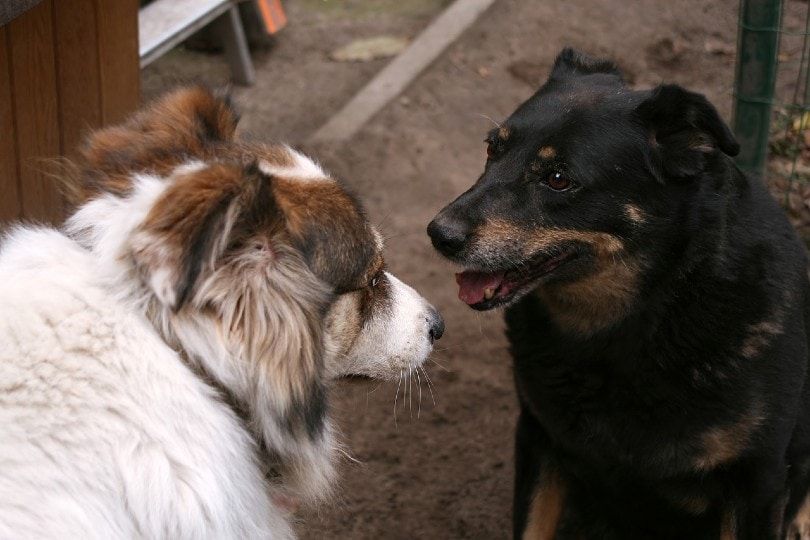
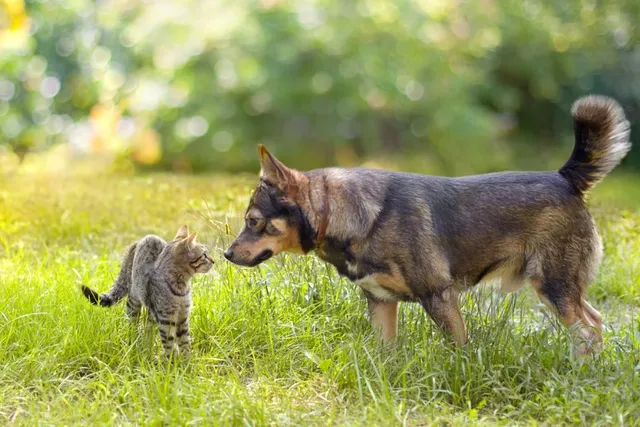
Dogs may not use words but they do talk to each other and their humans. Their communication mainly takes place through body language. A dog can say a great deal by where they place their ears and tail. However, vocalizations and scents also play a role in canine communication.
Canines understand this shared language through a mixture of innate knowledge and learning, a bit like how people understand facial expressions. You get better at understanding other people through interactions. But most people are also born with an innate sense of how to read others’ cues and give cues of their own.
Understanding a dog’s body language does not come naturally to us humans, though. Many owners may misinterpret their pup’s body language. A wagging tail does not always mean a dog is happy, for instance. This type of misunderstanding can potentially lead to dangerous situations, such as when you interpret an aggressive dog as being friendly, or ignore a dog’s warning signals to back off.
Taking the time to understand how a dog communicates can be extremely helpful. It should be something that every owner learns!

The 3 Categories of Canine Communication
All canine communication falls into three different categories. Body language is the most important of these, though the others also play vital roles. Interestingly, some breed traits like a stumpy tail, short faces, very long fur, and upright ears have reduced the communication repertoire of certain dog breeds.
1. Body Language

When dogs speak with each other, body language is vital. Most of their communication is presented through visual cues, which is quite similar to people, though we often consider words to be the most important.
Here is a quick breakdown of the various types of visual communication that dogs provide to other dogs.
Head Posture

Where a dog points their head is typically where they want to go. The direction of a dog’s gaze is used differently between people and dogs. When interacting with other dogs, a fixed stare (more than just brief eye contact) is a threat, and turning the head away is a sign of appeasement. When a dog gazes at a human, it is a sign of bonding or sometimes a request for help.
Mouth Shape
Everyone knows that a snarling dog is not a happy dog. However, mouth shape can be important in other ways.
Panting can be a sign of relaxation. A loose jaw often indicates that the dog is relaxed and content. However, panting can also be a sign of stress. Lip licking is an appeasement behavior. Some dogs exhibit “smiling,” which can be taken to be the opposite of snarling. Certain breeds like Dalmatians and English Springer Spaniels are known to do this more than others. It is a social signal, even though the teeth are technically shown. Stressed dogs will draw back their lips.
Yawn

Dogs may yawn to help them stay awake, similar to people. However, they may also yawn when stressed.
A passive dog may yawn to indicate that they are trying to defuse an aggressive dog. Usually, this is followed by the animal turning their head away.
Eyes
Soft eyes indicate your dog is relaxed and not threatened. Hard eyes, especially with tension around the forehead, indicate stress. If a dog is threatening or feels threatened, this is shown through a “whale eye”, or side eye with the whites of the eye exposed. The whale eye is a strong sign to remove your dog from the situation they are in.
Tail

A dog’s tail is a vital sign of a dog’s feelings and intentions. Tails held up high communicate confidence, willingness to approach, and excitement or aggression. A dog with a stiffly held-out tail usually feels anxious or threatened. A tail that is tucked between the legs could be fear-based or an appeasement signal.
Tail-wagging doesn’t necessarily mean that the dog is happy. They may also wag their tail low to the ground when they are insecure about the situation. Alternatively, a dog with aggressive intent can slowly wag the tail, or quickly vibrate the tail in a “flagging” gesture. Dogs that wave their tail slightly off to the left are unsure and may potentially be scared of the situation. Those who wave it slightly to the right are comfortable and optimistic.
Related read: Why Do Dogs Chase Their Tails?
Ears
Ears are another vital thing to watch in dogs. However, a dog’s ear shape can play a role in how this communication works. Some dogs, due to their breed, are unable to move their ears as noticeably in specific ways. If your dog’s ears are artificially altered, it may affect their communication even more.
Erect ears are often a sign of alertness, interest, and intent to approach. Ears that are stiff but pulled back may be a sign of aggression, appeasement, or fear. Sideways “airplane ears” can indicate some internal conflict.
Dog ears that are pulled down are often a calming sign, though. This is the expression that dogs often take when meeting new people, for instance.
Body

There are many ways that dogs can communicate with their bodies. Bristled fur often indicates aggression, for instance.
A dog may stand upright when they are aggressive and excited. Lowering the body has the opposite effect and may indicate that the dog is scared. or trying to defuse a threatening situation. A “play bow” with the head and forearms on the ground and the bottom in the air indicates that the dog wants to play. Rolling over or crouching with a raised paw are signs of appeasement.
2. Vocal

Dogs can also communicate through a range of vocal noises. These fall into two categories: long-range and short-range depending on the distance they are trying to communicate from.
Barking comes in many different forms. Deep and slow continuous barking is often more aggressive—the dog knows that the threat is there, and they don’t like it. Many dogs may happily bark too, such as when they see someone they know. High-pitched repetitive barking typically occurs when dogs feel isolated.
Growling is typically aggressive, but not always. Some dogs may also growl when playing, but this is usually higher pitched and shorter in duration. Howling is common among most dogs. It may indicate that the dog is bored or isolated. Many dogs will howl when they are lonely, but many will do it just for fun, as this is a social bonding behavior.
Whines can mean all sorts of things. People usually interpret them as being fearful, but they can also indicate something else. For instance, a whimper may signal eager anticipation or attention seeking. Play sneezes frequently occur during play, but they aren’t real sneezes.Deep and slow continuous barking is often more aggressive—the dog knows that the threat is there, and they don’t like it. Many dogs may happily bark too, such as when they see someone they know. High-pitched repetitive barking typically occurs when dogs feel isolated.
See Also: Dog Breeds That Don’t Bark
3. Olfactory

Dogs have sensitive noses. They often communicate through the use of pheromones and chemosignals, which humans can’t smell. Different scents are produced when the dog is fearful or angry. Odors can also indicate sex and identify the individual. If a female is in heat, she will produce pheromones that signal she is ready to mate.
Scent marking is a form of scent communication that dogs use, which doesn’t require proximity to other dogs; urine, feces, anal gland secretions, and other scent glands leave a trail of communication behind your dog. They will also sniff each other thoroughly when they meet to gain information about the other dog’s scent.
Dogs can also identify the unique odors of their owner, and learn about a person’s emotional state from their scent.
Can Dogs Talk to Each Other?
As you have probably noticed from this article, dogs do talk to each other, but vocal communication is less important than body language and smell when dogs interact. Dogs will signal to each other their intentions and emotional state. This fosters good friendships and minimizes potential fights.
A dog’s aggressive or appeasement behavior can be effective in bypassing physical conflicts. When humans learn to read dogs’ body language, they too can have better interactions with dogs and, importantly, avoid being bitten.
Final Thoughts
Canines communicate similarly to humans in many ways. Body language plays a key role, just like it does for people. Vocal signals may also indicate a dog’s emotions. However, these are rarer and less important than visual signals. For canines, vocal signals are second to body language. They don’t communicate a wide range of thoughts and aren’t used nearly as often. A dog is always using body language, while vocal signals are only used when necessary.
Dogs are also constantly producing scents, and use them to communicate all sorts of information. Humans have access to both the visual and auditory language that their dogs are giving off. We can learn to read these cues to understand our dogs better. However, the scents of chemosignals and pheromones are out of our reach because we can’t smell them.
Dog communication can also differ from dog to dog. Their ears can play a significant role, for instance. But a German Shepherd is going to use their ears differently than a Beagle. Some dogs are also better at communication than others. While much of it is innate, practice does make perfect. A dog that isn’t socialized may have difficulty communicating, which is why they are often more aggressive, fearful, or the targets of aggression. They don’t understand what the other dog is saying or respond appropriately.
Learning about canine body language is essential for all owners. Specifically, you should learn how your dog communicates, which can only be done by paying attention to them.
Related Reads:
Sources
Featured Image Credit: Ihtar, Pixabay
Expert dog care, straight to your inbox
News, insights, expert advice, and everything dog.

No spam — unsubscribe anytime.
By signing up, you agree to our Terms & Conditions and Privacy & Cookies Policy.
How useful was this post?
Click a star to rate. You can leave written feedback afterwards. (We read all feedback.)
Kristin loves to help pet parents create a fulfilling life for their pets by informing them on the latest scientific discoveries and helping them choose the best products for their pets. She currently resides in Tennessee with three cats, four dogs, two fish, and a lizard, though she has dreams of owning chickens one day!