What Do Dogs Think About All Day? Vet-Verified Insights, Emotions & Body Language


In this article
Dogs communicate via their body language and various vocalizations. As a dog parent, you should become familiar with your dog’s body language, as it can tell you how they are feeling or even what they are thinking at any given moment.
But what exactly do dogs think about during the course of the day? We can’t know for certain, but experts have a good idea of the common thoughts that they’re likely to have, such as ones related to food, family, and play.

Dogs Have Thoughts
Since dogs have a range of basic emotions, it’s practically a given that they also have thoughts. While canines don’t think or process information and emotions exactly like we do, they learn and understand things in their own way.

Memories of Experiences
Dogs remember other animals and humans that they’ve met before and how they feel about them. Canines have episodic-like memories, which means they can consciously remember things they’ve done or seen in the past.1 Their memories aren’t always based on reward and repetition.
Deception
Our beloved dogs have been known to deceive humans by adjusting their behavior for their own benefit. In a 2017 study, most of the dogs seemed to intentionally mislead a human who wasn’t giving them their preferred food over a human who was giving them their preferred food.2
Gestures
Dogs are surprisingly perceptive when deciphering our gestures, specifically when we point at something.
In a 2020 study, researchers used stray dogs and found that 80% of them could successfully follow a human pointing to a specific location, even though the dogs had no previous training.3 You can try this out with your own pup by pointing at a toy or other item; they might think you’re helping them out!
Problem Solving
Dogs can be quite good at figuring out problems and puzzles. According to the American Psychological Association, most dogs know more than 150 words (a Border Collie named Chaser knew more than 1,000 words!), and most dogs’ mental abilities are on par with those of a child between the ages of 2 and 2.5 years.4 Studies have shown that dogs can process basic numerical quantities, such as the number of squirrels in the yard, using an approximate number system.5 Researchers also demonstrated that dogs use a similar part of their brain to process numbers of objects as humans, and they don’t need to be trained to do it.

What Do Dogs Think About?
Now that you know more about how the canine brain works, let’s go over the possible thoughts that your dog might have at some point in their day.
Food
It shouldn’t come as a surprise that your dog thinks about food and everything food related. They think about mealtime and any tantalizing scents in the air—and what you’re eating, of course.
Family and Friends
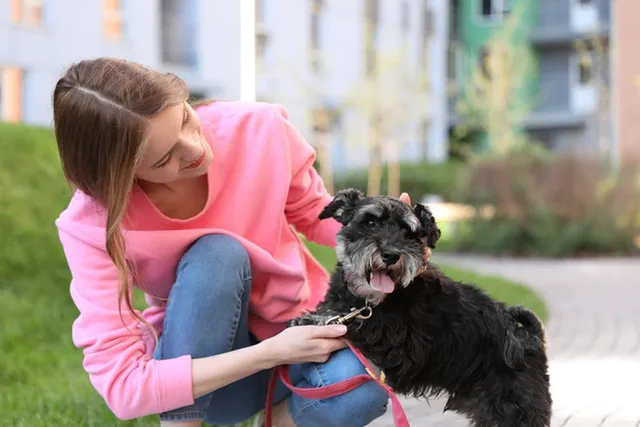
Your dog likely spends a great deal of time thinking about you and anyone else they share their home with. Most dogs are quite social, and considering that they depend on you for nearly everything, their world revolves around you, as do their thoughts.
When you arrive home, your dog likely greets you at the door, and they might follow you around and enjoy a cuddle any chance that they get. Your dog loves you, so it’s no wonder that they think of you often!
Senses and Exploration
With incredible senses of smell, sight, and hearing, your dog is constantly learning about the world around them. Be sure to give them time to explore, particularly when you go on a walk (and especially breeds with a particularly powerful sense of smell!).
Playtime
All dogs need exercise, and they enjoy fun play sessions with you. Some dogs will get the zoomies when they have a build-up of excess energy, so they’re probably looking forward to a game of fetch or a brisk walk to the closest off-leash park.
Basic Needs
If a dog needs attention for their basic needs, such as water, food, or going to the bathroom, they will be single-minded about it. This is when you’ll see your dog carrying their food or water bowl around or sitting next to the door.

The Emotions That Dogs Feel
Now that you have a handle on what your dog might be thinking about, you might be wondering what kinds of emotions they feel.
Basic Emotions
The typical dog has a similar mental capacity as a 2- to 2.5-year-old child. This also extends to the emotional side of things. Researchers believe that dogs experience the following emotions:
- Joy
- Fear
- Anger
- Disgust
- Love
Complex Emotions
Complex emotions which have elements that must be learned don’t appear until a child is older than 2.5 years. Based on current research it seems likely that dogs do not experience more complex emotions such as:
- Pride
- Shame
- Guilt
- Contempt
No one can truly know what a dog is feeling, but humans do tend to anthropomorphize animals excessively. For example, when you come home and find that your dog has ripped apart your pillows, you might assume that the look that they give you (like not being able to meet your eyes and looking somewhat ashamed) is a sign of remorse and guilt. But that is not at all what your dog is feeling. They’re responding to your tone of voice and body language, and those signs of “guilt” are actually your dog showing appeasement. They are communicating a desire for the threat to stop and show that they have no desire for confrontation.
This is why learning canine body language is so important; it’s the best way to understand how your dog is feeling. A dog might be showing signs that they are stressed out, but many people will believe that they are perfectly happy.

Canine Body Language
Here are just a few of the ways that you can interpret your dog's body language.
Appeasement
Appeasement is what used to be called submissive. The signs include:
- Ears pinned flat to the head
- Eyes squinted or eye contact is avoided
- Appeasement smile (pulled-back lips to show front teeth)
- Lowered body or exposed belly
- Tail held low and slowly wagging
Fearfulness
- Ears tucked against the head
- Head turned away
- Whale eye (showing the whites of the eyes)
- Corners of the mouth pulled back
- Panting
- Tail tucked tight against the belly
- Body stiff and low

Stress or Anxiety
- Looking and turning away
- Slow movements
- Curving the body
- Frequent yawning
- Lip licking
- Freezing
- Raising a paw
- Sniffing the ground
- Scratching
- Shaking like they are wet
Aggressiveness
How a dog appears aggressive depends on how they are feeling:
- Fearful dogs will hold their ears against their heads, but a confident dog will prick their ears forward or to the side.
- The eyes will be fixed and intense.
- They’ll have a wrinkled forehead.
- There will be tension of the mouth, possibly with a raised upper lip exposing the teeth.
- Fearful dogs will tuck their tails low and raise them before acting.
- Confident dogs will hold their tails high, possibly twitching them in a tight wag.
- The body will be tense, possibly with the hackles raised.

Alertness
- Ears perked up and facing forward
- Eyes wide open and focused
- Relaxed forehead
- No tension in the mouth
- Tail even with the spine and possibly wagging slightly
Relaxation
- Loose, relaxed body
- Ears held in their natural position
- Soft eyes
- Neutral forehead with no wrinkles
- Relaxed panting
- Sweeping tail wagging

Final Thoughts
Canines likely spend a lot of their time thinking about food, but they will react to anything occurring at the moment. Dogs also spend a great deal of time sleeping, so they might be thinking about how much they’ll enjoy a nice nap in their cozy beds.
Your dog’s breed may affect what they think about as well. For example, a Bloodhound might be more interested in an enticing scent, and a Border Collie will be likely thinking about running!
But if you make a point of learning how your dog is feeling through their behavior and body language, you’ll be that much closer to understanding your pet, which will form an even stronger bond between you.
See Also:
Sources
Featured Image Credit: studio Family, Shutterstock
Expert dog care, straight to your inbox
News, insights, expert advice, and everything dog.

No spam — unsubscribe anytime.
By signing up, you agree to our Terms & Conditions and Privacy & Cookies Policy.
How useful was this post?
Click a star to rate. You can leave written feedback afterwards. (We read all feedback.)
Kathryn was a librarian in a previous lifetime and is currently a writer about all things pets. When she was a kid, she hoped to work in a zoo or with wildlife in some way, thanks to her love for animals. Unfortunately, she's not strong in the sciences, so she fills her days with researching and writing about all kinds of animals and spends time playing with her adorable but terribly naughty tabby cat, Bella. Kathryn is hoping to add to her family in the near future – maybe another cat or two and a dog.