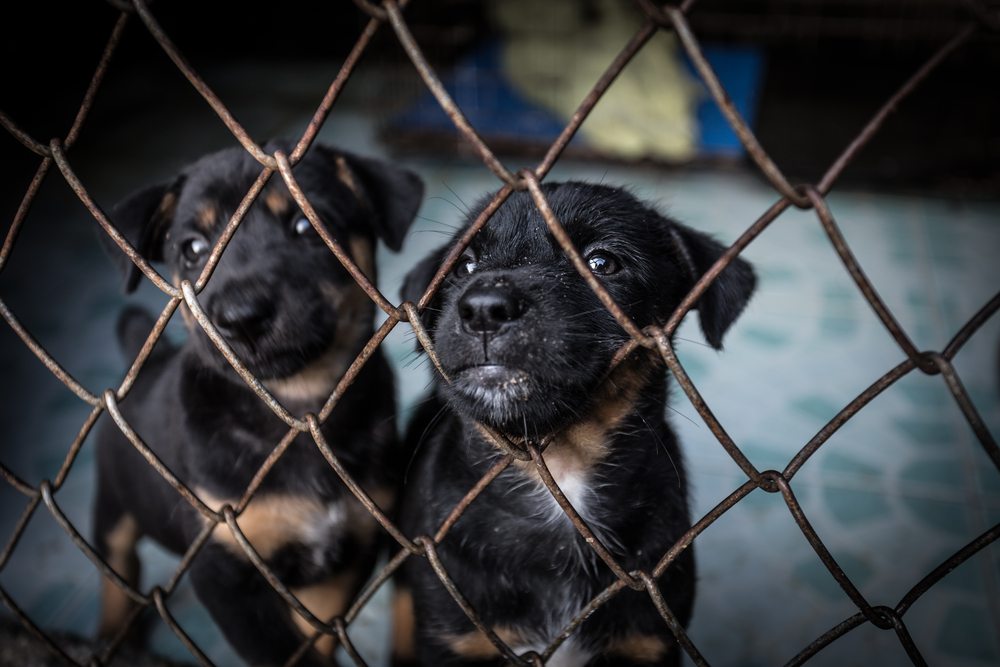
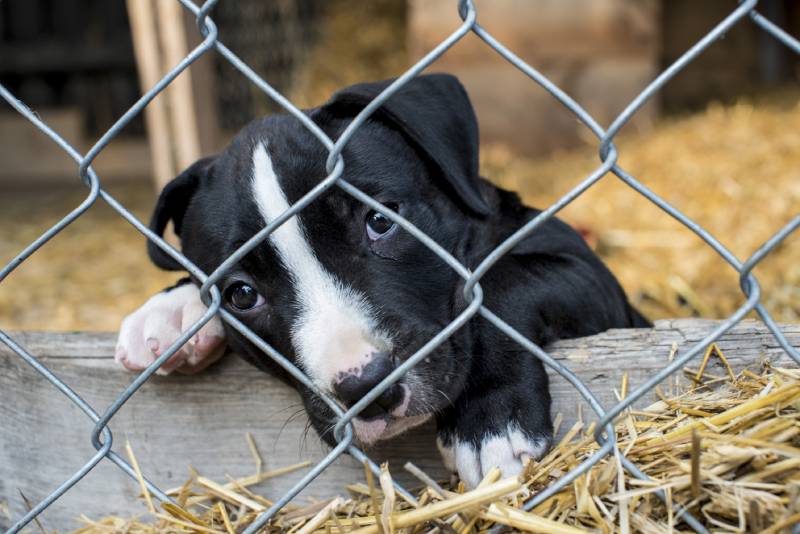
Getting a puppy should be an enjoyable experience. Pets can bring so much joy that it seems counterintuitive to consider behavior problems and the possible relinquishment of a pup. Sadly, it can occur with pets obtained from so-called puppy mills. The term describes dealers who mass-breed and sell canines for profit. Problems with puppy mills include crowded conditions, cramped living quarters, inadequate health care and prevention, lack of enrichment, and high animal turnover. This means that mothers bear as many litters as possible and puppies are often removed from their mothers before 8 weeks of age.
The issue rests with the animals’ development and the conditions they often endure in such places. Research has shown that early separation from a pup’s mother increases the risk of health and behavioral issues.1 Puppy farm dogs, especially those leaving as adults, show a higher incidence of fearful, compulsive, and repetitive behavior.

The 6 Common Puppy Mill Dog Behavior Problems
1. Fears and Phobias
The socialization period in dogs is from 3 to 14 weeks, this is a time to introduce the pups to new experiences in a controlled and safe way. However, adverse experiences can have lifelong consequences. If a puppy isn’t handled by humans, or worse treated poorly, they may become scared. The lack of exposure can also translate to other areas of everyday life. For example, a puppy mill dog may have never been exposed to a veterinary clinic, traffic, or a diverse range of people, leading them to develop phobias. One study showed that fears occur in pet dogs more often when they have less activity and training, so you can see how this would apply to the extreme circumstances of puppy farming.2
- What to Do:
While time-consuming, counterconditioning and desensitization may reduce your pet’s fearfulness. You will first need to earn your dog’s trust, with time, patience, and positive reinforcement. Exposure to new situations and people should happen gradually and be paired with plenty of positive reinforcement to build your dog’s confidence. Never force your pet into situations that are stressful for them, but rather let them progress at their own pace. Since these fears and phobias can be extreme we recommend working with professionals. Veterinarians can prescribe medication or supplements to ease anxiety, while behaviorists can show you how to deal with fears.
2. Lack of Bite Inhibition
Remember that the puppy’s mother and litter teach them important social skills. One of these skills is bite inhibition. Basically, when a puppy bites too hard, their mother will walk away, while litter mates will yelp. This provides important feedback which lets the puppy know how hard they can bite in friendly social interactions. These lessons are usually completed by loving owners of the puppy in the first few months. So if puppy mill dogs have been removed from their family too early, and placed in a cage with minimal interactions, bite inhibition was never learned.
- What to Do:
Make sure everyone who interacts with the dog understands how to do so respectfully, and never put a dog in a situation where they will bite. Understand that your dog lacks social skills and other dogs will probably react poorly to them, even if they mean no harm. Talk to your veterinarian about the issues you are experiencing, if there are triggers that cause biting, or if your dog is biting in play. They can give you advice about how to manage the issue.
3. Resource Guarding
Puppies raised in these operations may have to fight for food and other resources, setting the stage for resource guarding. They have possibly even been deprived of their basic needs, leading them to be insecure about where their next meal is coming from. These pups can jealously protect their favorite toys, food, and treats. It isn’t limited to other dogs; the animal may see any household member as a potential threat. Some pets may take something and hide with it, growling at anyone who approaches them.
- What to Do:
Please don’t attempt to tackle this problem on your own. You will need to reach out to a vet or animal behaviorist. In the meantime don’t approach your dog when they are resource guarding and let them eat their meals in peace.

4. Aggression, Hyperactivity, Anxieties
Behavior can be largely influenced by genetics.3 Studies have found genetic links to hyperactivity, anxiety, and aggression. Responsible breeders select parents to improve their breed including the looks, health, and temperament. Since puppy mills are characterized by indiscriminate breeding practices, meaning as long as a dog can produce puppies they will be used, these pups are not selected for temperament or health, and could possibly be more prone to behavioral issues. Not only that but the severe stress they have experienced in their life will leave some psychological scars and affect their behavior.
- What to Do:
Work on gradual, positive exposure to everyday life experiences. Be sure to provide your dog with plenty of physical, mental, and environmental enrichment. Never put yourself or anyone else at risk of being bitten. Again, counterconditioning and desensitization are excellent behavioral modification techniques for dealing with these issues. Seek help from your vet for medication and training advice for your specific situation.
5. Destructive or Housesoiling Behavior
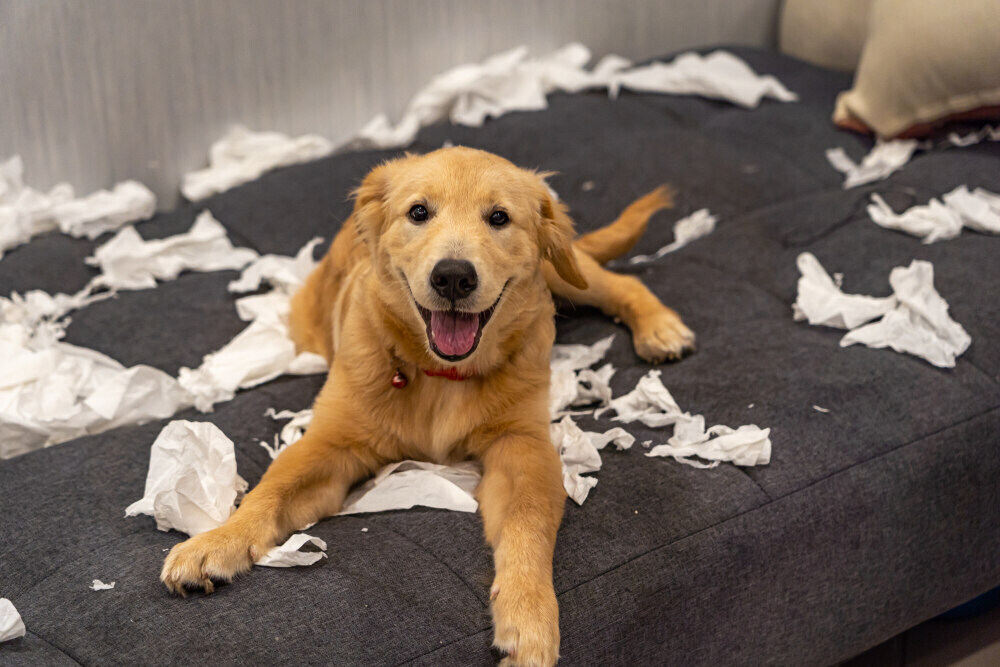
Puppy mill dogs are usually used to being housed in their own filth. Most have never had any toilet training, so the concept of taking themselves out to the toilet is completely foreign to them. Additionally, they have never been taught not to destroy people’s belongings and can do so, not only for fun (it’s a natural desire for a dog to chew), but also out of boredom or anxiety.
- What to Do:
Work on issues like boredom or separation anxiety that could lead your dog to become destructive. Seek help and medication from a vet if necessary. Never get frustrated or punish your dog for doing the wrong thing; remember where they came from, it’s not their fault that they are comfortable in unsanitary conditions and were never taught good habits. Take your dog outside regularly, especially after meals and naps. Give your dog positive reinforcement for going to the toilet outside and make sure this is repeated consistently to cement the lesson.

6. Compulsive Behavior and Stereotypies
Spinning in circles, pacing, and blank stares are common to see in dogs that have come from puppy mills. Stereotypies are typically thought about in zoo animals, hence the name “zoochosis”, however, they can be seen in dogs with inadequate housing, as in puppy mill scenarios. Stereotypies are repetitive behaviors that are aimless and out of context, which occur secondary to environmental stressors. Brain changes are common in dogs with stereotypies, and these behaviors become a habit in time.
- What to Do:
Start by providing all the physical, mental, and social needs for your dog. Talk to your veterinarian about the behavior as medication is likely needed. Recognize that your dog may never be able to completely kick these habits, but that they can be managed, especially with behavioral modification training practices.
Factors to Consider When Getting a Puppy
Research has shown no benefit to getting a puppy under 8 weeks old. It is not going to encourage a stronger bond with pet owners. Dogs need this time with their mothers and littermates for proper social and mental development. One can overemphasize the importance of this period. It provides a safe place for puppies to learn how to act and behave.
Therefore, we strongly urge you to get a puppy over 8 weeks old, preferably 12 weeks old. They will make a much better pet with some experience. We also suggest seeing the pup with their mother and littermates if possible, so you can see the temperament of the parents and how well they are cared for. However, beware of backyard breeders, which can pose the same behavioral risks as puppy mills.
Instead, only buy from reputable breeders and rescues who conduct the recommended health and behavioral screenings. These places should be a great source of knowledge about dogs and how to prevent and deal with various behavioral issues. Another risk of getting a dog from a puppy mill is a heightened chance of hereditary and congenital conditions, due to indiscriminate breeding practices. Inbreeding can increase these risks.
Conclusion
Fortunately, many pet stores no longer sell dogs from puppy mills. Sadly, these animals do not always get the chance to socialize with other people or pets and are raised in poor conditions, making them vulnerable to behavioral issues. Don’t be afraid to ask questions of a seller when looking for a new puppy. Request to see the pup’s mother and littermates. Choose wisely so you don’t end up supporting a puppy mill.
Featured Image Credit: khlungcenter, Shutterstock