How to Use a Dog Whistle: 8 Vet-Approved Tips for Training & FAQ


In this article
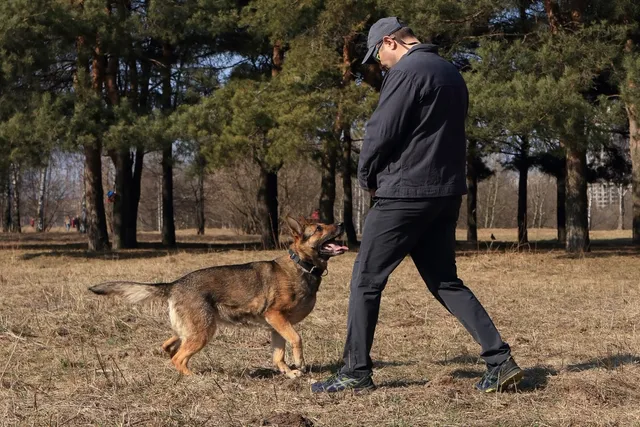
Training any dog can be challenging, especially if yours never seems to listen to you. While it’s true some dogs are easily distracted, it is also true that some struggle to respond to commands either because their human isn’t giving clear and consistent vocal instructions or because there’s too much background noise and they struggle to differentiate between their owner and other noises.
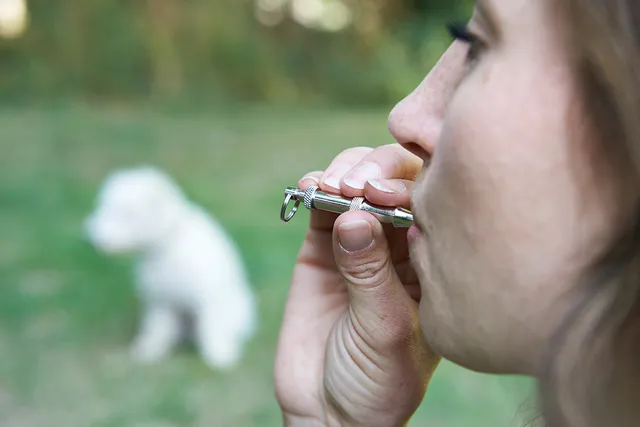
A whistle can help cut through the noise and provide a sharp sound that the dog will be able to recognize, and it can be heard over a long distance.

The Benefits of Using a Dog Whistle

It is possible to train your dog using your voice and clear verbal commands. A lot of trainers and owners also use clickers. While there are plenty of options, whistles offer certain benefits over these alternatives.
- Distinct Sound – Using verbal commands means using the same single-word commands every time. It is difficult to find words that are distinctly different from other words, which can lead to confusion. A dog whistle is a distinct sound that your dog will learn to recognize and is less likely to confuse with other noises.
- Clearly Audible – A dog whistle is audible without being deafeningly loud. The noise carries across a great distance, hence why shepherds and sheepdog handlers use whistles as well as verbal commands.
- It Saves You from Shouting – Whether you’re at the dog park or you want to call your dog in from the end of the garden, shouting to get their attention can be challenging. The sound of a whistle carries further and is more easily discernible by dogs.
What Can You Use Whistle Training For?
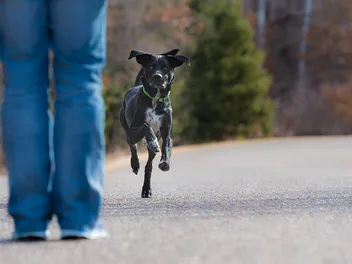
Although whistle training is most commonly used by pet owners for recall, it can be used for other purposes. You will need to train your dog to recognize different whistle sounds and patterns, but you can use the whistle to encourage sitting, lying down, and more. Sheepdog handlers teach their dogs directions as well as commands like lay down and approach.

The 8 Tips for Whistle Training
A whistle is easier to hear and carries over greater distances, but a dog doesn’t instinctively know what the sound of a whistle means. Until you have trained them to react to the whistle, it is just another noise with no meaning. Whistle training is similar to any training and benefits from the use of positive reinforcement methods.
1. Practice Alone

Even if you are only going to use the whistle for recall and no other commands, you need to use consistent calls so you don’t confuse your dog. Practice using the whistle at home and, ideally, out of the way of the dog, so you can blow a consistent whistle every time you use it.
2. Choose a Treat or Reward
Positive reinforcement will help teach your dog to respond to the whistle every time it hears it. This means giving praise or a reward when your dog performs an appropriate response to the whistle. Some dogs respond best to tasty food-based treats. Others prefer verbal praise, and some respond to being given their favorite toy. Find what your dog considers to be the best possible reward for good behavior, and stock up.
3. Combine the Whistle with Verbal Commands

Initially, you will want to combine the use of the whistle with known verbal commands. For recall, this means using a command like “come”. Alternatively, you can use commands like “sit” or “stay”. Use the verbal command and quickly follow it up with your chosen whistle blast. When your dog gives the appropriate response, offer praise or a reward. Over time, you should swap the verbal cue and whistle blast around, so you whistle first and then speak the command, gradually phasing out the verbal cue once your dog reliably responds to the whistle alone.
4. Start with Mealtimes
A good time to start with recall training is at mealtimes. Your dog will likely respond to the sound of the food bag, can opener, or the scraping of its bowl on the ground. When you make one of these noises, use the come command, and then offer the bowl of food as a reward. This gives you two opportunities every day to train the command by pairing the cue with a predictable, positive outcome.
5. Start Training in the Garden

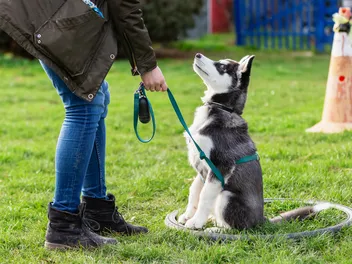
When you have verbal recall down and have mastered the use of the whistle alone, put your dog’s leash on and head into the garden. There aren’t too many distractions in the garden, at least when compared to the dog park or the beach. Take your treats and your whistle. Start by showing your dog the treat and then use a verbal recall and whistle call. When your dog approaches, offer praise and a reward.
6. Always Reinforce Recall
Once your dog gets the hang of recall, you should continue to reinforce the behavior consistently. The recall is a critical safety cue, and regular, high-value reinforcement helps maintain a fast and reliable response. This is the one behavior where we do not phase out reinforcement, as consistent rewards help keep your dog’s recall fast, reliable, and safe throughout their life.
7. Use a Leash When You First Leave the Garden

When it is time to go from the garden to the dog park or other area away from the house, start with your dog on a leash. It allows you to retain control and prevents your dog from straying too far. By keeping control, you can manage the situation and ensure that everything goes off without a hitch.
8. Be Patient
Any training takes time, especially if you are changing from verbal cues to a whistle. You might not get the whistle right every time, and your dog may not respond to every single call right away. Be patient and be prepared for the fact that it might take you weeks or even months for your dog to reliably respond in different environments and around distractions.
Frequently Asked Questions
Is Whistle Training More Effective Than Verbal Training?
A whistle can be more effective than verbal cues because it cuts through other noise and is a consistent noise. However, whether you use a whistle, clicker, or your voice, you still need to train your dog to recognize the sound and respond to it appropriately.
When Should I Whistle Train My Dog?
As with any type of training, the younger you can start training your dog, the quicker you will likely see results. Training from a young age not only means your dog is more receptive to learning new information, but it also sets them up so they are prepared to listen and learn more throughout their lives.
What Is the Difference Between a Dog Whistle and a Clicker?
A clicker is generally used for close-range training. The click is a distinct and recognizable sound, but it may be difficult for your dog to hear in a dog park, and your dog will struggle to hear it even in the garden. In contrast, using a whistle in the house can be excessive, although people can’t hear most high-frequency dog whistles, your dog should respond to the sound of your voice or a clicker.
Will Any Whistle Work?
High-frequency dog whistles are usually used for whistle training because they are less noticeable to most humans, but dogs can still hear them perfectly well. There are fewer noises at the kind of frequency that these whistles use, too, which means your dog is less likely to be confused by other noises in the area. If you intend to use a whistle at home, it is best not to use one that can be heard by people because it will become annoying very quickly.

Final Thoughts
Whistle training can be an effective method of mastering recall that is especially useful in busy areas where your dog might not be able to easily detect your voice over all the other noises. Whistle training does take time and patience, but if you are consistent with your whistle signals and your training methods, it will come. Initially, you should combine the use of a whistle with known verbal commands before taking it out into the world.
Sources
Featured Image Credit: Jari Hindstroem, Shutterstock
Expert dog care, straight to your inbox
Vet-reviewed advice, training tips, and the best of Dogster. Free, and you can unsubscribe anytime.
By signing up, you agree to our Terms & Conditions and Privacy & Cookies Policy.
Matt is a freelance writer from the UK. He lives with his partner and daughter, as well as two cats and one dog. A data analyst by profession, Matt moved from numbers to words more than 15 years ago and has been writing ever since. Having volunteered at a local animal sanctuary, he has a lot of experience with dogs, cats, and horses. Matt has also kept bearded dragons, a variety of birds, fish, guinea pigs, hamsters, mice, and rats. His daughter has adopted the same passion for animals, keeping and breeding snakes. A geek at heart, Matt is a member of a local board gaming group and regularly forces his family to “enjoy” board games with him at home.
Join the conversation
Ask a question, share your story, or send private feedback.