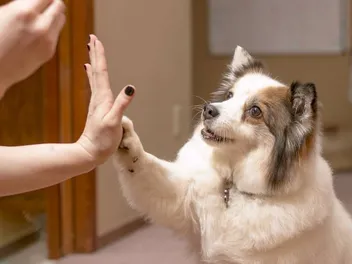
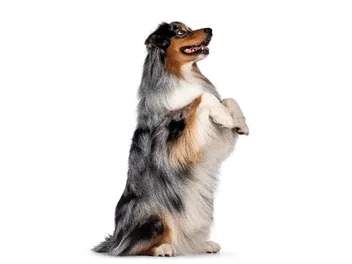
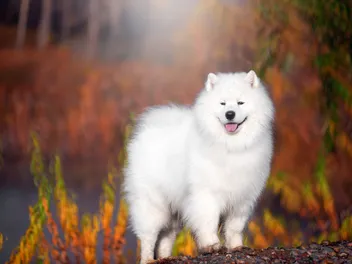
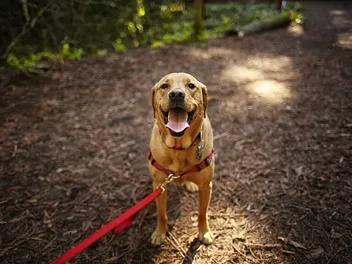
How to Teach a Dog to Smile: 10 Tips & Tricks

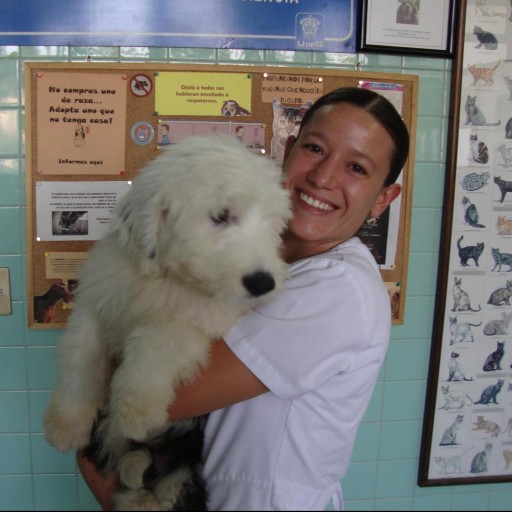

Do you want to know how to teach a dog to perform a “smile” behavior on cue? It's actually not as difficult as you might think! We will discuss 10 tips and tricks that will help make the process easier for both you and your furry friend. We'll also provide some helpful resources that can assist you along the way. So, whether your dog is new to learning tricks or has already mastered a few, read on for some great tips!

How to Teach the Smile Behavior
Before using the tips below, it helps to understand how the “smile” trick is usually trained. In most cases, trainers teach this behavior by capturing or shaping a small lip lift or relaxed mouth movement and then adding a cue.
Start by watching your dog closely during normal interactions. Some dogs briefly lift their lips, move their mouth, or open their mouth in a relaxed way when they are excited, anticipating a treat, or engaging with their owner.
When you see this small mouth movement, mark the behavior immediately with a clicker or a marker word such as “yes,” and then reward your dog with a treat or praise. Timing is important so your dog connects the reward with the specific action.
After your dog begins offering the behavior more often, you can start adding your cue. Say your chosen cue word, such as “smile,” just before you expect the behavior to occur. When your dog performs the behavior, mark and reward it right away.
Over time, your dog will begin to associate the cue with the action. Keep training sessions short and positive, and gradually reward clearer versions of the behavior as your dog improves.
Now that you understand how the behavior is taught, these tips will help make the training process easier and more effective. Here are our top 10 tips for getting your dog to “smile”.
Top 10 Tips for Teaching a Dog to Smile
1. Start with Basic Obedience
Start with basic obedience commands such as sit, stay, come, etc. Your dog needs to learn how training works by practicing a few basic cues first. As your dog masters these commands, you'll be able to better communicate with them and give them specific instructions. This will lay a strong foundation for more complex tricks down the road.

2. Give Plenty of Rewards
Use positive reinforcement methods such as training treats or verbal praise when your dog performs the desired behavior. Dogs respond well to rewards and will be more likely to repeat the behavior if they know they'll be rewarded.
Be sure to give your dog the reward immediately after they perform the desired behavior. This will help them understand that they are being rewarded for the specific action and not just for being cute.
Treats are great, but you can also use other forms of positive reinforcement, such as petting, belly rubs, or even just verbal praise. Find what works best for your dog and stick with it. Too many treats can lead to an overweight pup, so use them in moderation and supplement with other forms of positive reinforcement when possible.
3. Use Cues or Triggers
Use a cue or trigger to get your dog into the trained “smile” position. This can be a word, phrase, or even a hand signal. Once your dog masters the cue, you'll be able to get them to smile on command!
For example, you might use the cue "smile" along with a hand gesture such as lifting your lip slightly or giving a consistent hand signal. Alternatively, you could say "say cheese!" as your trigger. Choose something that is easy for you to remember and say consistently.

4. Be Consistent!
Consistency is key when it comes to training dogs. They need to hear the same cue every time in order for it to be effective. If you use differing cues or triggers, your dog will become confused, and the training process will take longer. Some ways to remain consistent include using the same words, tone of voice, and hand gestures each time.
Set aside a specific amount of time for training sessions so that your dog knows when they are expected to perform. This could be a few minutes up to 10–15 minutes, depending on your schedule and your dog's attention span.
5. Use a Happy, Upbeat Voice
Be sure to use the same wording, intonation, and hand gestures each time you give the cue. This will help your dog understand what you want them to do and make the learning process much smoother. Once you've chosen your cue, start by saying it in a happy voice while using a consistent hand signal or guiding motion to encourage the behavior. For example, if you're using the cue "smile," say it in a high-pitched, excited voice while slightly lifting your lips or giving the chosen hand cue.
Your dog is more likely to respond positively if they can see that you're happy and having fun. So, make sure your facial expressions and body language reflect this!

6. Have Patience
Training takes time and patience, so be prepared to put in the work. Dogs learn best through repetition and positive reinforcement, so don't get discouraged if your dog doesn't pick up the behavior right away.
Some dogs may require multiple short training sessions over several days or weeks before reliably performing a new behavior on cue. So, be patient and keep at it! Rome wasn't built in a day, and neither is a well-trained dog.
7. Use High-Value Rewards
Make sure you're using high-value rewards that will really motivate your dog. High-value rewards are items or experiences your dog finds especially rewarding compared to their usual treats or praise. This is especially important if your dog is less motivated by standard training treats. Some dogs prefer toys or attention, while others go crazy for a good belly rub. Find what your dog loves and use it to reward them for good behavior.

8. Don't Force It
If you find yourself getting frustrated, take a break and come back to it later. Training should be fun for both you and your dog, so don't let it turn into a chore. Forcing your dog to do something they're not ready for will only make the process harder and could lead to negative associations with the behavior you're trying to teach.
9. Break It Down
If your dog isn't responding to the cue, try breaking it down into smaller steps or using a different reward. There's no one-size-fits-all approach to training, so be willing to experiment until you find what works best for your dog.
For example, if you're having trouble getting your dog to perform the trained “smile” behavior on cue, focus on rewarding small approximations of the target behavior, such as slight lip movement or relaxed mouth positioning, and gradually shape the final behavior through repetition and reinforcement. Or, if your dog loves attention, try giving them a belly rub or petting them every time they perform the desired facial expression.

10. Find What Works for You and Your Dog
The important thing is to find what works for your dog and go from there. Dogs are all different, so there is no single training method that will work for every dog. Using reward-based training methods and adapting them to your dog’s preferences, learning pace, and motivation can help make training more effective. Be creative and have fun with it! Keeping training sessions positive and low-stress can help support learning and encourage your dog to participate willingly.
Additional Training Tips and Reminders
Move Forward
Once you've gotten the cues down and established a training routine that works for you both, don't forget to practice! The more you work with your dog, the better they will become at understanding and responding to your cues.
Expect Setbacks
Learning is a process. There will be good days and bad days, so don't get discouraged if your dog doesn't seem to be progressing as quickly as you'd like. Just keep at it, and they'll eventually get there! Individual dogs vary in learning speed, motivation, and reinforcement preferences due to factors such as genetics, early experiences, and training history. Dogs differ in how quickly they learn specific tasks and what motivates them during training. You can use these traits to your advantage instead of getting frustrated by them!

Remember to Have Fun
Training your dog to smile is a fun and rewarding process that will take time, patience, and lots of positive reinforcement. Be sure to use high-value rewards, be consistent with your cue, and have fun with it! With a little bit of effort, you'll be able to teach your dog this adorable trick in no time.
Mix it Up
Once your dog has mastered the basics, don't be afraid to mix things up! You can teach them even more tricks by using different rewards, adding new cues, or changing up the order of the steps.
There are endless possibilities when it comes to training your dog, so have fun and get creative! The most important thing is to remember to have patience, be consistent, and have fun with it. If you do that, you'll be well on your way to teaching your dog all sorts of new tricks!


Final Thoughts
Teaching your dog to smile is a great way to bond with your furry friend and show off their personality. Follow these tips, and you'll be on your way to success! Just remember, if you're not having a good time, your dog probably isn't either. Likewise, if you're having a blast, it can help create a more positive training environment for your dog. You set the tone during training, and your dog can respond to your body language and emotional cues. Good luck and happy smiling!
See also:
Featured Image Credit: LightField Studios, Shutterstock
Expert dog care, straight to your inbox
Vet-reviewed advice, training tips, and the best of Dogster. Free, and you can unsubscribe anytime.
By signing up, you agree to our Terms & Conditions and Privacy & Cookies Policy.
Nicole has loved animals of all sizes her whole life so it's no wonder she has dedicated her career to helping them through what she loves best: learning, writing, and sharing knowledge with others. She’s the proud mom of two dogs, a cat, and a human. With a degree in Education and 15+ years of writing experience, Nicole wants to help pet parents and pets around the planet to live happy, safe, and healthy lives.
Join the conversation
Ask a question, share your story, or send private feedback.