How to Teach Your Dog to Talk With Buttons: 7 Training Tips

In this article
Despite not being able to speak themselves, most dogs can understand an average of 89 words and phrases.1 While they can learn to understand us, though, it can be difficult for us to understand them. Their wagging tail and playful bow might be self-explanatory, but their puppy-eyed stare can sometimes be confusing.
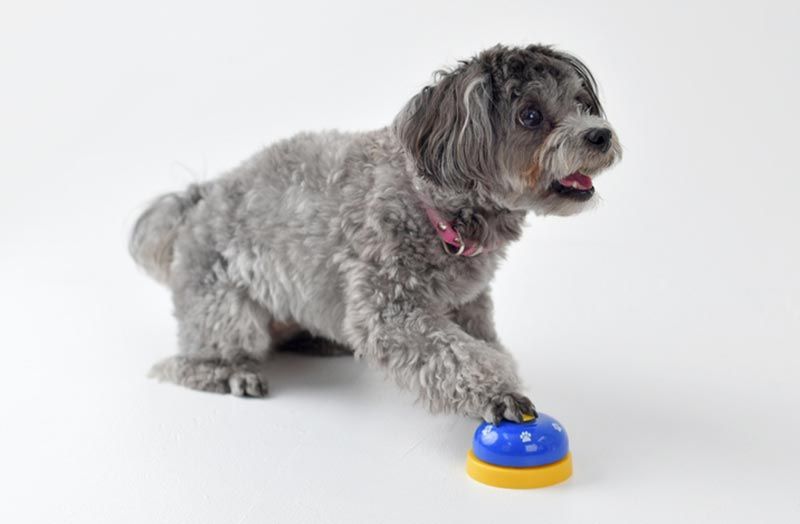
Buttons are a new way to train your dog to express their desires. By pushing a button with a recording of a word, they can learn to associate the sound with specific outcomes and request certain activities, such as when they want to take a walk or ask for a snack.

Before You Start
When it comes to teaching your dog to talk with buttons, preparation is key. The buttons that you choose can have an impact on both the success and cost of your training.
Buttons have been used to help aid communication with people, as well as dogs, but you don’t have to buy specially designed kits to teach your dog. A simple set of buttons that include a voice recorder will work just as well as official button communication tools.
You can also record your own voice so your dog is more familiar with the words that you choose
How to Teach Your Dog to Talk With Buttons in 7 Steps
1. Prepare Your Supplies
Unlike many other tricks that you can teach your dog, teaching them to talk with buttons requires a bit of setup. First and most importantly, you need buttons that you can record your voice with. A non-slip mat or even a piece of cardboard might also be useful if you have enough space, as you can create a console for your dog to use to communicate with you.
You’ll need treats too, especially if you’re teaching your dog to push a button to request a bone or other snack. Choose small, nutritionally appropriate treats and account for their calories in your dog’s daily intake to help prevent overfeeding or weight gain.
2. Choose Command Words

When you choose the words to record for your dog’s communication buttons, you need to be careful. Only choose simple words or phrases that your dog recognizes. “Walk,” “potty,” or even tricks, like “high-five,” are good things to start with.
As your dog becomes familiar with the process of pushing the buttons to express what they want, you can add new words. But you must first focus on teaching your dog to push the buttons to get a certain result. This will save you from confusing them by teaching them a new trick or word and then introducing buttons to their routine. Remember that dogs are learning associations between the recorded word, their action, and the outcome, rather than understanding language in the human sense.
3. Introduce One Button at a Time
Teaching your dog something new is always exciting, but it's easy to fall into the trap of pushing them too hard, too fast, when you get caught up in the rush of a successful training session. This can lead to frustration and disappointment when your dog doesn't quite catch on the way that you want them to.
Resist the urge to start with multiple buttons. Instead, introduce one button at a time, starting with the words that your dog is already familiar with.
Don't be worried if it takes weeks, months, or even years to build up an impressive communication board. Some dogs learn faster than others, and some might get confused if they're faced with too many communication choices. Take it slow and stay positive.
4. Find a Spot for the Buttons
Once you’ve prepared the buttons, you’ll need to make it obvious which buttons your dog needs to push to get a certain result. Some button sets come in different colors, but you shouldn’t rely on this to help your dog distinguish between them, as they don't see colors the same way that we do. Dogs can see some colors (primarily blues and yellows), but their color vision is more limited than human vision.
Instead, teach your dog to associate the button that they want with where it’s placed. You can do this by attaching the buttons to a mat that stays in one spot. Or you can place individual buttons at certain spots around the house. For example, a “walk” or “potty” button could go by the front door. To avoid confusing your dog, don't move the buttons once they're set up.
Over time, your dog will learn the placement of the buttons along with what happens when they push them. This learning occurs through repeated associations between the location, the sound, and the resulting outcome.
5. Add the Buttons to Your Routine
Rather than setting aside a special training session, introduce the button as part of your dog’s normal daily routine. This helps your dog learn that the button is connected to everyday events rather than something separate or unfamiliar.
Start with one simple need or activity that happens often and that you can provide right away. Good first options include “potty,” “outside,” “water,” or a short play session. Consistency is important, so choose something you can respond to immediately each time your dog presses the button.
Begin by pressing the button yourself just before the activity happens. For example, press the “outside” button right before opening the door. Over time, your dog will learn to associate the sound, their action, and the outcome. When your dog shows interest in the button, offer calm praise and follow through so the connection stays clear and reliable.
6. Link the Buttons with an Event
Once you’ve got the buttons set up where you want them and with the proper recorded word, it’s time to introduce them to your dog. Each button, whether you have one or a dozen, should have a different word or event connected to it. For example, you’ll need two separate buttons for “walk” and “potty,” since they lead to different results.
You'll need to pay attention to your dog's ability to recognize and respond to specific cues here. The more learned cue–outcome associations your dog has, the more buttons you can use. Introduce new buttons gradually to avoid confusion and maintain reliable responses.
7. Stay Positive
Positivity goes a long way when you’re training a dog. Teaching them something new takes time, and it can be difficult to stay positive about something that takes longer than you expected. If your dog doesn’t quite get it at first, it’s easy to get frustrated about your lack of success.
Unfortunately, your dog will pick up on your frustration and might be less likely to associate the buttons with a good thing. If this happens, they’ll prefer to avoid the buttons altogether rather than risk upsetting you. Dogs are sensitive to changes in human tone, body language, and emotional cues, which can influence their willingness to engage during training.
Be sure to take a step back when you need to. Focus on small successes, like looking at or sniffing the buttons. These actions might seem insignificant, but they're successes too, especially when you're just starting.

How to Keep Your Dog Interested in Training
Training your dog to talk with buttons takes time and dedication. You also need to know your dog and the methods that work best when you’re training them. Even if your dog is eager to please, they’ll get bored if you try to teach them to talk with buttons for too long.
Keeping them interested is essential if you want your training sessions to be successful. If you’re new to dog training, here are a few tips that you can try.
Treats
Most dogs are food-oriented. Find a treat that they love and don't get often, so you can reward them with it for showing interest in the buttons or touching them. There is a downside to using too many treats with the buttons, though. Your dog might learn to associate the buttons with getting a treat rather than the intended outcome, such as going outside or doing another activity.
You need to find a balance between giving treats for the desired behavior and teaching your dog what the buttons mean. Use small treats and account for their calories in your dog’s daily intake to help prevent weight gain.
Keep Sessions Short and Fun
It might take longer to teach your dog to use the buttons, but short training sessions will aid your progress. Your dog will stay interested if they don’t get bored with doing the same tricks over and over again. The shorter the sessions are, the more fun they’ll find the lessons.
One of the benefits of adding the buttons to your existing routine is you don't have to worry about dedicating a certain amount of time to teach your dog about the buttons. Instead, teach your dog through demonstration. It takes longer, but it can be very effective because dogs learn through repetition and consistent associations.
End with Success
Whenever you spare a few moments to teach your dog about your chosen buttons, make sure you stop the training on a positive note. End each session with a success, no matter how small, especially if your dog is struggling to understand what you want them to do.
Success can be anything. Touching the button might be your goal, but you can also reward your dog for showing interest, however fleeting, in the buttons. While sniffing at them might not be your end goal, it's a step in the right direction and helps reinforce engagement without creating frustration.
Conclusion
We all wish that we could have a proper conversation with our dogs. Talking buttons can be a challenge to teach to your dog, but they can provide a way for your dog to signal specific needs or requests through learned associations, making a typically one-sided conversation go both ways.
It might seem daunting, especially if your dog isn't quick to pick up new tricks, but a little time, dedication, and positivity are all that you need.
See Also: How to Teach a Dog to Speak: Step-by-Step Guide
Sources
Featured Image Credit: STUDIO BUDDY, Shutterstock
Expert dog care, straight to your inbox
Vet-reviewed advice, training tips, and the best of Dogster. Free, and you can unsubscribe anytime.
By signing up, you agree to our Terms & Conditions and Privacy & Cookies Policy.
Nicole has loved animals of all sizes her whole life so it's no wonder she has dedicated her career to helping them through what she loves best: learning, writing, and sharing knowledge with others. She’s the proud mom of two dogs, a cat, and a human. With a degree in Education and 15+ years of writing experience, Nicole wants to help pet parents and pets around the planet to live happy, safe, and healthy lives.
Join the conversation
Ask a question, share your story, or send private feedback.