Dogs Saving Lives at the Dinner Table – Turning Natural Instincts Into An Early Warning System

For people with severe food allergies, everyday life requires a level of vigilance that most people never have to think about. A shared kitchen, a mislabeled dish, a trace amount of peanut in a sauce; any of these can trigger a life-threatening reaction in a matter of seconds. Standard precautions help, but they are not foolproof, and you can never be too careful. Allergy-detection service dogs offer something different: a nose capable of identifying dangerous allergens before they cause harm.
Here is how they work, what they can and cannot do, and what is involved in getting one.
What An Allergy-Detection Service Dog Does
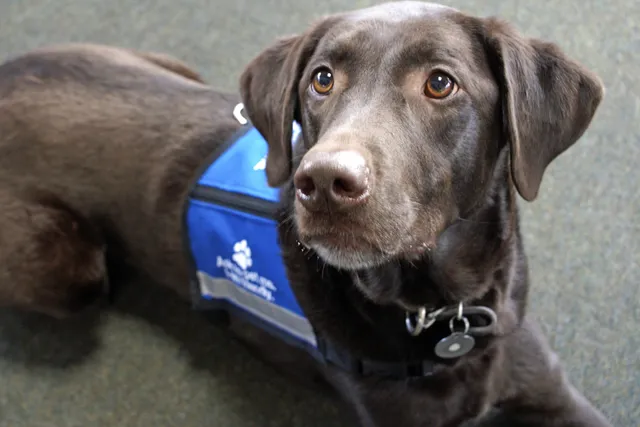
An allergy-detection service dog is trained to identify a specific allergen by scent and alert its handler before exposure occurs. The alert itself depends on how the dog has been trained: some bark, some paw at the person's leg, others perform a specific behavior that has been paired with the detection cue during training. The handler then knows to investigate before eating, entering a space, or handling an object.
The most common application is peanut allergy detection, as this is amongst the most common and deadly food allergies among people. An anaphylactic response can begin within seconds of exposure to even a trace amount of peanuts, causing blood pressure to drop to dangerous levels and making breathing difficult. In the most serious cases, it becomes a medical emergency. A dog that detects the allergen before the person encounters it provides a meaningful early warning system.
The same principle applies to other allergens. Dogs can be trained to detect gluten, shellfish, tree nuts, or any other substance their handler needs to avoid, provided the training is carried out correctly.

What An Allergy-Detection Service Dog Can’t Do
It’s clear that these talented canines could provide a life-changing service to people whose lives are crippled by the threat of anaphylaxis, but it’s worth being clear about what these dogs are not. They are trained to detect the odor of an allergen in an environment, not to detect the allergen itself as a substance. This is a subtle but important distinction.
A dog's nose contains around 300 million olfactory receptors compared to roughly 6 million in a human, making them extraordinarily sensitive to scent. But that sensitivity has limitations.
If a trace of peanut butter has been on an object for months, the odor may have degraded to the point where even a trained dog cannot reliably detect it, despite the allergen still being present and potentially dangerous. Physical barriers can also impede detection, as can certain environmental factors like temperature, ventilation, and competing scents.
The honest framing is this: an allergy-detection dog is a powerful additional layer of protection, not a guarantee. They have not demonstrated the ability to detect the onset of an anaphylactic reaction in the way that seizure-alert dogs can predict a seizure before it happens. What they can do, and do reliably when well-trained, is help prevent exposure in the first place.
How Allergy-Detection Dogs Are Trained
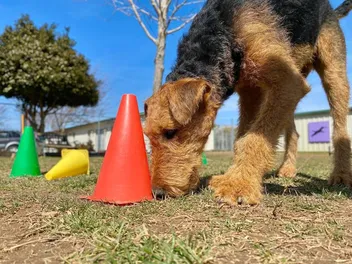
For a dog to detect a specific allergen, it must first be exposed to that allergen during training so it can learn which odor to identify. This sounds straightforward but requires careful handling to ensure the person with the allergy is not inadvertently exposed in the process, which is why training is usually undertaken by a professional. The allergen is kept in secure, sealed containers during training sessions, and there are safe handling protocols that allow the dog to access the scent while the handler remains at a safe distance.
From the point of initial scent introduction through to reliable real-world detection, training typically takes up to two years. The timeline depends on the individual dog's intelligence, maturity, and how well its olfactory processing has developed. Some dogs are naturally better candidates than others, but breed is not the only determining factor.

Can Any Dog Be Trained in Allergy Detection?
Under the Americans with Disabilities Act (ADA), any dog breed can legally qualify as a service dog. There are no breed restrictions, and no official certification is required. What matters is that the dog has been trained to perform a specific task related to a disability and can behave appropriately in public settings without being disruptive.
In practical terms, certain breeds are better suited to the demands of service work. Labradoodles and Poodles are commonly recommended for allergy-detection roles because of their intelligence, trainability, and low-shedding coats. The low-shedding quality is particularly relevant for handlers who are also allergic to pet dander. Although no dog is truly hypoallergenic, some produce significantly fewer allergens than others.
A service dog must be able to toilet on command, maintain focus in busy or unfamiliar environments, remain calm around loud noises and unexpected distractions, and stay under the handler's control at all times in public. That final requirement is often the hardest part to achieve and one of the strongest arguments for working with a professional trainer during at least part of the process.
Let’s Talk Money
Professional service dog training programs deliver reliable, thoroughly prepared dogs, but naturally, they don’t come cheap. Depending on the organization and the specific training involved, professional programs typically run between $12,000 and $25,000. Not everyone can access that.
The ADA does allow owners to train their own service dogs, and the American Kennel Club's Canine Good Citizen program provides a solid framework for the foundational skills required. Self-training is a legitimate and achievable route, particularly for owners who already have a strong bond with their dog and are willing to put in consistent work over an extended period. Consulting with a professional trainer for guidance on scent-specific training, even without enrolling in a full program, can make the process more effective.
For people living with serious food allergies, an allergy-detection dog represents something genuinely significant: freedom. A trained partner whose nose can do what no label, no kitchen policy, and no amount of personal vigilance can fully replicate, providing peace of mind when out in the world. Plus, they do it all with a waggy tail.
Featured Image Credit: SR Productions, Shutterstock
Did You Know?
- Our brand-new posts are rounded up and included in our weekly emails. Don't miss out on the latest - sign up for our newsletter below!
Expert dog care, straight to your inbox
News, insights, expert advice, and everything dog.

No spam — unsubscribe anytime.
By signing up, you agree to our Terms & Conditions and Privacy & Cookies Policy.
How useful was this post?
Click a star to rate. You can leave written feedback afterwards. (We read all feedback.)
Dan has been working in the dog world for over 4 years, covering dogs and all other pets, helping pet parents keep their companions happy, healthy, and totally spoiled! Originally from London, Dan now works remotely, which sadly means no pets at home, but plenty of opportunities to fuss over other people's furry friends.