Are Prong Collars Humane? Vet-Verified Safety Facts

In this article
Prong collars have supporters and critics. Some believe that they can be effective in training, while others believe that they are cruel. In this post, we explore the pros and cons of using prong collars and how they’re used in training.
However, please note that we are not in favor of prong collars, as they can cause pain and potential injury from puncture wounds and nerve damage, especially since most people are not trained in their safe use. Let’s get into more detail.

How Does a Prong Collar Work?
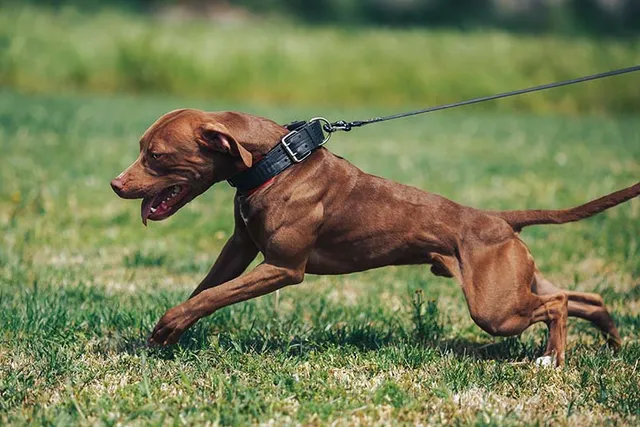
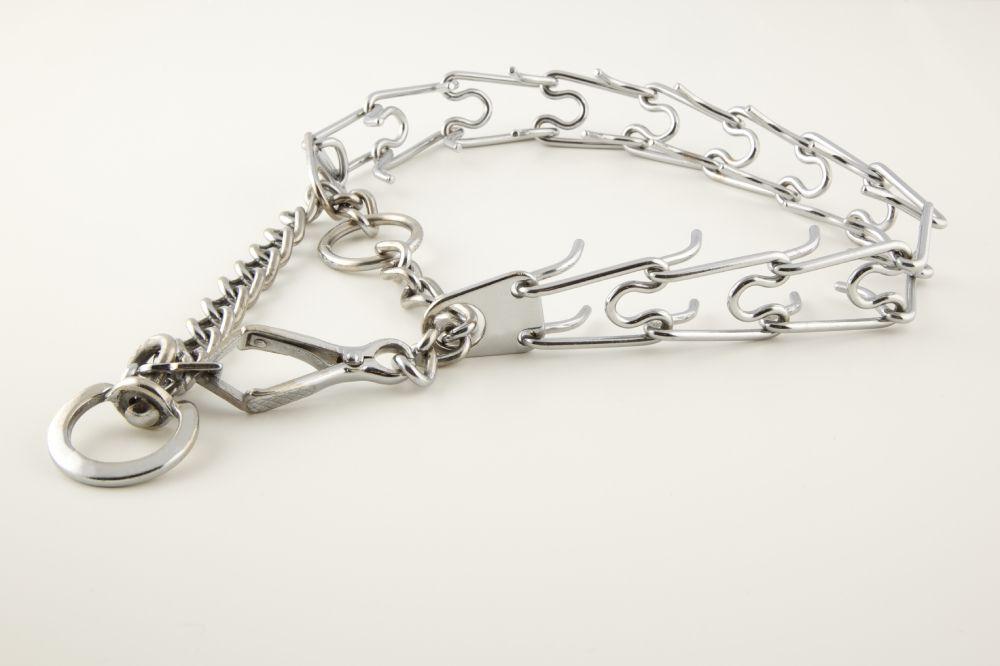
Prong collars have prongs/spikes that grip a dog’s neck when they lunge on the leash. When the dog pulls on the leash, the metal prongs make contact with the neck and in a drawing-together action, apply pressure around its whole circumference. If the pulling continues, the prongs will increasingly pinch into the dog’s neck. In theory, this gives the dog the signal to stop what they are doing. When the pulling stops, the pinching stops. This is a form of negative reinforcement, which means an aversive stimulus is removed in order to reinforce correct behavior.
Proponents claim that as long as the collar is used correctly, it will not harm a dog’s throat. They claim that prong collars can be safer than regular flat collars since they apply pressure to the whole of the neck and muscles and not just the front of the neck, where the trachea is. However, that isn’t entirely true. In fact, a prong collar can cause a dog to cough and even cause the windpipe to collapse.
With prong collars, the idea is to provide a quick behavioral correction for powerful dogs that tend to pull and lunge on leashes. These dogs often have a high prey drive and are difficult to manage. This is often why so many pet parents and “balanced trainers” turn to these collars. However, the best way to train a dog is with plenty of positive reinforcement.

Prong Collar vs Spiked Collar
People often confuse prong collars with spiked collars. With a prong collar, the spikes face toward your dog’s neck. This is the collar used for training, the one discussed in this post.
In contrast, a spiked collar has spikes facing away from the neck. These collars were used on farm and war dogs to protect them from predators. Today, people like to use faux spiked collars on their dogs to make them appear tough, and they’re mostly just for looks instead of protection of the neck.
The Pros and Cons of Prong Collars
Some people swear by prong collars as effective training tools when used correctly on the right dog with a responsible owner. Anecdotally, they offer quick results and allow for adjustable pressure, though they should only be used temporarily.
However, as stated, prong collars have the potential for harm and can easily be abused, even if accidentally. They can be painful and distressing, and they can even cause physical damage over time. Prong collars can also cause over-correction in training, instilling fear and anxiety in your dog. You certainly don’t want that to be your goal in training. On top of that, once you take the prong collar away, your dog’s bad behavior is likely to return, as you rely on the collar to control your dog.
Pros
- Quick results (anecdotal)
- Flexible pressure
- Temporary use
Cons
- Can be abused and cause pain
- Not right for all dogs
- Dog needs to understand how to avoid the pain
- Relies on an aversive stimulus
- Overcorrection in training
- Can create more behavior problems
- Easy to misuse
- Relies on equipment to correct your dog’s behavior
An Ethical Alternative to Consider
Getting your dog to walk appropriately on the leash can be a challenge, but it’s not something that requires pain in order to correct. Instead of using a prong collar, stick to reward-based methods. This will help your dog not only to build trust in you and strengthen your bond but also to learn essential life skills in a calm and stimulating way.
The best option for training your dog is to use a well-fitting harness that gives you better control of them. They should also have a highly motivating treat as a reward, along with plenty of pets and praise. Dogs are going to respond much better when they aren’t fearful or in pain, and they’ll soon learn that good behavior gets them exactly what they want, which is a treat!
If your dog isn’t responsive to treats while out walking but normally likes them, there are probably underlying issues like poor socialization or reactivity. You should use techniques like desensitization and counterconditioning to improve your dog’s threshold for triggers. While this may take time, this is a true behavioral modification, which will provide better long-term results, so work with a veterinarian to implement these techniques.

How to Use a Prong Collar Safely
While we don’t think that prong collars should be used to train your dog, there is a right and wrong way to use them if you insist on doing so.
1. Choose the Right Size
A prong collar should rest high on the neck just behind the ears. This helps distribute pressure evenly around your dog’s neck, unlike a regular collar that hangs low on the neck. If your dog’s prong collar hangs any lower, the collar is too big. Prong collars should fit snugly around the neck without choking your dog or pushing against the skin. If your dog’s collar doesn’t fit, remove or add prongs until it fits properly.

2. Select a High-Quality Prong Collar
Not only will a high-quality collar last longer, but it’s also safer for your pet. Low-tiered collars break easily and can be painful for dogs. On top of that, if the collar breaks, your dog can escape.
Most dog trainers will only use Herm Sprenger prong collars, and you should be wary of poorly made or counterfeit ones. At first glance, all prong collars look similar, but a good look at the prongs will tell you otherwise. They should never be square or sharp. A true Herm Sprenger prong collar has rounded prongs.
3. Use a Safety Clip
A safety clip attaches the prong collar to the regular collar in case the prong collar detaches while you’re on a walk. This also provides insurance if you mistakenly didn’t place the prong collar on correctly.

4. Start With Pressure and Release Training
You don’t want to startle your dog by putting the collar on and letting your dog pull as hard as they’re used to. Start by applying small amounts of pressure instead. Slightly tug on the leash so your dog understands the feel of the collar and then let go when they follow. Your dog will need to be taught how to relieve the pressure, so they can successfully yield during your training.
5. Apply Basic Obedience Training
The prong collar is a tool that can’t replace professional training. Never rely entirely on a prong collar. It's only for walks and training sessions. Practice basic obedience, and only use a prong collar as a tool.

Conclusion
While some trainers and pet owners swear by the use of a prong collar as a training tool, it isn't considered humane by many other people, including most veterinarians, especially since they are so easy to misuse. There are other training methods out there that will give you the results you want without causing your dog any sort of pain or ruining the bond between you two. At the end of the day, you get to decide how to train your dog and what tools to use to get the job done, but we support reward-based methods over prong or similar collars.
Sources
Featured Image Credit: Chantal Ringuette, Shutterstock
Expert dog care, straight to your inbox
News, insights, expert advice, and everything dog.

No spam — unsubscribe anytime.
By signing up, you agree to our Terms & Conditions and Privacy & Cookies Policy.
How useful was this post?
Click a star to rate. You can leave written feedback afterwards. (We read all feedback.)
Cassidy is a vet tech and professional pet sitter turned pet writer whose passion is all things animals, both domestic and wild. She’s had a multitude of pets over the years and loves writing about the animal-human bond. She and her husband now live in Wichita with a German Shepherd named Raven, two cats, Lucy & Strudel, and a few backyard chicks.