Tetanus in Dogs: Causes, Signs & Treatment



In this article
Tetanus can affect many animals, including humans, horses, dogs, and cats. Granted, it’s not a very common condition in dogs because they’re not as susceptible to the effects of Clostridium tetani, the bacteria that produces the tetanus-causing toxin. Still, it does occur in canines in some cases, and it’s a very serious ordeal as this toxin affects the spinal cord and brain. If your dog contracts tetanus, it will need immediate veterinary attention, and with treatments, 50%-90% of affected dogs survive.1

What Is Tetanus?
Tetanus is a bacterial infection that affects the brain, spinal cord, and nerves. It’s caused by Clostridium tetani, which happens to be a very common bacteria that are present all across the environment. Spores of it are contained in animals' feces, surviving for many years in dirt and dust.
Unlike some bacteria, C. tetani doesn’t cause any damage when ingested. It’s not dangerous in the gastrointestinal tract, and most of the time, it’s not even a threat when it’s on the skin. This bacterium requires an environment that’s low in oxygen to reproduce and start releasing tetanospasmin, which is the neurotoxin that actually causes tetanus.
Puncture wounds happen to be the perfect environment for C. tetani. After it starts releasing tetanospasmin, the toxin will infect the nerves around the puncture site. Once in the nerves, the toxin continues to travel to the spinal cord, which eventually follows all the way to the brain.
Signs of Tetanus in Dogs

Most dogs with tetanus will experience localized tetanus as it’s more common in pets than generalized tetanus. Localized tetanus will cause the muscles around the wound to become stiff and may even induce muscle tremors. On rare occasions, localized tetanus can progress into generalized tetanus.
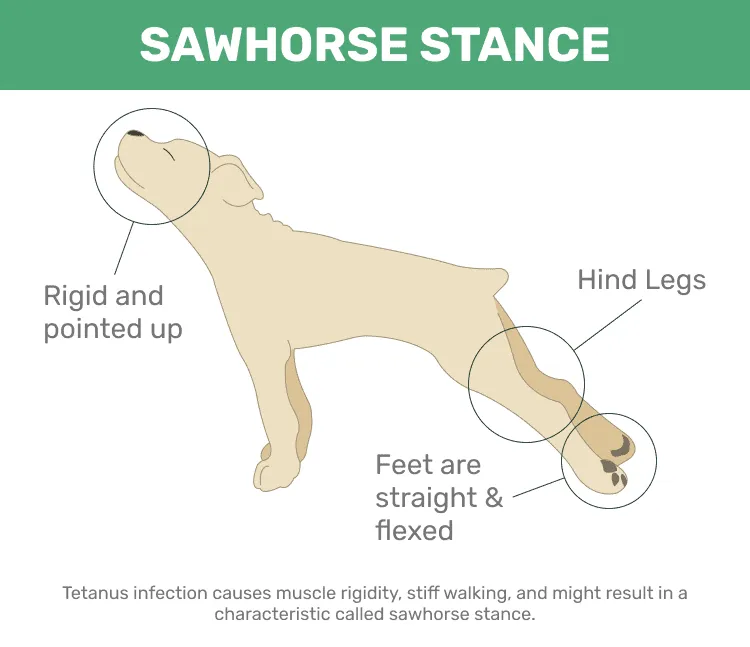
Generalized tetanus affects more than just the muscles that are near the site of infection. With generalized tetanus, all the muscles of the body may become stiff and rigid, causing them to walk strangely or hold their tail up in the air behind them. If it gets bad enough, they may lose the ability to bend their legs at all, being forced to hold all four legs straight in a “sawhorse stance.”
The muscles of the face are also commonly affected, resulting in forehead wrinkles, elevated third eyelids, and lips held into strange facial expressions. Often, the jaws are clamped tightly shut, which is why this condition is commonly known as lockjaw.
If your dog is showing any of these signs and you are seeking the best possible treatment for your pup, we recommend speaking with a vet.
Diagnosing Tetanus
If you believe that your dog might be experiencing tetanus-related symptoms, you should take it to the vet right away. A vet should be able to determine whether your dog is suffering from tetanus or another illness by performing a variety of tests, which might involve blood testing, urinalysis, X-rays, and electrocardiograms.
Treating and Managing Tetanus
How tetanus is treated and managed depends on how early in its development it’s caught. If treatment begins early enough, muscle relaxants and cleaning the wound might be sufficient. Some cases require the application of tetanus antitoxin. This antitoxin binds to the Clostridium toxins and ensures they can’t infect the nerve cells. However, if the nerve cells are already infected, then it’s too late for the antitoxin to do any good. Worse, the antitoxin might be accompanied by serious side effects.
Antibiotics can also be used to help treat tetanus, though they can’t do anything about the tetanus toxin. Rather, antibiotics are able to kill the C. tetani bacteria, which stops the production of new tetanus toxins.
The vet will search for the site of infection in order to surgically debride it and remove all the dead tissue. This will remove the tetanus-causing bacteria and instantly make a massive decrease in the amount of toxin being introduced to the wound.
While treatment is possible, it’s no easy task. Treatment will be very difficult on your dog, and it may require a feeding tube and IVs to provide sustenance and hydration. Your dog won’t be moving much, so you’ll need to set up a clean and soft place where it can remain. The dog will need to be turned often to ensure no pressure sores form and worsen your dog’s overall condition.
Preventing Tetanus
It’s not recommended that dogs be given the tetanus vaccine. They already have low susceptibility to this condition, so it’s unlikely that your dog will get it. Still, you can help reduce the chances even further by promptly treating and cleaning any wounds your dog receives by flushing them thoroughly and administering antibiotics, so, get used to taking your dog to the vet for injuries.
Conclusion
Clostridium tetani is abundant in our environment. However, it’s generally not a problem unless the right conditions are met. When your dog gets wounded, this bacteria has a chance to multiply in the low-oxygen environment of the wound, which allows it to start releasing the tetanospasmin toxin that causes tetanus. This toxin will infect the nerves, traveling up the spinal cord to the brain. If treated early on, it can be blocked with the antitoxin, though once attached to the nerves, more aggressive treatment is necessary. If you see your dog exhibiting any signs of tetanus, make an immediate trip to the vet for diagnosis.
See also:
Featured Image Credit: Igor Normann, Shutterstock
Expert dog care, straight to your inbox
News, insights, expert advice, and everything dog.

No spam — unsubscribe anytime.
By signing up, you agree to our Terms & Conditions and Privacy & Cookies Policy.
How useful was this post?
Click a star to rate. You can leave written feedback afterwards. (We read all feedback.)
An avid outdoorsman, Dean spends much of his time adventuring through the diverse terrain of the southwest United States with his closest companion, his dog, Gohan. He gains experience on a full-time journey of exploration. For Dean, few passions lie closer to his heart than learning. An apt researcher and reader, he loves to investigate interesting topics such as history, economics, relationships, pets, politics, and more.