Pit Bulls, Unbanned: How One County Is Putting An End to Unreliable Breed-Specific Legislation

In this article
If you've ever had a dog labeled a "Pit Bull" by a shelter, a landlord, an insurance adjuster, or a stranger at the park, there's a real chance that label was wrong. Not just wrong in the sense of opinion, but wrong in a statistically significant way.
This isn't just an abstract debate. On November 18, 2025, the Prince George's County Council in Maryland voted to pass CB-97, ending one of the longest-standing breed bans in the country. The new rules took effect on February 2, 2026. While this is triumphant news for local lovers of the American Pit Bull Terrier, it also highlights how unreliable the premise of a "Pit Bull ban" tends to be, wherever it's written into law.
Don’t Judge a Book, or a Pit Bull, By Its Cover

Breed-specific legislation rests on a simple assumption: that a person can reliably look at a dog and identify their breed. In a widely cited 2015 study published in The Veterinary Journal, that assumption was called into question.
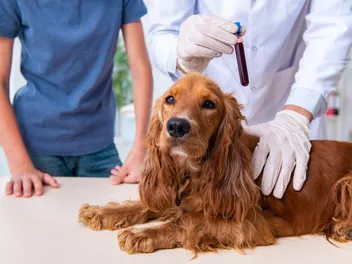
Researchers had 16 shelter staff members, including veterinarians, visually assess 120 dogs across four shelters, then compared those assessments to DNA testing. The results were not even close. DNA identified only 21 percent of the dogs as having Pit Bull-type heritage. Based on appearance alone, staff flagged 52 percent of those dogs as Pit Bull-types, while one in five dogs genetically identified as Pit Bulls were missed by every single staff member. One third of dogs labelled as Pit Bull-types by staff did not possess Pit Bull DNA, and there was only moderate consensus among staff members, including trained professionals working the same shelters.
The researchers' conclusion was blunt: reliable identification of "Pit Bull" dogs based on appearance is not possible, even for experts, a finding consistent with the CDC's decision to remove dog breed from its bite statistics, on the grounds that breed is not a useful predictor of bite risk in the first place.
Think of it like eyewitness identification in a courtroom. It feels reliable in the moment, but the data says otherwise.
$3 Million a Year to Enforce an Unreliable Law
The process of ending the ban in Prince George's County has also revealed how much enforcing this unreliable law can cost. According to county officials, the ban targeted Staffordshire Bull Terriers, American Staffordshire Terriers, American Pit Bull Terriers, and any dog that merely appeared to be predominantly one of these breeds, and cost an estimated $3 million a year to enforce. Meanwhile, an estimated 20,000 to 30,000 Pit Bull-type dogs were already living in the county the entire time.
At the public hearing, Caitrin Conroy of the Pet Unity Project told the council, "Our current law does not increase safety. It actually does the opposite." Given what the shelter-identification research shows, an unknown share of those "banned" dogs were likely never Pit Bull-type at all, and an unknown share of dogs who were never flagged may have been.

Why This Isn't Just a Maryland Problem
Breed-specific rules show up far beyond animal control ordinances. Home and pet insurance policies frequently exclude or upcharge for "Pit Bull-type" dogs. Rental listings and HOA bylaws do the same. Rescue and shelter websites label dogs by breed to help with adoption, often based on the same kind of visual guess the 2015 study tested. None of these systems typically use DNA to confirm the label before it's applied, and all of them carry real consequences: a denied lease, a canceled policy, a dog passed over for adoption, or a dog whose owner is unknowingly or unintentionally breaking the law.
Research overwhelmingly shows that without DNA screening, it is virtually impossible to accurately identify a dog as a Pit Bull, so how can any state or county impose laws that hinge on unreliable identification methods, both in enforcing such a ban and labelling the breed as dangerous in the first place? There must be a better way.
Behavior In, Breed Out: The New Rules
Under CB-97, Prince George's County replaced its breed-based ban with behavior-based assessment. All dogs must now be leashed, with retractable leashes no longer considered adequate restraint. Penalties for any dog legally deemed dangerous, regardless of breed, now range from $500 to $3,000 depending on the offense. Residents fostering or adopting a previously banned breed go through a new pilot program requiring a $25 permit and mandatory training. HOAs and private landlords can still set their own breed or size restrictions, so a repealed county law doesn't override a lease.

What This Means If Your Dog Might Be a "Pit Bull"
If you live somewhere with breed restrictions, whether in a lease, an insurance policy, or a local ordinance, and there's any ambiguity about your dog's ancestry, a DNA test is inexpensive relative to what's at stake and removes the guesswork entirely. Documentation of your dog's individual behavior and training history tends to carry more legal and practical weight than a visual label ever will, and it's worth keeping records of both. And if a shelter, landlord, or insurer tells you what your dog "is" based solely on visual assessment, you are well within your rights to challenge it.
Through my career, I've seen both sides of this argument up close. I've comforted pet parents whose dog, large or small, was hurt by an animal they were certain was a Pit Bull, and that fear and grief are real, not something to explain away. I've also listened to Pit Bull owners describe the denied leases, the neighbors who cross the street, and the assumptions made about a dog who has never shown a hint of aggression in their life. Both of those experiences are true, and neither cancels the other out.
We know that genetics play a significant role in temperament and behavior, but it has never been the whole story. What actually shapes how a dog behaves, far more reliably than the width of their jaw or the shape of their head, is their socialization, their training, and the life they have lived with the people responsible for them. That is where real prevention happens, and where the real responsibility sits. Watching policy start to catch up with that is something I'm glad to see, even knowing this conversation is far from over, and probably shouldn't be...
Did You Know?
- Our breaking news articles are included in our weekly emails. Don't miss out on the latest and sign up for our newsletter below!
Expert dog care, straight to your inbox
News, insights, expert advice, and everything dog.

No spam — unsubscribe anytime.
By signing up, you agree to our Terms & Conditions and Privacy & Cookies Policy.
How useful was this post?
Click a star to rate. You can leave written feedback afterwards. (We read all feedback.)
Dr. Paola Cuevas is our Senior In-House Veterinarian at Dogster and Pangolia. She has over 19 years of experience working with an array of species and loves sharing her knowledge and experience with our readers and aims to provide assistance with any issue presented by your non-human family members. She received her degree from the University of Guadalajara, Mexico.
Her passions are animal welfare and preventive medicine, and has skills in the fields of nutrition, microscopy, clinical pathology, diagnostic imaging, and endoscopy. Paola frequently contributes pet care insight to various media outlets like PetMD, The Daily Record, Parents.com, etc.
Paola is also an animal behaviorist with extensive experience in positive reinforcement animal training.