How Far Can I Run With My Dog? Vet-Approved Guide By Breed

In this article
Roughly 48 million Americans jog or run for recreation. While it’s excellent exercise, some may find it boring after a while, particularly if they’re on the same route. You can mix it up by going elsewhere, but you may find it even more enjoyable to bring along a running companion— your dog. However, that likely leaves you with some questions: How many miles can I run with my dog? Do I need to implement a training plan for them? How far is too far for them?
Our pets descended from wild canids that needed to move regularly to hunt and survive. That same DNA exists in your pooch, but dogs today aren’t as athletic as their ancestors. So, a general rule of thumb is that a fit dog can run about 2 to 5 miles. However, many variables exist, including your canine companion's health, age, activity level, and breed. You will need to start low and then slowly work your way up. Plus, domestication has had both negative and positive effects on how long and how fast your dog can hit the trail, so read on to find out more.

Factors to Consider Before Running With a Dog
You should consider several factors before taking your dog with you on your run. Let’s start with the canine perspective.
1. Age
Even though puppies are bundles of energy, we don’t recommend taking a juvenile running for long because of the risk of injury. Too much exercise can actually cause permanent damage to their joints and bones. Dogs aren’t fully developed until they’re at least a year old. And giant breeds like the Newfoundland, for example, may not reach this point until they’re 2 years old.
Your senior Golden Retriever may want to run with you, but it’s probably best that they don’t, particularly if they have joint issues. Running may aggravate their condition, leading to discomfort when you get home. Let’s move on to the practical matters.

2. Health
The other consideration is the animal’s health status. Walking is often a better option for dogs with a chronic disease. Remember that running is a stressful albeit healthy activity. A dog with a medical issue is already stressed. An overweight or obese pet will struggle to keep up with you. Again, a slower pace can help manage the pooch’s weight without unduly taxing them. Brachycephalic dogs are prone to heat and exercise stress due to their compromised airways and most won’t cope with even a shorter run. Cardiac and respiratory conditions can be aggravated by exercise, so dogs with these should also have lighter exercise.
3. Environmental Conditions
The weather is another significant consideration for you and your pet. The chances are you already time your runs to take advantage of optimal conditions, whether it’s avoiding the heat or the cold. If it's hot, you must look at it from your pup’s perspective. If you can’t place your hand on the sidewalk or pavement without flinching, neither should you subject your pet to it, which could result in burns on their paws. Heatstroke is another serious concern in hot weather; remember your dog’s skin can’t sweat and they wear a fur coat! Likewise, the cold presents other risks, including frostbite and hypothermia. A dog’s coat only goes so far in keeping them warm, particularly if there’s precipitation.
There’s also the condition of the running surface. You may have shoes with excellent tread or add something for added traction. Your pup can slip just as easily as you on slick pavement. Hard surfaces like cement will cause more impact on their joints. Over time this can worsen or lead to arthritis, so for regular runs, we recommend finding a softer track like grass. The takeaway is that you must also prepare for your run.


The Effects of Domestication
Let’s consider varying distances by breed, starting with the dog’s closest relative, the gray wolf (Canis lupus). This animal runs a lot. The average pace is around 5 miles per hour (mph), a pretty good pace if you’re jogging. However, wolves can kick it up a notch, up to 34 to 44 mph if needed. After all, they must go faster than their prey if they’re going to be successful hunters.
To put these figures in perspective, the fastest human is Jamaican sprinter Usain Bolt, who ran the equivalent of 23.35 mph. Wolves are also excellent cross-country runners, able to travel up to 125 miles a day! They share 99.9% of their DNA with our canine companions, so the genetics for running exist in our pets. However, domestication has affected these figures, and many of the breeds we know and love today simply aren’t able to keep up.
Which Breeds Are Best to Run With?
Much diversity exists in the 378 recognized dog breeds. One well-studied feature is the shape of the animal’s skull. Scientists loosely group dogs into three basic categories based on their cephalic index or the skull width/ length.1 They include the following:
- Long-snouted or dolichocephalic dogs like the German Shepherd
- The middle-of-the-road dogs or mesocephalic breeds, such as the Labrador Retriever
- Short-muzzled brachycephalic pups like the Pug

This classification is significant because it can affect brain anatomy, potential behavior, and efficiency of respiration and cooling, which impacts endurance and speed. One study considered this question in research with sporting dogs and terriers.2 Enthusiasts presumably selected for characteristics in the former that would improve the animal’s endurance traversing rough terrain to flush and retrieve game.
Terriers served as ratters for people, requiring intelligence, persistence, and cognitive performance. The researchers identified several genes that affect neuronal, muscular, and cardiovascular function and compared the DNA of these animals. The scientists found strong correlations between specific genes and desirable traits, particularly in the sporting dogs.
The team also compared the agility testing results of these animals for further support of their presence in the various breeds. Dogs that excelled in these skills included the Brittany Spaniel, American Cocker Spaniel, and Irish Water Spaniel. All are members of the Sporting Group. Herders also scored high marks with the Bearded Collie, Australian Cattle Dogs, and, surprisingly, the Pembroke Welsh Corgi.
Another interesting finding was the Jack Russell Terrier. This dog is an intelligent animal that enthusiasts bred to be fast. Their work demanded they keep up with other dogs who were hunting foxes and other game. The pooch’s small size is an asset for scurrying around the terrain. This breed makes another excellent choice for a running partner who will stick with you at your pace.
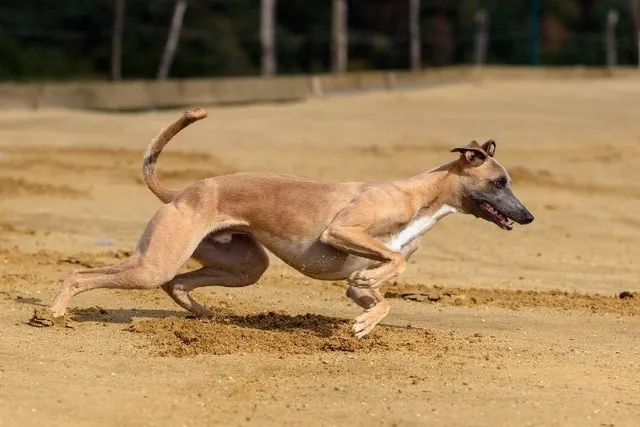
The latter makes a strong case against assuming only medium or large dogs can run longer. The researchers also identified an allele or copy of a gene unique to Whippets. These pups can reach speeds up to 36 mph if you’re looking for a sprinter on your runs. An early study found large proportional heart weight correlated with faster speeds in Greyhounds.
These data provide compelling evidence of variability in how fast and long you can run with your dog based on their breed and historic use. Other research offers another take based on the animal’s cephalic index or skull shape. The main finding was a positive association between running and dolichocephalic breeds, like the Greyhound and Saluki. However, the science also goes the other way.

Brachycephalic Dog Breeds
Brachycephalic breeds have short muzzles, which better equipped the dogs for fighting. Think of dogs like the Mastiff and Cane Corso. Selective breeding for this trait made them better guardians and protectors of livestock. However, it also comes at a price, mainly in breeds such as the Pug, French Bulldog, and Boston Terrier. These dogs are susceptible to many conditions, including respiratory disease.
That may make them more vulnerable to heatstroke and exercise intolerance. While you can run with your Whippet, brachycephalic pups aren’t suitable as running partners because of their health issues. Some develop brachycephalic obstructive airway syndrome (BOAS), which can heighten their risks of adverse outcomes from intense exercise like running. So, we recommend short daily walks for these pups instead of running.
Introducing Your Dog to Running
We suggest beginning with a vet exam if you want to introduce your pet to running. It’s probably a good idea for you as well if you haven’t been active for a while. The key to success, however, is to start slow and let your dog adjust to the new activity. Start with roughly half a mile, and then very slowly work your way up over the next couple of months.
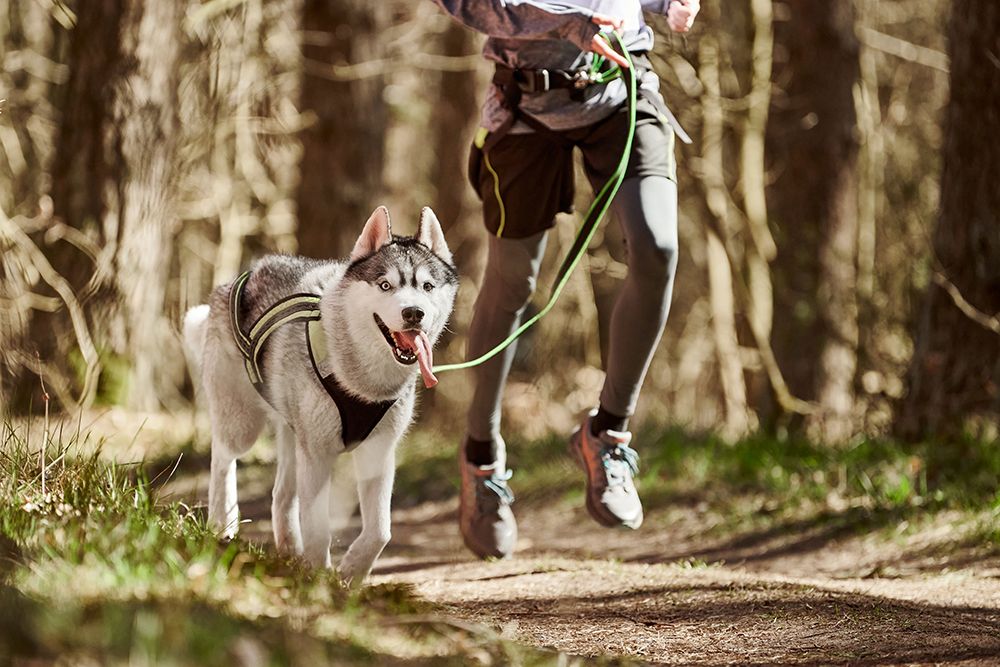
You should also scout out a dog-friendly trail before your run. A hands-free leash will make it more manageable for you, and remember that you have to bring twice as much water.
Minimize weather stress by running during the cooler times of the day. You may find it more enjoyable to go out when fewer people, dogs, or other distractions are on the trail. Of course, treats are a must-have to teach your pup to stay focused. However, keep them to a minimum to avoid stomach upset. Let your pup warm up with a short walk before running. Watch your pet’s body language for signs of stress, and stop exercising them immediately if they appear unwell or overly fatigued.


Final Thoughts
A well-conditioned dog can safely run 2 to 5 miles. Variables exist with the pup’s age, health status, and breed, though. Some animals are better suited for intense cardio than others. If your pet is new to the activity, start slowly to give them time to adapt to the new physical demands. Also, strive to make it easier and more enjoyable for your pooch with plenty of water and treats.
Sources
https://vcahospitals.com/know-your-pet/running-with-your-dog
https://www.statista.com/statistics/190303/running-participants-in-the-us-since-2006/
https://www.britannica.com/story/how-fast-is-the-worlds-fastest-human
https://www.labroots.com/trending/genetics-and-genomics/15279/wolves-evolved-dogs
https://www.vetstreet.com/our-pet-experts/meet-eight-of-the-fastest-dogs-on-the-planet
Featured Image Credit: travelarium.ph, Shutterstock
Expert dog care, straight to your inbox
News, insights, expert advice, and everything dog.

No spam — unsubscribe anytime.
By signing up, you agree to our Terms & Conditions and Privacy & Cookies Policy.
How useful was this post?
Click a star to rate. You can leave written feedback afterwards. (We read all feedback.)
Since 2009, Chris has written on a variety of topics. Her motto with all of her writing is “science-based writing nurtured by education and critical thinking.” She specializes in scientific topics, with a special love for health and environmental topics, and of course, pets of all shapes and sizes.
Chris lives happily with her husband and three cats in the land of 10,000 lakes, writing, wining, and boating as much as she can. She and her husband, Norm, were awarded the State of Kentucky Colonel Honor for their restoration work at Mammoth Cave National Park.