Sex-Related Aggression in Dogs: Vet-Reviewed Facts & Safety Tips


In this article
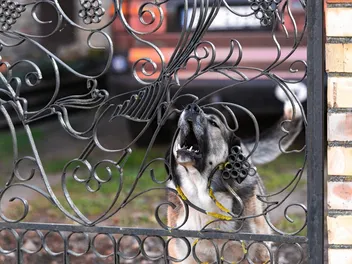
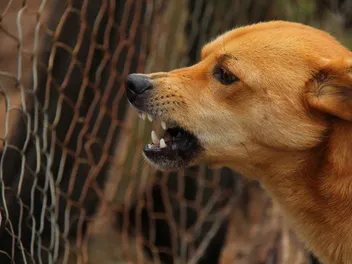
Dealing with a dog that’s started showing signs of aggression can be incredibly stressful. While you still consider them your loyal, loving companion, the thought that they might snap at any moment can be incredibly terrifying.
One of the first things that you should do when your dog starts acting aggressively is to try to pinpoint the source. There are many possible causes; dominance, fear, and anxiety are a few of the most common ones.
One that shouldn’t be overlooked, however, is their sex. Your dog’s raging hormones could be whipping them into an agitated state, making them more likely to lash out at anything in their path.

What Is Sex-Related Aggression?
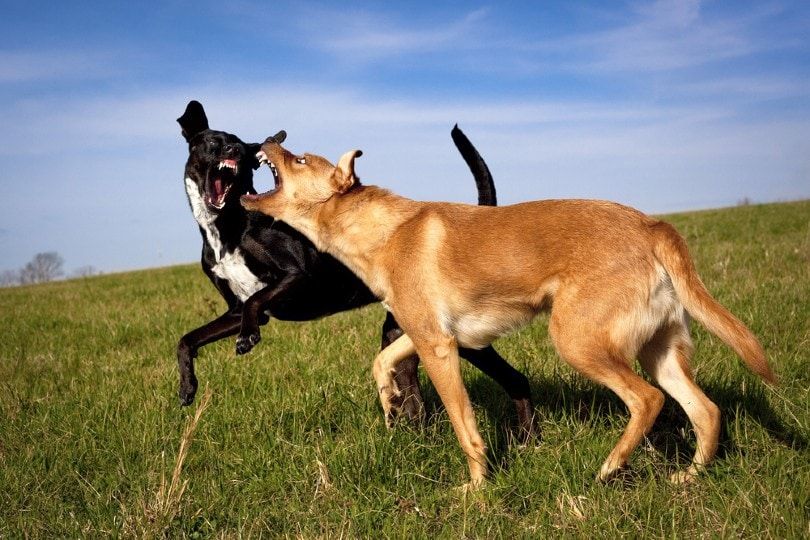
If you’ve ever watched a nature documentary, you already know that the urge to procreate often causes violence between animals looking to breed. Dogs aren’t immune to these urges, and the hormones coursing through their bodies could cause them to become over-stimulated and agitated. That agitation will need an outlet, and unfortunately, that outlet is often violence.
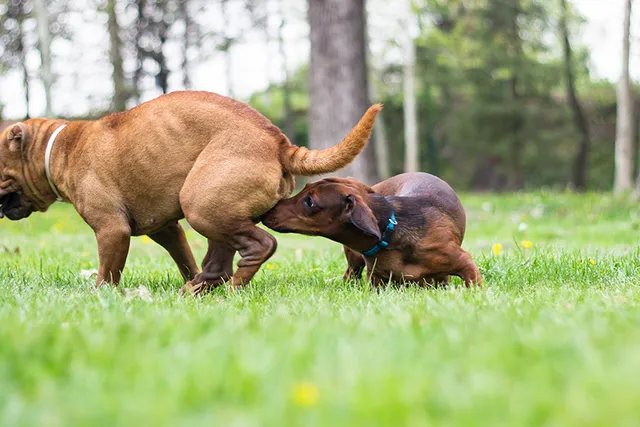
Sexual aggression is most likely to occur around a female in heat, and it’s usually male-on-male or female-on-male, though females can be aggressive toward other females too.
Sexual violence usually happens around adolescence, though intact mature dogs of any age can be susceptible to it.

How to Recognize Sex-Related Aggression in Dogs
Violence related to sex rarely occurs without plenty of warning signs beforehand. If you can recognize these signs, you might be able to head off the aggression at the pass.
If you notice any of the following signs, especially in a male dog, watch for potential aggression:
What to Do About Sex-Related Aggression
There are a few things that you can do to solve sex-related aggression in your pup. However, there’s one thing that you should never do: Let your dog “get their urges out.”
While this may seem counterintuitive, the fact is that allowing them to mate will just reinforce the behavior; it will let them see what they were missing, in essence. If anything, this will make aggression more likely, so you shouldn’t allow it to happen under any circumstances.
With that out of the way, let’s take a look at what you should do instead.

Have Your Dog Spayed or Neutered
This is the quickest, easiest, and most effective way to solve sex-related aggression. If you take away your dog’s gonads, their hormones and drive will also decrease. This won’t solve all aggression issues, of course, but it should nip sex-related problems in the bud. It does not happen overnight, though; it can take a while for some existing circulation hormones to eventually fade.
Spaying or neutering your pet has other benefits. You won’t have to worry about dealing with any unwanted puppies, and dogs that have been fixed have been shown to live longer than their unaltered counterparts. In addition to solving aggression, it will reduce marking, eliminate the issues that go along with your dog going into heat, and make them less likely to run away.
If you’re hoping to breed your dog or you have another reason that you can’t get your dog fixed, there are still actions that you can take to curb sex-related aggression.
Keep Them Away From Other Dogs
If you have a male dog, it’s important to keep them away from females in heat. This can be easier said than done, as your dog can pick up on the smell of a female in season from quite a distance.
You’ll want to reinforce your fence and make sure there aren’t any gaps that they can escape through, and you’ll need to be careful not to leave doors open. This method will require constant vigilance because you’ll never truly solve the problem. You’ll just have to stay on top of the situation as long as there’s a nearby dog in heat.
If you have a female, you’ll want to keep them indoors as much as possible when they’re in heat. You’ll have male dogs coming from all around if they catch a whiff of her, and dogs can be quite ingenious when it comes to breeding. After all, if “Jurassic Park” has taught us anything, it’s that life finds a way.

Pay Attention to Your Dog’s Cycle
A female dog will be much more prone to violence toward males at certain parts of her cycle, so it’s important to keep track of where she is in her cycle at all times. Specifically, at the beginning of your dog’s proestrus cycle, she’ll be prone to reject the advances of any suitors. She usually does this quite violently, so if you try to breed her prematurely, you might end up with a fight on your hands.
Proestrus is the first stage of your dog’s cycle, and it usually lasts about 9 days or so. After proestrus, she’ll move into the estrus stage, at which point, she’s ready to accept a mate. This is when you should attempt to introduce a male. Be aware, though, that she may become more prone to aggression toward other unspayed females at this time.
Breeding your dog can be fun and rewarding, but it requires you to stay on top of the changes in your dog if you hope to avoid a bad situation.
Use Training to Redirect Their Attention
You should work on training your dog regardless of whether they’re prone to aggression, but obedience work can really come in handy when their hormones are raging out of control. To be clear, training won’t solve the problem, but it could buy you a few valuable seconds in an emergency.
Commands like “leave it,” “come,” and “stay” are all essential. They can prevent your dog from running away or lashing out, giving you enough time to intervene and regain control of the situation.
You’ll have to make sure that these commands are firmly ingrained, though. It’s hard for dogs to ignore the call of nature, so the pull of your command has to be more attractive than the allure of a mate.
It’s Important to Take Sex-Related Aggression Seriously
Sex-related aggression is a big problem for dogs, and it can have disastrous consequences. If you’ve noticed that your dog is prone to it, you should take action right away, before something terrible happens.
The easiest and most effective way to solve the problem is to get your dog fixed, but if you don’t want to do that, there are other options to look into.
The important thing is to just take action immediately. You don’t want your dog—or someone else you care about—to suffer needlessly because you didn’t act soon enough.
Featured Image Credit: Dmussman, Shutterstock
Expert dog care, straight to your inbox
News, insights, expert advice, and everything dog.

No spam — unsubscribe anytime.
By signing up, you agree to our Terms & Conditions and Privacy & Cookies Policy.
How useful was this post?
Click a star to rate. You can leave written feedback afterwards. (We read all feedback.)
Quincy has been around mutts his entire life and has been writing about them for the past nine years and now consists of sharing a house with three spoiled pups who couldn’t hold down a job to save their lives. Quincy never intended to be a cat person. When his wife brought home a kitten one day, he told her she had one week to find it a new home. That week turned into 10 years (his wife moves very slowly), and that kitten turned into three (they got two more, the kitten didn't self-replicate). After a decade of sharing his home with the dogs and three cats, one horrifying realization finally set in: oh God, he's a cat person now too, isn't he???