Rottweiler With Tail vs Without: Vet-Verified Facts & FAQ


In this article
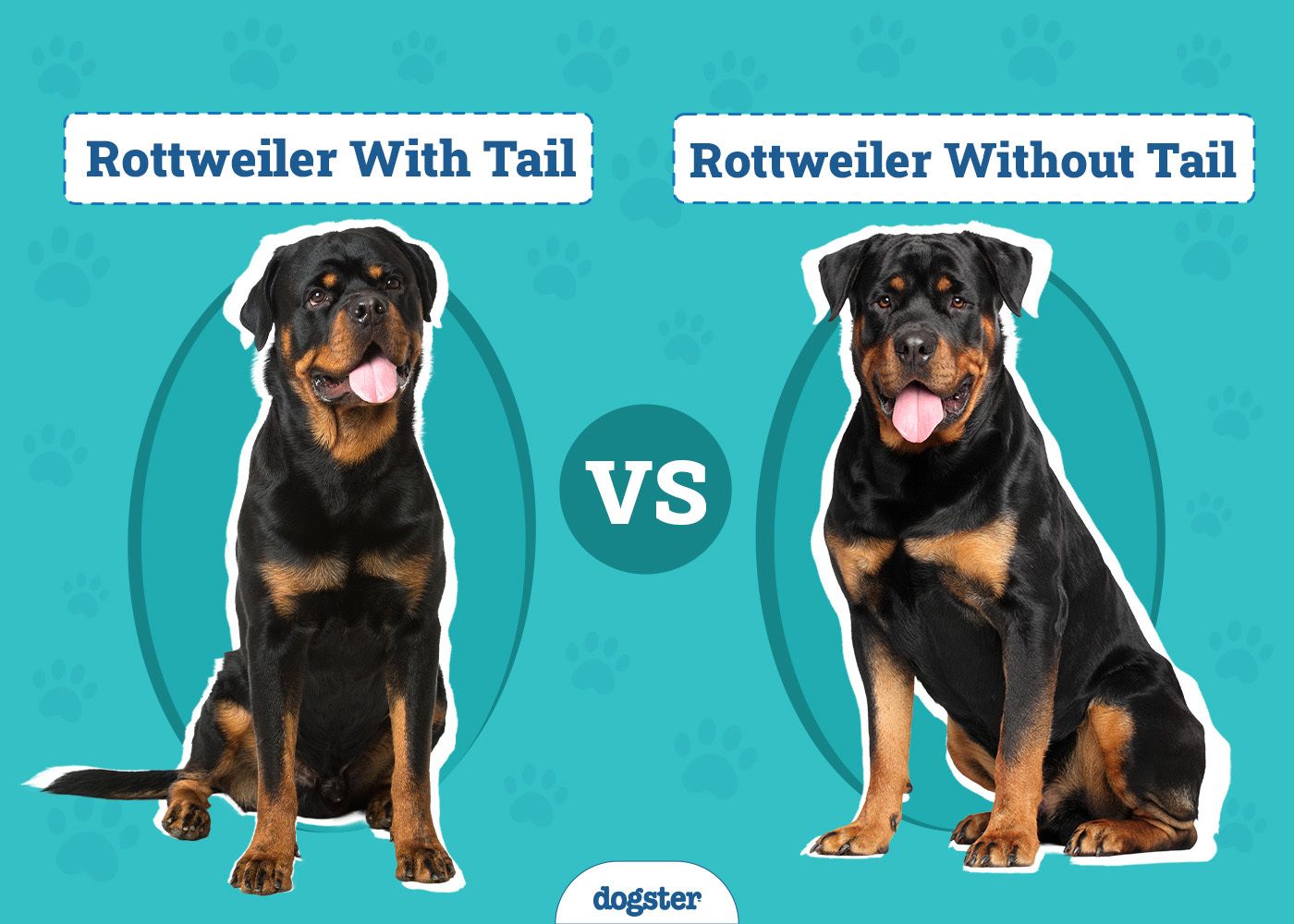
The debate of whether to dock a Rottweiler’s tail or not is a heated one. Proponents say that it improves agility or speed, and tails were originally docked on some working dog breeds, including the Rottweiler, to prevent it from becoming injured.
The most common reason it was done until recently was to conform with kennel club standards and as an aesthetic choice. Opponents say that it is inhumane but also that it is unnecessary because it makes no difference to athletic performance and it may impair normal dog communication. Tail docking is not illegal in the U.S., but it is in many countries worldwide. It is also worth noting that the American Kennel Club (AKC) included docked tails in the breed standard until 2025, when it was finally updated to include both natural and docked tails. The updated breed standard emphasizes the set of the tail over its length.
Disclaimer: Dogster does not endorse the practice of tail docking. This article is for informative use only.

Why People Dock Tails
Historically, Rottweilers had their tails docked to prevent injuries. They were bred as working dogs and were commonly used to pull carts. It is possible that the tail, protruding from the back of the dog and under the cart, could have become entwined with the wheels or caught in the cart and injured.
Today, however, people dock Rottie tails for different reasons. Owners claim that it helps improve the speed or agility of their dog. Others do it for aesthetic purposes, and some people may dock tails because it is inconvenient and can hurt when wagged.

What Opponents Say
Opponents of tail docking state that there is no physical or athletic benefit to docking a tail. Dogs still run at the same speed and are just as fleet of foot with a docked tail as they are with no tail.
That is why tail docking is considered inhumane, because it is done for cosmetic reasons. You may come across some breeders that perform this procedure when a puppy is a few days old. Even at this age, puppies have an operational nervous system, which means that they can feel the pain of the tail being removed. Additionally, if the procedure isn’t done under sterile conditions, the wound can become infected, posing a serious risk to a newborn puppy.
If performed, the procedure should be carried out by a professional veterinarian who will surgically remove the tail and provide appropriate anesthesia and pain relief as necessary.
Another factor to consider is how a dog typically uses their tail. The tail is used to communicate with other dogs, showing whether a dog is friendly, aggressive, or playful. Dogs also use their tails to communicate with humans in a similar way. Docking the tail means that the dog is unable to communicate as effectively.

What The Kennel Club Says
The American Kennel Club is responsible for setting the standards of different breeds and a dog must conform to these standards to be registered. In November 2008, the AKC published an official response to the AVMA’s amended policy, stating that the club “recognizes that ear cropping, tail docking, and dewclaw removal, as described in certain breed standards, are acceptable practices integral to defining and preserving breed character and/or enhancing good health.” With the added caveat that “appropriate veterinary care should be provided.”
However, almost 17 years later, the AKC finally updated their Rottweiler breed standards to allow dogs with both natural and docked tails. This new standard states that the tail’s set is more important than its length. This is certainly a win for the Rottweiler breed since they are mostly kept as pets and not working dogs. Hopefully, other breeds’ standards will soon be modified, as well.

Should a Rottweiler Have a Tail?
Tail docking is considered an unnecessary amputation of a dog’s body part. It causes pain to a dog when they are a young puppy and, what’s more, it can lead to some health problems and physical complaints such as a chronic neuroma forming at the docking site. Although there are some occasions when there is a therapeutic need to dock a tail, when it isn’t medically necessary, the dog will always benefit from being left with a natural tail.
Is Rottweiler Tail Docking Illegal?
Tail docking is legal in the U.S., and the AKC does encourage the practice by excluding Rotties with natural tails. However, it is illegal in many countries. In the UK, it was outlawed in 2007, although working dogs can still be docked, if the vet performing the procedure is shown working papers. Tail docking is also banned in most European countries, Australia, New Zealand, Israel, South Africa, and many South American countries. You should check the legal position in your country if you are considering having your dog’s tail removed.

Is Docking a Dog’s Tail Cruel?
While the AKC might still approve of tail docking, most vets do not.
The American Veterinary Medical Association wants to see docked tails removed from breed standards and they state that they are opposed to the practice when it is completed purely for cosmetic purposes and when there is no therapeutic or medical benefit to doing so.
The British Veterinary Association describes it as an “outdated practice” and they want it banned for all breeds of dogs, not just non-working breeds.
Should I Buy a Dog With a Docked Tail?
It is legal to own a dog with a docked tail in the U.S.. Therefore, it is legal to buy one. However, if you do not agree with the procedure, buying a dog with a docked tail from a breeder may encourage them to continue docking because there is a demand for docked dogs. If the dog is in a shelter or rescue, this isn’t a concern. Ultimately, it comes down to whether you agree with tail docking or not.

Conclusion
The Rottweiler is a loyal family companion and can also be a strong working dog. You will likely have seen docked Rottweilers, as well as those with their natural tail. While the procedure remains legal in the U.S., it is primarily done for cosmetic reasons. However, many experts oppose tail docking, noting that it is inhumane, causes pain to the puppy, and can lead to infection and other complications around the docking site.
You may also be interested in:
To Dock Or Not To Dock a Rottweiler’s Tail? (Legality, Ethics, Behavior)
Dog Breeds With Docked Tails Naturally: Pictures, Facts, History
Featured Image Credit: (L) Dora Zett, Shutterstock | (R) Elayne Massaini, Shutterstock
Expert dog care, straight to your inbox
News, insights, expert advice, and everything dog.

No spam — unsubscribe anytime.
By signing up, you agree to our Terms & Conditions and Privacy & Cookies Policy.
How useful was this post?
Click a star to rate. You can leave written feedback afterwards. (We read all feedback.)
Nicole has loved animals of all sizes her whole life so it's no wonder she has dedicated her career to helping them through what she loves best: learning, writing, and sharing knowledge with others. She’s the proud mom of two dogs, a cat, and a human. With a degree in Education and 15+ years of writing experience, Nicole wants to help pet parents and pets around the planet to live happy, safe, and healthy lives.