German vs American Rottweiler: The Key Differences (With Pictures)

In this article
Rottweilers are among the most popular breeds in the world. They were initially drovers that herded and protected cattle but were later used to pull carts and wagons. Today, Rottweilers are kept as pets, guards, police companions, and guide dogs.
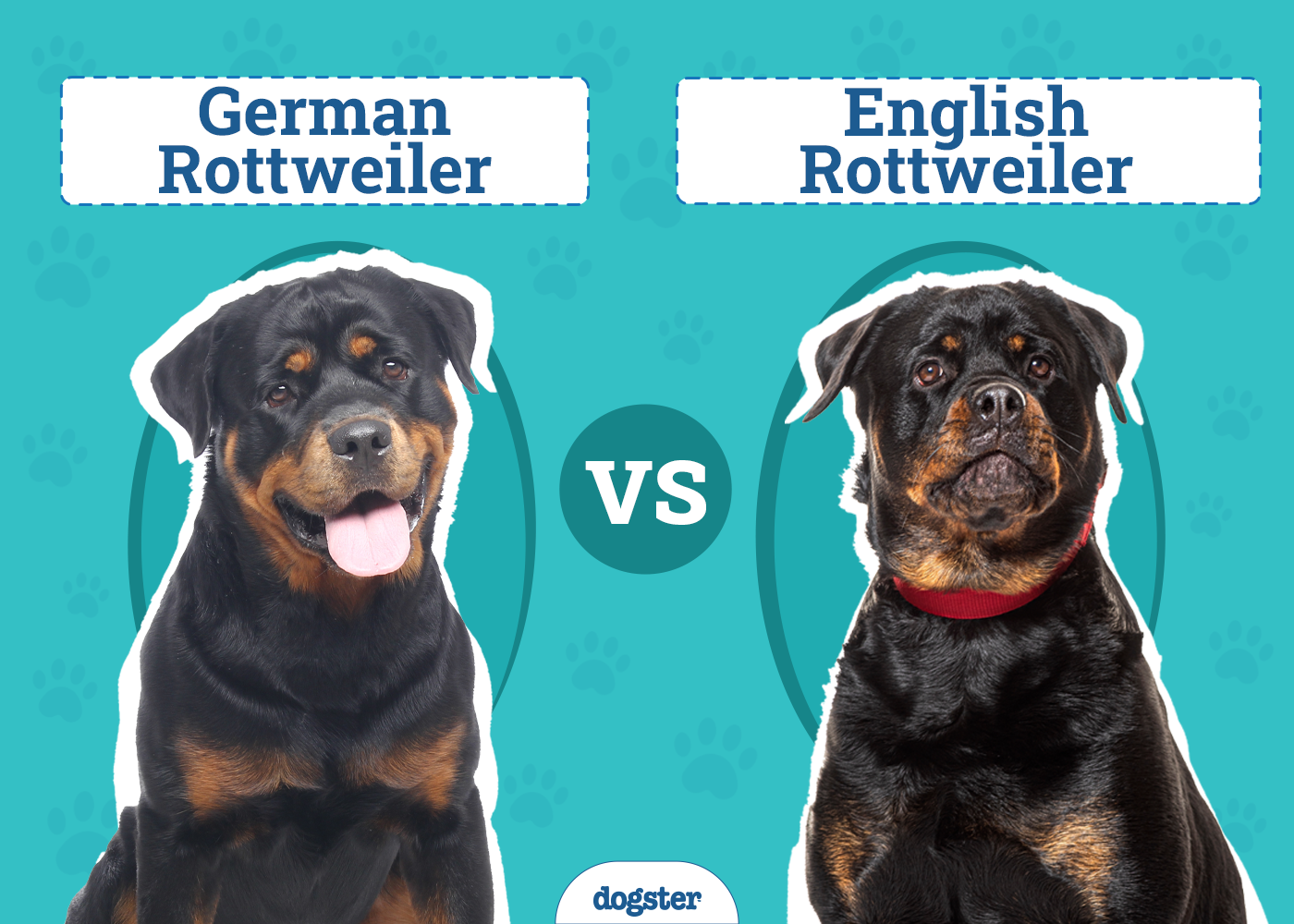
Rottweilers can be classified as German or American. Both versions come from Germany and share a mellow, alert, intelligent, and fearless nature. They are both classified as working dogs because their respective builds emanate endurance, power, and strength.
However, German and American Rottweilers have a few differences that may not be immediately obvious.

Visual Differences

At a Glance

German Rottweiler Overview

A Rottweiler is considered a German Rottweiler if they are born in Germany. Thus, all Rottweilers originally born in Germany are referred to as German Rottweilers.
Apart from the dog's place of birth, the Allgemeiner Deutscher Rottweiler-Klub (ADRK) has other strict standards in place. The club expects the Rottweiler to have a temperament suitable for a perfect companion dog, guide dog, security dog, family dog, or working dog. They must be mild and calm and have a sharp mind without getting into a violent mood and hurting others.
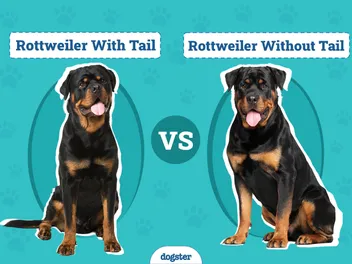
The ADRK is also strict about tail docking and does not register a Rottweiler with a docked tail. Tail docking is when an owner intentionally snips or cuts off a dog’s tail, often when they are a puppy.
The German Rottweiler has almond-shaped eyes, triangular ears, and a well-muscled neck. However, they have a broader nose and body than the American Rottweiler. The acceptable coat colors as per the ADRK standards are black and mahogany, black and rust, and black and tan.
Personality
The German Rottweiler is a courageous and loyal guard dog to their owner and family. They are a strong fighter that will protect their family fiercely from any perceived threat.
Since the German Rottweiler is bred as a perfect human companion, they have a calm temperament and a sharp mind. The dog is a great playmate for kids and will accept other house pets as long as they are raised and socialized with them at a young age.

Training 🎾
This breed is highly intelligent, a reason that they have worked with the police, military, and customs. The dog responds well to training, and because of their size, training should start at an early age.
German Rottweilers need early socialization and firm and consistent training to become companions and guardians. If this does not happen, they can become aggressive bullies that discriminate against everyone and everything they encounter.
Health & Care
These Rotties look tough and powerful but are susceptible to health problems. They can suffer from hip dysplasia, elbow dysplasia, parvovirus, von Willebrand's disease, hypothyroidism, eye disorders, and cancer.
Some of these health concerns are hereditary. Therefore, you should only buy the German Rottweiler from a licensed and reputable breeder. Also, find friendly pet insurance to help you cover any medical bills.

Breeding
The ADRK is strict about the breeding standards of the German Rottweiler. If the parent dogs do not pass a breed suitability test, the club does not register their puppies. The standard ensures that only the best Rottweilers reproduce and limits puppies with birth faults.
Suitable For:
The German Rottweilers are perfect for owners who want a dog without congenital diseases, since the parents have undergone rigorous selection and testing. They are also suitable for those looking for a powerful, stocky, and excellent working dog.
American Rottweiler Overview

The American Rottweiler is one that's born in America and has a characteristic docked tail. This breed is slightly smaller and less robust than the German Rottie.
The American Rottweiler has a medium-length head that is broad between the ears. They have triangular ears, almond-shaped eyes, a black and round nose, and a moderately long, slightly arched neck. Their chest is deep, broad, and roomy, while the ribs are oval and well-sprung.
The AKC is not strict about the Rottweiler’s coat color variations, so you'll see black and mahogany, black and tan, black and rust, as well as red and blue coat colors.
Personality
American Rottweilers are loyal and affectionate to their owners. They are aloof to strangers and have a wait-and-see attitude to assess whether they are a threat. The dog may approach the stranger quietly, a trait that some owners mistake for shyness.
If trained appropriately, this breed enjoys a close relationship with children. However, you should supervise all interactions between the dog and small children.
American Rotties get along with other house pets when they are raised together. But they may be violent with strange animals or dogs of the same sex.

Training 🎾
American Rotties are highly trainable and intelligent. They have an innate desire to please their owners. Nevertheless, they possess a stubborn nature.
Owners are advised to engage their puppies in basic training classes while young. Since this breed requires intense training and socialization, treats and praise help ease their stubbornness. Being mean to or roughhousing with the dog only encourages aggression.
Health & Care
The average lifespan of an American Rottie is 8 to 10 years, but that's not to say that they can't live longer. You can extend your pet's life by taking them to the vet for routine checkups.
American Rottweilers are prone to health issues like their German cousins. They may suffer from hip dysplasia, elbow dysplasia, eye problems, cancer, and aortic stenosis.

Breeding
The AKC breeding standards are not as strict as the ADRK. The club allows the registration and sale of puppies bred from faulty Rottweilers. All the breeder needs to do is report the parents' names and the number of the litter, pay the registration fee, and await registration. This is why there are notable physical differences between German and American Rottweilers.
Suitable For:
The American Rottweiler is ideal for those looking for a family protector and companion. They're also ideal for those in need of a lean, leggy dog with a docked tail. If you are looking for a canine with red, blue, and black color variations, this might be for you.
Other Notable Differences Between the German and American Rottweilers
Gait/Movement
A canine's gait reflects their overall skills. The AKC refers to the American Rottweiler's movement as balanced, sure, powerful, and harmonious. Their forereach and rear drive are strong, and they're a well-known trotter.
German Rotties have a similar gait. They can trot, and their motion is effortless and ground-covering. The ADRK describes their movement as full of energy, harmonious, and unrestricted.

Working Skills
Rottweilers were originally bred to be working dogs. The ADRK monitors the breeding of Rottweilers so the produced litter can match their original traits. German Rottweilers are excellent all-around pets and eager workers.
The same cannot be said about the American Rottweiler. These dogs do make great protectors, but they do not have the German Rottweilers' original agility and power.
Kennel Club Breeding Regulation
The AKC recognizes and registers American Rottweilers, while the ADRK registers the German Rottweiler. The American Rottweiler's appearance is proof for some owners that the AKC is failing to implement strict breed standards. Instead of having a broad body and thick bones as a Rottweiler should, the American version can appear lean, leggy, and tall. In addition, the AKC allows tail docking, which is the removal of the dog’s tail.
Conversely, the ADRK ensures that all breeders follow the breeding standards. First, the parent Rottweilers have to pass the ZTP test. This checks whether the breeding dogs fit the ideal physical appearance and are free of genetic diseases.
Rottweilers also undergo IPO trials, BH companion dog tests, and dog shows. The IPO is a physical and mental exercise full of fun, rewards, competition, and new friendships. BH companion test assesses the dog's obedience and how they behave in public.

Price
Are you eager to learn how much one of these puppies costs? You may need to spend $1,500 on an 8-week-old American Rottweiler. You will then have to spend more on insurance, training, vaccinations, and daily upkeep.
The German Rottweilers are more expensive due to the high breeding standards that they have to meet. They can cost between $2,700 and $3,000, and there may be an additional $500 shipping fee.

Which Breed Is Right for You?

The German and American Rottweilers come from the same ancient lineage of great herders, drovers, and protectors. However, there are notable physical differences between the two variants.
If you are a casual pet owner looking for a family companion and protection, the American Rottie is suitable for you. However, if you are with the police service, military, security firm, or a similar profession and need a working dog, the German Rottweiler should fit the profile.
See Also:
Featured Image Credit: Up - Dolores Preciado, Shutterstock; Down - nicolas.fontana, Shutterstock
Expert dog care, straight to your inbox
News, insights, expert advice, and everything dog.

No spam — unsubscribe anytime.
By signing up, you agree to our Terms & Conditions and Privacy & Cookies Policy.
How useful was this post?
Click a star to rate. You can leave written feedback afterwards. (We read all feedback.)
Nicole has loved animals of all sizes her whole life so it's no wonder she has dedicated her career to helping them through what she loves best: learning, writing, and sharing knowledge with others. She’s the proud mom of two dogs, a cat, and a human. With a degree in Education and 15+ years of writing experience, Nicole wants to help pet parents and pets around the planet to live happy, safe, and healthy lives.