15 Dog Breeds With Docked Tails Naturally: Info, Pictures & History

In this article
When we talk about docked tails on dogs, we are usually referring to dogs that have had their tails amputated when they are less than 5 days old. This procedure is performed without anesthesia or pain relief. For a few working breeds, tail docking is performed to minimize injury, but in the vast majority of cases, it is for aesthetic reasons only.
Most vets, including the American Veterinary Medical Association (AVMA), oppose the practice. Interestingly, however, there are some breeds that have the appearance of a docked tail naturally. These 'stumpy tails' are the result of a genetic mutation which has been made more common through selective breeding.
Below, we’ll take a look at 15 dog breeds that have naturally stumpy tails, so you'll be able to recognize which dogs may have been docked, and which have been born that way.

How Are Stumpy-Tailed Breeds Classified?
Below, we’ve categorized the breeds on our list using the American Kennel Club’s scheme of grouping them by function. Seven groups exist, with many dogs with naturally short or stumpy tails belonging to the Herding Group. That makes sense since a tail might be cumbersome for these pups. After all, it’s a vulnerability if a cow or sheep steps on the pup’s tail.
We’ve also identified the source of the naturally stumpy tails if known. Scientists theorize that the mutations occurred relatively early in our canine companions’ evolution. However, the development of the various breeds also played a role. Breeds created through selective breeding for conformation are relatively new, occurring around 160 years ago.
Regardless, it’s also important to know that dogs with naturally stumpy tails will have tails of various lengths. Some will appear nearly full in length, while others appear to have virtually no tail at all. Our list includes several breeds with the appearance of a shortened tail, some of which are longer than others.
The 15 Dog Breeds With Naturally Short Tails
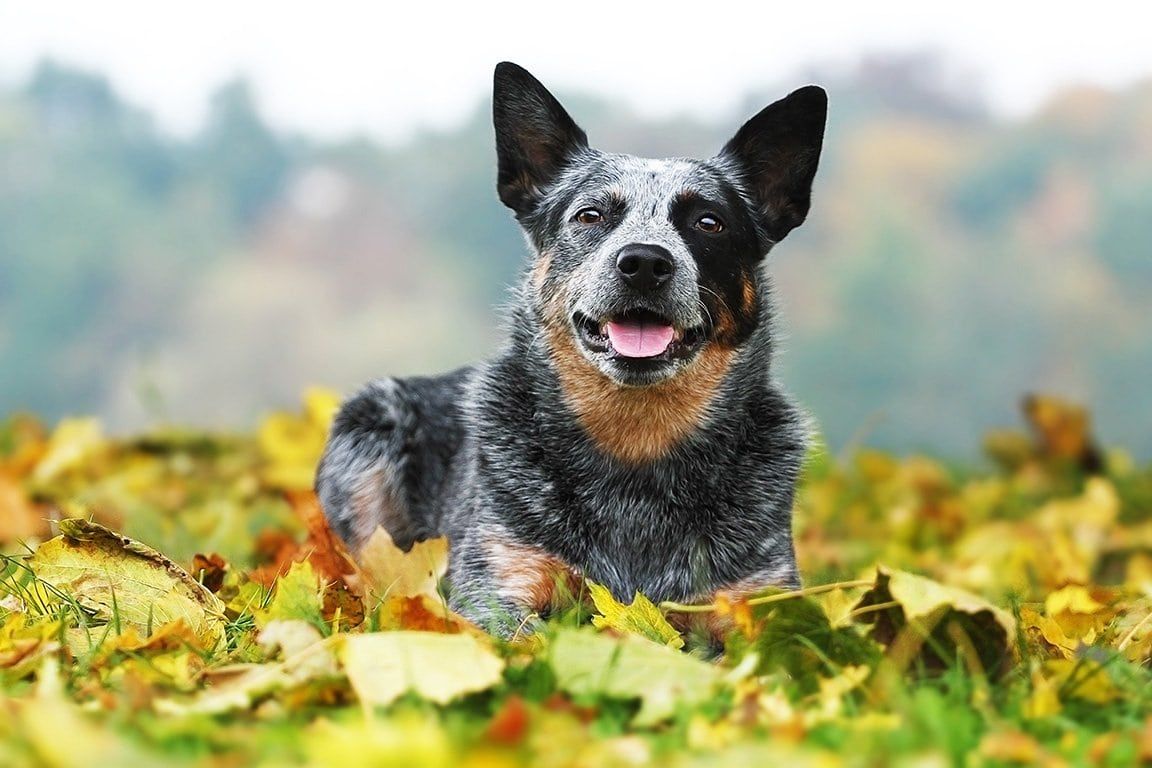
1. Australian Cattle Dog

| Origin: | Australia |
| Cause: | C189G T gene mutation |
| AKC Group: | Herding Group |
The Australian Cattle Dog is appropriately named because of the breed’s role in the country’s livestock industry, and they get their tail due to a DNA variant in the T gene, which is important during early embryogenesis. However, some are born with long tails as well.
They are hard-working animals with the tenacity and loyalty to get their assigned job done. Interestingly, early efforts to selectively breed the canine included Australia’s dingoes as part of the mix.
2. Australian Shepherd

| Origin: | United States |
| Cause: | C189G T gene mutation |
| AKC Group: | Herding Group |
The Australian Shepherd’s name is a misnomer. It may speak to the breeding stock of the animal but not their origin in the United States. This pup has the intelligence and independence you’d expect to see in a pooch working as a herder. While easy to train, this dog isn’t the best choice for novice pet owners. Note that this dog’s tail mutation is also thanks to the T gene mutation.
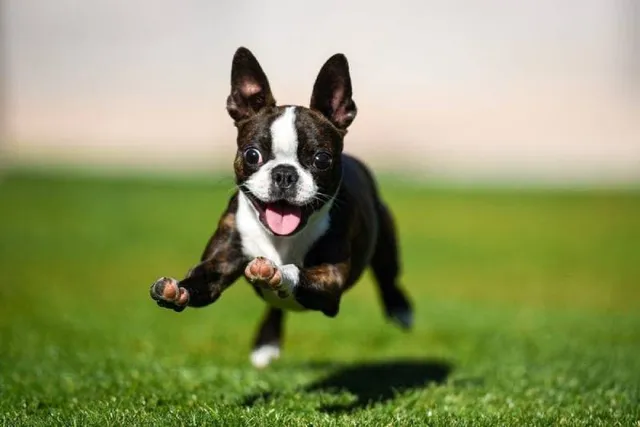
3. Boston Terrier

| Origin: | United States |
| Cause: | Without the C189G T gene mutation |
| AKC Group: | Non-sporting Group |
You probably instantly recognize the Boston Terrier for its stocky frame, despite their small size, as well as their naturally short tails. They are a selective breeding success story. You’d be hard-pressed to find a sweeter dog. The breed is relatively old and developed soon after people began this practice. Enthusiasts affectionately know this breed as the American Gentleman.
4. Brittany

| Origin: | France |
| Cause: | C189G T gene mutation |
| AKC Group: | Sporting Group |
The Brittany is full of energy, making the dog perfectly suited to life as a hunter, pointing and retrieving upland game. The breed got its start in France in the region of its name. It made its way to the United States in the 1940s, where it quickly found a devoted following. The pup quickly proved themself worthy in the field with their keen sense of smell and upbeat personality.
5. Catahoula Leopard Dog

| Origin: | North America |
| Cause: | C189G T gene mutation |
| AKC Group: | Foundation Stock Service |
The Catahoula Leopard Dog gets their name from their unique coat pattern. The breed’s name implies a foreign origin. However, they are native to North America and have a history that goes back hundreds of years. While still a part of the Foundation Stock Service, the breed is destined for the Herding Group, given its initial function.
6. Danish-Swedish Farmdog

| Origin: | Scandinavia |
| Cause: | C189G T gene mutation |
| AKC Group: | Miscellaneous |
The name of the Danish-Swedish Farmdog reflects their Scandinavian origins. The pup is appropriately named, given their intelligence and hard-working temperament. The Miscellaneous Group is fitting for this pup since they did several jobs from herder to ratter. That makes them an all-purpose dog. The breed is relatively new to the AKC family, with official recognition in the pipeline. Also, note that while some of these dogs have naturally bobbed tails, it’s not out of the question for some to have long tails as well.
7. English Bulldog

| Origin: | England |
| Cause: | N/A |
| AKC Group: | N/A |
While AKC doesn’t recognize the English Bulldog breed, the United Kennel Club (UKC) places them in the Companion Dog Group. Scientists haven’t identified the C189G T gene mutation in this pup, which suggests something else is at play with this trait. However, they all have differing tail lengths, with some even being curled.
8. Jack Russell Terrier

| Origin: | England |
| Cause: | C189G T gene mutation |
| AKC Group: | Terrier |
The Jack Russell Terrier is a shorter and smaller version of the Parson Russell Terrier, although the two look similar. This breed has the C189G T gene mutation, whereas the other does not. You’ll see this pup with the naturally stumpy tail, although people often have the procedure done on dogs with long tails.
9. Mudi

| Origin: | Hungary |
| Cause: | C189G T gene mutation |
| AKC Group: | Herding Group |
The Mudi is a smaller version of herding dog kept by the Magyar people of Hungary for hundreds of years, although this breed is probably the oldest. We see many traits in this pup that we’d expect from a dog with this job. They are intelligent and independent, but they are also eager to please with the energy to back up what they need to do. Mudis may be born with naturally stumpy or medium length tails.
10. Parson Russell Terrier

| Origin: | England |
| Cause: | N/A |
| AKC Group: | Terrier Group |
You’ll find the larger Parson Russell Terrier across the pond in Ireland and England. The breed is also popular in Australia. These dogs illustrate the subtle differences we often see in selectively bred animals. The association with the Jack Russell Terrier suggests an older origin and proliferation of the trait between the two breeds.
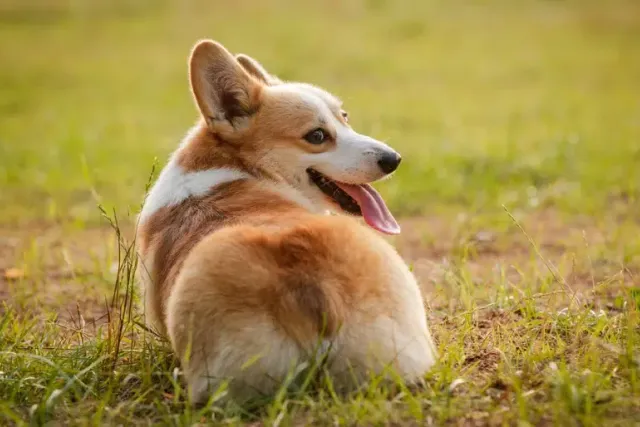
11. Pembroke Welsh Corgi

| Origin: | Wales |
| Cause: | C189G T gene mutation |
| AKC Group: | Herding Group |
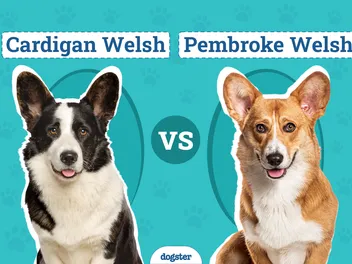
The Pembroke Welsh Corgi provided the first solid evidence of the C189G T gene mutation on naturally stumpy-tailed dogs. We can understand how valuable this trait was for these canines, given their role as herders. Their size alone keeps them safe from kicking livestock, and the lack of a tail means it won’t get stepped on and hinder the pooch in their work.
12. Pug

| Origin: | China |
| Cause: | N/A |
| AKC Group: | Toy Group |
The Pug doesn’t have a naturally stumpy tail as much as they have a curled tail resulting from a spinal defect. Scientists have yet to fully understand the genetics behind this trait, but it seems certain that it isn’t the product of the C189G T gene mutation.
13. Schipperke

| Origin: | Belgium |
| Cause: | C189G T gene mutation |
| AKC Group: | Non-sporting Group |
The Schipperke began life as ratters on ships, hence the familiar sound of the breed’s name. The pup has a Spitz-like appearance, although it is unrelated to these dogs. Nevertheless, this dog carries themself confidently and will make an excellent watchdog.
14. Spanish Water Dog

| Origin: | Spain |
| Cause: | C189G T gene mutation |
| AKC Group: | Herding Group |
The history of the Spanish Water Dog is murky and lost to history. The pup has been a fixture in the country of their namesake. Again, they are an example of a herding dog with a naturally stumpy tail to serve them better in their work. They likely served as herders and hunters to cover all the bases as an all-purpose farm dog.
15. Swedish Vallhund

| Origin: | Sweden |
| Cause: | C189G T gene mutation |
| AKC Group: | Herding Group |
The Swedish Vallhund excels at their role because of their diligent and energetic nature. They share their history with Vikings, which explains their origin. Their stature resembles the Pembroke Welsh Corgi with relatively short legs to help them maneuver around cattle, and they can be born with tails of various lengths.

The Significance of Dog Breeds With Naturally Stumpy Tails
The C189G T gene mutation is on a non-sex autosomal chromosome. Each gene consists of a contribution of a copy or allele from the mother and father. If a gene is dominant, only one copy is necessary for it to present visually, like the naturally stumpy or bobbed tail. That could explain its prevalence among dogs.
It’s worth noting that if both parents contribute the C189G T gene mutation, the result is fatal, with no offspring surviving until birth. Selective breeding can carry unintended consequences with piggyback mutations, although science has yet to identify the specific ones involved. However, there’s a positive twist to this tale.
Selective breeding can replace the complications and disadvantages of tail docking with a naturally occurring trait. Nonetheless, there is an unavoidable risk of 25% of the offspring perishing with the inheritance of two copies of the C189G T gene mutation. About 50% will have one copy, with another 25% having two copies of the mutation and showing the trait.

Final Thoughts
Naturally stumpy dog breeds aren’t as rare as they may seem, with most occurring as a result of a genetic mutation. DNA tests make it easy for breeders to identify dogs with this genotype. It can potentially change the landscape of selectively breeding pups for specific characteristics. Nevertheless, a potential alternative to tail docking, with further research needed to determine the risk of continued selective breeding of this feature.
Sources
https://www.avma.org/resources-tools/avma-policies/ear-cropping-and-tail-docking-dogs
https://bostonterrierclubofamerica.org/boston-terrier-history/
https://www.swedishvallhund.com/breed-information/breed-history
https://www.livescience.com/59875-less-variety-in-cats-than-dogs.html
https://www.akc.org/breeder-programs/foundation-stock-service-program/fss-breeds-broken-group/
Featured Image Credit: Best dog photo, Shutterstock
Expert dog care, straight to your inbox
News, insights, expert advice, and everything dog.

No spam — unsubscribe anytime.
By signing up, you agree to our Terms & Conditions and Privacy & Cookies Policy.
How useful was this post?
Click a star to rate. You can leave written feedback afterwards. (We read all feedback.)
Since 2009, Chris has written on a variety of topics. Her motto with all of her writing is “science-based writing nurtured by education and critical thinking.” She specializes in scientific topics, with a special love for health and environmental topics, and of course, pets of all shapes and sizes.
Chris lives happily with her husband and three cats in the land of 10,000 lakes, writing, wining, and boating as much as she can. She and her husband, Norm, were awarded the State of Kentucky Colonel Honor for their restoration work at Mammoth Cave National Park.